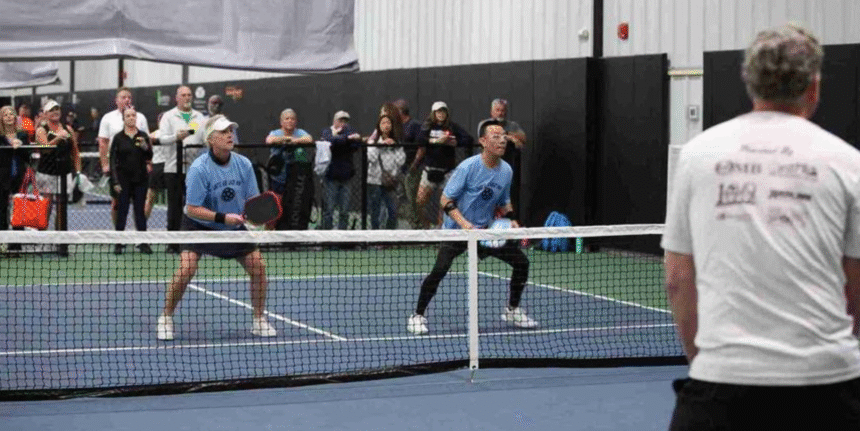
Knowing how to approach the kitchen line safely in pickleball is the difference between controlling a rally and getting picked apart in transition. This guide breaks down the footwork, shot selection, and timing you need to move forward without getting punished.
Learning how to approach the kitchen line safely in pickleball is the single skill that separates recreational players from players who actually win.
Everyone wants to get to the kitchen. Most people just don’t know how to get there without handing their opponents a free point.
And if you play doubles at any competitive level, the ability to approach kitchen line safely in pickleball will define your win percentage more than any single shot in your bag.
The transition zone is a no-man’s land. You’re not deep enough to reset comfortably, and you’re not close enough to control dinks. You’re exposed.
And if you walk forward while the ball is high, you’ll eat an ATP attempt or a body shot you had zero time to react to. The good news? There’s a system for this.
It’s repeatable, teachable, and it works at every level of the game.
Love pickleball? Then you’ll love our free newsletter. We send the latest news, tips, and highlights for free each week.
What the Transition Zone Actually Is (And Why It’s So Dangerous)
The transition zone is the area between the baseline and the non-volley zone (NVZ) line.
In a standard pickleball court, that’s roughly 15 feet of court where you’re neither in nor out.
According to USA Pickleball’s official rulebook, the NVZ (commonly called the kitchen) extends 7 feet from the net on both sides.
Most players understand where the kitchen is. Fewer understand what makes advancing to it so treacherous.
Here’s the thing: when you’re in transition, your paddle is usually lower, your weight is still moving forward, and your reaction window shrinks dramatically.
An opponent who spots you mid-stride and pops a ball at your feet or at your hip has you in an almost unwinnable position.
This is why court positioning is the conversation every serious player needs to have.
The transition zone isn’t just a physical space. It’s a mindset problem. Players rush forward because they know they’re supposed to be at the kitchen.
But speed without timing is a liability.
If you want to approach kitchen line safely in pickleball, the mindset shift is this: forward movement is a reward for a good shot, not a default behavior.
How to Approach the Kitchen Line Safely in Pickleball: The Core Framework
To approach the kitchen line safely in pickleball, you need three things working together: the right shot to cover your advance, a controlled movement pattern, and a split step before the opponent strikes.
- Shot first, then move. The most common mistake is stepping forward before the ball has done its job. Your advance is only safe when the ball you just hit is low, unattackable, and headed toward your opponent’s feet. A quality third shot drop or a deep reset that forces your opponent to lift the ball gives you a window. A mediocre floater? Stay put.
- Move in stages, not sprints. The kitchen isn’t somewhere you run to. It’s somewhere you earn your way into, a few steps at a time. Move forward after each ball you’ve neutralized. Stop when the opponent is about to hit. Advance again after the next neutralizing ball. This is called moving in increments, and it’s the foundation of transition zone play.
- The split step is non-negotiable. Just before your opponent contacts the ball, stop and split step: a small, shoulder-width hop that lands you in an athletic stance with your weight balanced and your feet live. Research in the Journal of Sports Sciences consistently shows that a pre-contact split step reduces reaction time and improves lateral agility. Skip it, and you’ll get caught flat-footed every single time.
💡
Why Does the Third Shot Drop Make or Break Your Approach?
The third shot drop exists specifically to let you approach the kitchen line safely in pickleball without getting destroyed.
It’s the mechanism that turns a defensive rally into a forward movement.
When you hit a drop that arcs softly into the kitchen and forces your opponent to hit upward, they physically cannot attack you while advancing.
They have to lift, and that buys you precious steps.
The third shot drop is one of the most analyzed shots in the game for this exact reason. It’s not flashy. It doesn’t win the point outright.
But it’s the toll booth between the baseline and the kitchen line, and you have to pay it.
The fourth shot matters just as much. Your partner is also advancing. After you hit the drop, you move. After they hit the fourth shot, they move.
This two-player choreography is what 4th shot strategy in doubles is all about.
Get in sync with your partner during transition or you’ll have gaps your opponents will find.
Don’t have a reliable drop yet? Solo pickleball drills targeting drop-and-advance patterns are the fastest way to build the muscle memory you need.
Third Shot Drop Pickleball: 3rd Shot Guide
The 3rd shot pickleball play is the most important shot you’ll hit on every single rally. This step-by-step guide breaks down the mechanics, common mistakes, and drills to help 3.0 to 4.0 players master it fast.
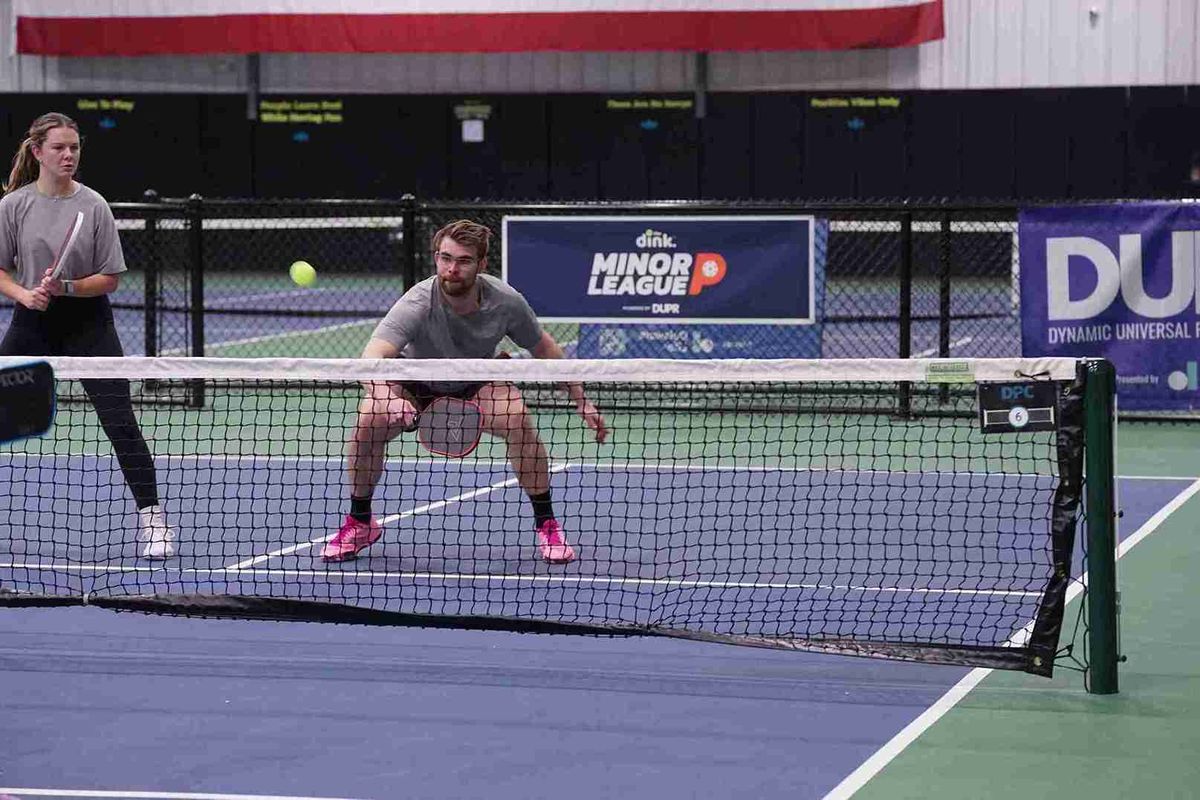
Footwork in transition doesn’t get talked about enough. Most content focuses on the shot selection, but how you move is equally important.
When you approach the kitchen line safely in pickleball, your body mechanics need to support your paddle position, not fight against it.
Players who have clean footwork arrive at the NVZ line composed; players with sloppy footwork arrive there already off-balance and easy to pick apart.
- Stay low. Bent knees, weight slightly forward, paddle up and in front of your body. If you’re standing upright while moving toward the net, any ball hit at your feet becomes a disaster. Staying low keeps your center of gravity stable and your paddle in a position to handle a low ball.
- Move laterally between shots. You’re not just moving forward. You’re maintaining your side-by-side relationship with your partner. Doubles positioning depends on you and your partner moving as a unit. If one person charges the net while the other is still retreating, the middle of the court opens up like a highway.
- Use small, quick steps near the NVZ line. The closer you get to the kitchen, the smaller your steps should be. Big strides near the line mean momentum that’s hard to stop, and that momentum will carry you into the kitchen illegally if you’re not careful. The lunge has a place in this pattern when a ball dips short and you have to extend to keep it alive. Just don’t make it your default movement.
4 Essential Footwork Tips Every Senior Pickleball Player Must Master
Smarter positioning and simple footwork adjustments can help senior pickleball players improve performance without relying on speed
What to Do When You Can’t Approach the Kitchen Line Safely
Not every ball gives you an opening. Sometimes the return of serve is flat and fast, and you’re pinned.
Trying to approach the kitchen line safely in pickleball means recognizing when advancing is not the play.
Reset from mid-court. If you’re in transition and under pressure, a soft reset aimed into the kitchen resets the rally and lets you live another shot.
Resetting in pickleball is a skill, not a retreat.
It’s a deliberate choice that puts the ball back in a neutral position so you can start your advance over with a better setup.
Stay patient at mid-court. Some players treat the transition zone like a place to escape as fast as possible. It’s not.
If you keep the ball low and unattackable from mid-court, you force your opponents to eventually give you a soft ball.
That’s your window. Good shot selection during transitions is about waiting for the right moment, not forcing one that isn’t there.
Use the return to set up your advance. A deep, low return of serve gives you the best possible starting point.
Making the most of your return of serve is the step that often gets overlooked in transition conversations, but it sets the whole sequence in motion.
Deep return, follow it in, hit a quality drop, advance in stages. That’s the pattern.
Kitchen Line Dominance: 5 Secrets From Pro Tyra Black
Tyra’s approach combines footwork, positioning, tactical dinking, and elite hand skills into a system that’s incredibly hard for opponents to break down.
How to Position Yourself Once You Arrive at the Kitchen Line
Getting to the kitchen safely is step one. Staying there effectively is step two. Once you arrive, proper kitchen line positioning is what turns defense into offense.
Stand roughly 2 to 4 inches behind the NVZ line. Close enough to attack short balls, far enough to handle a fast volley without stepping in.
Keep your paddle up, shoulder height or above, especially when your opponent is in a position to speed up.
A low paddle at the kitchen line is an invitation.
Your goal at the kitchen is to become unattackable in pickleball.
That means keeping your dinks low, directing them at your opponent’s feet, and moving them side to side until you create an opportunity.
It’s not a glamorous strategy. It’s a winning one.
Pickleball Shot Placement: Complete Winning Guide
Whether you’re serving, returning, dinking, or driving, knowing where to aim gives you control over the rally and keeps your opponent reacting instead of attacking.
Key Takeaways
- To approach the kitchen line safely in pickleball, the shot you hit before advancing must be low and unattackable. Don’t move forward after a floater.
- Move in incremental stages, not full sprints. Advance a few steps, split step, advance again.
- The split step before your opponent’s contact is the single most important mechanical habit for transition survival.
- The third shot drop is the primary tool for earning your approach. A well-hit drop buys you steps. A poor one pins you at the baseline.
- When you can’t advance safely, reset from mid-court rather than forcing a bad approach.
- Once you arrive at the kitchen, keep your paddle up, stay 2 to 4 inches behind the NVZ line, and work toward unattackable positions.
💡
Frequently Asked Questions
What does it mean to approach the kitchen line safely in pickleball?
Approaching the kitchen line safely in pickleball means advancing from the baseline to the NVZ line in stages, timed around the shot you just hit. The key is to move only after a low, unattackable ball and to split step before your opponent makes contact. Players who approach safely arrive at the kitchen in control rather than off-balance.
How do I stop getting attacked in the transition zone?
The best way to stop getting attacked in the transition zone is to stop moving forward after high, attackable balls. Your advance must be earned by the shot you hit. If your drop or reset is too high, stay put and neutralize the next ball before taking another step. A split step before each opponent contact also dramatically reduces how often you get caught flat-footed.
What is a split step and why does it matter during transition?
A split step is a small hop performed just before your opponent strikes the ball. It lands you in an athletic stance with your weight balanced on both feet, ready to move in any direction. According to sports science research, performing a split step before contact improves reaction time significantly compared to standing still. It’s the most important habit for surviving the transition zone.
Should I always try to get to the kitchen line?
Yes, the kitchen line is where pickleball points are won and lost, but how you get there matters more than when. If you can’t approach the kitchen line safely in pickleball, the right play is to reset from mid-court and try again on the next ball. A patient player who resets well will eventually earn a clean approach. A rushed player will give up a point trying to force one.
How does the third shot drop help me advance to the kitchen?
The third shot drop creates a situation where your opponent must hit upward, which means they cannot attack you while you’re moving forward. A well-executed drop that lands softly in the kitchen buys you two to four steps of safe advancement. Without it, a flat or high ball gives your opponent the angle and the pace to pick you apart in transition. The drop is the mechanism that makes a safe approach possible.
Nguồn: thedinkpickleball