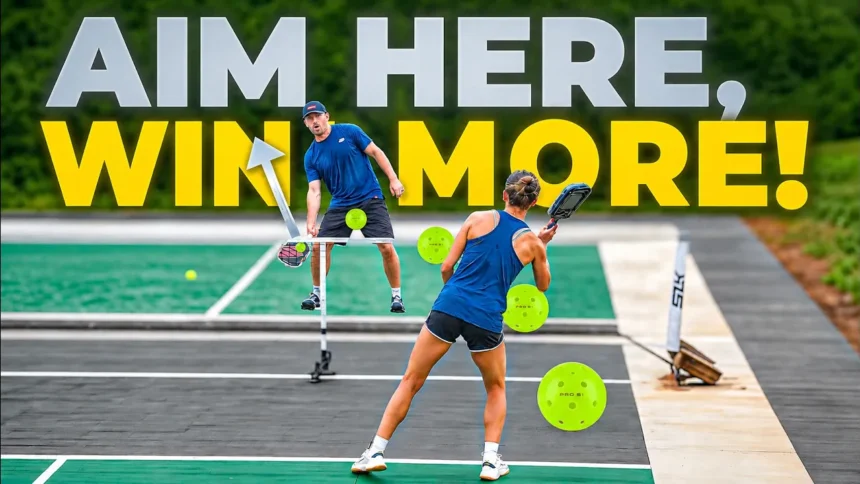
Knowing where to aim in pickleball is the difference between winning and losing. Learn the exact placement strategy for every shot from serve to attack.
The difference between a casual pickleball player and a competitive one often comes down to one thing: understanding pickleball placement strategy.
You can have perfect technique, lightning-fast reflexes, and the most expensive paddle on the market, but if you don’t know where to aim the ball, you’re leaving points on the table.
Most players guess.
They hit the ball somewhere in the general direction of their opponent and hope for the best.
But the best players think strategically about every single shot.
They understand that placement is about controlling the court, limiting your opponent’s options, and setting yourself up for the next shot.
In a comprehensive tutorial from PlayPickleball.com, one of the sport’s leading coaching channels, the fundamentals of pickleball placement strategy are broken down shot by shot.
Whether you’re serving, returning, hitting a third shot drop, dinking at the net, or attacking from the baseline, there’s a specific strategy that works better than others.
Love pickleball? Then you’ll love our free newsletter. We send the latest news, tips, and highlights for free each week.
Why Does Serve Placement Matter in Pickleball Placement Strategy?
Your serve is the only shot you control completely. Your opponent can’t influence it, can’t move you around, and can’t force you into a bad position.
That’s why serve placement is foundational to pickleball placement strategy.
According to PlayPickleball.com, the two most advantageous spots to target on the serve are the backhand corners of each service box.
Here’s why: most players have a weaker backhand than a forehand.
By aiming to the backhand, you’re immediately putting your opponent in a defensive position.
The strategy gets more specific.
- If you’re serving to the right side of the court and your opponent is right-handed, aim to the left side of that service box (their backhand).
- If you’re serving to the left side, do the same.
This creates a dilemma for your opponent: do they hit a backhand or move their feet to hit a forehand?
Either way, you’ve forced them to make a decision under pressure.
If you want to add more weapons to your arsenal, it’s worth understanding the most important aspect of your pickleball serve before you start experimenting with placement.
Beyond placement, the serve itself matters. You want depth, pace, and a ball that kicks into your opponent.
But without the right shot placement in pickleball, even a perfect serve can be returned effectively.
The Return of Serve: Playing Defense Strategically
The return of serve is where the returning team starts to build momentum.
The most important thing to remember is that your goal isn’t to hit a winner. Your goal is to make the serving team’s third shot as difficult as possible.
PlayPickleball.com emphasizes targeting the back fourth of the court on the return.
Why? Because it forces the serving team to hit their approach shot from deeper in the court, which makes it harder to land a drop shot in the kitchen.
But there’s more to pickleball strategy here.
If you’re playing against opponents with strong passing shots and angles, return the ball more toward the middle of the court.
This cuts off their angles and limits their aggressive options.
Conversely, if you’re playing against weaker angle players, you have more freedom to return to the sidelines.
One advanced concept is stacking. If your team is stacking on the return, think about time as currency.
When you hit a diagonal return, you’re running diagonally to the opposite kitchen line, which means your opponents have a short shot right to where you’re going.
Instead, hit your return down the line to the player who isn’t hitting.
Now their longest shot is from corner to corner, giving you more time to get set for the next ball.
If you’re looking to sharpen your return game further, these four essential return targets break down exactly where pro-level players are aiming on every return.
💡
Where Should You Aim Your Third Shot in Pickleball Placement Strategy?
The third shot is where the serving team transitions from defense to offense.
This is the moment you’re trying to get to the net and take control of the point.
There are two main options: the third shot drop and the third shot drive. Regardless of which you choose, placement strategy is critical.
Your biggest goal is to get the ball to dip over the net.
This forces your opponent to hit up on the ball, which gives you the offensive advantage.
Here’s a placement tip that surprises many players: aim for the middle of the court.
The net is lower in the middle than on the sides, so you have more margin for error.
You’re also confusing your opponents about whose ball it is, and you’re taking away their angles.
- If they try to speed it up, they can really only hit it back to the middle.
- If they try to pull it to the side, they risk hitting it out.
For a deeper dive into perfecting the third shot drop itself, the science-backed method to hit perfect pickleball drops is worth your time.
Only go for aggressive angles on your third shot if you’re really prepared early or if the ball sits up higher.
Otherwise, the middle is your safest, smartest target.
You can also explore the hybrid roll, which has become an essential variation for advanced players at the third shot.
Third Shot Drop Pickleball: 3rd Shot Guide
The 3rd shot pickleball play is the most important shot you’ll hit on every single rally. This step-by-step guide breaks down the mechanics, common mistakes, and drills to help 3.0 to 4.0 players master it fast.
The Fourth Shot: Keeping Your Opponent Deep
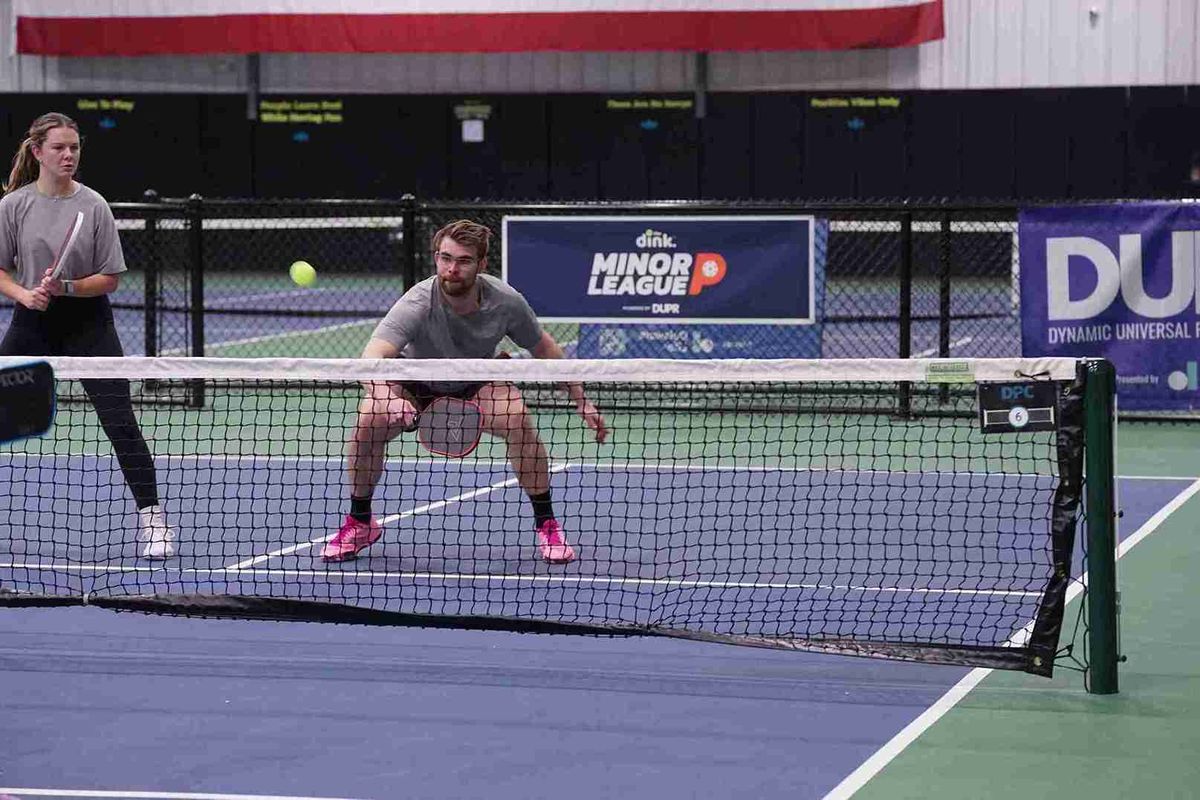
The fourth shot is your response to the serving team’s approach shot.
They’ve hit their third shot drop or drive, and now you’re hitting the ball back as they’re moving toward the net.
The biggest priority is keeping that ball deep in the court.
Don’t let them get comfortable at the net. But here’s where shot placement in pickleball gets tactical: aim for your opponent’s feet.
When you hit to someone’s feet, their paddle is down and the only way they can hit is up.
That means your next ball is coming back higher, giving you a better chance to be offensive.
Many players try to work angles on the fourth shot, but if you’re not hitting deep and to their feet, they can still run up and get in position to hit a better ball.
The extra credit move? Hit directly at their feet. It’s one of the hardest balls to hit in pickleball, and if they do manage to hit it, it has to be defensive.
This is also a core concept in how to attack drives and beat bangers in pickleball when the rally heats up.
Master the Fourth Shot in Pickleball to Win More Points
The fourth shot in pickleball is your chance to seize control of the rally. By engaging your body and legs with a longer swing, you can generate maximum power and spin that forces errors from your opponents.
Dinking: The Art of Pickleball Placement Strategy at the Net
Once you’re both at the net, the game becomes about dinking. A dink is a soft shot that lands in the kitchen (the no-volley zone).
It’s where most points are won or lost.
Dink placement depends on how prepared you are for the shot. If you’re off-balance, hit a more defensive dink.
If you’re balanced and ready, you can be more aggressive.
But when choosing where to aim, the middle of the court is one of the most frustrating spots for your opponent.
Why? Because they don’t have many options. You’re not giving them an angle they can be aggressive with.
If they speed it up, they can really only hit it back to the middle. If they try to pull it to the side, it goes out.
This shrinks the court and puts pressure on them.
Understanding what elite 6.0 players think during every dink gives you a window into the mental game that separates the best from the rest.
The other great target is your opponent’s backhand.
Most players have a weaker backhand than a forehand, so this is a natural weakness to exploit.
As the rally continues and your opponent starts pinching the middle more, you can be aggressive to the outside of the court.
Just remember: when you do that, you’re opening up angles for them, so be prepared for the ball to come back to multiple locations.
If your forehand dink specifically needs work, this five-minute fix from a pickleball pro is one of the most efficient ways to clean it up.
Pickleball Dinking Technique: The Complete Beginner’s Guide
This guide breaks down everything you need to know about proper dinking form, grip, stance, and drills to dominate at the kitchen line.
Lobs: Pushing Your Opponent Off the Net
The lob is an underrated offensive shot. It pushes the opposing team off the kitchen line and forces them to work all the way back to get back into the point.
But lob placement requires understanding where your opponent’s forehands are.
If your opponent is in front of you and you’re on the right side of the court, their forehand is in the middle.
If you lob down the middle, you’re setting them up for a great forehand if they can get behind the ball.
Instead, lob to the backhand corner. Or, if you’re on the right side, lob crosscourt to the corner.
This gives you more margin because it’s the furthest distance you have to hit, and it dodges their forehand.
Typically, your opponent has to run further to get it, which makes recovery harder.
If you’re on the left side, keep the same principle in mind: dodge the forehands.
You’re probably not looking to lob to the sideline, but rather straight over your opponent or to their backhand.
Master the Offensive Lob: Two Strategies for Senior Pickleball Players
When you hit an offensive lob, you’re not just getting the ball over your opponent’s head. You’re causing chaos and forcing them into a weak position.
Attacking From the Baseline: Reading Ball Location in Your Pickleball Strategy
When you get a ball that sits up and you have a chance to attack, pickleball placement strategy becomes about reading where the ball is located and what options you have.
If you get a ball to your inside foot on the forehand side, you can really only attack to the middle. In this case, take a little pace off and use it as a bait ball.
You’re not going for the winner; you’re setting up the next shot.
If you get a ball to your backhand, you have more options.
- You can attack down the line, but make sure you’re getting that ball nice and low because you’re probably going to have a forehand waiting for you on the next shot.
- You can also pull the ball across your opponent’s body.
Don’t pull it too far into their forehand side, but pull it across their body so they have to react at the last minute.
For more on using the backhand as a weapon, how to hit a harder backhand volley breaks down the mechanics at an advanced level.
On the backhand side, the strategy is different. If the ball is coming to your inside foot, people will anticipate that you’re going straight.
That’s not your favorite place to attack.
Instead, look for a ball that’s sitting in the corner area. This gives you options to go straight down the line, down the middle, or hit a hard angle.
The more options you have, the harder it is for your opponent to read where you’re going.
To round out your attacking game, six spots to attack your opponents in pickleball gives you a full map of the high-percentage target zones to exploit.
Also worth studying: how pros have evolved their attacking approach in 2025, including why professional pickleball players abandoned the slice shot in favor of more penetrating attack lines.
And if you want to build a complete, structured approach to winning, this simple 4-step system to win more pickleball games in 2026 ties placement directly into overall game management.
Smart shot decisions beat power every time in advanced pickleball, and the data backs that up.
If you want to keep building your understanding of court control, the 6 essential pickleball shots to master for 2026 is the logical next step.
As ESPN has reported, pickleball continues to be one of the fastest-growing sports in America, and the players leveling up fastest are the ones investing in strategy, not just power.
According to CBS Sports, the competitive pickleball landscape has shifted dramatically, with court awareness and shot selection becoming the defining factors between recreational and competitive play.
💡
Frequently Asked Questions
What Is the Most Important Principle in Pickleball Placement Strategy?
The most important principle is controlling the court by limiting your opponent’s options. Whether you’re serving, returning, or attacking, you want to put your opponent in a position where they have fewer choices and less room to be aggressive. This is the foundation of pickleball placement strategy.
Should I Always Aim for the Middle of the Court?
Not always, but the middle is a safe, smart target in many situations — especially on third shots and dinks. The net is lower in the middle, you have more margin for error, and you’re taking away angles. However, as you get more prepared and balanced during a rally, you can be more aggressive to the sidelines.
How Do I Know When to Lob Versus When to Dink?
If your opponent is at the net and you have a ball that’s sitting up, a lob can push them back and give you time to reset. If the ball is lower and you’re both at the net, dinking is the right choice. The key is reading the ball height and your positioning.
Why Is the Backhand Such an Important Target in Pickleball Strategy?
Most players have a weaker backhand than a forehand. By targeting the backhand consistently, you’re exploiting a natural weakness and forcing your opponent to hit a shot they’re less comfortable with. Over time, this wears them down and leads to more errors.
Can Pickleball Placement Strategy Work for Beginners?
Absolutely. Even beginners benefit from thinking strategically about where they aim from the very first game. Start with the basics: serve to the backhand, return deep, aim for the middle on third shots, and target the backhand when dinking. As you improve, you can add more complexity to your pickleball placement strategy.
Nguồn: thedinkpickleball