Pickleball tournament nerves are one of the most common performance killers for amateur players. This guide breaks down the exact pre-match mental prep system that helps you stay calm and compete at your best.
Pickleball tournament nerves hit differently when there’s a bracket on the line. You’ve drilled your third shot drop for months. Your dink game is sharp.
Then the first match starts and your paddle hand is shaking. Your feet feel cemented. Every unforced error feels catastrophic. Sound familiar?
You’re not alone, and more importantly, you’re not broken. Managing pre-match anxiety is a skill, and it’s one most amateur players never actually train.
The players who compete well under pressure aren’t fearless. They just have a system.
Love pickleball? Then you’ll love our free newsletter. We send the latest news, tips, and highlights for free each week.
What Are Pickleball Tournament Nerves, Really?
Pickleball tournament nerves are your body’s stress response triggered by competitive stakes.
Elevated heart rate, shallow breathing, muscle tension, and mental chatter. These are the classic symptoms.
They show up because your brain perceives the match as a threat, not just a game. Understanding that distinction is where building a champion mindset actually begins.
The Science Behind Pre-Match Anxiety
The physiological response to competition is well-documented.
Research published in the Journal of Sport and Exercise Psychology shows that competitive anxiety falls into two categories: cognitive anxiety (worried thoughts, negative self-talk) and somatic anxiety (physical tension, elevated heart rate).
Both affect performance, but they respond to different interventions, which is why a one-size-fits-all “just relax” cue rarely works.
A 2025 meta-analysis from Frontiers in Psychology found that athletes who used structured pre-competition routines reported significantly lower cognitive anxiety scores and higher confidence levels than those who did not.
That’s not a minor edge. That’s the difference between playing your game and playing scared.
The good news: your nervous system is trainable. And the tools to train it are simpler than you think.
💡
Why Your Pickleball Tournament Nerves Aren’t the Enemy
Here’s the thing: a little activation is useful.
Research on the Yerkes-Dodson law confirms what athletes have known for decades: performance peaks at a moderate level of arousal, not zero.
Completely eliminating nerves isn’t the goal. Channeling them is.
The players who struggle most aren’t the ones who feel nervous. They’re the ones who interpret those nerves as a sign they’re going to fail.
That cognitive reframe, from “I’m anxious” to “I’m ready,” is backed by research from Harvard Business School professor Alison Wood Brooks (2014, Journal of Experimental Psychology) and remains one of the most replicated findings in sports psychology.
You’re not managing pickleball tournament nerves by eliminating them. You’re managing them by redirecting that energy.
How to Manage Pickleball Tournament Nerves
Pickleball tournament nerves hit almost every competitive player, even the ones who look ice-cold on court. This guide breaks down exactly how to manage pre-match anxiety with mental prep strategies that work when the pressure is on.
Build a Pre-Match Mental Prep Routine That Actually Works
The most effective pre-match routine addresses both the physical and cognitive components of anxiety.
Think of it as a two-track system running in parallel: calm the body, direct the mind. This is the foundation of a strong pickleball mindset going into any match.
A routine doesn’t have to be elaborate. In fact, overly complex routines often create new anxiety when a player can’t execute them correctly.
The best pre-match systems take 15 to 20 minutes and have three stages: physical warm-up, controlled breathing, and mental rehearsal.
Breathing Protocols to Calm Your Nervous System
Controlled breathing is the fastest and most accessible tool for managing tournament anxiety in pickleball.
Box breathing, a technique used by Navy SEALs and elite athletes, works by activating the parasympathetic nervous system and lowering cortisol.
The protocol: inhale for 4 counts, hold for 4, exhale for 4, hold for 4. Repeat four cycles.
A 2025 review in Applied Psychophysiology and Biofeedback confirmed that slow-paced breathing at five to six breaths per minute consistently reduced competitive anxiety and improved focus in athletes before competition.
Four to five minutes of box breathing before your match warm-up is enough to move the needle.
Another option: 4-7-8 breathing (inhale 4, hold 7, exhale 8), which is particularly effective for players who experience racing thoughts before competition.
The extended exhale activates a stronger vagal response than equal-ratio protocols.
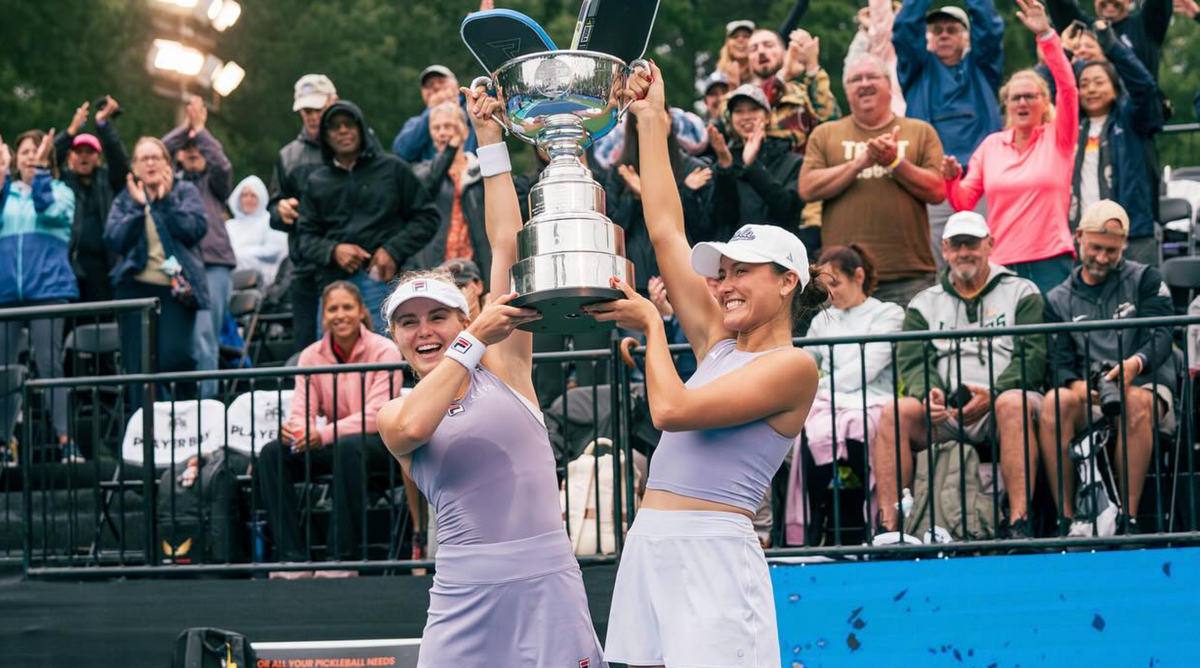
Preparation & Positivity: Anna Bright’s Winning Strategy for VA Beach Gold with Anna Leigh
After a brief hiatus, Anna Leigh Waters and I have made our return to the top of the podium! Here’s how we did it.
Visualization: The Mental Warm-Up Most Players Skip
Most pickleball players warm up their forehand.
Almost none warm up their mind. Mental rehearsal, visualizing specific situations, shot selections, and responses before they happen, is one of the most effective mental prep tools available.
And the research on its effectiveness in sport is overwhelming.
Here’s how to do it practically. Five minutes before you step on the court, close your eyes and walk through three scenarios:
- You’re serving at 8-8 in the third game. Visualize your serve, your transition to the kitchen, and a calm reset dink when your opponent attacks.
- You hit an unforced error early. Visualize your reset process: one breath, a cue word, and stepping back into position focused.
- You’re playing a team that’s slightly better than you. Visualize yourself staying in rallies longer, playing your strengths rather than panicking, and constructing points patiently.
The specificity matters. Vague “imagine winning” visualization is not the same as rehearsing your actual decision-making under pressure.
How to Stay Focused During a Pickleball Match
Learning how to stay focused during a pickleball match is the difference between players who choke under pressure and players who thrive. These 5 in-game mental techniques give you the tools to stay locked in from the first serve to the final point.
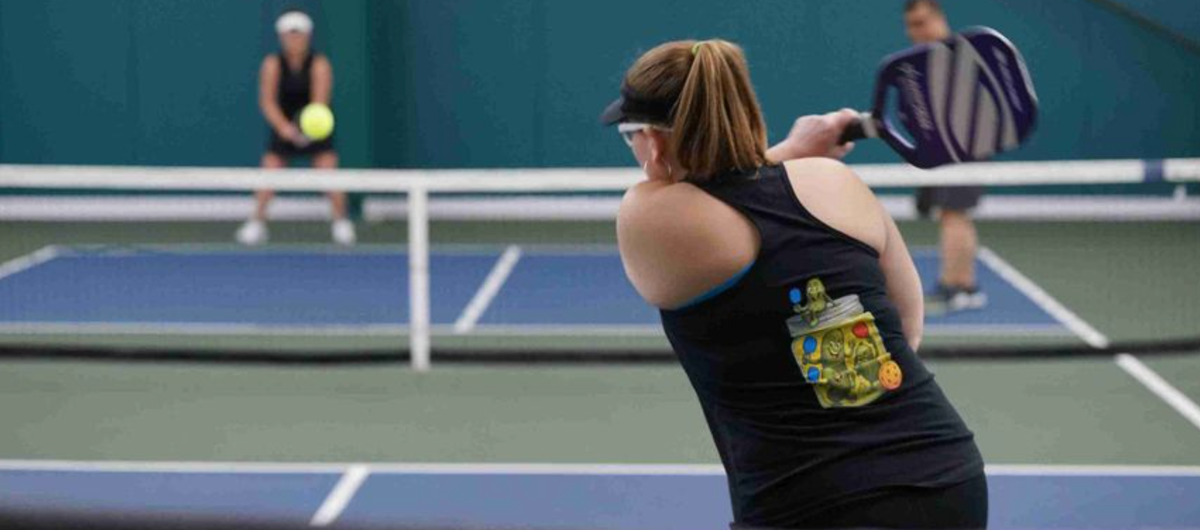
Does Your Pre-Match Warm-Up Match Your Mental State?
Most amateur players use the warm-up period to get physically loose. That’s smart, but incomplete.
The warm-up is also your last chance to stabilize your pickleball mental game before the first point is played.
A structured physical warm-up that includes dynamic movement, a few targeted warm-up drills, and intentional reset between shots trains your nervous system to stay composed.
That’s not an accident. It’s rehearsal for the match itself.
If you’re practicing good training habits consistently, your warm-up should feel like a familiar signal: this is what calm and ready feels like.
How to Simplify Your Game Plan Before a Match
Cognitive overload amplifies tournament anxiety. The more decisions you have to make under pressure, the more likely you are to freeze or revert to bad habits.
The fix: enter every match with a three-point game plan, maximum.
Before your next tournament match, write down three things:
- Your go-to pattern. The ball flight you execute best under pressure (cross-court dink, reset from mid-court, speed-up to the backhand).
- Your opponent’s likely weakness. One thing you want to exploit consistently.
- Your mental cue for errors. A single word or phrase you use to reset after a mistake: “next point” or “play the ball” works for a lot of players.
That’s it. The game plan doesn’t need to be a scouting report. It needs to be simple enough that you can recall it instantly at 7-8 in the third.
Playing the percentages under pressure starts with having a clear, uncomplicated plan before the match starts.
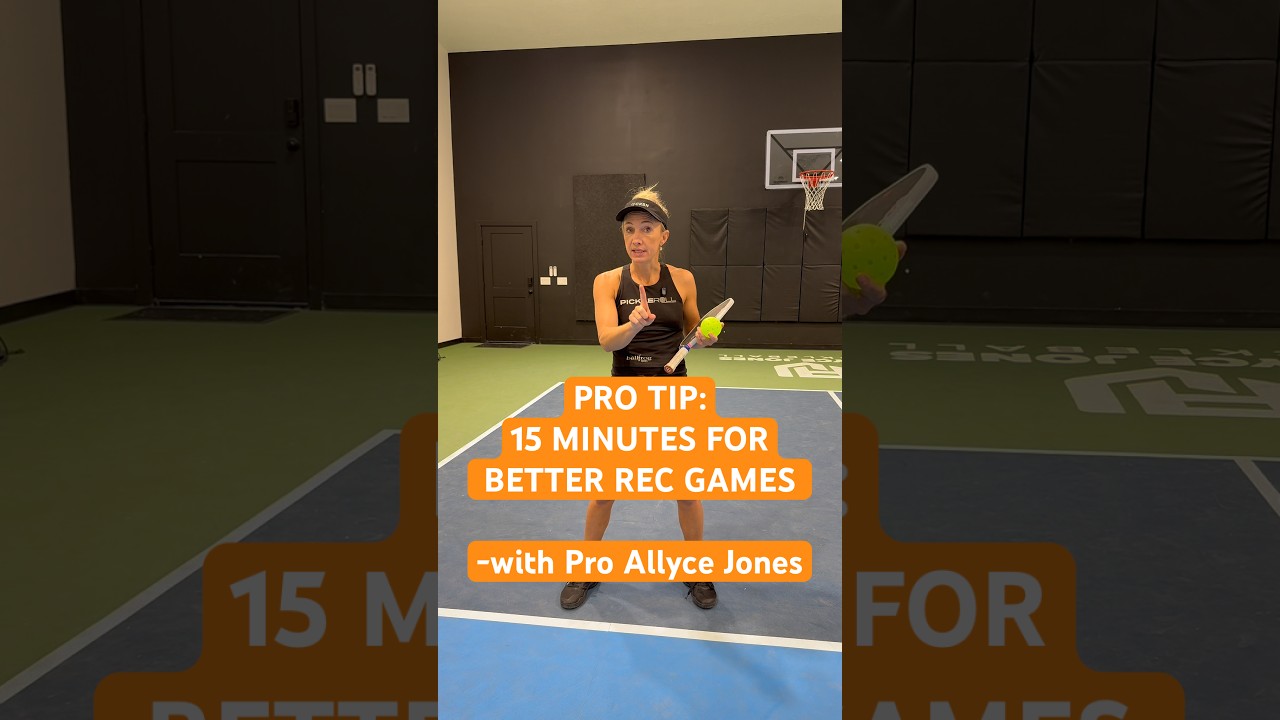
Pre-Game Drill: Transform Your Rec Game in 15 Minutes
An intentional pre-game drill focused on one skill can transform your performance and help you win more points.
How to Reset During a Match When Pickleball Tournament Nerves Spike Again
Managing pickleball tournament nerves before the match is one thing.
Handling the mid-match anxiety surge, when a run of errors sends your confidence crashing, is the harder skill. Most players have no structured response to this.
They just hope it passes. It usually doesn’t. Building a consistent mental game means planning for these moments in advance.
The Between-Point Reset Ritual
The between-point window (typically 10 to 15 seconds in recreational and tournament play) is where elite players do the most mental work.
If you watch Ben Johns or Anna Leigh Waters, you’ll notice they rarely rush to the next point.
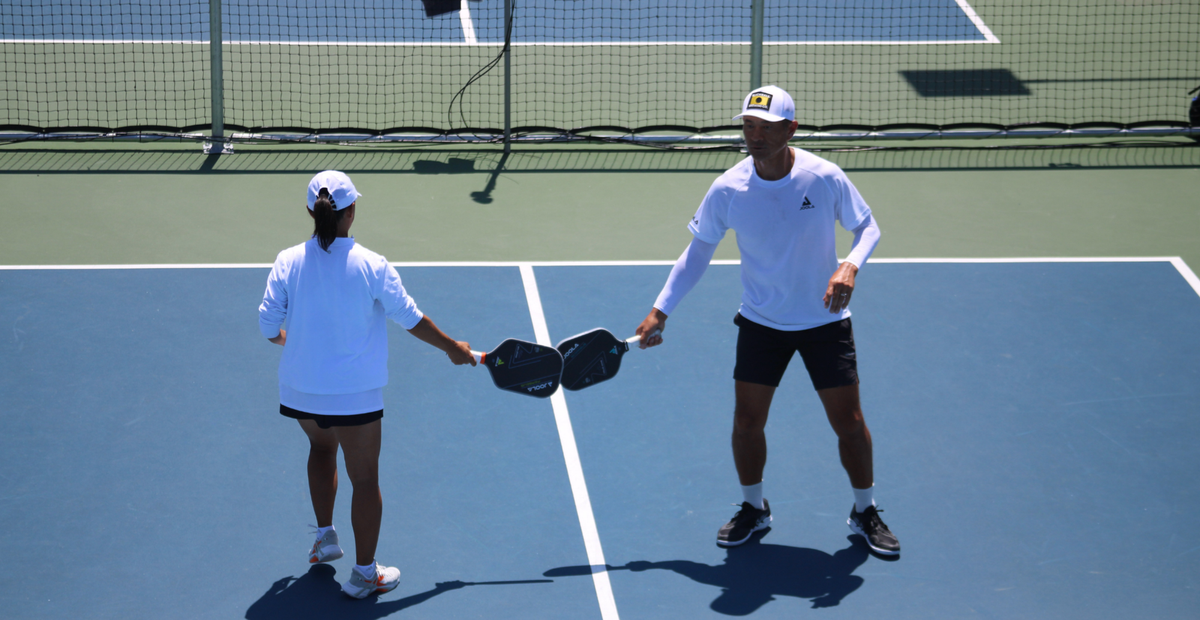
They use the space: a brief walk back, a breath, a physical cue (paddle tap, finger roll), and then forward focus.
You should have an identical routine. It doesn’t need to match theirs. It needs to be yours. The key components:
- A physical anchor: Something you do with your body that signals a mental state reset. Walking toward the back of your side, tapping your paddle grip, bouncing the ball.
- One breath: Just one. Long exhale. Forces your heart rate down a fraction and interrupts the error spiral.
- A forward cue: A word or focus trigger that moves your attention from the last point to the next one. “Fresh,” “reset,” or “new ball” are common.
This three-step sequence takes less than eight seconds and creates a buffer between the emotion of the error and the execution of the next point.
Shot selection under pressure improves when your mental state is reset, not reactive.
What Happens When the Score Gets Tight?
Close scores amplify everything. Breathing becomes shallow. Your game plan narrows to “don’t lose the point” instead of “win the point.”
This is where tournament anxiety in pickleball is most damaging, and it’s also where the best players separate themselves.
The tactical answer: narrow your focus to the next ball, not the scoreboard.
Research from sport psychology consistently shows that outcome-focused thinking during execution impairs performance.
Process-focused thinking (where does my paddle need to be?) sustains it.
Mastering the routine shots, executing the balls you make 90% of the time in practice, is the competitive edge under pressure.
It’s boring advice. It’s also what works.
One more thing. If you’re feeling pressure at 9-10 in the third, that’s actually a sign you’re competing well.
Pressure means the match matters. Use the activation, don’t fight it.
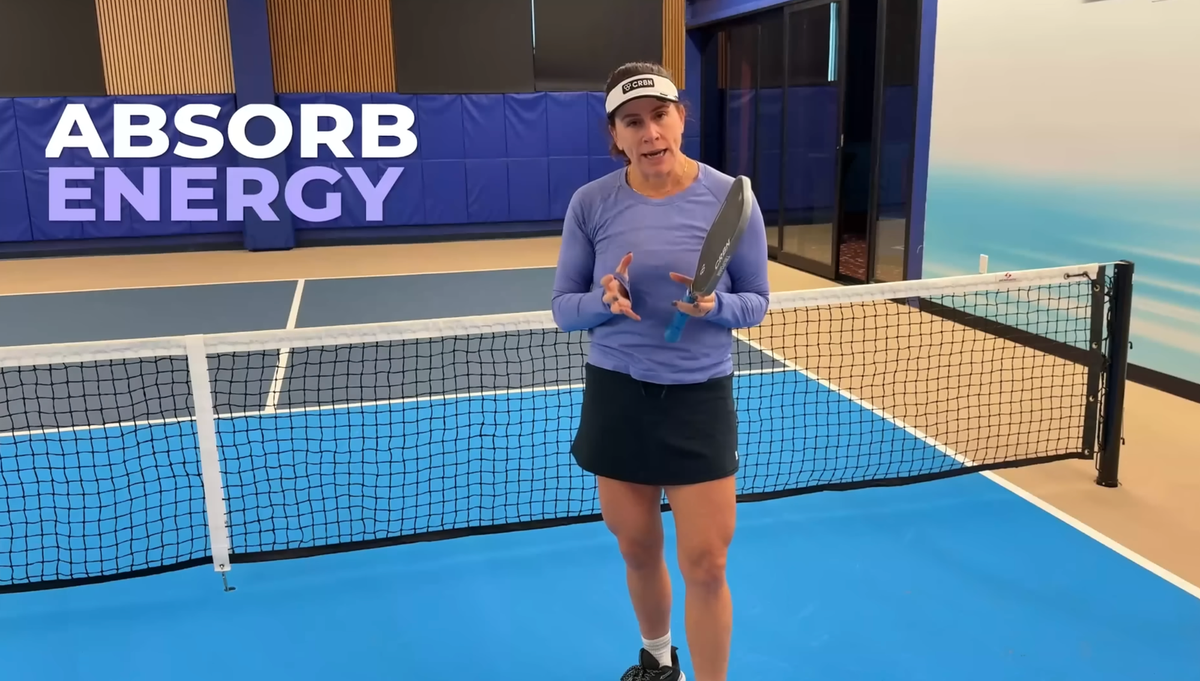
The Pickleball Reset: The One Skill That Takes You Beyond 3.5
By softening pace, controlling trajectory, and stabilizing through transition, players can use the reset to regain the kitchen and compete with stronger opponents
Key Takeaways
- Pickleball tournament nerves are a physiological response, not a character flaw. They’re manageable with structured prep.
- Moderate activation improves performance. The goal isn’t zero nerves. It’s channeled nerves.
- Box breathing (4-4-4-4) and 4-7-8 breathing are the fastest tools for reducing somatic anxiety before a match.
- Visualization should be specific: rehearse situations, decisions, and reset responses, not just a highlight reel of outcomes.
- Enter every match with a three-point game plan. Simplicity under pressure is a competitive advantage.
- Build a between-point reset ritual. Three steps: physical anchor, one breath, forward cue.
- Close-score pressure is a signal you’re competing well. Redirect it toward process focus, not outcome avoidance.
💡
Frequently Asked Questions
Why do I get so nervous before a pickleball tournament match?
Pre-match nerves in pickleball are a normal stress response to competitive stakes. Your body activates the same fight-or-flight system it uses for any perceived threat, producing elevated cortisol, increased heart rate, and muscle tension. The good news: this response is trainable. Structured pre-match routines that include breathing protocols and mental rehearsal have been shown in peer-reviewed research to measurably reduce competitive anxiety before athletic competition.
What is the best breathing technique for pickleball tournament nerves?
Box breathing is the most widely used and research-supported option. Inhale for 4 counts, hold for 4, exhale for 4, hold for 4. Repeat four to five cycles before your warm-up. For players who experience racing thoughts specifically, 4-7-8 breathing (inhale 4, hold 7, exhale 8) may be more effective because the extended exhale creates a stronger parasympathetic response. Either approach takes less than five minutes and requires no equipment.
How long before a match should I start my mental prep routine?
Start your full mental prep routine 20 to 30 minutes before your scheduled match time. That window allows time for breathing exercises, a brief visualization session, and your physical warm-up without feeling rushed. Rushing through pre-match prep is one of the most common mistakes at tournaments at every skill level. The warm-up period should feel calm and deliberate, not frantic.
Can visualization actually improve my pickleball tournament performance?
Yes. Mental imagery and visualization have decades of peer-reviewed support as performance tools in competitive sport. A 2024 review published in the Journal of Sport Psychology found that mental rehearsal before competition improved both confidence and execution accuracy across multiple sport disciplines. The key is specificity: visualize realistic scenarios, shot sequences, and error-response protocols , not just a highlight reel of winning.
How do I stop making unforced errors when I’m nervous during a match?
The most effective approach is a structured between-point reset ritual, not just “trying harder.” The ritual has three parts: a physical anchor (paddle tap, slow walk back), one long exhale, and a forward-focused cue word. This breaks the anxiety-error feedback loop by creating a mental buffer between the last point and the next execution. Pair this with a simplified game plan (three priorities maximum) and a commitment to executing your highest-percentage shots rather than trying to make spectacular plays under pressure.
Nguồn: thedinkpickleball