Most pickleball positioning mistakes have nothing to do with your strokes. Fix these 7 court positioning errors and you will win more points immediately.
Your pickleball positioning mistake might be invisible to you but completely obvious to anyone watching.
Most players assume they are losing points because of bad shots. The real problem is usually where they are standing before the shot even happens.
A coach can tell your rating within five minutes just by watching you move around the court. Not by watching your swing. Not by watching your spin.
Just by watching your feet and where you choose to stand.
These seven fixes come from Coach Jess of Athena Pickleball on YouTube, a pro player and coach who has logged thousands of hours working with players across every skill level.
None of these fixes require you to rebuild your strokes.
Every single one is just smarter positioning, the kind of pickleball positioning habit that separates players who stall out from players who keep climbing.
Love pickleball? Then you’ll love our free newsletter. We send the latest news, tips, and highlights for free each week.
Mistake 1: Drifting Into the Court After Your Serve
This one catches players at every level, including 4.5 and 5.0. You step up to serve, and your momentum carries you a foot or two past the baseline.
Now you are stuck in no man’s land before the rally even begins, a pickleball positioning error that undoes a good serve before the point starts.
That foot or foot and a half inside the baseline is the worst possible place to receive a third shot.
You cannot move forward efficiently, and backpedaling under pressure is a losing battle.
The fix is simple: serve and actually stay. You might even take a small step back after contact.
The return could come to you, not just your partner, and you need to be in position behind the baseline to step into that third with authority.
Mistake 2: Sprinting or Standing Still When Your Partner Hits the Third
Two versions of this mistake exist, and both hurt you.
The first is sprinting toward the kitchen the second your partner winds up, leaving you wide open to get blasted.
The second is staying even with your partner and marching forward as a stacked unit, which sounds like good teamwork but actually opens up a massive square of court for your opponents.
The right move is to creep forward in a staggered position. Think of the transition zone split into thirds.
As your partner hits that drop, you should be about one third of transition ahead of her.
That stagger does two things. It shrinks the available court from a square into a triangle, funneling the ball toward your partner.
And it puts you in position to attack if she hits something good or reset if she does not. Check out how the staggered transition works in more detail.
💡
Mistake 3: Are You Hurting Yourself on the Return of Serve?
Mistake three is camping on or inside the baseline for your return. When you start too close, your first instinct is to step back when a big serve comes.
That backward step kills your momentum and your ability to attack the kitchen line.
The fix: back off the baseline before the serve ever comes. Give yourself room so that every movement you make after contact is forward.
As soon as you see the server make contact, split step and load into whichever leg matches your shot.
Then push forward and follow the ball toward the kitchen.
Starting deep creates the path to the kitchen. Starting cramped takes it away. A strong return of serve is built on positioning as much as technique.
Pickleball Return of Serve: The Most Important Shot
The pickleball return of serve is often overlooked, but it’s arguably the most critical shot in the game. PPA pro Kelly Goodnow explains why a deep, controlled return sets up your entire point.

Mistake 4: Moving Up the Court in a Straight Lane
The ball does not move in a straight line, so neither should you. This is one of the most common patterns at the 3.0 to 3.5 level.
Players move forward through transition as if they are on a fixed track, heading straight to their assigned spot regardless of where the ball is moving across the net.
A 4.0 player will spot that hole immediately and exploit it.
If your partner hits the ball to the outside of the court, you need to shift toward the center to cover the middle. Your partner covers the sideline.
You cover the space that opened up.
Think of it this way: the middle of the court shifts as the ball shifts. As the ball moves to one side of the net, the center of danger moves with it.
Follow the ball, not your lane. Learn more about transition zone mistakes that trip up players at every level.
5 Shots That Fix 3.0 Pickleball Mistakes Fast
Most 3.0 pickleball mistakes happen in the first five shots of every rally. Fix these five specific problems and you will win more matches at your next tournament.
Mistake 5: Being “At the Kitchen Line” Two Feet Behind It
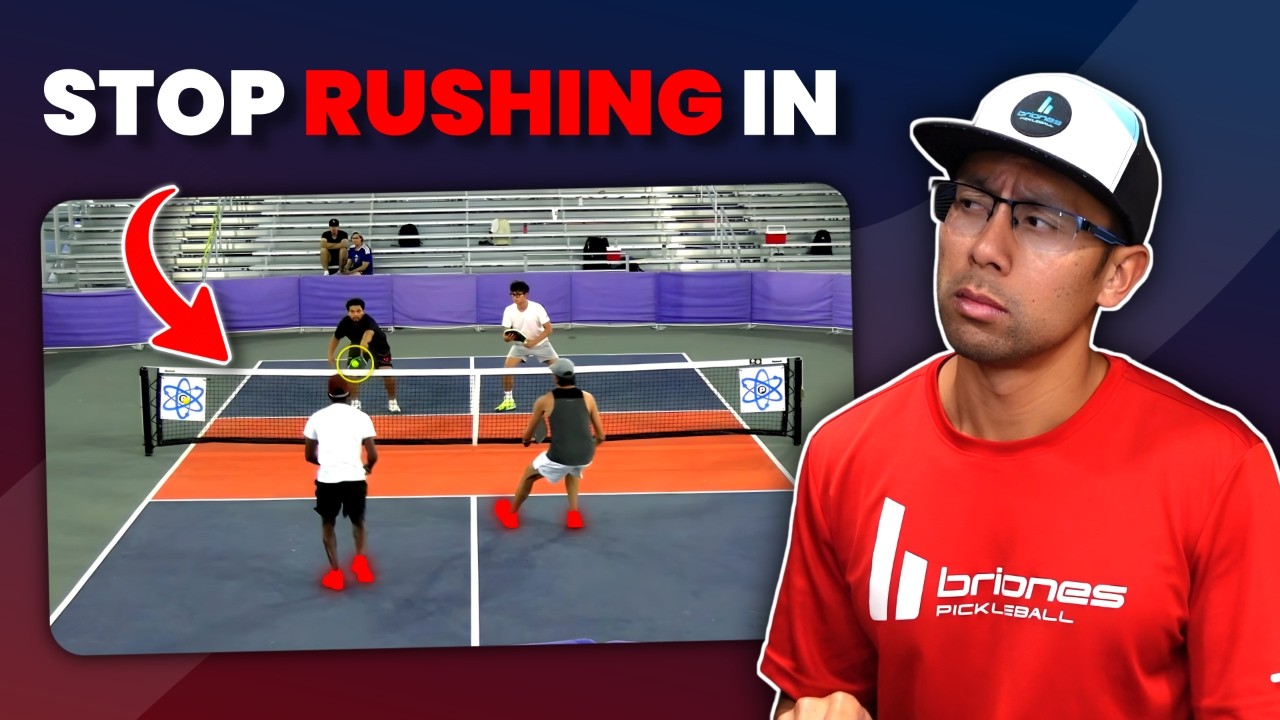
You made it to the kitchen. Except you did not.
You are standing two feet behind the non-volley zone line, which is close enough to feel comfortable but far enough back to neutralize every advantage the kitchen is supposed to give you, a small but costly positioning mistake.
Here is what happens when you stand back there. An attackable ball arriving at chest height gets caught at your knees instead.
You are forced to hit up on it, and now your opponents are the ones sitting on a ball coming high to low.
You handed them the offense.
Toes close to the tape is where you win points. Kitchen line excellence is a signature trait of elite players.
Watch how players like Tyra Black and Anna Leigh Waters maintain pressure at the line and you will see this in action.
Read about Tyra Black’s kitchen line habits for specifics worth copying.
There are times to step back off the line, like when you pop up a dead dink and need a moment to defend.
But that should be the exception, not your default setting.
The Critical Kitchen Line Skill Most Rec Pickleball Players Are Missing
By attacking the ball in the air, you’re stealing time from your opponents and shifting the dynamic of the rally in your favor
Mistake 6: What Should You Do When You Get Pulled Wide?
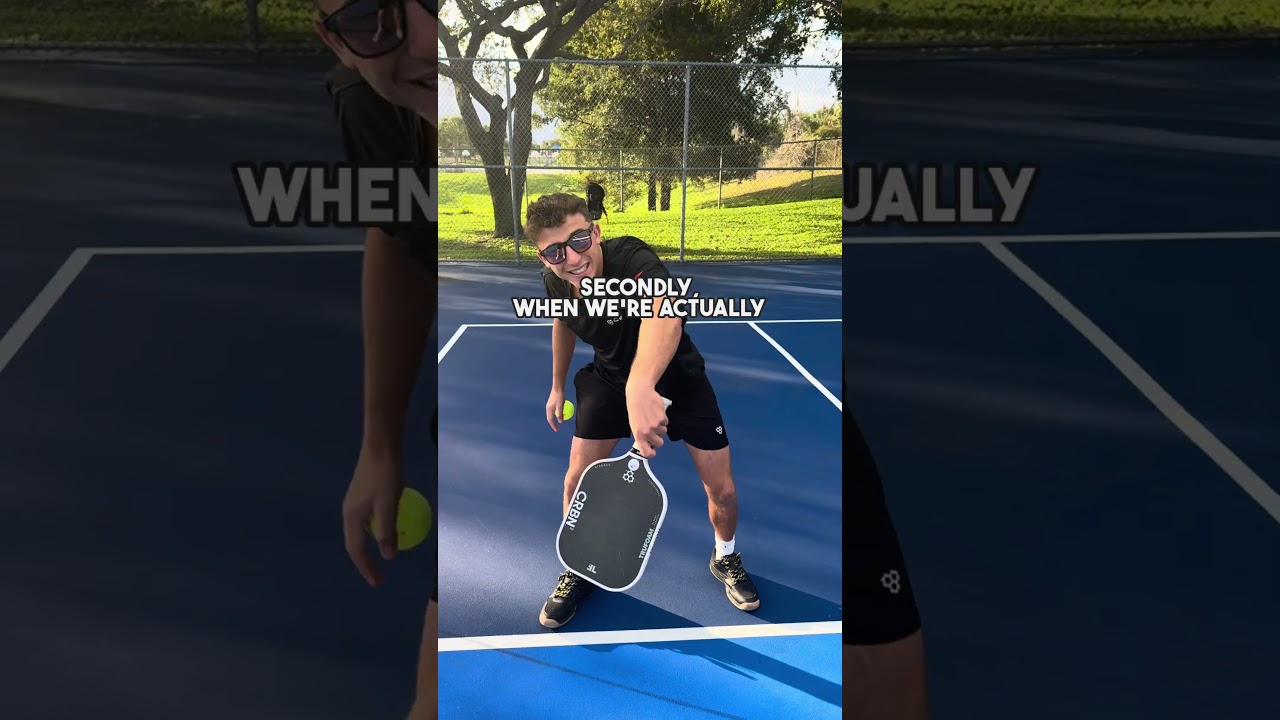
Mistake six is failing to recover after you get stretched to the sideline. You get pulled out wide, you dink the ball back, and then you stay out there.
Your partner cannot cover the entire court.
That space through the middle is your responsibility to close.
The fix is mechanical and repeatable. When you reach for that wide dink, your outside leg becomes your recovery tool.
Use it to push your body back toward the center after contact.
Do not fall over the line and watch the point play out from the corner.
The same rule applies on both sides of the court. If your partner gets pulled wide, she uses her outside leg to recover. You shade slightly toward her to help cover the gap. This is shared positioning responsibility, not one player bailing out the other. Here is more on covering your partner without leaving gaps.
- Get pulled wide on the left: use the left leg to push back right
- Get pulled wide on the right: use the right leg to push back left
- After contact, your eyes should already be tracking back toward center
- Your partner shades toward you to temporarily shrink the exposed gap
- Once you recover, your partner returns to their side of center
How to Recover After Being Pushed Back From the Kitchen
Getting pushed back from the kitchen line is one of the most disorienting moments in a pickleball rally. Here’s exactly how to recover pushed back from the kitchen in pickleball and reclaim your position before the point slips away.
Mistake 7: Thinking the Center Is a Fixed Line
This is the positioning concept that ties everything together, and most players get it wrong.
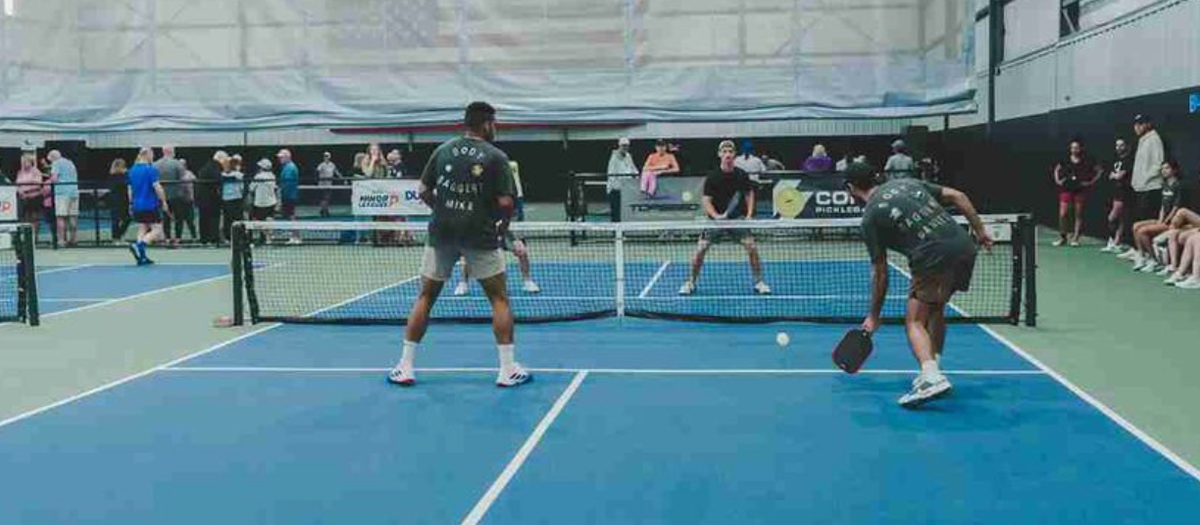
The center of the court is not the centerline. It is the space between you and your partner. That space moves as the game moves.
If your partner gets pulled out wide, the gap between you two shifts in that direction. The center you need to protect just moved several feet.
If you stay planted in your half of the court while that happens, you are leaving an empty lane for your opponents to exploit.
The solution is to stay tethered to your partner as the ball shifts around the court. When she goes wide, you take a step in her direction to close the gap.
When the ball comes back toward the center, you both squeeze in slightly, which is called squeezing the middle
This shrinks the angles your opponents can use and puts pressure on them to find a more difficult shot.
The principle of constant pressure applies here at the positioning level.
As they find balls out wide, you and your partner expand. As balls come back to center, you compress. This is dynamic positioning, not a static spot on the court.
When to Cross the Center Line and Cover Your Partner in Pickleball
Most 3.5 to 4.0 pickleball players treat the center line pickleball like an invisible wall they can’t cross. This fundamental misunderstanding is costing them matches and limiting their doubles strategy. Here’s what you need to know to fix it.
The Full List at a Glance
Here are all seven fixes in plain terms:
- Serve and actually stay: Hold behind the baseline. Do not let your energy carry you into no man’s land.
- Creep forward staggered: When your partner hits the third, move ahead about one third of transition, not even with her.
- Start deep on the return: Back off the baseline so every step after contact goes forward toward the kitchen.
- Follow the ball through transition: Shade toward the ball as it moves across the net instead of marching in a straight lane.
- Toes near the tape: Get up to the kitchen line and stay there. Two feet back is not the kitchen line.
- Recover after wide balls: Use that outside leg to push yourself back to center after a wide dink.
- Move with your partner: The center of the court shifts. Stay tethered to your partner as the ball moves side to side.
None of these require a single technical fix to your swing.
They are all about reading the geometry of the court and putting yourself where the game needs you to be, which is the entire point of good court positioning.
If you want to see where these habits fit into your broader development, read about what it takes to go from 4.0 to 4.5 and the habits every 5.0 player has locked in.
Fix even two or three of these at your next open play and you will feel the difference immediately.
The court will feel smaller. Opportunities will appear where they did not before.
That is pickleball positioning working in your favor instead of against you.
For players also working on their decision making during rallies, pairing smart positioning with the three zone system for third shots and understanding how to escape no man’s land will complete the picture.
💡
Frequently Asked Questions
What is no man’s land in pickleball and why should I avoid it?
No man’s land is the transition zone between the baseline and the kitchen line, roughly the middle third of your side of the court. It is dangerous because balls tend to land at your feet there, forcing difficult low-to-high shots. The goal is to move through it quickly rather than stopping there.
How close should I actually stand to the kitchen line during a dink rally?
Your toes should be as close to the non-volley zone line as possible without stepping in. Standing two feet back removes your ability to attack mid-air balls and gives opponents easier angles at your feet. Step back only when you are defending a high-pressure situation, not as your default position.
What does it mean to shade toward your partner in pickleball?
Shading means shifting your body position slightly in your partner’s direction when she gets pulled wide, so the gap between you two does not grow too large. You do not need to chase her across the court. One or two steps closes enough space to protect the middle without leaving your side exposed.
Should I move forward when my partner is hitting the third shot drop?
Yes, but not by sprinting to the kitchen. Move about one third of the way through the transition zone ahead of your partner in a staggered position. That positioning shrinks the court for your opponents and keeps you ready to attack a good drop or reset a bad one.
Why do I keep getting beaten down the middle in doubles?
The most common reason is that both players are stacked at their own half of the court without adjusting when the ball moves to one side. When the ball shifts wide, the center of the court shifts with it, and if neither player moves to cover that new gap, the middle is wide open. Staying tethered to your partner as the ball moves is the fix.
Nguồn: thedinkpickleball