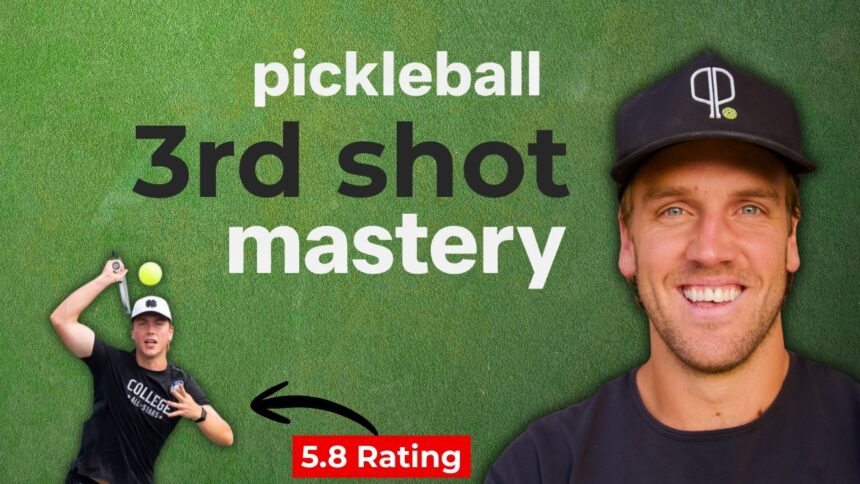
Pro coach Austin Hardy breaks down the exact framework pros use to choose between driving and dropping every single time.
The third shot decision is the most important moment in pickleball, and it’s where most players lose points without even realizing it.
You’re standing at the baseline, your opponent just hit a return, and you have maybe a second to decide: do you drive this ball or drop it?
Get it wrong, and you’re either inviting them to the kitchen or hitting a weak ball they can attack.
Get it right, and you’ve just set yourself up to control the entire rally.
That’s exactly what Austin Hardy, head coach at Pickleball Playbook, breaks down in a recent video featuring pro player Liam Duffin, a 5.8-rated player and three-time national champion.
Together, they’ve created a decision-making framework that removes the guesswork from your third shot decision and gives you a repeatable system that works at every skill level.
Love pickleball? Then you’ll love our free newsletter. We send the latest news, tips, and highlights for free each week.
The Framework That Changes Everything
Here’s the thing: your third shot decision isn’t actually that complicated once you understand the core principle.
It all comes down to one question: where are your opponents standing on the court?
That’s it. Everything else flows from that single rule.
But here’s where it gets interesting.
- The height of the ball
- The spin on the return
- The depth of the court
- Your own positioning all matter too
The pros don’t just look at one variable; they’re reading multiple pieces of information simultaneously and making a split-second decision that puts them in control.
Liam Duffin explains it this way: “When I step out onto a court, my first thought is, ‘All right, I’m going to give my opponents a quick little test.
“Am I going to be driving the ball, dropping the ball? How are they reacting?'”
This isn’t about being unpredictable; it’s about gathering information early so you can exploit weaknesses later.
When Your Opponent Hits a Deep Return
Let’s start with the most straightforward scenario: your opponent just crushed a deep return, whether it’s high or low. What do you do?
You drive it. Almost every time.
Why? Because they’ve hit the ball deep, which means you’re standing far behind the baseline. From that position, the kitchen looks impossibly small.
If you try to drop the ball from back there, you’re putting enormous pressure on yourself to hit a perfect shot.
One mistake, and you’re popping it up or hitting it into the net.
When you drive instead, you’re accomplishing two things at once.
- First, you’re putting pressure on your opponent by hitting the ball at them with pace.
- Second, you’re moving your body weight forward toward the kitchen, which sets you up for an easier drop on your fifth shot.
Austin Hardy demonstrates this in the video:
“After I hit my drive, I was only hitting one to two shots and I was already at that kitchen line just because that drive put so much pressure on my opponent while he was moving forward into the court.”
The math is simple. Drive from deep, and you’ll reach the kitchen in one or two more shots.
Try to drop from deep, and you’ll be hitting three, four, or even five more shots before you get there.
That’s exhausting, and it gives your opponent time to set up an aggressive position.
💡
What Changes When the Return Is Short?
Now the scenario shifts. Your opponent hits a short return that lands around midcourt. The ball is either high or low. What’s your third shot decision now?
This is where opponent positioning becomes critical. If your opponent is still back near the baseline, you can drive that short ball to keep them deep.
But if they’ve already moved up and established themselves at the kitchen line, driving is a death sentence.
They’re balanced, they’re ready, and they’ll tee off on that ball.
In that case, you drop. You concede the kitchen and allow them to move forward, but you do it on your terms.
You’re hitting a soft shot that lands near the net, forcing them to hit a dink back to you.
Now you’re in a dinking rally where you can set up an offensive opportunity.
Hardy emphasizes this point repeatedly:
“If your opponent’s deep in the court, not established, drive. If your opponent is up and established, drop that ball.”
The key word here is “established.” It’s not just about where they are on the court; it’s about whether they’re ready to attack.
If they’re moving forward but haven’t set their feet yet, you might still drive. If they’re planted at the kitchen line with their paddle up, you drop.
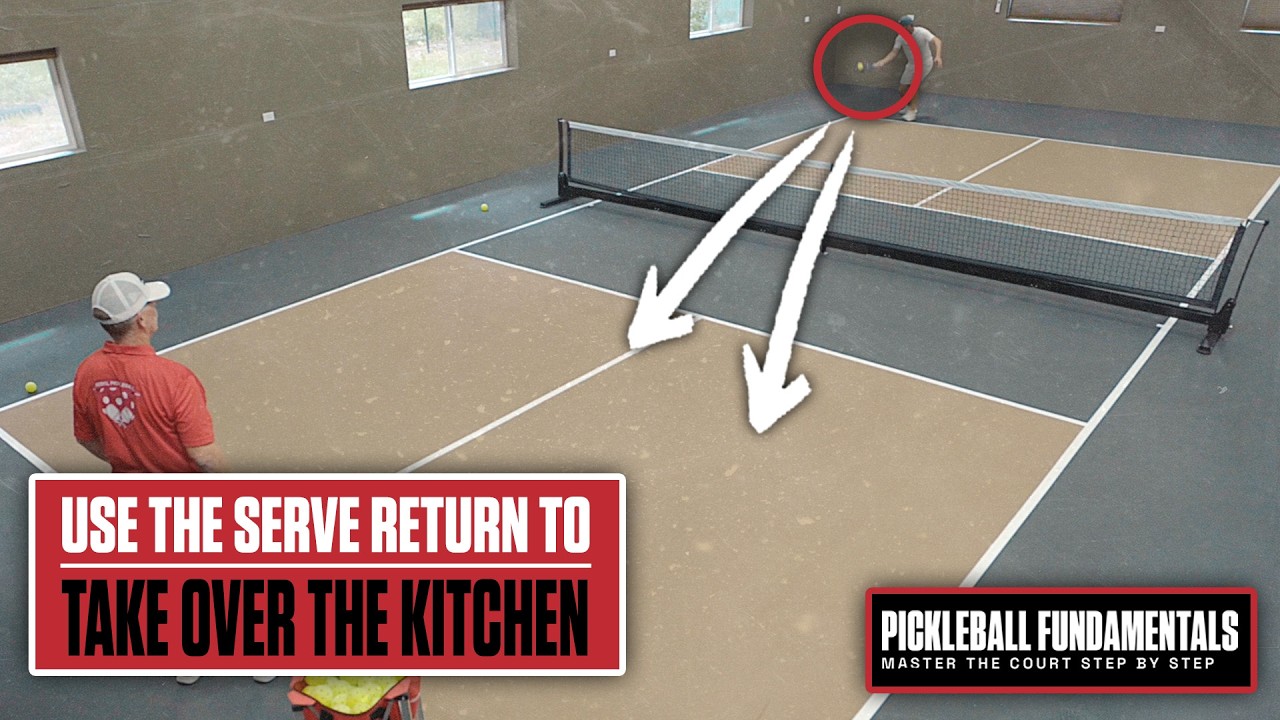
Pickleball Return of Serve: Master It in 5 Steps
The pickleball return of serve is one of the most underrated shots in the game, but mastering it can give you a massive positional advantage. Learn the essential footwork, positioning, and strategy to transform your returns into a weapon.
The Spin Game: Slice vs. Topspin
Here’s where things get more nuanced. The type of spin on your opponent’s return changes how you should execute your third shot decision.
When you receive a slice return (underspin), the ball stays low to the ground. You have to bend your knees and get underneath it.
The natural instinct is to drive, and Duffin confirms this:
“When I see that slice, I’m more prone to drive that ball.”
Why? Because slice creates topspin when you hit it back. That topspin dips hard at your opponent’s feet, making it difficult for them to attack.
If you try to drop a slice return, you’re fighting against the spin. The ball wants to stay low, and you’re trying to hit it softly.
That’s a one-in-twenty shot for most players.
Topspin returns are the opposite. When your opponent hits topspin, they’re creating underspin for you.
That underspin makes your drop shot come off soft and pillowy.
You’re way more consistent with a topspin return because the spin is working with you, not against you.
But here’s the catch: you still have to read where your opponent is on the court.
If they hit a topspin return and they’re still deep, you might drive anyway to keep them back. If they’re established at the net, you drop and let the spin do the work.
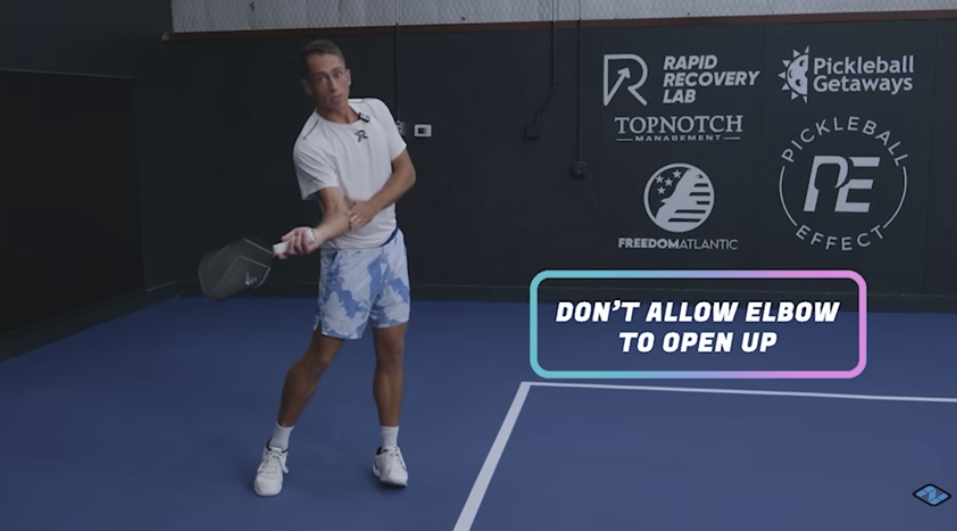
What Is Wrist Lag in Pickleball? The Pro Technique for Power, Spin & Control
Pros use this technique to generate more power, more spin, and better control on serves, returns, drives, and speedups. And you should, too.
The Transition Zone: Where Most Players Fail
There’s a middle ground that trips up most recreational players. The ball lands in the transition zone, somewhere between the baseline and the kitchen.
It’s not deep, but it’s not short either. And the height varies: sometimes it’s high, sometimes it’s low.
This is where Hardy introduces the concept of the “driving drop shot,” an advanced technique where you take 40 to 50 percent pace instead of your full swing.
You’re not fully committing to a drive, but you’re not dropping either.
You’re hitting a controlled shot that lands near the net with some pace behind it.
“This is a super advanced shot where you’re really only going to be seeing this at that 5.5 plus level or 5.0 plus,” Duffin notes.
For most players, the rule is simpler: if the ball is high in the transition zone, drive it. If it’s low, drop it.
The reason is physics. A high ball gives you the angle to hit down. A low ball forces you to hit up, which means your opponent can hit down at you.
So you drop instead and neutralize the point.
Master the Pickleball Transition Zone: Attack or Reset
The best players in the world aren’t just comfortable in the transition zone – they actively use it to their advantage
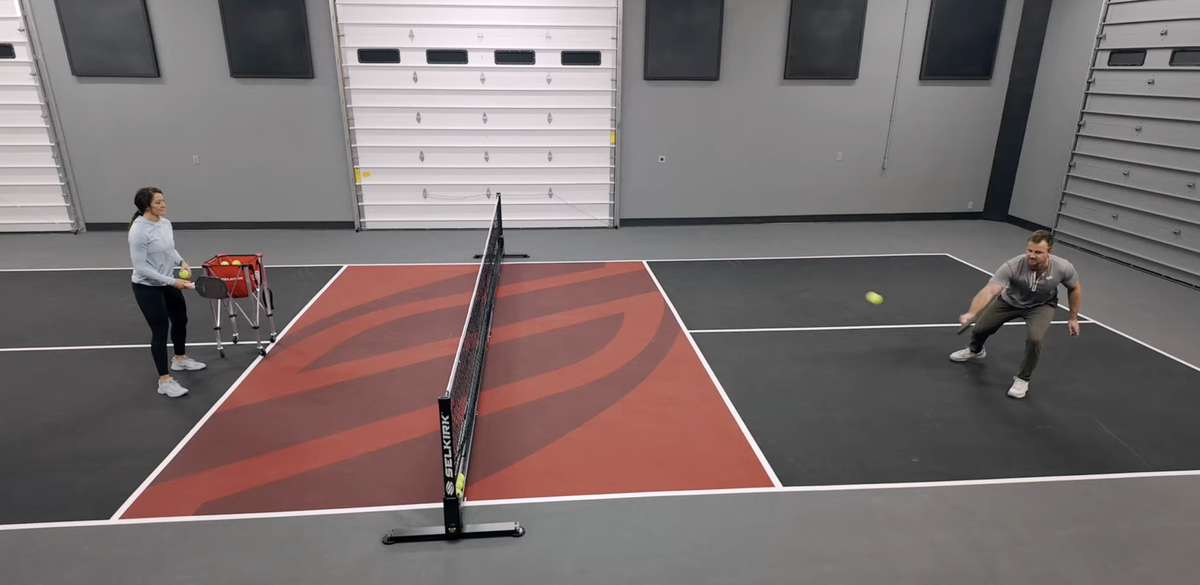
Reading Your Opponent’s Preferences
Here’s something that separates good players from great ones: understanding your opponent’s preferences.
Some players hate being driven at. Others hate being dropped at. Some are better on their forehand side; others dominate their backhand.
The pros test this early in the match.
“Within the first two to three points, we can make this quick assessment,” Duffin explains.
You’re not trying to win those points; you’re gathering intelligence. You hit a drive and see how they react. You hit a drop and see how they react.
One of those shots will be more effective than the other.
Once you know their weakness, you exploit it. If they’re smoking your drives back at you, you drop more. If they’re struggling with drops, you drive more.
It’s not complicated, but it requires you to actually look at the other side of the net instead of just focusing on yourself.
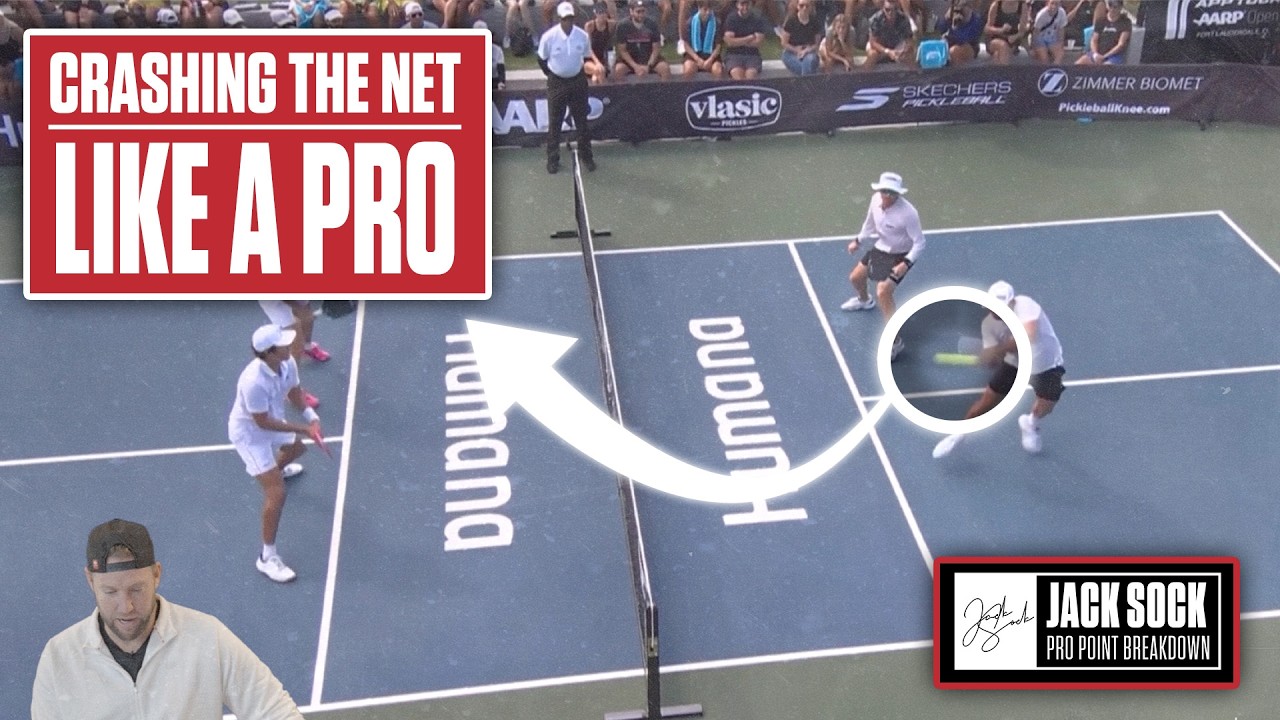
How to Read Your Opponent’s Eyes and Poach More Balls in Doubles Pickleball
The key to winning many pickleball points isn’t just quick reflexes; it’s reading what your opponent is about to do before they do it
The Mental Side of the Third Shot Decision
There’s a psychological component to this too.
When you’re standing at the baseline and your opponent is already at the kitchen, there’s pressure to do something aggressive.
You want to hit a winner or at least keep them from scoring.
But Hardy and Duffin both emphasize the importance of conceding the kitchen.
“Even though we don’t necessarily want our opponents at the kitchen line, it’s the smartest shot,” Duffin says.
“We can play out that point longer and set it up from there versus forcing it. It’s like a 50/50 chance that we’re going to miss that shot.”
This is the mindset shift that separates 3.0 players from 4.0 and above. You’re not trying to win the point on your third shot.
You’re trying to set yourself up to win it on your fifth or seventh shot.
You’re playing the long game, not the short game.
The 5 Third-Shots Every Pickleball Player Needs — & When to Use Each One
Modern pickleball demands versatility. You need multiple tools in your arsenal, and knowing when to deploy each one separates 3.5 players from 4.0+ competitors
Putting It All Together
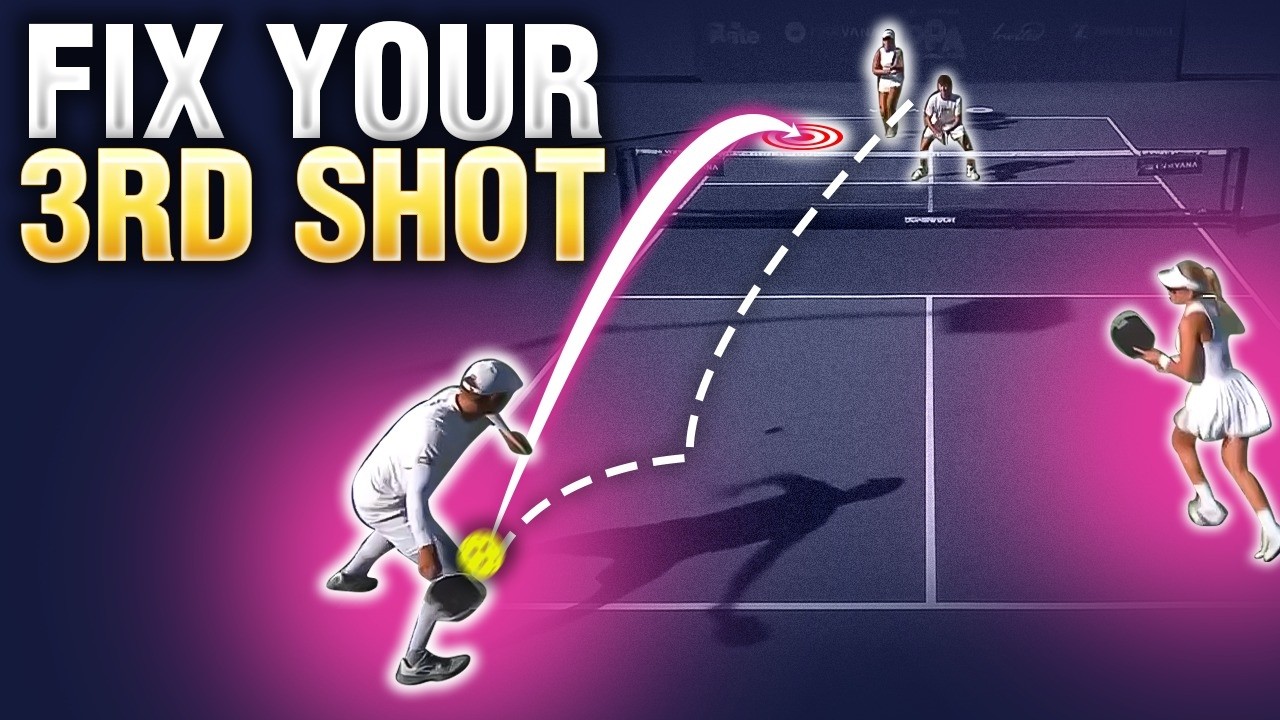
The third shot decision framework is really just a decision tree. You start with the most obvious variable: where is my opponent?
Then you layer in secondary variables: how high is the ball, what spin is on it, where did it land?
Each answer narrows down your options until you arrive at the right shot.
It sounds complicated when you read it, but Hardy and Duffin demonstrate it over and over in the video, and it becomes intuitive.
The challenge is drilling it enough times that you don’t have to think about it during a match. You just see the return, read the court, and execute.
That’s when your third shot decision becomes automatic, and your game elevates.
💡
Frequently Asked Questions
What’s the difference between a third shot drop and a third shot drive?
A third shot drop is a soft shot that lands near the net, designed to force your opponent to hit a dink. A third shot drive is a faster, more aggressive shot hit with pace. The choice depends on where your opponent is positioned and the height of the ball.
Should I always drop if my opponent is at the kitchen?
Yes, in most cases. If your opponent is already established at the kitchen line, dropping is the smarter play because driving gives them an easy ball to attack. The only exception is if the ball is high enough that you can hit down and keep it low.
How do I know if I have forward momentum for a drop?
If you have at least one foot inside the baseline and you can lean forward through contact, you have forward momentum. This makes the drop easier to execute and sets you up for a quicker transition to the kitchen.
What should I do if I’m not sure whether to drive or drop?
Test your opponent early in the match. Hit a few drives and a few drops to see which one they struggle with. Once you identify their weakness, exploit it. You can also use the ball height as a guide: high balls are easier to drive, low balls are easier to drop.
Is the third shot decision important at lower skill levels?
Absolutely. The third shot is critical at every level, from 2.5 to 5.5 and beyond. Learning the framework early will accelerate your improvement and help you win more points immediately.
Nguồn: thedinkpickleball