A dead dink in pickleball is essentially a gift shot from your opponent. This guide breaks down how to identify a dead dink and exactly how to attack it every single time.
Pickleball dead dinks are the gift shots that separate winners from casual players, and you’d be surprised how many amateurs still let them bounce passively.
The frustrated rally, the floating ball that sits up, the moment you hesitate and hit another soft dink back, all of it comes back to not recognizing a dead dink when it happens.
Miss that read and you’re leaving critical points on the table, arguing with yourself about why you didn’t go for the attack.
Here’s the good news: attacking a dead dink is straightforward once you see it as a signal, not just another shot.
If you want to win more pickleball games in 2026, mastering this one read is one of the fastest ways to get there.
Love pickleball? Then you’ll love our free newsletter. We send the latest news, tips, and highlights for free each week.
What Is a Dead Dink in Pickleball?
A dead dink in pickleball is a dink shot that sits higher than usual, has little to no spin, and gives you time and space to attack.
It’s a passive shot by your opponent that screams “hit me,” essentially a gift shot you should attack every single time.
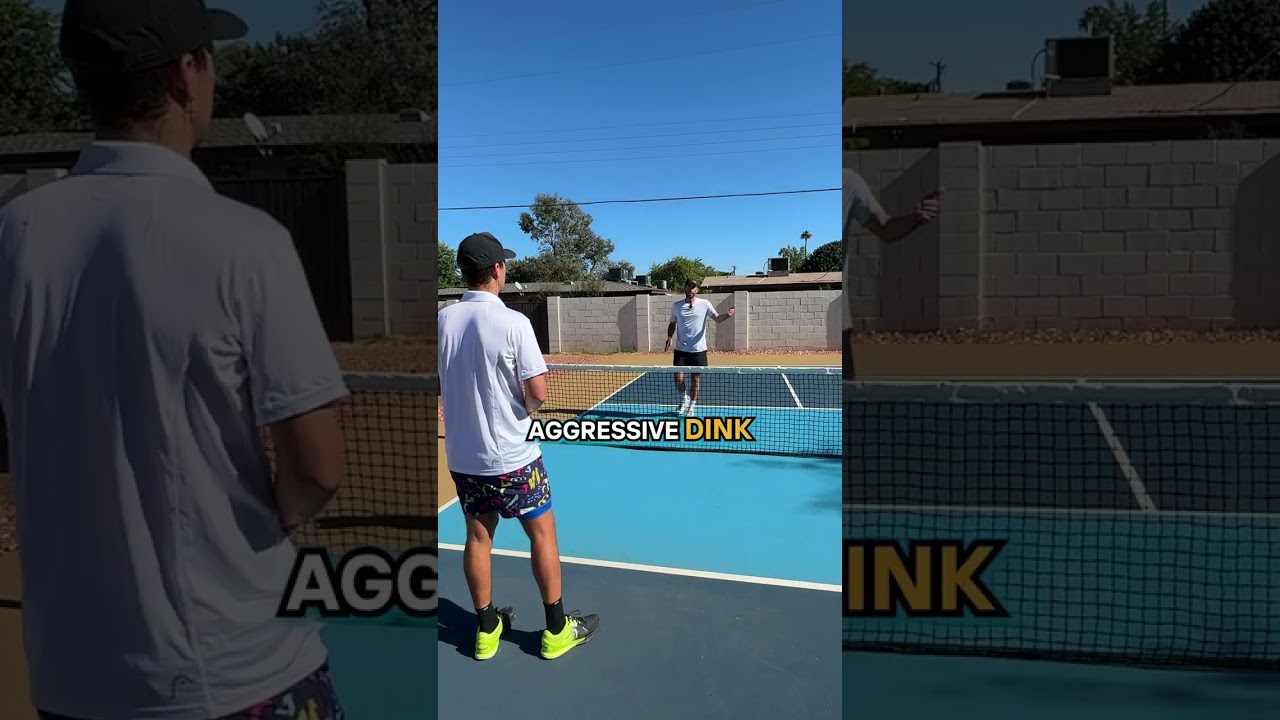
When you see a dead dink your opponent hits, the worst thing you can do is hit another passive dink back. Instead, you must instantly deploy one of three attacking options: aggressive dink, speed-up, or offensive lob.
Understanding what is a dead dink in pickleball starts with recognizing that passivity at the kitchen line is a choice you’re actively making, and it’s costing you points.
Top teaching professionals, including internet sensation Kyle Koszuta, call this specific ball a dead dink for this exact reason.
If you are letting these balls bounce and casually returning them with a soft, passive shot, you are leaving critical points on the table.
The 6 essential pickleball shots to master for 2026 include this exact scenario, recognizing the dead ball and converting it.
Based on deep research into pickleball strategy and expert teaching, here is the complete guide to understanding what is a dead dink in pickleball and how to systematically attack it every single time.
Anatomy of a Dead Dink
To master the kitchen line, you must first understand the anatomy of a weak shot.
A dead dink is simply a dink that sits high, gives you time and space, or basically screams “hit me.”
It is an unforced, passive error that hands tactical control over to you if you know how to read it.
What Makes a Dink “Dead”? Key Characteristics
The logic here is straightforward, yet it is frequently overlooked by recreational players.
In recreational pickleball, players often get caught in a hypnotic rhythm, hitting soft dinks back and forth indefinitely.
The 12 drills you need to play your best pickleball in 2026 were specifically designed to break players out of this passive habit pattern.
As Kyle Koszuta states:
“If the ball sits high or your opponent gives you time and space to make a decision, you need to do something with it. Either speed it up or take an aggressive dink.”
💡
Why Dead Dinks Are Dangerous (When You Hit Them)
Understanding the dead dink is a two-way street.
While you want to hunt them down when your opponent hits them, you must eliminate them from your own defensive arsenal.
They are widely considered the #1 dink you must avoid in competitive play for several distinct reasons:
Key Strategic Rule: The deeper your dead dink gets toward the opponent’s kitchen line, the more dangerous it becomes for you.
A deep dead dink gives your opponents maximum leverage and way more geometric options to speed the ball up cleanly.
Holding Your Dinks: The Deadliest Kitchen Strategy You’re Not Using Enough
Holding a dink forces your opponent to prepare for a slew of possibilities, and that split-second delay is where you gain the upper hand
The Modern Pickleball Mindset: Aggression Wins
The landscape of competitive pickleball has evolved dramatically.
The days of playing purely passive, “stay-in-the-point” pickleball, where you simply keep the ball in play and wait for your opponent to hit the net, are gone.
Modern pickleball is entirely about applying pressure, exerting your will on the court, and forcing opponents into uncomfortable positions.
When you get a dead dink in pickleball, attacking that ball is non-negotiable.
According to modern pickleball’s four key strategies to winning in 2026, transitioning from passive to aggressive ball-striking is the single most impactful shift a developing player can make.
The Dead Dink Breakthrough Blueprint
The goal of an attack isn’t always to end the point immediately.
Sometimes it is simply about putting your opponent off balance and making them react rather than act.
If you don’t capitalize on that floating opportunity right away, you might not get another look like it for the rest of the point.
The 4th Shot Mindset: Stop Inviting Your Opponents to the Kitchen Line
Stop playing the fourth shot like it’s a formality. Instead, recognize it for what it is: your last chance to apply pressure before your opponent gets a chance to attack.
2026 Pickleball Trends: Dead Dink Attack Evolution
The way pros attack dead dinks has evolved significantly in 2026. Here’s what’s changing:
What Is a Dead Dink in Pickleball Compared to a Push Dink? (2025-2026 Shift)
In 2025-2026, the terminology has shifted.
What was once called an “aggressive dink” is now more commonly called a push dink, a more offensive dink shot that puts sustained pressure on opponents.
Push dink characteristics:
- Uses topspin to push opponents back
- Applied with controlled pace crosscourt
- Creates offense while staying in the soft game
Lift dink characteristics (defensive):
- Used when out of position
- Soft shot to reset the point
- Defensive necessity, not offensive weapon
As Richard Livornese Jr. explains in 2026: “In general, topspin equals offense, slice equals defense.”
While topspin dinks are used to apply pressure and push opponents back, slice dinks are more about control and buying time.
The reasons professional pickleball players abandoned the slice shot in 2025 reinforce exactly this evolution, and understanding it gives you a decisive edge over players still stuck in defensive habits.
Dead Dink Reaction Drill: New for 2026
A dead dink drill was added to the official six essential pickleball drills in 2026:
Setup:
- Start by dinking one, two, then intentionally give your partner a dead, soft dink
- Get prepared to defend, anticipating the attack
Purpose:
- Trains you to react instantly when opponent gives you a dead ball
- Builds muscle memory for the three attack options
- Trains defensive positioning when you’re the one hitting the dead dink
This drill is now considered essential for players at 3.5+ skill levels. Want a complete drill library?
The 12 drills you need to play your best pickleball in 2026 covers this and every other key training routine in one place.
What Is a Dead Dink? The Gift Shot You Should Be Attacking Every Time
Think of a dead dink like a gift. Your opponent either made a mistake or gave you an opening. The question is: what are you going to do with it?
How to Attack a Dead Dink Every Time: 3 Options
When you receive a dead dink in pickleball, the absolute worst thing you can do is hit another passive, dead dink back.
Doing so completely wastes the opening your opponent handed you. Instead, you should instantly deploy one of these three attacking options.
Option 1: Hit an Aggressive Offensive Dink
- The Goal: Make your opponent move wherever they are currently leaning.
- The Target: Hit the ball sharply out to their forehand near the sideline, or hard toward the middle to force an uncomfortable, jammed backhand.
- The Strategy: Force them to move laterally (left-to-right) and dynamically (up-and-back) using a calculated mix of deep and shallow placement.
- Pro Hack: Add spin. Manipulate your paddle face to use different spins so they do not receive the same look twice. Understanding the difference between aggressive vs. defensive dinking is key to mastering this option. As noted in the 5 pickleball shots you must master before 2026, spin variation is the separator between good dinking and elite dinking.
Option 2: Speed Up the Ball with Pace
- The Goal: Jam your opponent on their dominant side and force a highly restricted “chicken wing” defensive posture.
- The Technique: Drive through the ball and add a little topspin to ensure it dips and stays within the baseline.
- The Target: Aim directly at the player positioned in front of you, specifically targeting their dominant hip or shoulder.
- Why it Works: Because dead dinks naturally sit high, they provide the ultimate strike zone for safely adding pace without hitting the net tape. This targets the “chicken wing” zone, one of the most difficult areas for opponents to handle. The speed-up off a floating dink is one of the key weapons highlighted in the 6 essential pickleball shots to master for 2026.
Option 3: Hit an Offensive Lob from the Non-Volley Zone (NVZ)
- The Goal: Clear your opponents’ heads entirely, force them out of the kitchen, and create massive structural openings on the court.
- Key Factors: Precision is everything; both optimal height and deep baseline depth are required.
- The Technique: Brush up heavily on the ball to apply heavy topspin. This causes the shot to “run away” from your opponents as they chase it backward toward the baseline.
- Why it Works: Since a dead dink does not press or rush you, you are set up with perfect, stable balance to execute this high-accuracy shot. An offensive lob from the NVZ is the ultimate disruption tool. The 2026 rules changes you need to know also clarify several NVZ situations where this lob becomes even more tactically viable.
How to Attack Dead Dinks in Pickleball
Knowing when and how to attack dead dinks in pickleball is the fastest way to upgrade your kitchen game. This guide breaks down exactly how to identify attackable dinks and execute the right shot every time.
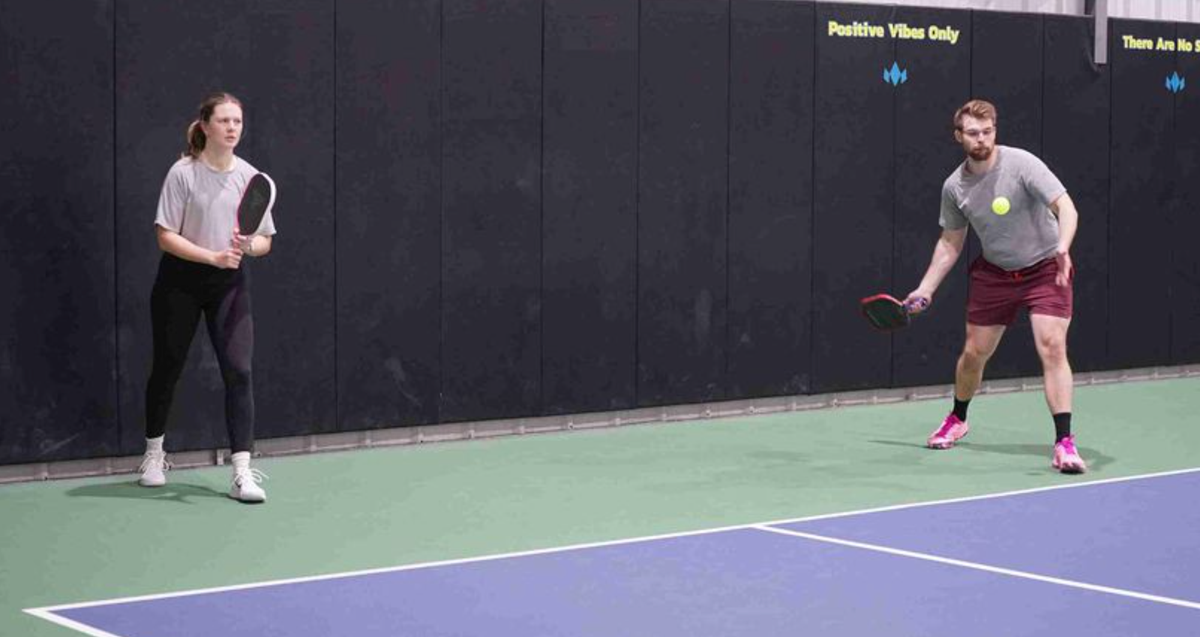
Quick Reference: Attack Decision Tree
To help you make split-second decisions at the kitchen line, use this strategic decision tree based on the exact placement of the incoming dead dink:
The Power of Triadic Threat: Mental Compounding
When you master all three attacking variations, the aggressive dink, the speed-up, and the offensive NVZ lob, you unlock a devastating psychological advantage.
When an opponent has to actively worry about all three options simultaneously, it becomes nearly impossible for them to read your paddle face or anticipate your next move.
By consistently and ruthlessly attacking dead dinks, you send an explicit psychological message: You will pay for every mistake made at this net.
Over the course of a match, this aggressive mentality compounds heavily:
The 4-step system to win more pickleball games in 2026 reinforces this exact mental framework, sustained aggression is a system, not a mood.
Stop neutralizing the gifts your opponents give you.
The next time you spot a dead dink, step up, choose your weapon from the three options above, and take complete control of the court.
Mental Warfare: What Elite 6.0 Pickleball Players Think During Every Dink
What separates good from great in pickleball is the split-second mental shift that happens the moment the ball leaves the paddle
Key Takeaways
- A dead dink in pickleball is a dink shot with little to no spin that sits higher than usual, giving you time and space to attack. It’s an unforced error your opponent makes that hands tactical control to you.
- The #1 dink to avoid in competitive play is the dead dink you hit yourself, because it gives opponents zero pressure, abundant time to speed up, and absolute court control.
- When you receive a dead dink, attack using one of three options: aggressive offensive dink, speed-up with pace, or offensive lob from the NVZ.
- The modern 2026 mindset has shifted terminology: “push dinks” (topspin, offensive) vs. “lift dinks” (slice, defensive), with topspin equaling offense.
- Master all three attacking variations to unlock the triadic threat, a psychological advantage where opponents can’t read your paddle face or anticipate your next move.
💡
Frequently Asked Questions
What Exactly Is a Dead Dink in Pickleball?
A dead dink in pickleball is a dink shot with little to no spin that sits higher than usual, giving you time and space to attack. It’s essentially an unforced error by your opponent that hands tactical control to you if you know how to read it.
Should I Hit a Dead Dink Back as Another Dink?
No, hitting another passive dink back is the absolute worst response to receiving a dead dink. This completely wastes the opening your opponent handed you, and you must instead attack using one of three options: aggressive dink, speed-up, or offensive lob.
What Are the Three Ways to Attack a Dead Dink in Pickleball?
The three proven attack options when you receive a dead dink are: hit an aggressive offensive dink to move your opponent laterally, speed it up with pace to jam their dominant side and force a chicken wing response, and hit an offensive lob from the NVZ to clear their heads and force them out of the kitchen. Each option creates a different problem for your opponent, which is exactly why mastering all three is more powerful than relying on just one.
Why Are Dead Dinks Dangerous When I Hit Them?
Dead dinks are the number one dink to eliminate from your game because they give opponents zero pressure, provide abundant time and space to speed up, and hand absolute court control to your opponent. The deeper your dead dink lands toward their kitchen line, the more geometric attack options you hand them.
How Does the Dead Dink Fit Into Modern Pickleball Strategy in 2026?
In 2026, modern pickleball strategy demands that every dead dink be treated as a non-negotiable attack opportunity. The evolution of push dinks versus lift dinks means players are now trained to recognize ball height as an automatic trigger for transitioning from passive defense to controlled aggression.
What Is the “Chicken Wing” Zone and Why Does It Matter?
The chicken wing zone is the paddle-side shoulder and hip area of your opponent, where they struggle to decide between forehand and backhand, forcing an awkward restricted return posture. This is the primary target zone for speed-up attacks on dead dinks because even a well-prepared opponent has almost no clean response from that position.
Ready to dominate dead dinks at your next match? Start implementing these three attack options today. The players who capitalize on every dead dink pickleball opportunity aren’t just talented, they’re aggressive. Now you know how to be, too.
Nguồn: thedinkpickleball