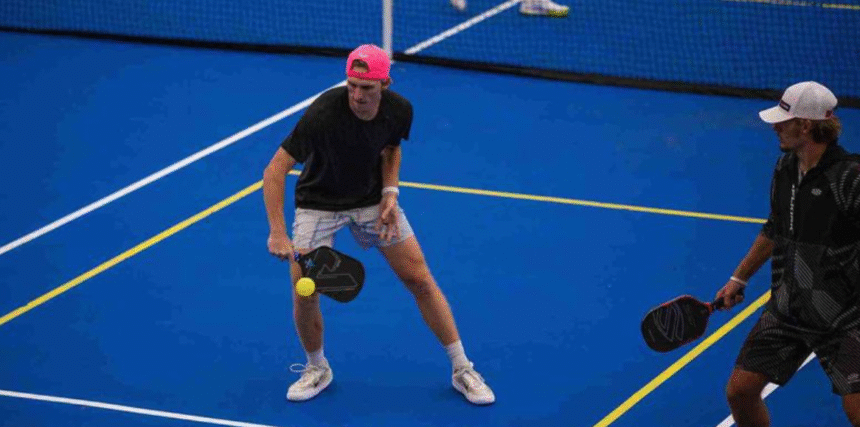
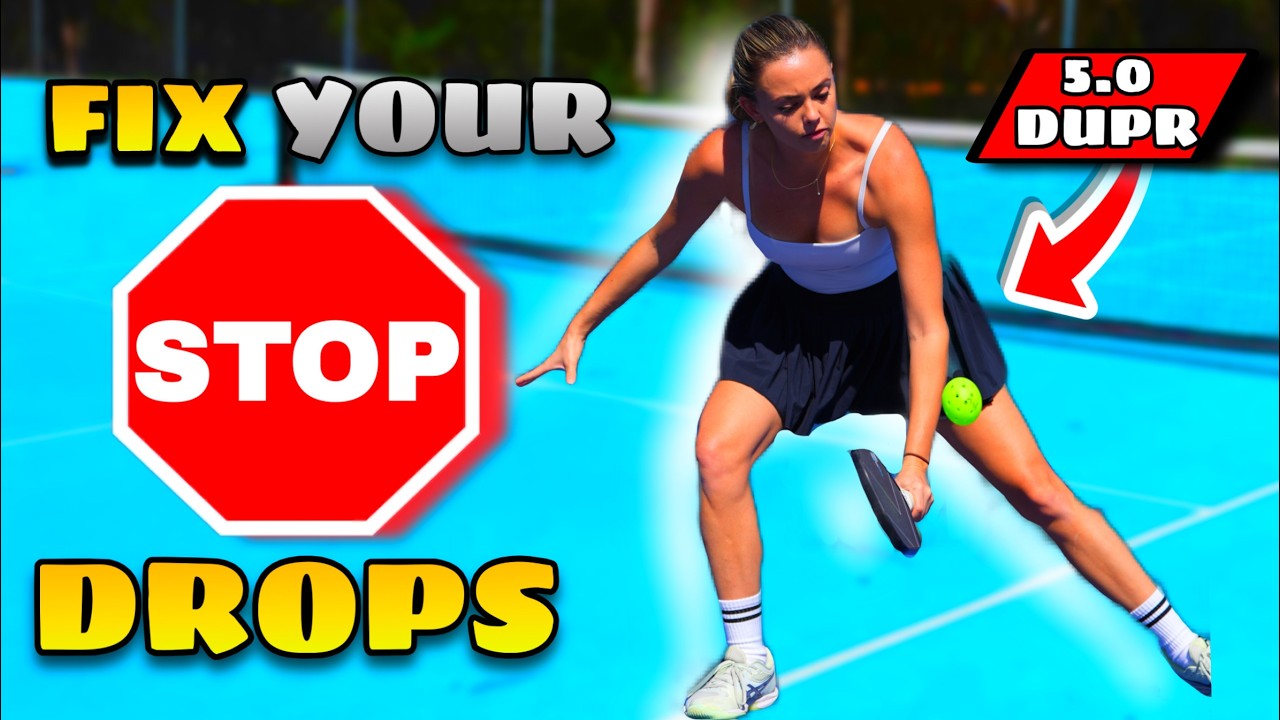
Most players avoid the backhand third shot drop until it costs them a game. Here’s how to hit backhand third shot drop pickleball shots that actually land soft and stay low.
Your forehand third shot drop is fine. Your backhand is why you’re stuck at 3.5.
If you want to know how to hit backhand third shot drop pickleball players use to survive a hard drive down the line, you’re in the right place.
Here’s the thing.
Most players avoid the backhand third shot drop entirely, running around it, slapping a panicked slice, or eating the error until someone serves deep to the backhand corner.
This guide covers the grip, footwork, and drills built around real shot selection that fix that.
Love pickleball? Then you’ll love our free newsletter. We send the latest news, tips, and highlights for free each week.
How To Hit Backhand Third Shot Drop Pickleball: Grip and Setup First
The direct answer: use a continental grip, keep your paddle face slightly open, and let the shot come off a short, controlled backswing instead of a swing.
Grip mistakes are where most backhand drops die before they even leave the paddle, and they show up in third shot drop variations far more often than players realize.
Rachel Simone has talked about this exact fix in her own backhand clinic, and the core idea holds up: a continental grip gives you one paddle face angle for volleys, drives, and drops, so you’re not re-gripping mid-point when a ball comes hot to your backhand side.
How To Hit Backhand Third Shot Drop Pickleball With The Right Grip
Continental is the safest starting point for most players.
It’s the same grip you already use for volleys, so your hand doesn’t have to relearn anything under pressure.
Some advanced players prefer a slight eastern backhand shift for more topspin control, but that’s a refinement borrowed from a different kind of reset, not a starting point.
Watch your wrist here. A loose, floppy wrist turns a drop into a pop-up. A locked, rigid wrist turns it into a line drive.
You want firm but relaxed, the same feel you’d use to set a glass down on a table without slamming it.
This same wrist discipline shows up in the figure 8 drill, which is worth stealing for your backhand practice too.
💡
Why Your One-Handed Backhand Keeps Sailing Long
Here’s the direct answer: your paddle face is too closed, and you’re swinging instead of lifting.
The one-handed backhand rewards touch over power, and most players bring too much shoulder into a shot that should come mostly from the forearm and wrist.
It’s the same touch you need for the go-to slice dink, just with more arc.
Think of it this way.
A forehand drop and a backhand drop shot are solving the same problem, soft contact, high arc, landing in the kitchen, but your body doesn’t naturally trust the backhand side the same way.
Learning how to hit backhand third shot drop pickleball shots consistently starts with removing that hesitation, not adding more power.
That lack of trust shows up as tension, and tension is what sends the ball three feet past the baseline.
Check your backhand volley mechanics too, because a shaky volley almost always means a shaky drop.
They share the same compact swing path, just with less pace and more arc on the drop.
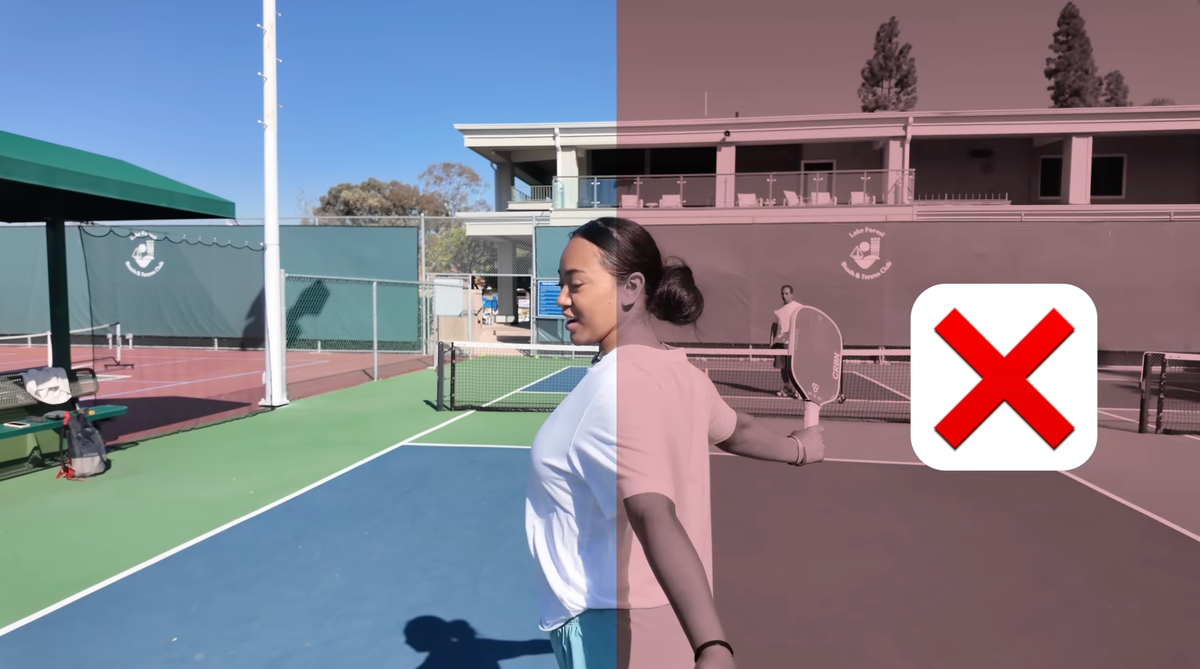
How (and Why) to Hit the One-Handed Backhand in Pickleball
It’s an unconventional shot in pickleball, yes. But done properly — and practiced relentlessly — it can become a devastating and unpredictable weapon when the time is right.
The Two-Handed Backhand Alternative
If the one-handed version keeps breaking down, try a two-handed backhand for your third shot, the same stability trick behind good doubles strategy and sideline coverage.
It adds control and cuts down on paddle wobble, since you’re trying to manage touch, not generate power.
The tradeoff is reach. A two-handed backhand shortens your effective wingspan, so you’ll need sharper positioning to get to the ball in time.
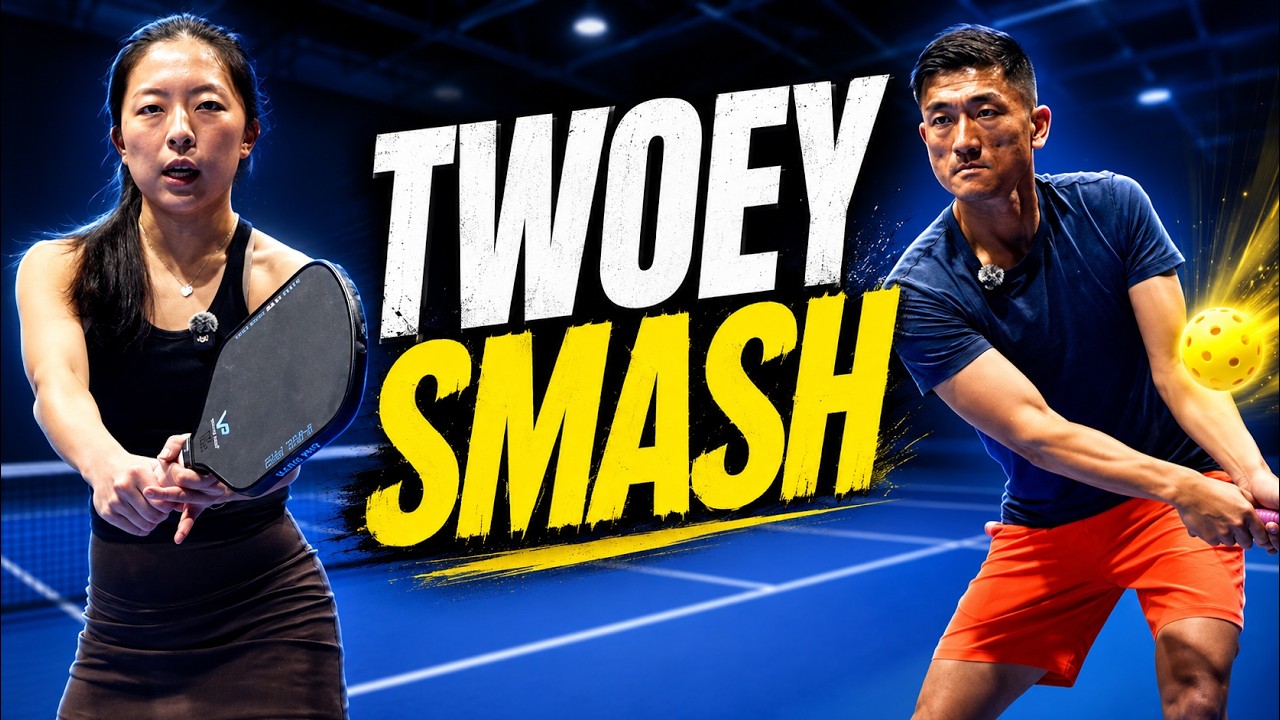
Ben Johns built his own backhand into arguably the best in the sport, and his approach to the shot shows how much of this comes down to repetition rather than raw talent.
Pickleball Two-Handed Backhand Volley: 6 Keys From a Pro
The two-handed backhand volley looks effortless when a pro hits it, then falls apart the moment you try. Here are six keys that fix the shot, starting with where the power actually comes from.
The Footwork Nobody Talks About
Direct answer: your feet decide the shot before your paddle ever touches the ball.
If you’re still moving when contact happens, the drop turns into a pop-up almost every time, which is exactly the kind of thing you can fix with solo footwork drills before you ever add a partner.
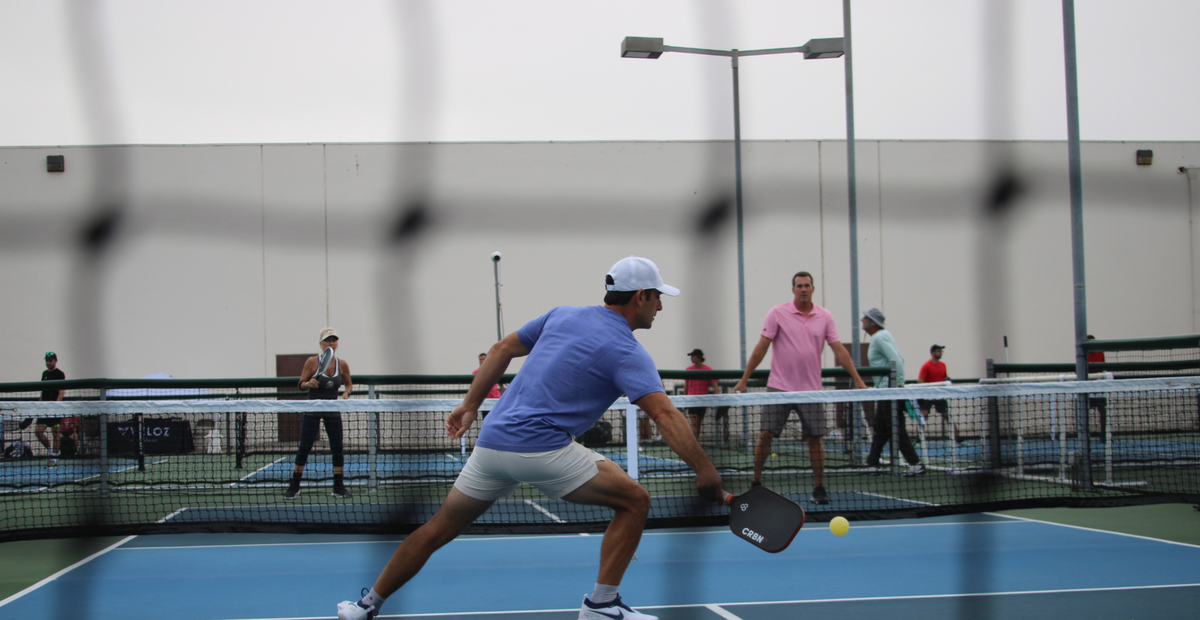
Split step as the ball leaves your opponent’s paddle, then pivot your outside foot toward the ball so your shoulders rotate into the shot instead of reaching across.
Reaching is the biggest mechanical flaw in a backhand third shot drop, usually a footwork problem wearing a grip problem’s clothes.
The same discipline shows up in how top teams handle doubles disruption at the net.
Every conversation about how to hit backhand third shot drop pickleball shots circles back to footwork, because no grip fixes bad positioning.
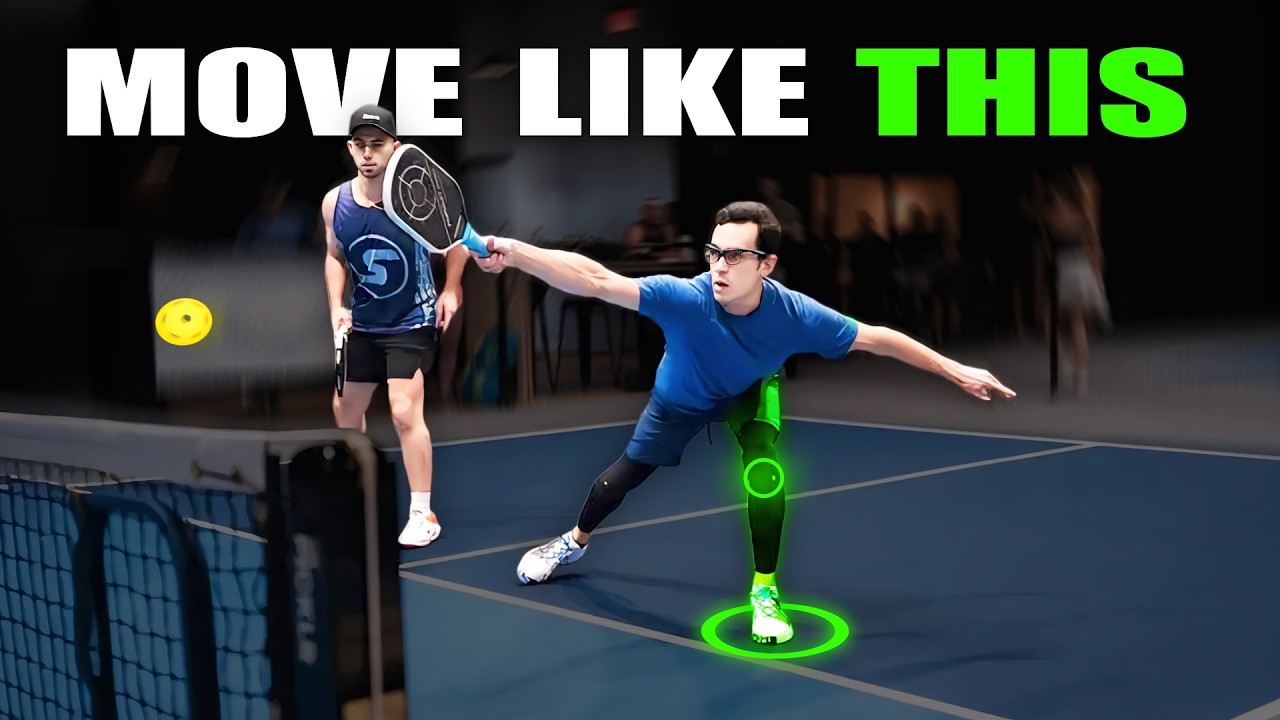
Pickleball Load Step: The Footwork Secret Pros Use
The pickleball load step is the foundation of modern footwork that separates high-level players from amateurs. Master this essential movement and transform your positioning, balance, and shot execution.
What Is the Transition Zone, Anyway?
The transition zone, sometimes called no man’s land, is the stretch of court between the baseline and the kitchen line.
It’s the danger zone where balls bounce awkwardly and you’re neither set up to drive nor close enough to dink.
A clean third shot drop gets you out of the transition zone and up to the kitchen, which is why changing the way you think about doubles usually starts with this one shot.
Get your court positioning locked in before you even worry about the shot itself. A perfect backhand means nothing if you’re standing in the wrong spot to hit it.
Master the Pickleball Transition Zone: Attack or Reset
The best players in the world aren’t just comfortable in the transition zone – they actively use it to their advantage
Drilling How To Hit Backhand Third Shot Drop Pickleball Players Actually Use
The direct answer: repetition beats theory, the same repetition behind pickleball’s hardest dinking drill.
You cannot think your way into a soft backhand drop, you have to groove it until your hand does it without your brain getting involved.
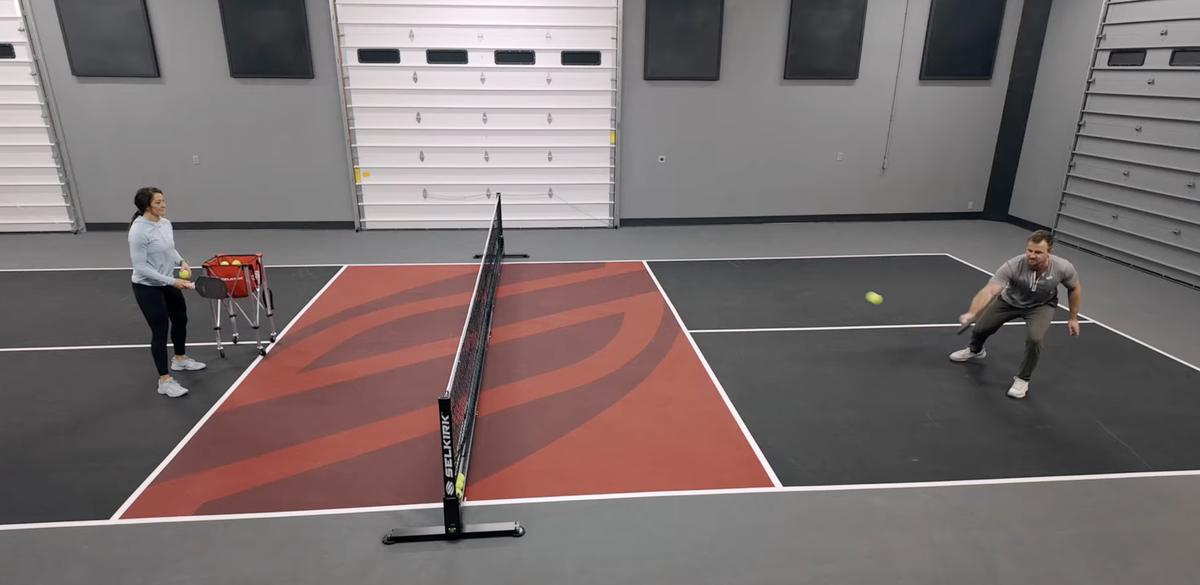
Start with a wall or a paddle machine. Feed yourself 20 backhand balls from a stationary spot, focusing only on paddle angle and soft hands.
Once automatic, add movement: have a partner feed from the baseline while you split step into focused reps near the kitchen line.
The goal isn’t pace, it’s control under fatigue.
How To Hit Backhand Third Shot Drop Pickleball With The Three-Ball Progression
Try this progression: three backhand balls fed to your body, three fed wide to your backhand side, three fed with pace off a partner’s drive.
That sequence forces your hands to adjust to speed and placement in real time, the same core stability work pays off elsewhere too.
Borrow another layer from the reset drill, since a backhand reset and a backhand drop use nearly identical hand mechanics, just from different court positions.
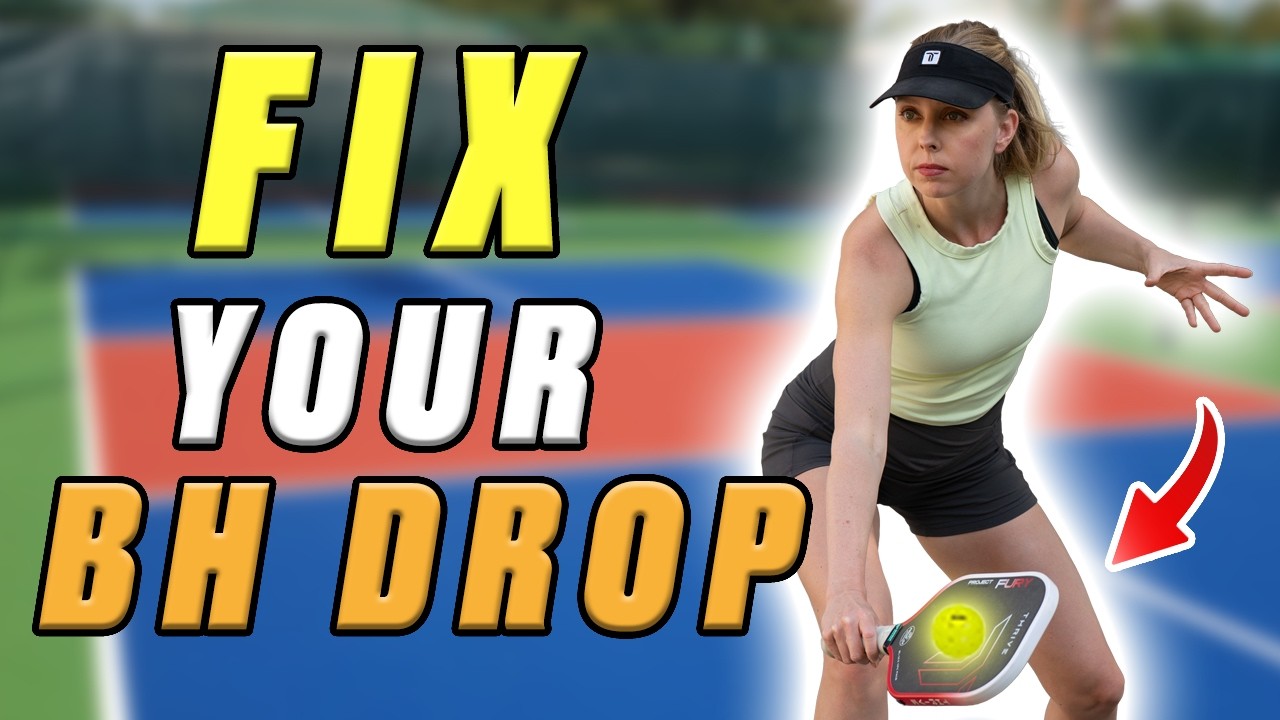
Master the Backhand Drop: A Step-by-Step Guide
The backhand drop is one of the most avoided shots in pickleball, but it doesn’t have to be. With the right progression and focus on fundamentals, you can build a reliable backhand drop that becomes a weapon instead of a weakness.the
When to Use the Backhand Drop Shot Instead of Your Forehand
Direct answer: use your backhand drop shot whenever running around the ball would pull you out of position, a doubles court coverage problem covered in our court coverage breakdown.
Running around your backhand feels safer, but it often leaves the middle of the court wide open.
Honestly, this is where a lot of intermediate players sabotage themselves.
They’ll sprint three feet for a forehand drop, then get caught flat footed when the return comes back to the space they just vacated, the same tradeoff that shows up on a rushed swing volley.
A slightly imperfect backhand drop shot that keeps you in position beats a perfect forehand drop that doesn’t.
5 Drop Shot Techniques to Elevate Your Pickleball Game
The drop shot is one of pickleball’s most essential skills, yet it’s also one of the most misunderstood.
The Data Behind the Drop
Pickleball’s growth isn’t slowing down.
According to the Sports & Fitness Industry Association’s 2026 participation report, pickleball remains the fastest growing sport in the country for the fifth straight year, and newer players often learn shot selection the hard way, a lesson covered in the lob doctor.
Biomechanics research backs this up.
A 2025 study through the Journal of Sports Sciences on two-handed versus one-handed backhand stability in racquet sports found two-handed strokes produced less paddle face rotation at contact, the same touch you build through the fridge and toaster drill.
DUPR’s own shot tracking data from 2026 shows third shot execution, forehand and backhand alike, is one of the clearest separators between 3.5 and 4.5 rated players.
Round out your game beyond this one shot.
Check your serve grip and your return of serve positioning, since a weak third shot is often just the symptom of a shaky first two shots. If your paddle is fighting you through all of this, it might be time to let your equipment do more of the work.
Pickleball Third Shot Drop by Skill Levels: 3.0 to 4.0 Guide
Third shot drop skill levels pickleball players need to master vary dramatically between 3.0 and 4.0 rated competitors. This guide breaks down exactly what to focus on, fix, and refine at each rating so you stop training the wrong things.
Key Takeaways
- Grip matters most. A continental grip with a slightly open paddle face is the safest foundation for a backhand third shot drop.
- Footwork comes first. Split step, pivot, and set your feet before the paddle ever moves.
- The two-handed backhand trades reach for stability, which is often a fair trade on a drop shot, especially when paired with return of serve positioning that keeps you from starting a point on your back foot.
- Drill with pressure and fatigue, not just clean reps, since matches never give you clean reps.
- Knowing how to hit backhand third shot drop pickleball shots well means you stop avoiding the shot and start using it as a weapon, the same shift covered in our third shot drop culture piece.
💡
Frequently Asked Questions
Is a backhand third shot drop harder than a forehand drop?
For most players, yes, mostly because the backhand side gets far less practice time. The mechanics aren’t more complex, but touch and confidence take longer to build since fewer reps naturally come to that side during casual play.
Should beginners use a one-handed or two-handed backhand for the third shot drop?
Beginners often find more consistency with a two-handed backhand since it adds stability and reduces paddle wobble, the same wobble that shows up in drills, drills, drills style repetition work. As touch and confidence improve, many players transition to a one-handed version for better reach and disguise.
How long does it take to build a reliable backhand third shot drop?
Most players see real improvement within four to six weeks of consistent, focused drilling, three or four short sessions a week, similar to the timeline behind weaponizing your serve. Consistency in practice matters more than the total number of hours logged.
What’s the biggest mistake players make on a backhand third shot drop?
Swinging instead of lifting. A drop shot needs a short, controlled motion with a slightly open paddle face, not a full swing, which sends the ball long or into the net. Dialing in your setup, right down to the bag and gear you bring to practice, removes one more excuse for skipping reps.
Can you use a backhand slice for a third shot drop?
Yes, and many advanced players prefer it. A slight slice adds backspin that helps the ball die quickly once it lands, useful against opponents who like to attack a ball with topspin still on it. Pair it with turning your dinks into winners once you’ve closed the distance to the kitchen.
Nguồn: thedinkpickleball