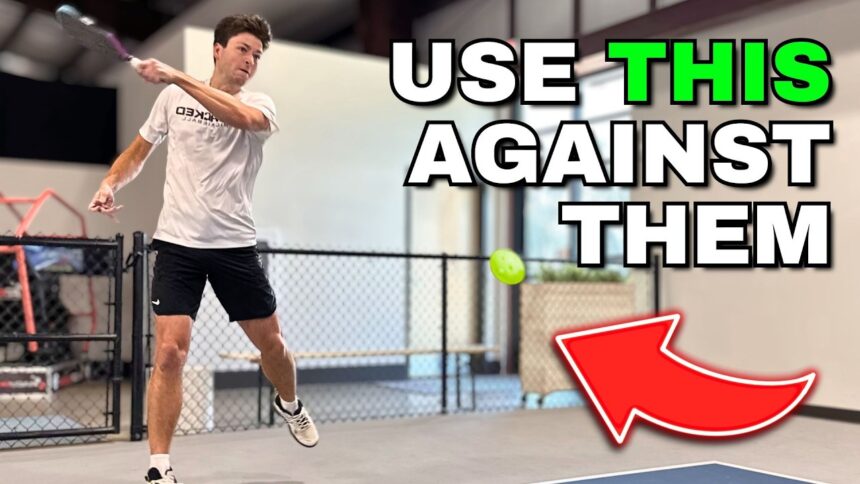
Every pickleball player type requires a different counter-strategy. Here are 5 specific breakdowns so you know exactly what to do against bangers, lobbers, dinkers, spinners, and walls.
Every pickleball player type you face requires a completely different approach, and most players never figure that out.
They show up with one game plan, get frustrated when it stops working, and blame their opponents instead of their strategy.
The good news is that once you know what each player type is doing and why, the counter becomes obvious.
These five breakdowns come straight from Cracked Pickleball on YouTube, where they systematically walk through how to dismantle each common opponent style.
Here is everything you need to know.
Love pickleball? Then you’ll love our free newsletter. We send the latest news, tips, and highlights for free each week.
Player Type 1: The Banger
A banger is someone who hits the ball as hard as possible, nearly every single shot.
These players are more common than ever now that paddles generate so much power, and a huge chunk of them come straight from tennis.
The mistake most players make against a banger is matching their energy. You see someone hitting hard, so you swing hard back. That is exactly what they want.
Here is what actually works against a banger:
- Keep your paddle out in front and use a compact motion, not a big swing
- Block or punch the ball back rather than adding more pace to an already fast ball
- Aim every response at their feet, not back up to their chest or paddle level
- Stay still and planted when they drive. Panicking and moving makes contact worse
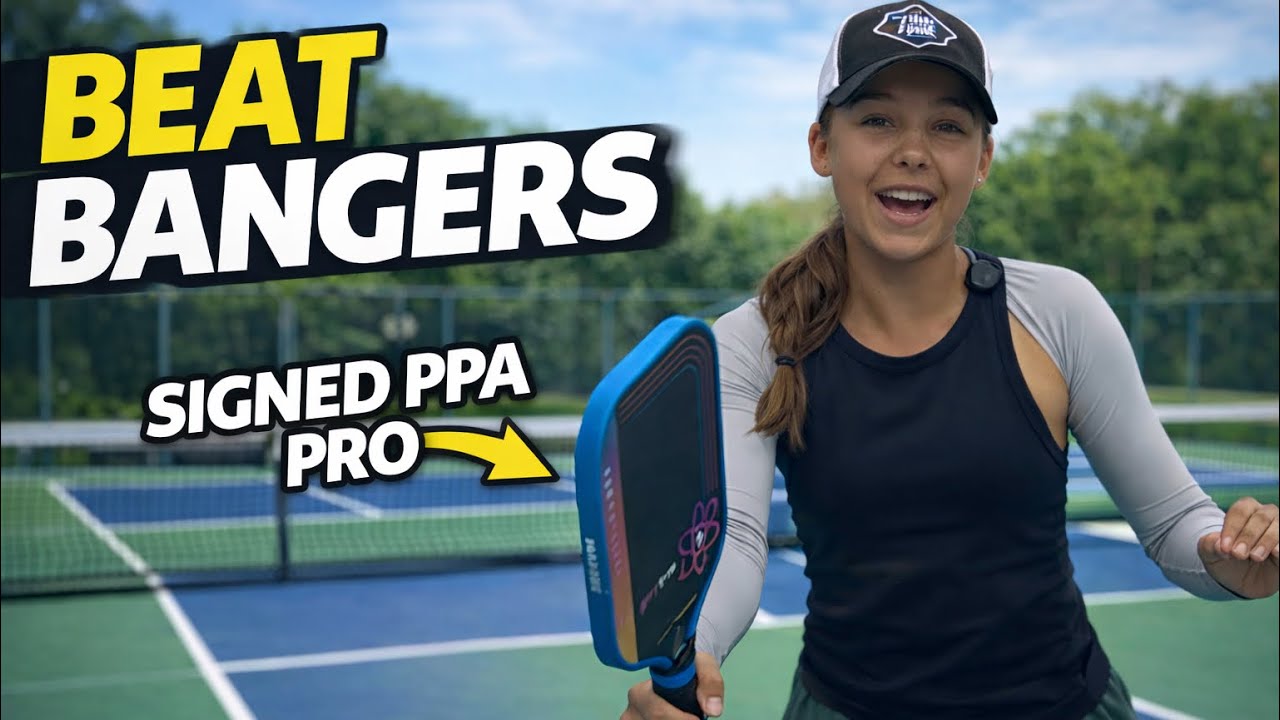
How to Beat Bangers in Pickleball Fast
Kelly Goodnow explains how blocking, patience, and smart positioning can turn aggressive “bangers” into beatable opponents
The physics here are simple. When someone hits a ball hard at you, that ball already has pace. You do not need to add any.
A compact block back toward their feet is almost always a better shot than a full swing.
If you want to go deeper on stopping hard hitters, these block volley fixes are built specifically for this problem.
Player Type 2: The Lobber
The lobber is the player who keeps floating the ball high over your head, forcing you into awkward overheads or backward sprints.
At intermediate and beginner levels, lobs are genuinely difficult to deal with, which is exactly why so many players use them.
The biggest mistake people make against lobbers is backpedaling.
Running straight backward with your weight on your heels is one of the least stable positions in all of pickleball.
The correct move is to turn your shoulder toward the opposite side of the court and shuffle backward instead of running backward.
That small change keeps your weight balanced, lets you track the ball with your eyes, and opens up two options: a controlled overhead or a forehand drive off the bounce at the baseline.
The Best Pickleball Players Aren’t Following the Rules Anymore
Modern pickleball isn’t won by coloring inside the lines. More and more, the most successful players are also the most creative.
A few more things to keep in mind against lobbers:
- Hit overheads at 70 to 80 percent power, not full rip. You just need it to go in.
- When in doubt, let the lob bounce. Resetting from the baseline is better than stretching for a bad overhead.
- In doubles, let your partner cover lobs that are over your head. They can cut diagonally and reach it far more efficiently than you can spinning around.
For more on executing the overhead cleanly once you get there, check out how to hit the overhead backhand smash in pickleball.
💡
Player Type 3: The Patient Dinker
The patient dinker is the exact opposite of a banger.
They sit at the kitchen line, hit everything soft and low, and wait for you to lose your patience and attack a ball you have no business attacking.
This player only needs you to make one impatient mistake. They will happily dink for fifteen shots in a row until you pop one up.
There are two non-negotiable rules when playing against a patient dinker:
- Never speed up a ball that is below your knee, whether out of the air or off the bounce. You can only hit it upward from that position, which sends it right to their chest for an easy put-away.
- Never speed up a ball when your weight is on your back foot. Even if the height is right, your timing will be off and the shot will pop up.
You should only attack if two things are true at the same time: the ball bounces above your knee AND your feet are planted and balanced.
If they never give you that ball, you have to create it. Move them around by hitting to the middle and then immediately switching to the outside.
Even one or two steps makes their dink worse.
You can also feed them balls they have to take out of the air around their shin or knee.
Taking a ball out of the air is harder than letting it bounce, so they will eventually pop one up.
Understanding why your forehand dink keeps getting attacked will also help you tighten up your own dinking so the patient dinker does not turn the tables on you.
How to Win Dinking Rallies in Pickleball
Knowing how to win dinking rallies in pickleball separates reactive players from players who actually control the point. This guide breaks down the placement targets, patience principles, and attack triggers that make dinking a genuine weapon.
Player Type 4: The Spinner
The spinner relies on slice, side spin, or heavy topspin to produce unpredictable bounces that throw off your timing.
Players who come from tennis tend to use heavy slice on their volleys without even thinking about it.
The counter to spin is simpler than most people think. Watch what your opponent’s paddle does at the moment of contact, not where the ball is going.
A big chop motion means heavy slice is coming. An exaggerated low-to-high swing means topspin.
Reading the paddle first gives you a half-second head start on adjusting your feet and angle.
Here is how to handle each type:
- Slice (backspin): The ball will bounce shorter and skid to one side. Stay low, read the direction of the spin, and respond with topspin. Their backspin becomes your topspin once it crosses the net, so aim higher over the net and roll it deep at their feet.
- Side spin: The ball will curve left or right after the bounce. Get low and shuffle toward the direction the ball is moving. Do not reach for it.
- Topspin: The ball will launch toward you aggressively after the bounce. Take one extra step back when you see topspin coming so the ball does not jam you. That space makes the read easy.
The universal rule across all spin types is to stay low, split step, and shuffle. Most spin problems are footwork problems in disguise.
For more on reading and responding to spin off the drive, this contact point fix for drive spin is worth studying.
If you want to build your own spin arsenal to use against these players, here is how to hit a slice in pickleball without losing control.
Develop a Spin Serve in Pickleball: 3 Essential Steps
The spin serve is one of the most devastating weapons in pickleball, capable of catching opponents off-guard at any level. Here’s how to conquer it in three essential steps.
Player Type 5: The Wall
The wall is arguably the hardest player to beat because they are not doing anything aggressive. They reset everything. They never miss.
They just sit in the transition zone or at the kitchen line and send every ball right back over the net like it costs them nothing.
Most players respond by hitting harder. That is the wrong move. A player who resets well is also great at letting out balls fly long.
So when you start cranking pace, they will just let your mistakes go and keep resetting your good shots.
The answer against the wall is placement over power. Specifically, stop hitting the same ball to the same spot.
Here is where to target:
- The paddle-side hip. Most reset players can handle balls to their backhand or forehand. The hip is awkward no matter what grip they use.
- The same-side shoulder. Feed them a high ball around shoulder height and tempt them to attack it. Resetting specialists are rarely comfortable attacking, so they will force an aggressive shot they are not practiced at.
- The sideline and middle in alternating patterns. Make them take one or two steps in any direction before they reset and their mechanics will start to break down.
If the wall refuses to give you anything to work with from the transition zone, fall back on the lob.
A player who is camped in the middle of the court and not moving is almost always vulnerable to a well-placed lob over their head.
Knowing how to counter different aggressive styles in pickleball will round out your ability to flip the script on players who think they have a formula against you.
How to Beat a Pickleball Opponent You’re Intimidated By
Instead of trying to out-power an opponent with superior skills, you’re going to out-think them.
How Do These Strategies Work Together?
The best players in any given rec session are not the ones with the most powerful drive or the most consistent dink.
They are the ones who recognize what their opponent is doing and adjust within the first few points.
If someone is bashing the ball, you block and aim low.
If someone is lobbing, you turn and shuffle. If someone is waiting for your impatience, you stay calm and move them around.
These are not complicated adjustments. They just require you to actually see who you are playing before defaulting to your usual game.
For a broader look at the habits that separate strong players from everyone else, these 7 pickleball habits show your level instantly.
You should also know that there are specific reasons 3.5 players stay stuck, and most of them come down to not reading opponents and adjusting.
One more thing worth mentioning.
If you are still popping balls up consistently no matter which player type you are facing, the issue is probably your contact point and reset mechanics.
Here are 3 fixes that stop you from popping the ball up.
The player who wins the most is the one who stops reacting emotionally and starts solving problems.
Pick one player type from this list, focus on countering it in your next few sessions, and then move to the next. That is how you build a complete game.
💡
Frequently Asked Questions
How do you beat a banger in pickleball without trying to out-hit them?
The key to beating a banger is to use their pace against them by blocking or punching the ball back rather than swinging hard. Keep your paddle compact and in front of you, stay planted, and aim every response at their feet. You do not need to add pace to a ball that already has pace.
What is the correct footwork for handling a lob in pickleball?
Turn your shoulder toward the opposite side of the court and shuffle backward instead of running straight back. This keeps your weight balanced and lets you track the ball much more consistently than backpedaling does. If the lob is too deep for an overhead, this footwork also sets you up to hit a clean forehand drive off the bounce.
How do you beat a patient dinker who never misses?
Only attack balls that are bouncing above your knee with your feet planted and balanced. If they never give you that ball, move them around by alternating between the middle and outside of the court, or feed them balls they have to take out of the air below their knee. Patience beats patience, so settle in for a longer rally instead of forcing a speed up too early.
How do you read and counter spin in pickleball?
Watch your opponent’s paddle at the moment of contact, not the ball in flight. A chop motion means slice is coming and you should respond with topspin aimed deep. A heavy topspin drive means you should take a step back so the ball does not jam you after the bounce.
What is the best way to break down a wall player in pickleball?
Stop trying to hit harder and start targeting their paddle-side hip and shoulder instead. Make them move one or two steps left or right before they reset and their mechanics will get sloppy. If nothing works, lob them repeatedly since wall players who park in the transition zone are almost always vulnerable overhead.
Nguồn: thedinkpickleball