Most players are leaving easy points on the table with a short, arm-dependent pickleball serve. Coach Michael Oaksen’s 3-step system fixes your depth, your toss, and your follow-through fast.
Your pickleball serve is the one shot in the entire game where you have complete control.
You control the toss, the contact point, and the follow-through. Nobody is rushing you.
And yet most players treat it like an afterthought. They stand upright, flip the ball with their arm, and hope it clears the net.
Then they wonder why their opponent is running through an aggressive return and taking over the point immediately.
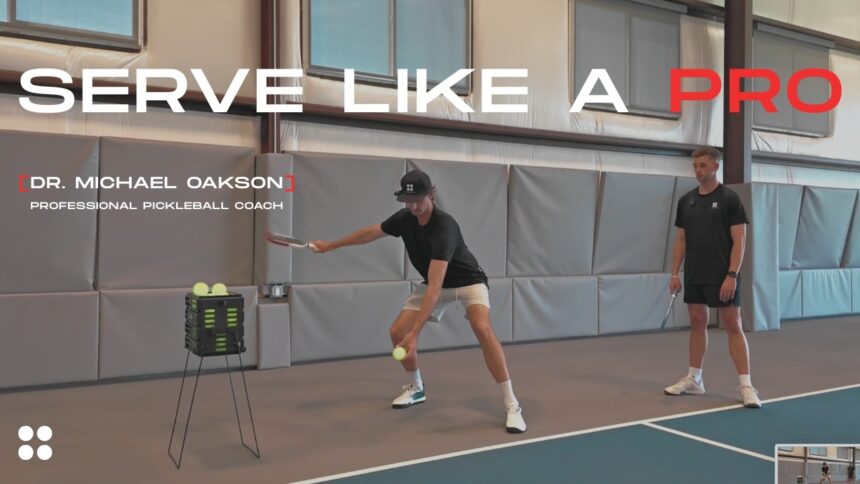
Coach Dr. Michael Oaksen has a fix. This breakdown comes from Holbrook Pickleball on YouTube, where Oaksen walks through his three-step serve system covering technique, strategy, and drills you can run in your next session.
Love pickleball? Then you’ll love our free newsletter. We send the latest news, tips, and highlights for free each week.
Why the Serve Matters More Than You Think
Here’s something most recreational players get wrong: the serve is not about winning the point outright.
At any level worth playing at, that almost never happens.
The serve is about controlling the quality of your third shot. A deep serve pushes your opponent back.
A returner who is jammed against the baseline cannot run through the ball and blast an aggressive return that then gives you a nightmare third shot.
Pickleball and the Pursuit of Flow
Pickleball gives people movement, competition, connection, improvement, and joy. But more than anything, it gives them a place to put their full attention.
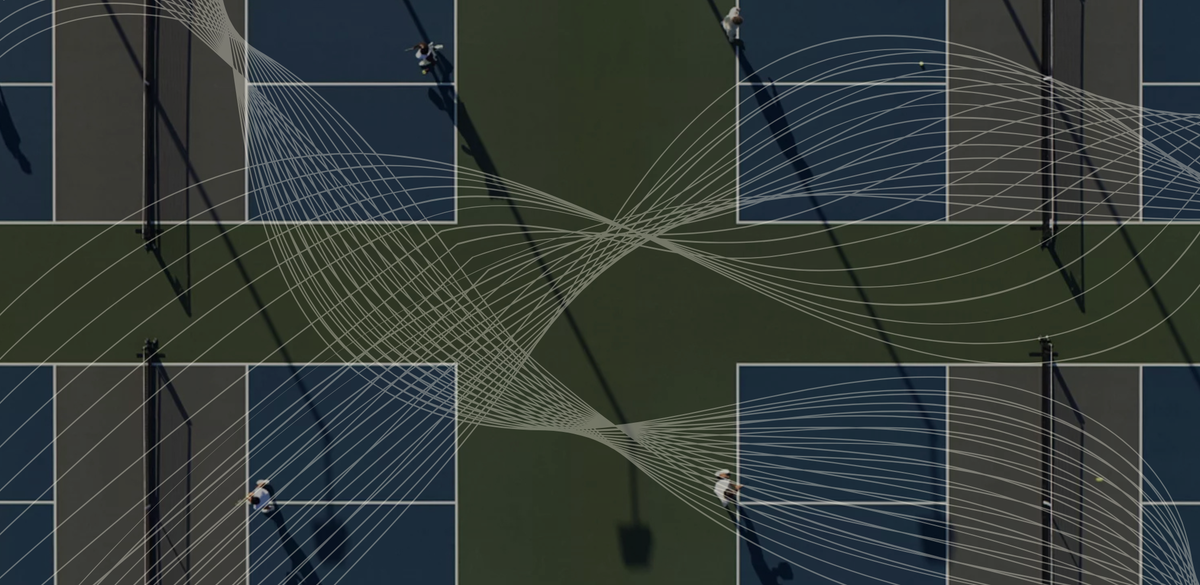
When your pickleball serve lands in the middle third of the court, your opponent steps forward and drives through it.
Now your third shot drop or drive is coming off a ball that has pace, angle, and attitude.
That’s a hard spot to be in before the rally even starts.
According to Oaksen, the target is simple: the last quarter of the court.
Think of it as the back third. If your serve lands there consistently, you’ve already done your job.
Step 1: Use Your Legs, Not Your Arm
The single biggest flaw Oaksen sees at every level below 5.0 is an arm-dependent serve.
Players stand upright, lock their lower body in place, and swing entirely from the shoulder.
This generates weak power and wears you down over the course of a match or tournament day.
The fix is to load your legs before every serve. Here’s how Oaksen breaks down the footwork:
- Start with your feet somewhere between fully open and fully closed stance, splitting the difference
- Shrink your height by roughly half, like a partial squat
- Shift 60 to 70 percent of your weight onto your back leg
- Drive forward through the ball using that leg to create propulsion
The reason a fully closed stance causes problems is that you over-rotate and lose the clean forward drive.
The reason a fully open stance fails is that you have nothing to push off of.
The middle position lets you load back and transfer forward without spinning off the ball. Your arm follows. It is not leading.
One key detail Oaksen emphasizes: stay low through contact. Your body wants to pop up as you swing.
Resist that. Imagine balancing something on your head as you make contact. The height stays stable.
Getting low the right way is one of the most underrated skills in the game, and it applies directly to the serve.
💡
Step 2: The Toss Determines Everything
Most pickleball serve breakdowns skip the toss entirely. Oaksen doesn’t, and for good reason. A bad toss makes good serve technique impossible.
If the toss is too close to your body, you get jammed on contact. Your elbow tucks in, your swing path gets cramped, and the ball drops short.
You can have perfect footwork and a great follow-through, but a tight toss wrecks all of it.
Oaksen’s landmark for the toss is specific: in front of your front knee. For a right-handed player, that’s in front of the left knee. Not behind it.
Not past it. Right there in that window.
If you’re tossing behind that knee, you’re already jammed. If you’re tossing well past it, you’re overreaching and losing control.
The contact point and the toss are the same decision.
Where you toss is where you contact. So toss it where you can extend your arm comfortably and swing through space.
Think of it like a forehand drive. You want space between your body and the ball at contact. The serve is no different.
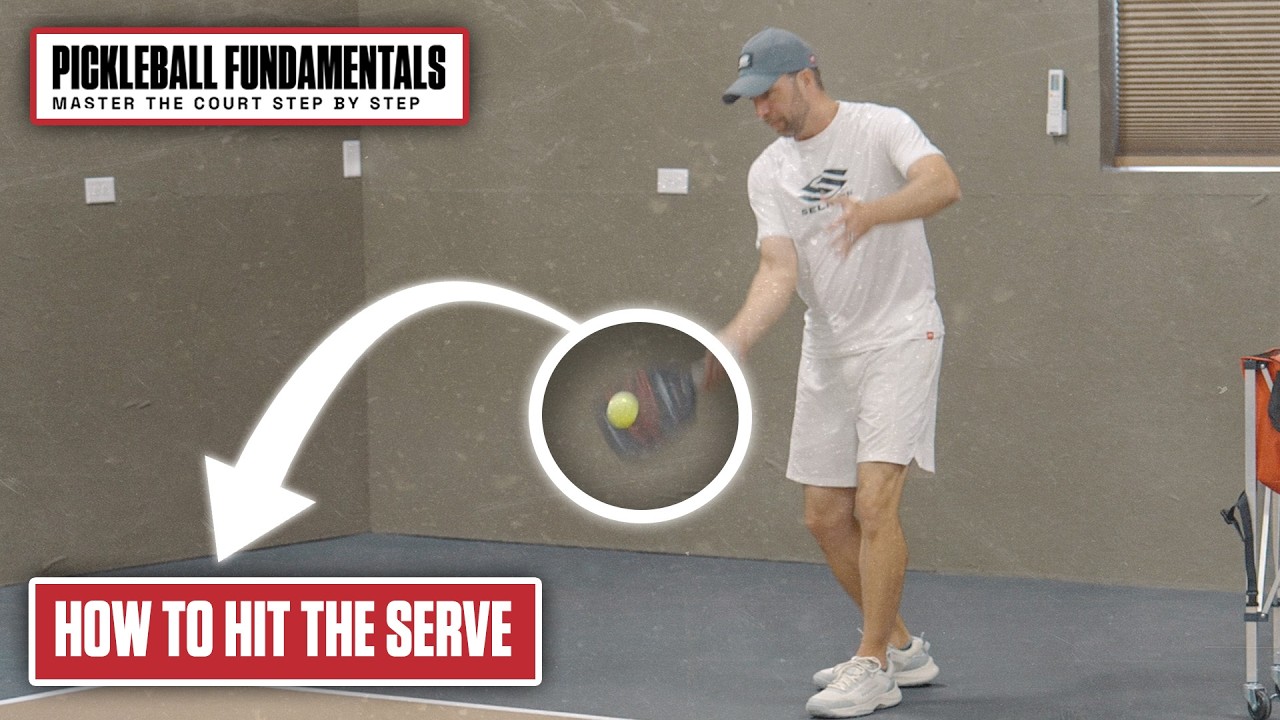
Perfect the Pickleball Serve: Rules, Technique & Strategy
A great pickleball serve is about more than just getting the ball over the net—it’s about applying pressure from the very first shot. Master the official rules, stance, and strategy to win more points.
Step 3: Follow Through to Your Shoulder
You’ve loaded your legs. You’ve tossed into the right window. Now the follow-through determines whether that depth is consistent or random.
Oaksen describes the tension between two failure patterns:
- Too much extension with no lift: the ball goes flat and short, clipping the net or landing in the transition zone
- Too much lift with no extension: the ball floats high and gives your opponent an easy, aggressive return
The shoulder is where these two forces meet.
When you finish your swing by bringing the paddle up to your shoulder, you’re blending extension and lift in one connected motion.
That’s why “follow through to the shoulder” is actually great advice, even if most people say it without knowing why it works.
Here’s how to self-correct in real time. If your pickleball serve keeps landing short even with a shoulder finish, you lifted too early. Tell yourself to extend a beat longer before coming up.
If the ball is floating high and inviting attack, you’re finishing too high without enough forward drive. Push through the ball first, then lift.
The three-step framework makes this easy to troubleshoot. You always have one thing to fix on the next ball.
Fixing serve inconsistency gets much simpler when your serve technique has three clear checkpoints.
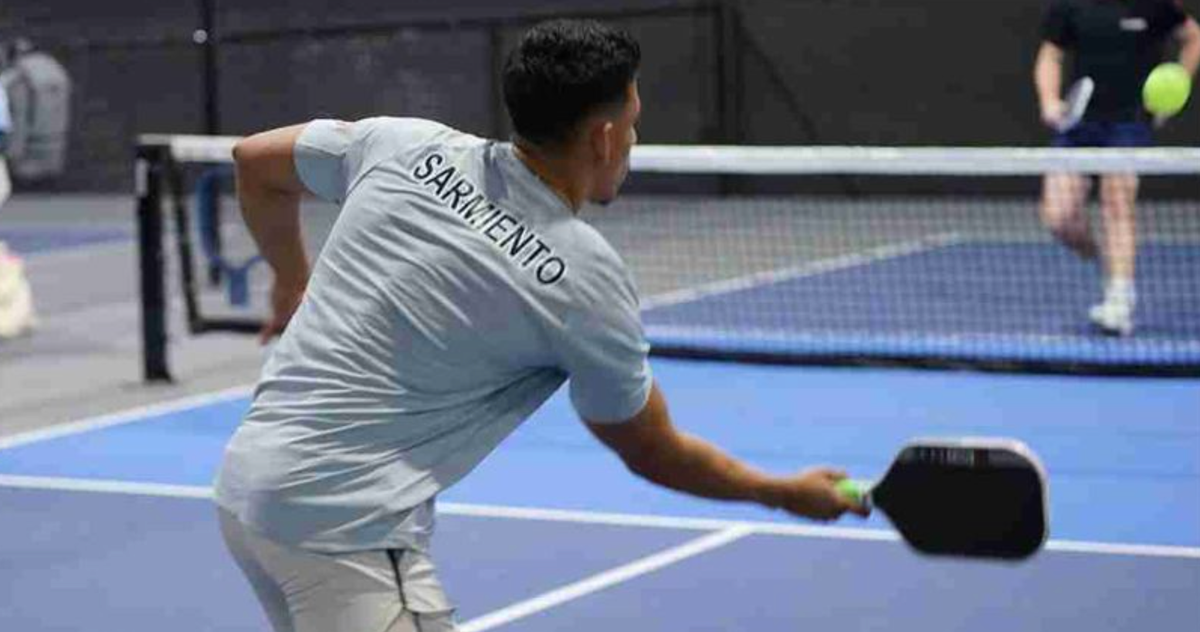
How to Hit a Forehand in Pickleball: Grip & Swing
Knowing how to hit a forehand in pickleball is the foundation for every aggressive shot in your arsenal. Master the grip, swing path, and follow-through and you’ll own the baseline.
What Spots Should You Actually Target?
Once you’ve built a consistent, deep serve, Oaksen lays out three strategic targets. Master depth first. Then add direction.
Should you always start with a body serve?
Yes, and here’s the reason. A body serve is your data collection tool.
You’re serving directly at your opponent or as close to their hip as possible, and then watching exactly how they respond.
If they take a straight approach and crowd the ball, their paddle has nowhere to go. It lifts.
You can read that before they even hit the shot, and you know the return is going to be weak.
Keep going there.
If they move well and create space, you have useful information. Now you adjust. But start here in every competitive match before you start trying to hit corners.
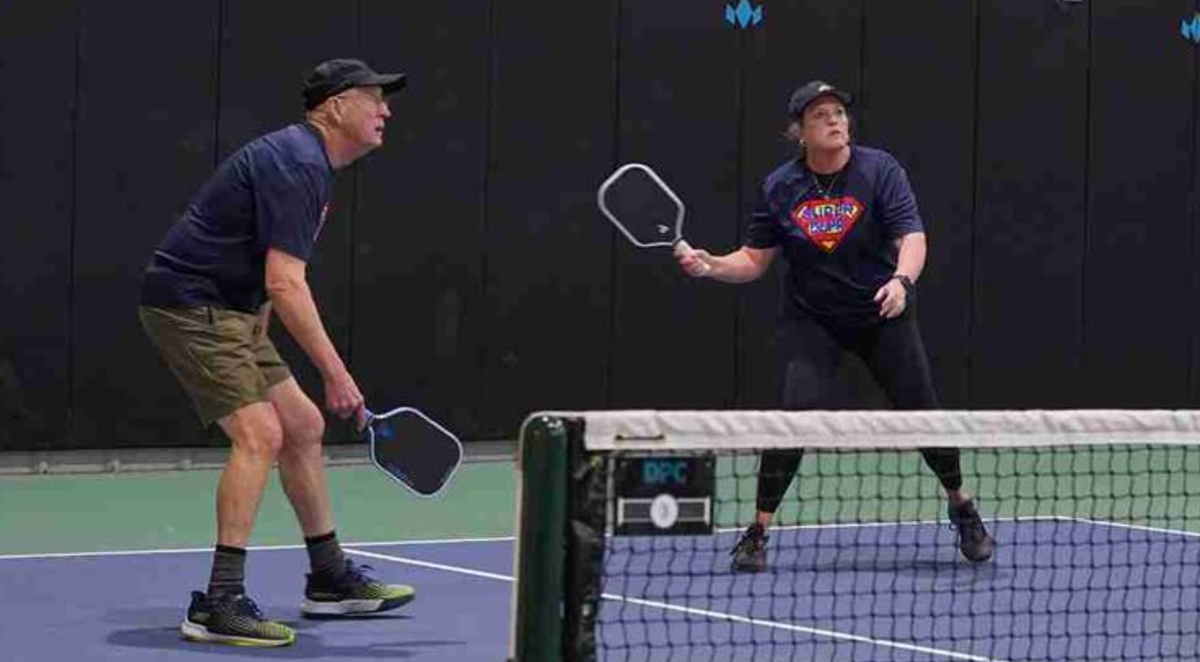
Pickleball Return of Serve for Seniors: Save Your Legs
Suffer from heavy legs during late pickleball sets? Discover the simple return-of-serve footwork adjustment designed for players 50+. Eliminate heavy braking, protect your knees, and arrive at the kitchen line balanced and ready without outrunning younger opponents.
When does a wide serve make sense?
The wide serve is especially useful against a stacking team. If your opponent needs to travel from one side of the court to the other after returning, serving wide forces them to cover that ground while also executing a quality return.
Even at the 5.0 level, covering that distance at full sprint creates mistakes. Serve wide to the corner, drive the next ball directly at the player in motion. That combination creates real pressure.
The key is depth plus corner. Depth alone is not enough. You need both. There are specific serve patterns that make this combination automatic with enough reps.
What is the T-serve and when should you use it?
The T-serve (also called the inside serve) targets the center line, the spot where the service box lines form a T shape. The goal is to make your opponent hit a backhand return from an uncomfortable position.
The important geometry point here: the distance from the server to the inside of the court is shorter than the distance to the wide corner. That means you take pace off this serve without sacrificing depth. Less pace, same depth.
This prevents the ball from sailing long while still pushing the returner onto their backhand.
Use it when your opponent is not stacking and you want to deny a strong forehand return.
Combining multiple serve targets within a match makes you much harder to read and much harder to return against.
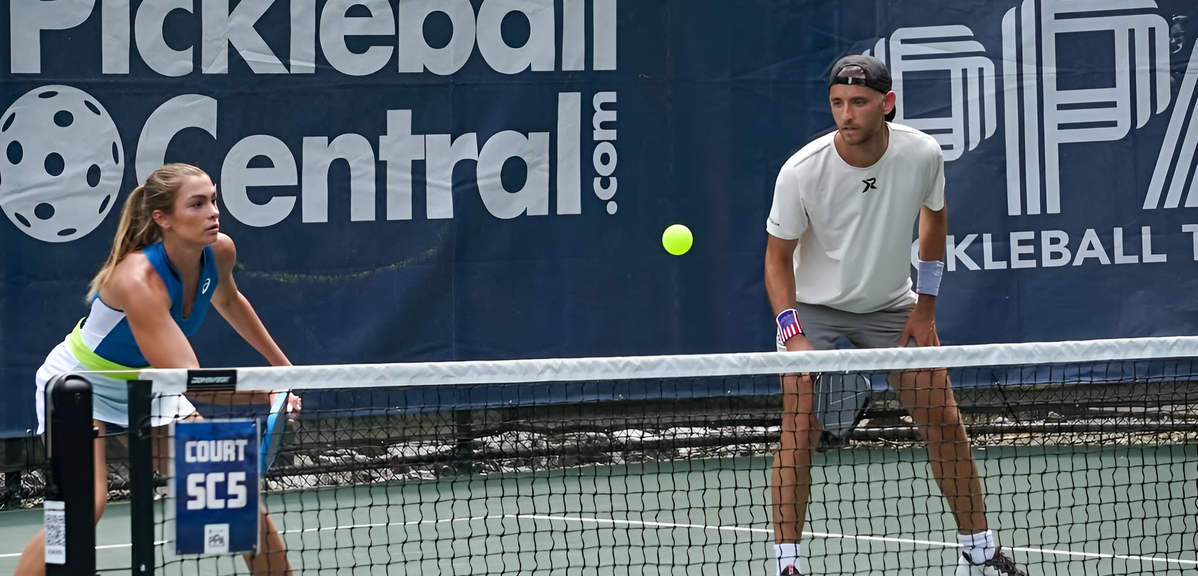
Attack the Right Spots: Win More Points in Pickleball
You can’t go to the same spot every single time you go on offense – eventually, your opponent will catch on. And make you pay for it.
The Drills That Actually Build a Better Serve
Oaksen is direct about this: you cannot just go out and practice serving and expect to improve.
You have to practice the individual elements of the serve, then combine them.
Here’s his progression:
- Weight shift drill: Get into your serve stance and simply practice shifting 70 percent of your weight to your back leg, then returning to neutral. Do this until it feels automatic. The stance and the load need to be identical every single time before you ever add a swing.
- Rock and toss drill: Add the toss. Rock back onto your back leg, toss the ball, and catch it. Look at where you caught it. Is it in front of your front knee? Is your arm extended comfortably? Adjust the toss until the catch feels effortless.
- Segmented serve drill: Rock back, toss, let the ball bounce, then serve off the bounce. This broken-down version lets you focus on each piece separately before combining them into one fluid motion.
- Cone target drill: Place cones in the back quarter of the court and serve to them. Don’t stop a session until you’ve hit 20 consecutive serves past the cones. This builds the depth consistency that makes everything else work.
The bounce variation is a legal serve as long as you’re behind the baseline, and it’s a fantastic training tool.
Once you’re comfortable, take the bounce out and swing directly from the toss.
If you want to see how this fits into a broader practice structure, a full beginner training routine gives you a complete framework to build around.
And if you’re drilling at a higher level, the drills pros use in every practice include serve work as a non-negotiable starting point.
The serve connects directly to your third shot quality. A deep serve creates a harder return. A harder return becomes a more attackable ball for you.
That chain reaction starts on the very first shot. Knowing what to do with your third shot after a strong serve is the next piece of the puzzle.
And if your serve is getting attacked, the depth and placement principles here are exactly what you need to fix first.
The serve is the only shot in pickleball where your opponent cannot rush you. Use that. Build it with intention.
💡
Frequently Asked Questions
What is the most important thing about a pickleball serve?
Depth is the most important factor in a pickleball serve. A ball landing in the back quarter of the court prevents your opponent from stepping into an aggressive return and forces them to hit from a more defensive position. Everything else, including spin and placement, comes after you’ve mastered consistent depth.
Why does my pickleball serve keep landing short?
A short serve usually comes from lifting the paddle too early before you’ve extended through the ball. Try extending your swing path forward longer before bringing the paddle up to your shoulder finish. Also check your toss: if it’s too close to your body, you’re getting jammed and losing extension on contact.
What is the T-serve in pickleball?
The T-serve targets the center line where the two service box lines meet, forming a T shape. It’s designed to push the returner onto their backhand and is hit with less pace than a wide serve because the distance from server to that target is shorter. The goal is to maintain full depth while denying your opponent a comfortable forehand return.
How much leg drive should I use on a pickleball serve?
You should load roughly 60 to 70 percent of your weight onto your back leg before each serve. Coach Michael Oaksen recommends shrinking your height by about half in a partial squat, then driving that weight forward through contact. When done correctly, your arm should feel like it’s doing very little of the actual work.
How do I practice a consistent pickleball serve?
Start by drilling the three elements separately: weight transfer, toss placement, and follow-through. Then combine them using a segmented serve practice where you let the ball bounce before swinging. Set cones in the back quarter of the court and don’t end a session until you’ve hit 20 consecutive serves past them.
Nguồn: thedinkpickleball