The most common pickleball mistakes beginners make can derail your progress before you ever find your groove. Here’s what’s going wrong and exactly how to fix it.
The common pickleball mistakes beginners make aren’t random. They follow a pattern, and once you know it, you can’t unsee it.
Most new players build bad habits in the first month that take a year to undo. The good news? Every mistake on this list has a clear, specific fix. Let’s get into it.
Love pickleball? Then you’ll love our free newsletter. We send the latest news, tips, and highlights for free each week.
Common Pickleball Mistakes Beginners Make: Staying Glued to the Baseline
Staying at the baseline is the most common pickleball mistake beginners make, and it costs points every single rally.
New players treat pickleball like tennis, which makes sense, because the court feels familiar. But in pickleball, the kitchen line is where points are won and lost.
If you’re hanging back, you’re handing your opponents an angle advantage, a height advantage, and the entire offensive half of the rally.
The fix is simple to explain, harder to commit to. After your return of serve, move forward immediately.
Your job is to close the gap between you and the non-volley zone line. Don’t wait to see where the ball lands.
Start moving the moment your return leaves your paddle.
These beginner fundamentals explain exactly why kitchen line positioning changes everything about how you score.
Think of the baseline as the place you start a point, not where you play it. Your opponents want you stuck back there. Every step forward is pressure reclaimed.
Court coverage in doubles gets much clearer once you commit to advancing.
Swinging Too Hard: The Power Trap That Kills Beginners
This one hits especially hard for former tennis players. You have a big swing, muscle memory, and the ball is right there, so you crush it.
Then it sails wide, or clears the back fence by two feet. Welcome to the most common shot error beginners repeat endlessly.
Pickleball is a control sport. The court is small (20 by 44 feet), the ball is slow, and the margin for error on a power shot is razor thin.
According to USA Pickleball’s player development resources, ball control and shot placement are the foundational skills the sport rewards, not raw pace.
The fix: practice hitting at 60 percent power. It will feel wrong. Your shots will land in. Start with drives and returns, and give yourself permission to be boring.
Power shots have a place, but only once you have the control to set them up. You can practice solo to groove a compact swing before bringing it into live play.
💡
Why Is the Third-Shot Drop So Hard for Beginners?
The third-shot drop is the most ignored skill among players working through the common pickleball mistakes beginners encounter.
Most new players drive every third shot because dropping feels passive. It isn’t. It’s a reset mechanism that neutralizes your opponents’ position advantage.
Here’s how it works. After the serve and return (the two-bounce rule requires both to bounce), the serving team hits the third shot.
If they drive it hard, the returners already at the kitchen line smash it back.
The third-shot drop takes the pace off, forces a high bounce near the net, and buys the serving team time to advance. That’s the design of the shot.
Research published in the Journal of Sports Sciences (2025) confirms that motor skill acquisition in racket sports accelerates significantly with deliberate, isolated repetition of single shot patterns, which is exactly what the third-shot drop requires.
Practice it with the figure-8 drill until the muscle memory locks in. More on third-shot decision-making.
Third Shot Drop Crash Course
The third shot drop carries a lot of weight in the game of pickleball. It’s the key to neutralizing the returning team’s advantage and advancing towards the NVZ.
Mistake #3: Serving Into the Net or Way Out of Bounds
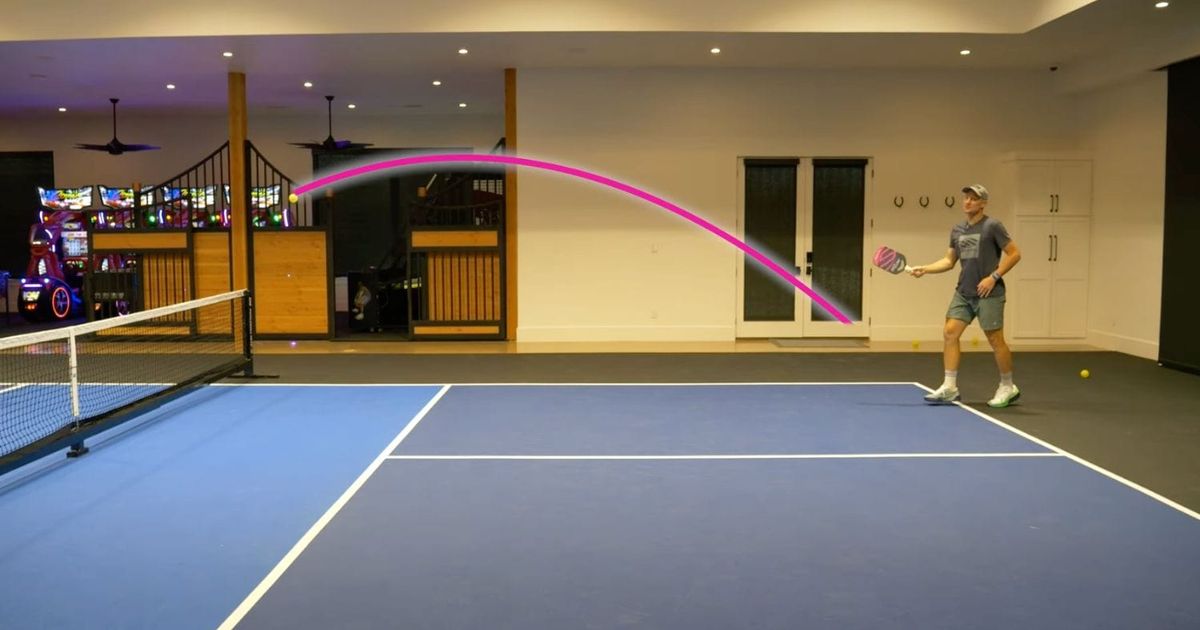
Serve errors are free points for your opponent, and beginners give away a shocking number of them.
The serve must clear the kitchen and land in the diagonal service box. That’s it. It’s not supposed to be aggressive. It’s supposed to start the point.
The most common serve fault: hitting downward on the ball, like a tennis serve, instead of upward.
USA Pickleball rules require an underhand serve with paddle contact below the waist and the paddle head below the wrist at contact, per the USA Pickleball Official Rulebook (2025).
Violating any of those three conditions is an immediate fault.
The fix: slow your swing down and focus on a low-to-high paddle path. Aim for the middle-to-back of the service box, not the lines.
Advanced serve placement is a later conversation.
Consistency is the only goal at first. Your return game improves naturally once your serve stops costing you free points.
Beginner Pickleball Mistakes That Are Costing You Points
Most beginner pickleball mistakes come down to a handful of repeatable patterns, bad positioning, the wrong shot at the wrong time, and unforced errors you can fix this week. This guide breaks down the most common ones and gives you practical corrections to start winning more points immediately.
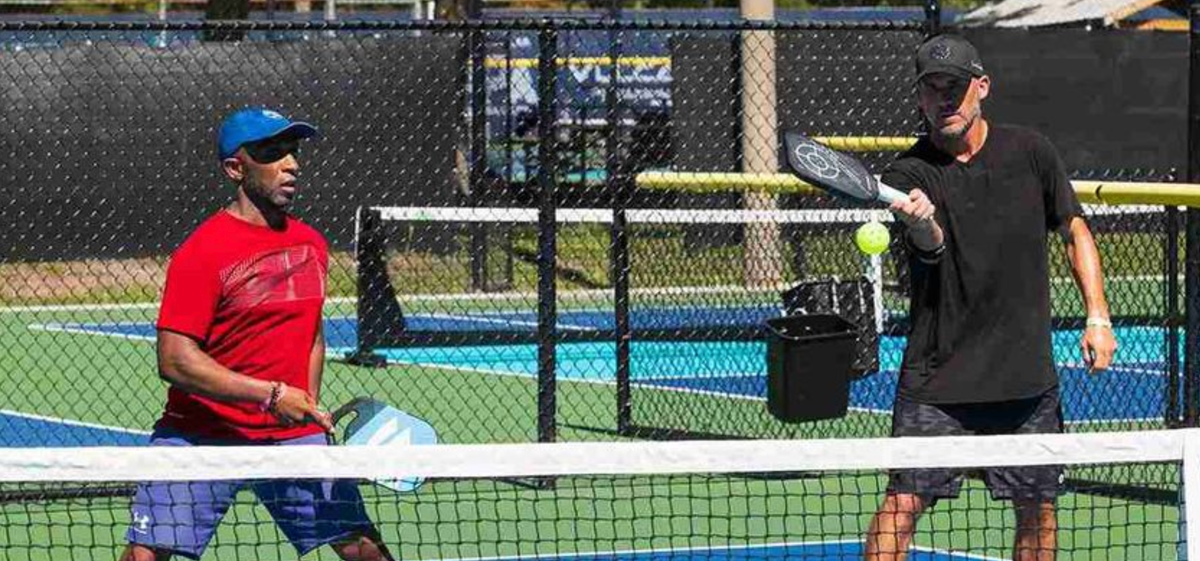
The Kitchen Rule: What Common Pickleball Mistakes Beginners Make Near the Net
The non-volley zone, better known as the kitchen, is the seven-foot area on each side of the net where you cannot volley the ball.
Volleying means hitting before the bounce. Step into the kitchen to hit a volley, and that’s a fault, full stop.
Even if your momentum carries you in after a volley you hit from outside it, that’s still a fault.
This is the rule that most frequently surprises new players mid-rally. You lunge at a ball near the net, your front foot clips the kitchen line, and the point is over.
The kitchen line fault is one of the most common in recreational play. Awareness alone won’t fix it. You need footwork habits that keep you disciplined near the net.
The key distinction beginners miss: you can enter the kitchen anytime, as long as you don’t volley from it.
Once the ball bounces in the kitchen, go ahead and step in to return it.
The rule is specifically about volleying. JW Johnson’s dinking positioning is a masterclass in how the pros manage the kitchen edge without ever fouling.
Pickleball Rules Explained for Beginners (2026)
Pickleball rules can feel overwhelming at first, but they break down into a handful of core concepts that click fast. This guide covers every rule you need to know to step on the court with confidence in 2026.
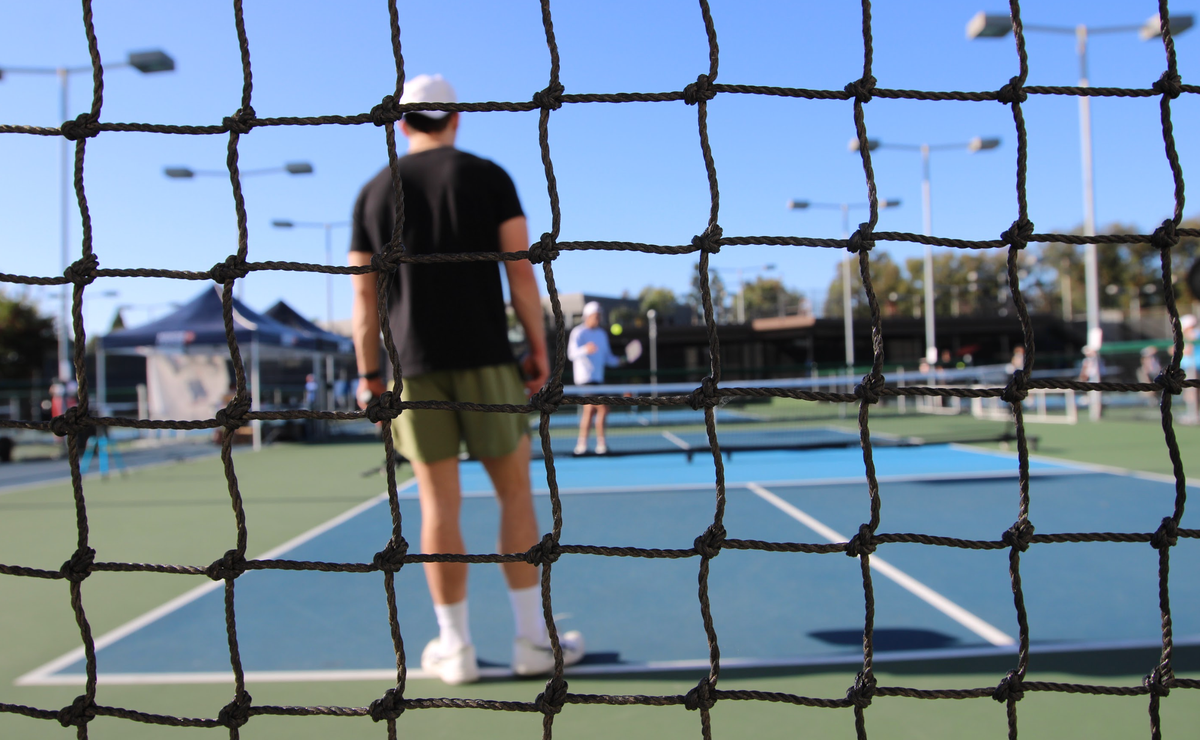
Poor footwork is the root cause hiding underneath every other beginner pickleball error on this list.
Beginners stand flat-footed, reach for balls instead of moving to them, and end up making off-balance contact that sprays everywhere.
The split step is the most important footwork pattern beginners skip.
Right as your opponent is about to contact the ball, you hop into a small athletic stance: feet wider than shoulders, weight on the balls of your feet, knees slightly bent.
This prepares you to move in any direction instantly.
A study in the British Journal of Sports Medicine (2025) found that anticipatory positioning cut reaction time by 18 percent in racket sport athletes compared to static starting positions.
Better footwork means better shots, every time.
Two drills that fix beginner footwork fast: the backhand volley approach drill and the figure-8 drill.
Run both twice a week and your court movement will look completely different inside a month.
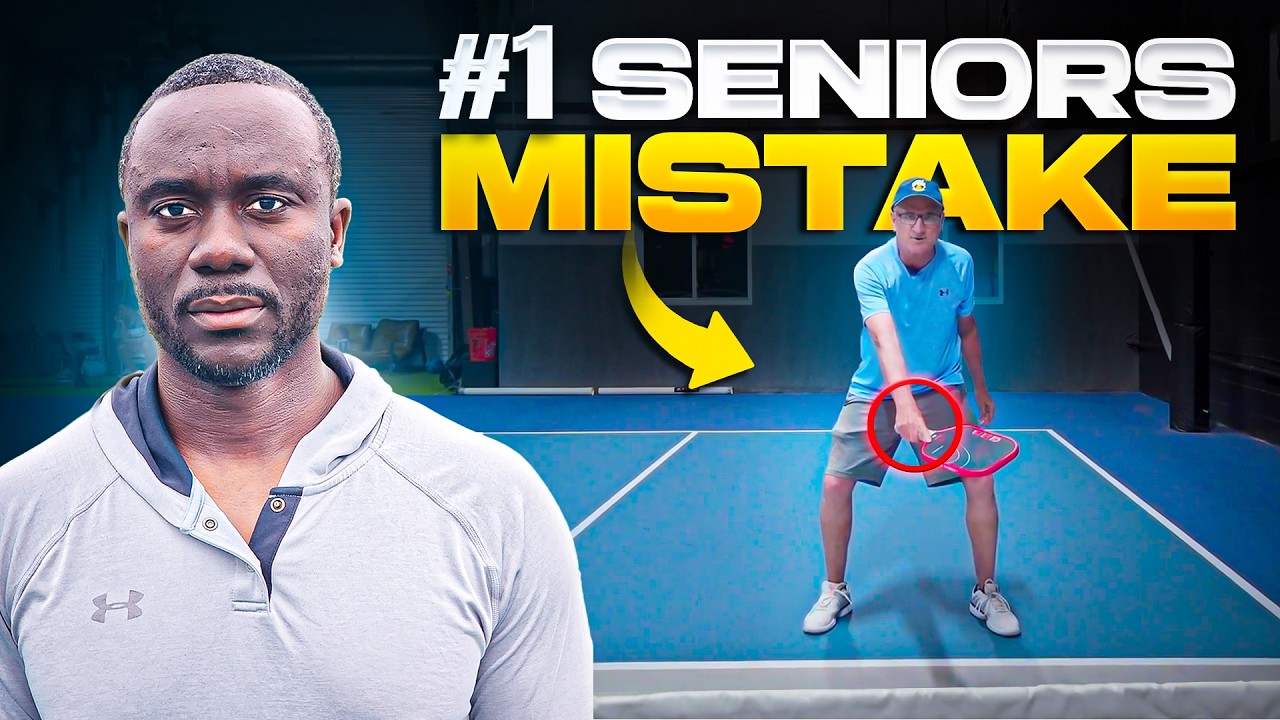
4 Essential Footwork Tips Every Senior Pickleball Player Must Master
Smarter positioning and simple footwork adjustments can help senior pickleball players improve performance without relying on speed
Mistake #5: Treating Every Ball Like a Chance to Win the Point
Here’s the mindset trap most beginners fall into: every shot feels like an opportunity. A short ball appears, you go for the put-away.
An overhead arrives, you swing for the fences. And then you miss it by six inches, your partner stares at the floor, and you wonder what happened.
Pickleball is a patience game. The point rarely ends on shot three.
Research from PubMed/NIH (2025) analyzing rally length in recreational pickleball shows that most winning points in amateur play come after five or more shots.
The team that makes fewer unforced errors wins more often than the team with the most aggressive shots.
The fix: change your internal metric. Instead of “did I hit a winner,” ask yourself “did I keep the ball in and force them to hit another shot?”
That shift is what separates a 3.0 player from a 3.5. Always making the routine shot is genuinely the skill to develop first.
Doubles strategy gets clearer once you stop gambling on every rally.
How to Win Dinking Rallies in Pickleball
Knowing how to win dinking rallies in pickleball separates reactive players from players who actually control the point. This guide breaks down the placement targets, patience principles, and attack triggers that make dinking a genuine weapon.
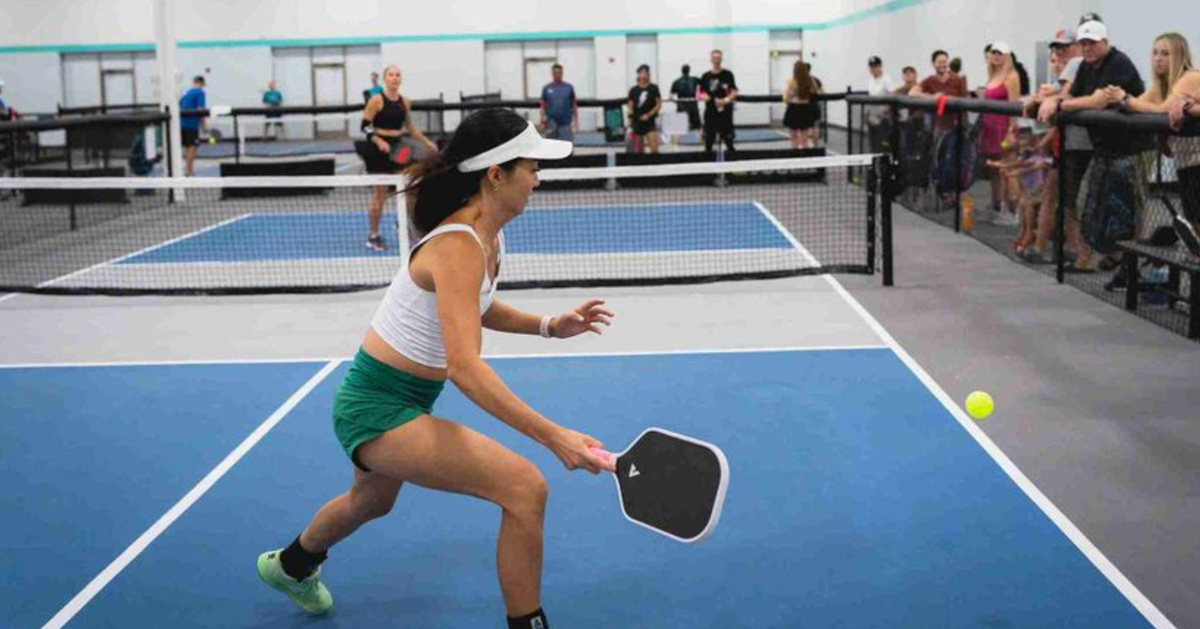
Mistake #6: Ignoring the Dink and Relying on Drives
The dink is pickleball’s signature shot, and beginners almost universally avoid it.
A dink is a soft, controlled shot hit from near the kitchen that arcs into the opponent’s non-volley zone.
It’s slow. It’s deliberate. And it’s devastating when done well.
Why do beginners skip it? It doesn’t feel like winning.
But when you dink consistently, you force your opponent into a patient, low-margin rally where they eventually crack.
The slice dink adds another layer to what looks like a simple exchange. Pickleball deception tips build naturally on top of a reliable dink game.
The practical fix is pickleball’s hardest dinking drill: cross-court dinking with a partner, keeping every ball below net tape height and inside the kitchen.
Ten minutes per session. It’s boring. It works. And once you trust your dink, you’ll know exactly when to reset instead of drive.
Pickleball Dinking Technique: The Complete Beginner’s Guide
This guide breaks down everything you need to know about proper dinking form, grip, stance, and drills to dominate at the kitchen line.
Key Takeaways
- Staying at the baseline is the single biggest position error beginners make. Get to the kitchen line after your return.
- Over-hitting kills points. Pickleball rewards control, not power.
- Kitchen rule violations (volleying from the non-volley zone) are the most-cited fault in recreational play.
- Footwork is the root cause of most shot errors. Fix your feet, fix your shots.
- Serve mechanics matter more for consistency than speed.
- The third-shot drop is the most important shot beginners ignore.
💡
Frequently Asked Questions
What Are the Most Common Pickleball Mistakes Beginners Make?
The most common pickleball mistakes beginners make include staying at the baseline instead of advancing to the kitchen line, hitting too hard and losing control, faulting on the serve with a downward paddle motion, and volleying from inside the non-volley zone. Footwork errors and skipping the dink in favor of power drives are close behind. Most of these habits carry over from tennis or other racket sports.
Why Do Beginners Keep Hitting the Ball Out of Bounds?
Beginners hit out because they swing with too much power relative to the size of the court. The pickleball court is much smaller than a tennis court, and the ball moves slower, which means full swings almost always overshoot. Drop your swing speed to around 60 percent and aim for the middle of the target zone rather than the lines. That one change eliminates a significant chunk of unforced errors immediately.
How Do I Stop Stepping Into the Kitchen by Mistake?
Develop the habit of stopping your approach before the kitchen line rather than running through it. Practice arriving at the non-volley zone line and planting both feet behind it before you swing. Drilling this during warm-ups rather than only in live play accelerates the adjustment. Over time your footwork adapts and you develop an instinctive feel for where that line is.
What Is the Two-Bounce Rule in Pickleball?
The two-bounce rule requires the serve to bounce in the returner’s service box before they hit it, and requires the return to bounce in the serving team’s court before they hit it. Both sides must let the ball bounce once before volleys are permitted. This rule prevents serve-and-volley dominance and is the reason the third-shot drop exists as a strategy. USA Pickleball’s Official Rulebook covers this under Rule 7.0.
How Long Does It Take a Beginner to Get Good at Pickleball?
Most beginners who play two to three times per week see noticeable improvement in positioning and consistency within six to eight weeks. Reaching a 3.0 rating typically takes three to six months with regular, intentional practice. The players who improve fastest are the ones who identify and fix the most common pickleball mistakes beginners fall into early, rather than just rallying casually and hoping progress happens on its own.
Nguồn: thedinkpickleball