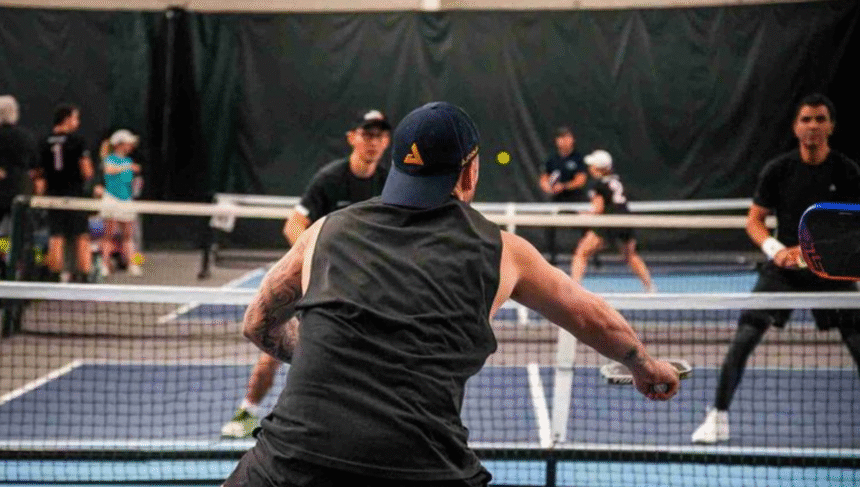
Knowing how to defend against stacking in pickleball is one of the most underrated skills in doubles. This guide breaks down the counter-tactics that flip the stacking team’s positioning advantage against them.
The moment you realize the team across the net is stacking, most players freeze, or worse, keep playing the same way and wonder why nothing is working.
Knowing how to defend against stacking in pickleball is one of the highest-leverage skills you can build in doubles, and almost nobody works on it deliberately.
Here’s the thing: stacking isn’t magic. It’s a system. And every system has pressure points.
Love pickleball? Then you’ll love our free newsletter. We send the latest news, tips, and highlights for free each week.
What Is Stacking in Pickleball: and Why Do Teams Use It?
Stacking is a formation where both players on a doubles team deliberately position themselves on the same side of the court after the serve or return, allowing them to quickly rotate into their preferred sides.
Under USA Pickleball’s 2025 Official Rulebook, stacking is completely legal, Rule 4.A governs server and receiver positioning, and nothing prevents players from lining up on the same side before rotating into their preferred positions after contact.
That’s exactly what makes it so effective at the recreational and competitive level: it’s a rules-based exploit that most opponents aren’t prepared for.
The goal is simple: keep the stronger player’s forehand in the middle of the court, or keep a lefty-righty combo with both forehands covering the center.
Most stacking teams use it to control shot quality and prevent opponents from targeting their weaker side.
There are two main stacking scenarios you’ll face. The full stack happens when both players start on the same side before the point even begins.
The half stack is more subtle, one player drifts post-serve or post-return to create their ideal positioning.
Both versions have the same objective: get both players where they want to be, not where you’re forcing them.
Understanding why they’re stacking tells you exactly where the weakness is.
Changing the way you think about doubles pickleball starts with recognizing that your opponents aren’t stacking for fun.
They’re hiding something, usually a weak backhand, an uncomfortable side, or a left-handed player who loses their forehand advantage on the “wrong” side.
How to Defend Against Stacking in Pickleball: The Core Principles
The best way to defend against stacking in pickleball is to serve and return to the correct side of the court, specifically, to the side the stacking player is trying to vacate, and to keep the pressure on throughout the point.
Before you can counter stacking, you need two things: a pre-point read and a communication system with your partner.
You have three or four seconds between points to identify the formation, pick your target, and confirm your plan. Use them.
Research on anticipation and pattern recognition in racket sports consistently shows that players who read opponent positioning before the point begins make faster, more accurate tactical decisions during the rally.
That pre-point read isn’t just good advice, it’s what separates reactive players from predictive ones.
Here are the three core principles that hold every counter-tactic together:
- Identify the stack before you serve or return. Watch where both players are standing as the serve is about to happen. If they’re both leaning to one side, that’s your cue.
- Serve and return to the vacating side. This forces a player to hit a ball they didn’t want to hit, often on the run and with their weaker wing.
- Expose the transition gap. During the stack rotation, there’s a brief moment where coverage is uneven. That’s your window.
Simple tips to improve teamwork, communication, pre-point signals, and a clear plan, are non-negotiable when you’re trying to execute any kind of counter-strategy against a well-drilled stacking team.
💡
Where Should You Serve to Defend Against a Stacking Team?
Serve to the player covering the wide lane, not the player in the conventional position, specifically to the outside hip or the deep corner of the vacating side.
This sounds counterintuitive at first. You’re used to serving to the player positioned for the return.
But against a stacking formation, the returner on the wide side is the one stuck.
They’ve sacrificed ideal positioning to let their partner get to the preferred side. Make them pay for it.
Two serve targets to memorize:
- The deep corner of the vacating side. This forces the returning player to run wide and return from an uncomfortable angle. A well-placed serve near the kitchen sideline can push them further out of position.
- The body of the transitioning player. If the stacking partner is still moving across the court during your serve, a serve aimed at their hip or torso during the transition disrupts the entire rotation.
One thing to keep in mind: where you return the serve also matters on the very next shot.
A weak return that floats to center gives the stacking team exactly the reset they need to complete their rotation comfortably.
Your return should be deep, angled, or targeted specifically at the weaker side.
Pickleball Stacking: Complete Guide to Both Court Positions
Pickleball stacking is a game-changing doubles strategy that lets you position your forehands in the middle of the court. Whether you’re playing mixed doubles or teaming with a lefty, understanding both off-court and on-court stacking methods will transform your competitive edge.
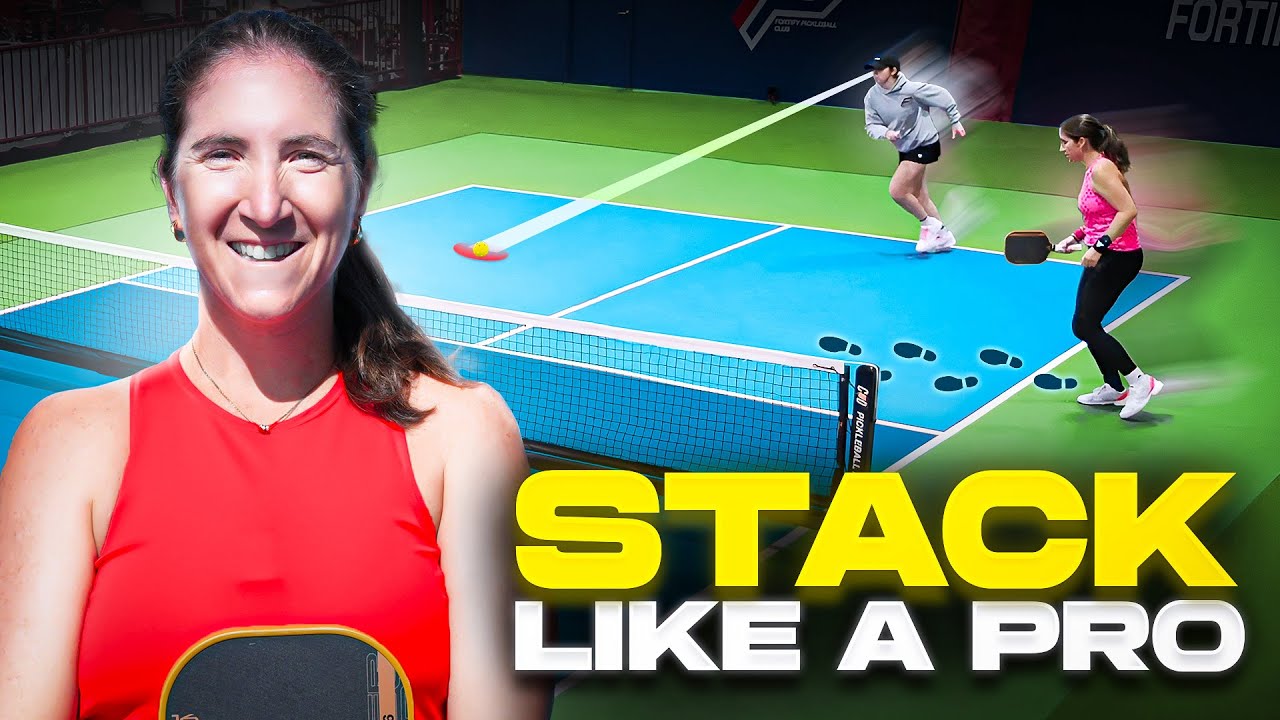
Targeting the Middle: Does the X Rule Change Your Counter-Tactic?
Yes, and understanding the middle-X rule is critical when you’re trying to exploit the seam between two players who just rotated.
The middle-X rule in doubles says the player whose forehand is closer to the middle ball should take it.
According to the USA Pickleball Rules Summary, there is no rule that formally dictates who must take a ball in the middle, it’s a tactical convention, not a regulatory one.
That matters because it means the responsibility is genuinely shared, and shared responsibility during a live rotation creates hesitation.
Against a stacking team, that hesitation is your weapon. Right after the rotation, the two players are still settling into their sides.
A ball hit directly at the seam, down the middle, just past the kitchen line, forces a decision. Who covers it? In that split second of uncertainty, errors happen.
Sports science research on decision-making under time pressure confirms that athletes facing simultaneous coverage decisions with a moving partner show measurably higher error rates than athletes in stable, pre-assigned positions.
A mid-transition middle ball isn’t just tactically sound, it’s physiologically stressful for the opposing team.
The middle ball is even more effective when combined with a doubles strategy that attacks the T and sideline.
The idea is to alternate: go middle, then snap wide. Middle again, then wide. You’re not pattern-hunting, you’re pattern-breaking.
Attack the Right Spots: Win More Points in Pickleball
You can’t go to the same spot every single time you go on offense – eventually, your opponent will catch on. And make you pay for it.
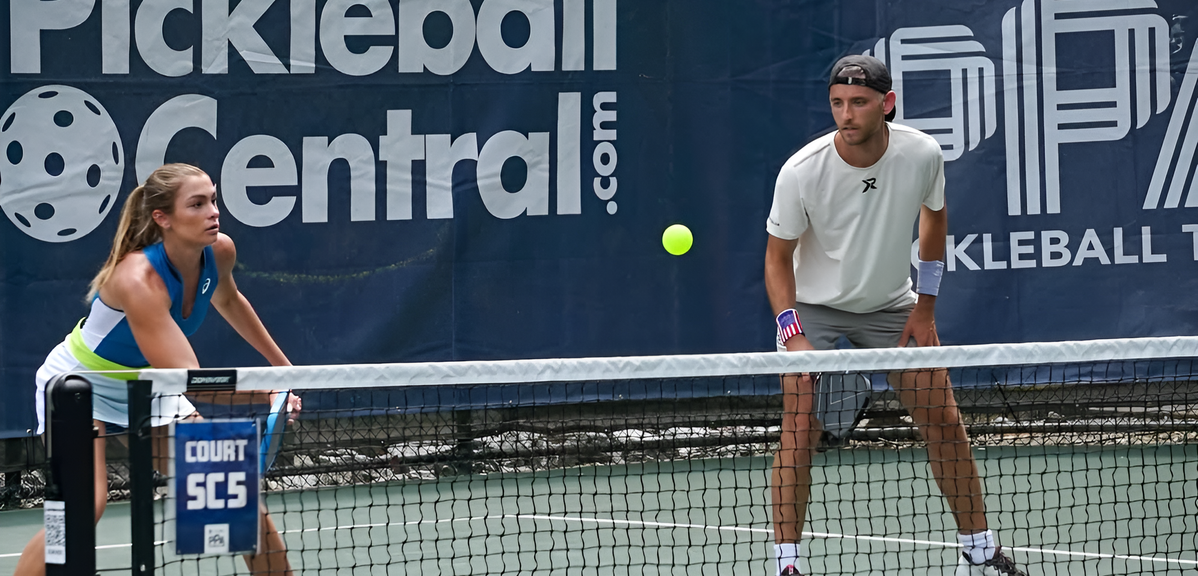
How to Exploit the Transition Gap When Defending Against a Stacking Formation
The rotation window, the 1-2 seconds when a stacking team is moving from their stacked starting position into their preferred sides, is the most vulnerable moment in their entire game plan.
Most recreational players let this window close before doing anything useful with it. Here’s how to keep it open:
- Drive the return low and deep. A third-shot drive forces a moving opponent to handle pace while transitioning. They can’t complete the rotation and recover at the same time. You’ve broken their rhythm before the point even gets to the kitchen.
- Pull them wide with your return angle. An angled return, especially one that pulls a player wide toward the non-volley zone corner, creates a coverage gap on the opposite side. The partner has to cover more court than intended. Now you’ve turned their stacking advantage into a liability.
- Follow up with a body shot. Once the stacking team has settled, a hard ball to the body of the player whose forehand is pointed toward the center prevents them from loading up for an aggressive shot. Research on reaction time and cognitive load in sport shows that athletes processing both lateral movement and an incoming body shot simultaneously experience a significant spike in response latency, in plain terms, they’re slower and less accurate under that dual pressure. Mid-court positioning tips are worth revisiting here, you want to be moving forward as you apply this pressure, not standing at the baseline waiting for something to happen.
Doubles Pickleball Stacking for Beginners: Full vs Half Stack
Stack pickleball doubles beginners need to master one of the most misunderstood tactics in the game: intentional position-swapping to control court sides. This guide breaks down full stack vs half stack so you and your partner can start using it immediately.
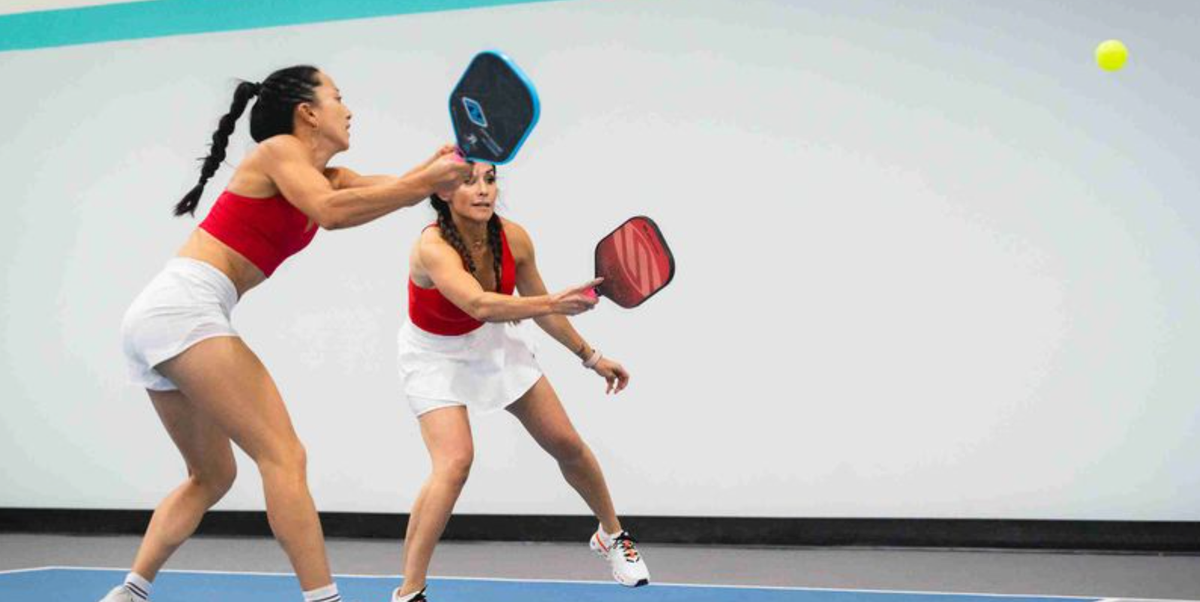
Should You Stack Back Against a Stacking Team?
Counter-stacking, using your own stacking formation in response, is a legitimate option, but only if both players are comfortable with the formation and can execute it without hesitation.
Trying to out-stack an experienced stacking team without practice is a recipe for confusion.
You’ll end up with two players in the wrong place, arguing about coverage, and gifting easy points.
Good shot selection and shot creation only work when positioning is locked in first.
The better approach for most teams is to play straight and be surgical. You don’t need to mirror their formation.
You need to become unattackable in your own base position while picking apart the gaps their stacking creates. That’s the real counter-tactic.
If you do want to incorporate counter-stacking into your game, drill it first. The transition has to feel automatic, not something you’re thinking about mid-rally.
Studies on sport-specific skill automaticity consistently show that tactical movements only become reliable under match pressure once they’ve been rehearsed to the point of unconscious competence.
A formation you’re thinking about is a formation that will break down.
Doubles Stacking 101: The Fool-Proof Positioning Strategy That Wins Points
Stacking might be the single most underrated positional tool in doubles pickleball – and it’s way simpler than you think
Reading Patterns and Staying a Step Ahead
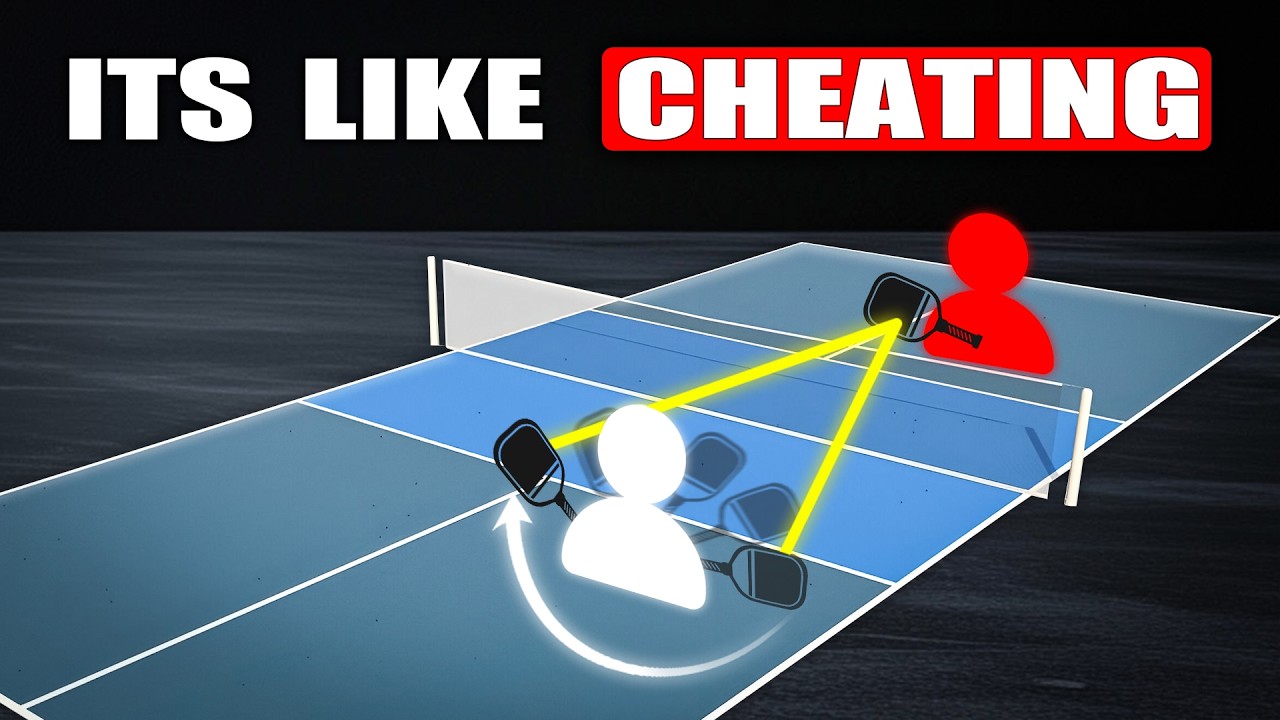
The best defense against stacking in pickleball isn’t just reactive, it’s predictive. Most stacking teams run the same rotation every time, which means you can anticipate it.
Pickleball is full of patterns, and stacking teams are no exception.
After two or three points, you’ll know exactly which direction they rotate, which player ends up where, and which side they’re protecting.
Write that down in your brain. Then use it.
Here’s a tactical sequence worth drilling:
- Identify the stack direction in the pre-serve moment.
- Serve or return to the wide vacating side.
- Follow with a shot to the middle during the rotation window.
- Once they’ve settled, attack the side that was originally covered by the weaker player.
This sequence forces them to constantly second-guess the rotation instead of executing it confidently.
Applying pressure to your opponents isn’t about raw power, it’s about making every decision they make feel costly.
The drive vs. drop decision on the fifth shot becomes clearer when you’re reading the stack.
If their rotation isn’t complete, drive it. If they’ve settled, a well-placed drop into the kitchen buys you time to attack the weaker side once you’re at the net.
Targeting your opponent’s strength strategically also has a place here.
Occasionally go to the stronger player’s forehand on purpose, it throws off the pattern they’ve built in their head.
Then when you snap it wide to the weaker side, the element of surprise is fully intact.
4 Pickleball Patterns to Win More Points
Understanding pickleball patterns is the fastest way to improve your game without hitting thousands of balls. These four essential pickleball patterns will transform how you read the court and anticipate your opponent’s next move.
Key Takeaways
- Stacking is legal and structured. Under USA Pickleball’s 2025 rulebook, no rule prevents stacking, which means you need a deliberate counter-strategy, not just awareness.
- Serve and return to the vacating side, the side the stacking player is abandoning is where the vulnerability lives.
- The transition window is your best opportunity. Drive low, pull wide, and attack the body to disrupt the rotation before it completes.
- The middle ball creates hesitation. Research confirms that split-second shared-coverage decisions during movement increase error rates, exploit that moment.
- Pattern recognition matters. Most stacking teams repeat the same rotation. Read it, predict it, punish it.
- You don’t need to counter-stack to win. A solid base position and surgical ball placement beats a chaotic mirror formation every time.
💡
Frequently Asked Questions
What is stacking in pickleball and why does it matter?
Stacking in pickleball is a doubles formation where both players line up on the same side of the court before or after the serve so they can quickly rotate into their preferred positions. It’s fully legal under USA Pickleball’s official rules, which is exactly what makes it so common at higher levels of play. If you don’t recognize it and adjust, you’re playing into their formation instead of against it.
How do you defend against stacking in pickleball as the serving team?
As the serving team, your best counter is to serve to the vacating side, the side the stacking player is leaving to complete the rotation. A deep serve to the outside corner, or a serve aimed at the body of the transitioning player, disrupts the rotation before it’s complete. Follow that with a low, aggressive third shot to keep the pressure on while they’re still moving.
What is the best return strategy against a stacking formation?
Return deep and to the wide side of the vacating player. A floating, soft return gives the stacking team exactly what they want, time to complete the rotation and get comfortable. A hard, low return or a sharp angle return forces them to handle pace while moving, which breaks the stack before it can fully form. Resetting your game plan after a stacking point is also important, don’t carry the confusion into the next rally.
Should I target the middle against a stacking team?
Yes, especially during the transition window right after the serve or return. A middle ball forces a coverage decision between two players who are still moving into position. Research on decision-making under time pressure in sport shows athletes in shared-coverage situations during movement make measurably more errors. Combine middle attacks with wide attacks, using deception to keep opponents guessing, and the stacking team won’t know which seam you’re targeting next.
Does counter-stacking work as a defensive tactic?
Counter-stacking can work, but only if you and your partner have drilled the rotation until it’s automatic. Research on skill automaticity in competitive sport shows that tactical movements only hold up under match pressure once they’ve been rehearsed to unconscious competence. Trying to out-stack a stacking team mid-match with no practice creates more confusion for your own team than for theirs. Play straight, be surgical, and let their formation create the gaps for you.
Nguồn: thedinkpickleball