Most players lose pickleball drive spin because they make contact too close to their body. Move your contact point to your front leg and you will feel the difference immediately.
You are hitting your drives hard, swinging up on the ball, and doing everything you think is right.
But the ball keeps sailing long or floating without any real dip, and you cannot figure out why.
The problem almost certainly comes down to one thing: your contact point.
It is too close to your body, and that single flaw is wiping out every bit of topspin you are trying to create.
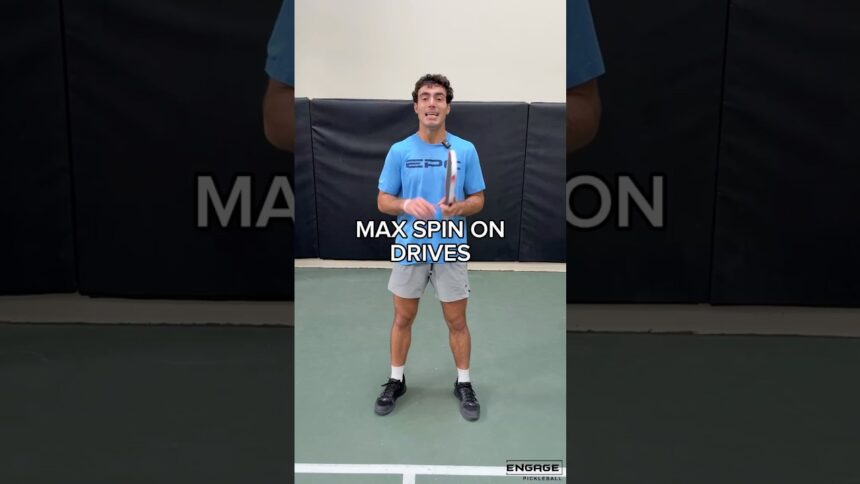
This tip comes straight from Richard Pickleball on YouTube, who breaks down exactly why players lose spin on drives and what one adjustment fixes it fast.
Here is everything you need to know.
Love pickleball? Then you’ll love our free newsletter. We send the latest news, tips, and highlights for free each week.
Why Your Drive Spin Disappears
When you make contact with the ball close to your body, you are hitting it on a flat or even slightly downward part of your swing path.
That means you are getting too much of the ball with your paddle face rather than brushing up and across it to generate topspin.
Think about where your swing is actually going. Your paddle starts low, rises through the hitting zone, and then continues upward after contact.
The Best Pickleball Players Aren’t Following the Rules Anymore
Modern pickleball isn’t won by coloring inside the lines. More and more, the most successful players are also the most creative.
The upswing portion of that arc is exactly where topspin gets created.
If you are making contact late, the ball is meeting your paddle after that sweet spot has already passed.
You are essentially throwing away the most productive part of your entire swing.
This is one of the most common reasons your forehand drive keeps flying long. The fix is not swinging harder or adding more wrist.
It is simply adjusting where in space your paddle meets the ball.
What Does “Out in Front” Actually Mean?
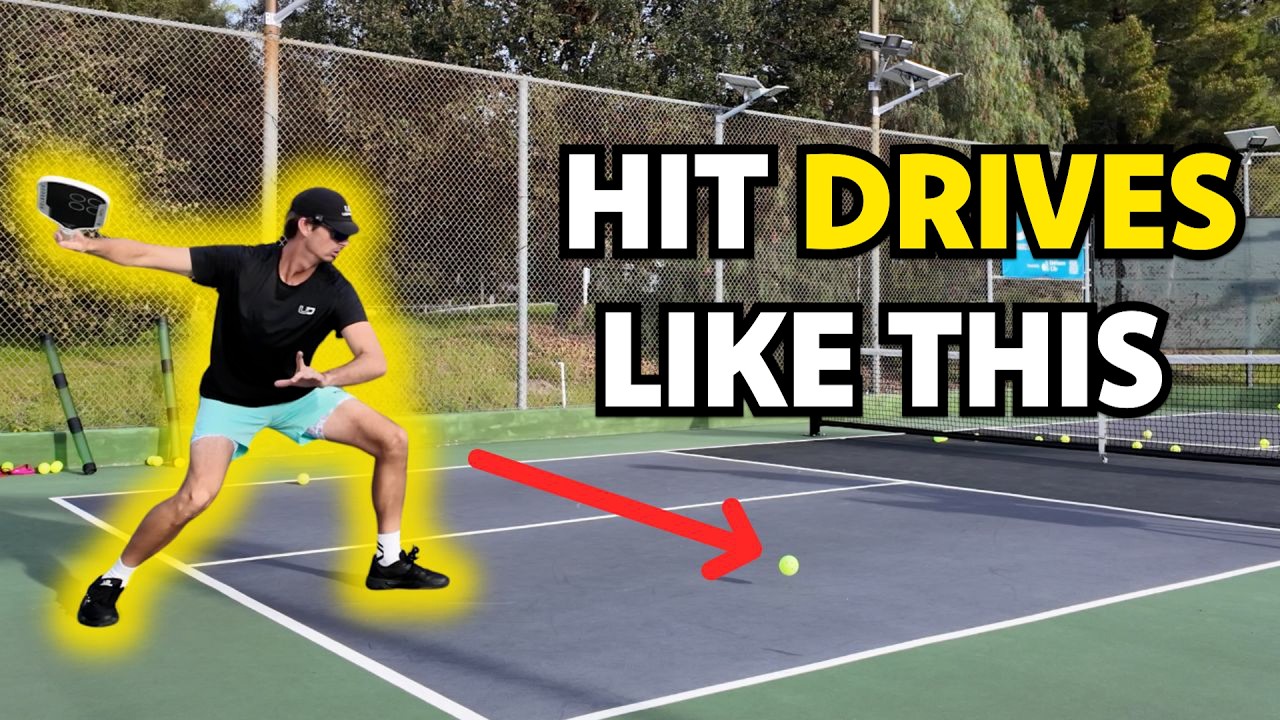
Contact in front of your body means making contact at or near your front leg, not at your hip or beside your torso.
A lot of players hear “hit out in front” and think they are already doing it.
But when you check where the ball actually meets the paddle, it is usually four to six inches further back than you think.
Your front leg is your landmark. When you step into a drive and your weight shifts forward, the ball should be striking your paddle right around that front foot.
If it is happening anywhere behind that point, you are late.
Here is a simple way to think about it:
- Contact at the front leg: paddle is still on the upswing, brushing up the back of the ball, generating topspin and dip
- Contact at the hip or behind: paddle is flattening out, too much surface area hitting the ball, no spin, no shape
- Contact near the back leg: paddle may actually be coming down, which sends the ball into the net or produces a dead flat shot that sails on you
The position of your contact point determines your spin. Full stop.
💡
How Does Swing Path Create Topspin?
Topspin happens when your paddle moves from low to high while brushing up the back surface of the ball.
The faster you move through that upward arc relative to the speed of the ball, the more spin you produce.
When your contact is out front at the front leg, your paddle is still climbing. It catches the lower half of the ball and rolls over it, imparting forward rotation.
That rotation is what makes the ball dip down after crossing the net instead of floating into the back court.
This is the same mechanical principle you see in topspin roll shots. The physics do not change based on shot type. Upward brush on the back of the ball equals forward spin equals dip.
What changes your ability to execute that brush consistently is where in your swing arc you are meeting the ball.
Mastering Pickleball Topspin: 5 Common Mistakes and How to Fix Them
By maintaining a stable face and letting the path of the paddle create the spin, you widen your margin for error and maximize consistency
There are a few reasons this mistake is so common, and most of them come down to habit and reaction time.
- First, players often wait on the ball instead of moving to it. When you are reactive rather than anticipating, you end up making contact wherever the ball happens to arrive, which is usually closer to your body than you want.
- Second, many players have practiced drives for years without anyone pointing out their contact point. The mechanics feel natural because they are familiar, not because they are correct.
- Third, when you are trying to hit hard, there is a tendency to pull through with your shoulder and lag the paddle. That lag can push your actual contact point further back even if your step forward is correct.
If you want to create instant topspin on your drives, fixing the contact point is the starting point. Everything else builds on top of it.
3 Mistakes Killing Your Pickleball Serve Power
Most pickleball players are unknowingly sabotaging their pickleball serve power with three critical mistakes. Fix your shoulders, hips, and ball placement to generate explosive power on every serve.
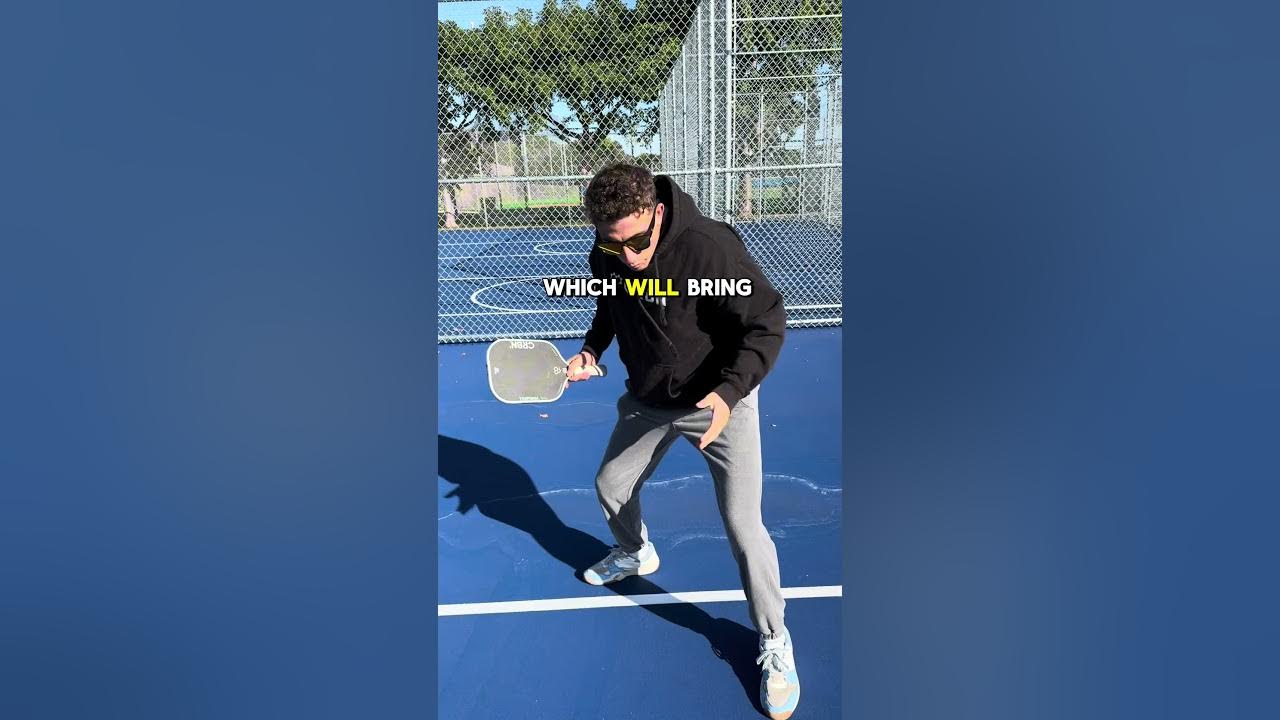
Knowing where to make contact is one thing. Training your body to do it consistently under pressure is another.
These three drills will help you build the habit fast.
- Front leg tap drill: Before you swing, physically touch your front leg with your non-paddle hand as a cue. Then hit your drive with that tactile reminder fresh. Your brain will start associating the swing with that position over time.
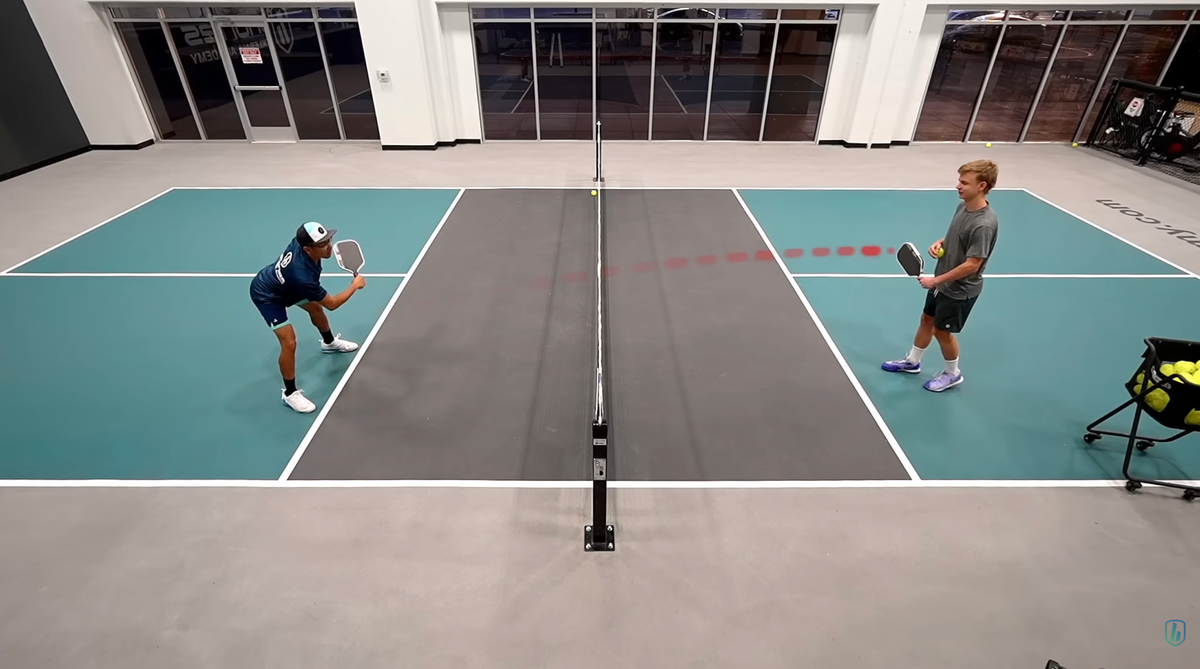
- Toss and step drill: Have a partner toss balls slightly in front of you instead of right at you. You have to take an aggressive step forward to meet the ball. This forces early contact and naturally puts your swing on the upswing arc.
- Shadow swing check: Stand without a ball and swing your drive. Freeze exactly where your paddle stops at the moment you would make contact. Is your arm fully extended? Is the contact point out near your front leg? If not, you have found your problem and can correct it without the pressure of an incoming ball.
Repeat these consistently and your natural contact point will shift forward without you having to think about it mid-rally.
3 Pickleball Speed Up Drills to Win Kitchen Battles
Most players warm up their hands and call it drilling. This pickleball speed up progression isolates the attack, the counter, and the dink that sets them up, so the skills hold under game pressure.
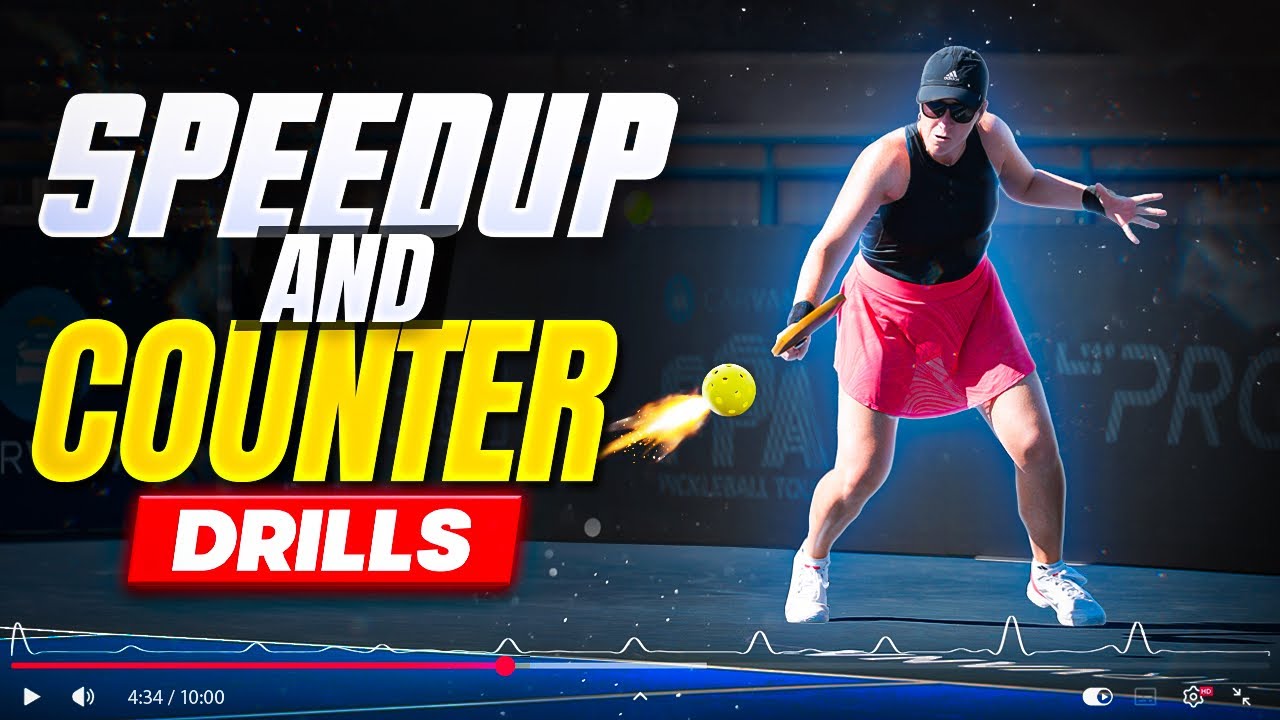
The results are immediate. You will feel a sharper, crisper contact rather than a dull thud.
The ball will come off your paddle with more pace and a noticeably tighter trajectory.
More importantly, the ball will dip.
Instead of floating toward the baseline and giving your opponent an easy setup, it will drop into the court and force a low ball out of them.
That is the whole point of hitting a drive with spin rather than pace alone.
This is also what separates a drive that creates pressure from one that just fills space. A flat hard drive can be attacked.
A drive with shape and dip has to be dealt with carefully, and that forces errors and weak returns.
Players who struggle to force pop-ups with their drives are often hitting the ball without enough spin.
Fixing the contact point is the most direct way to change that.
Why Your Forehand Drive in Pickleball Keeps Flying Long
Most forehand drive problems in pickleball aren’t about power, they’re about spacing and contact point. Here’s the exact system to fix both.
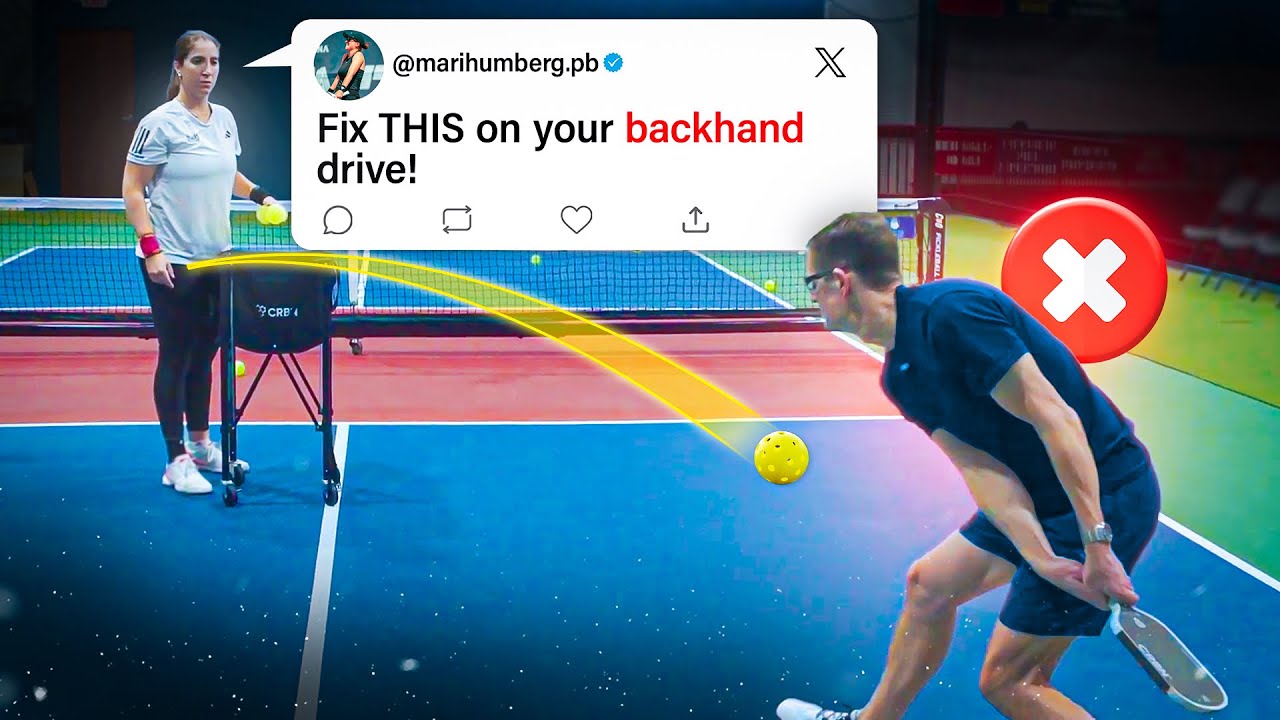
Does This Apply to Backhand Drives Too?
Yes, and the same principle applies on the backhand side.
You want the contact point out in front of your lead shoulder, not tucked in close to your chest or armpit.
On the backhand, late contact is even more punishing because you lose structural support from your arm when the ball gets behind you.
The swing path flattens out quickly on that side.
If you are working on your backhand third shot drop or any backhand drive, the same cue applies. Front foot, extended arm, contact on the upswing.
When, How & Why to Hit a Two-Handed Backhand Drive in Pickleball
Whether you’re trying to break out of a dinking rally or apply pressure, knowing how to execute a solid backhand drive can completely change your game.
How Does This Connect to the Rest of Your Game?
Getting your contact point right on drives does something else for your game that most players do not expect.
It forces you to move your feet earlier and commit to shots sooner.
When you practice hitting out in front, you stop waiting for the ball to come to you.
You start going to get it. That shift in mentality carries over into every other part of your game, including your dinks, your resets, and your volleys.
It is also worth noting that correct contact point mechanics make your drives more consistent, not just more spinny.
When you are striking the ball at the same point in your swing arc every time, the variability in your shot goes down dramatically.
Players who are working on moving from 4.0 to 4.5 will find this kind of mechanical precision to be one of the clearest separators between the two levels.
Split Step Pickleball: Footwork Tips for Seniors
By mastering this simple footwork move, you’ll stop your forward momentum and give your brain the split second it needs to read your opponent’s paddle.
Common Mistakes Players Make When Trying to Fix This
Once players hear the contact point tip, they sometimes overcorrect. Here are the errors to avoid:
- Reaching too far out: You want the contact at your front leg, not two feet past it. Over-extension kills your ability to transfer weight and creates a weak, arm-only shot.
- Swinging up without brushing: Moving your contact point forward only works if you are still brushing up the back of the ball. Some players extend forward but stop rotating, which gives them a flat shot hit from the right location but with no spin anyway.
- Ignoring footwork: The contact point is partly a footwork issue. If your feet are not moving to set up the correct position, you cannot consistently hit out in front. Work on your split step and lateral movement together with the contact point drill.
- Only using it on one side: Apply the same cue to both forehand and backhand drives. Fixing one side and ignoring the other will create obvious patterns your opponents can exploit.
If you find yourself hitting shots long even after adjusting your contact point, check your paddle angle next.
7 Pickleball Positioning Mistakes Hurting Your Game
Most pickleball positioning mistakes have nothing to do with your strokes. Fix these 7 court positioning errors and you will win more points immediately.
Sometimes the contact point is right but the face is slightly open, negating the topspin you just created.
And if you are dealing with drives that feel inconsistent from one day to the next, spend time on your swing repeatability mechanics as a parallel fix.
Consistency in contact is a skill that requires deliberate practice, not just awareness.
The bottom line is simple.
Move your contact point forward to your front leg, keep the paddle moving upward through the ball, and you will immediately notice more shape, more dip, and more pressure on every drive you hit.
💡
Frequently Asked Questions
What is the correct contact point for a pickleball drive?
The correct contact point is out in front of your body, roughly aligned with your front leg when your weight is shifted forward. Hitting here puts your paddle on the upswing arc, which is where topspin is generated. Contact at your hip or behind it flattens your swing and removes spin from the shot.
Why does my pickleball drive keep sailing long even when I swing hard?
Drives that sail long are usually hit flat, meaning the ball is not dipping back into the court after crossing the net. This is almost always caused by late contact, where the paddle meets the ball too close to the body on a flattened swing path. Moving the contact point forward and brushing up through the ball adds topspin, which creates the dip that keeps drives in the court.
How do I know if I am making contact too close to my body?
A good self-check is to freeze at the moment of contact during a shadow swing and look at where your arm is. If your elbow is significantly bent and the paddle is near your hip, your contact is too late. You want a more extended arm position with the paddle well in front of your torso at contact.
Does the contact point matter more on forehand or backhand drives?
It matters equally on both sides, but late contact on the backhand tends to produce worse results faster because the backhand structure weakens more quickly when the ball gets behind you. Practice the front-leg contact cue on both sides to avoid creating exploitable patterns in your game.
Will fixing my contact point also help my third shot drive?
Yes. A third shot drive hit with topspin is far more effective than a flat one because it forces a low ball out of the opponents at the kitchen line. Moving your contact point forward so the paddle is on the upswing at impact will add spin and dip to your third shot drive, making it harder to attack and more likely to produce a weak response.
Nguồn: thedinkpickleball