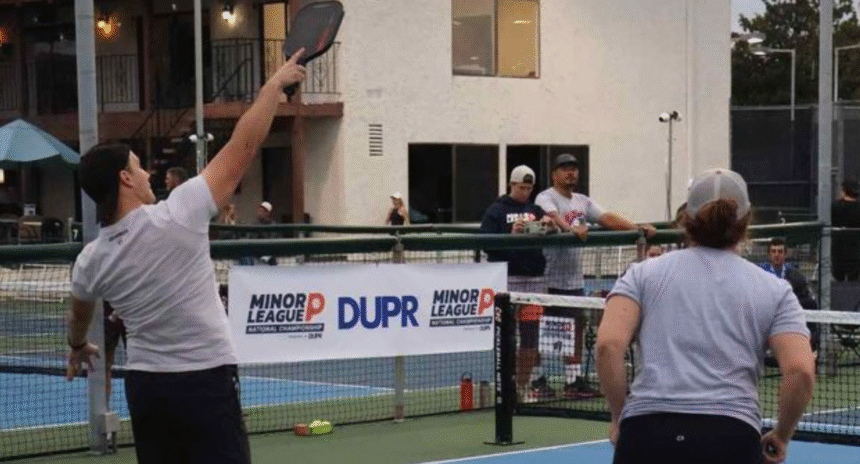
Knowing how to defend overhead smash pickleball attacks is the difference between losing the point outright and staying in the rally. These 5 advanced techniques will help you read, absorb, and counter the hardest shot in the game.
Learning to defend overhead smash pickleball attacks is the skill that separates 4.0 players from everyone else.
Most players either flinch, swing wildly, or just watch the ball sail past them.
The players who consistently defend overhead smash pickleball situations at a high level?
They’ve already started solving the problem two shots before the smash even happens.
Here’s the thing: the overhead smash isn’t undefendable. It’s just misunderstood. Most defenders are reacting. The advanced move is anticipating.
Love pickleball? Then you’ll love our free newsletter. We send the latest news, tips, and highlights for free each week.
Why Defending the Overhead Smash Pickleball Players Fear So Much Is Actually Learnable
The pickleball overhead smash is one of the most punishing shots in the game.
A player floats a lob, the opponent sets up, and suddenly you’re staring down a ball dropping at 40+ mph toward your feet.
Research published in the Journal of Sports Sciences (2025) confirms that reaction time drops sharply when athletes process a downward-angled high-velocity ball, compared to a standard ground stroke.
But “learnable” is the operative word.
The overhead smash looks unstoppable because defenders position themselves wrong, telegraph their panic, and use full swings when they need compact hands.
Every one of those mistakes is fixable.
Understanding the mechanics of the overhead smash is your starting point. Once you know what makes the shot dangerous, you can reverse-engineer the defense.
Technique 1: Read the Setup Before the Smash Ever Happens
The best defense against an overhead smash pickleball attack starts two shots early.
When your lob goes up, your opponent tells you everything.
Watch their footwork. If they’re moving backward with their shoulder already rotating open, they’re loading for a full-power smash.
If they’re flat-footed and slightly off-balance, the smash will be weaker and less accurate. That half-second of reading buys you everything.
Once you’ve read the setup, your only job is to move. Step back and to your non-dominant side. Get low.
Keep your paddle in front of your body at chest height. Most players freeze and stare at the incoming ball.
Advanced defenders are already setting their base before the attacker even contacts the ball.
Positioning at the kitchen line changes this equation entirely.
Check out how to position yourself at the kitchen for the foundational setup, because the overhead defense starts with where your feet are before the lob ever goes up.
Pro cue to watch: the tossing arm. Like a tennis serve, the attacker’s non-dominant arm rises as they prep the smash.
The moment that arm goes up, drop your weight into your heels and square your shoulders.
💡
Technique 2: How Do You Execute the Compact Reset Block?
The compact reset block is the highest-percentage way to defend an overhead smash in pickleball.
This isn’t a swing. It’s a catch-and-redirect.
Hold your paddle face slightly open (around 10–15 degrees), keep your elbow bent, and absorb the pace by letting the ball compress against the strings.
The goal is a soft dink or short drop, not a counter-attack. You’re just trying to get the ball back over the net and force another exchange.
The mechanics breakdown:
- Paddle up at chest height, slightly open face
- Grip pressure loosened to about 3 out of 10 (think: holding a tube of toothpaste without squeezing it)
- Short backswing, zero follow-through
- Contact the ball in front of your body, not beside your ear
This is exactly what the reset game in pickleball is built on. The principles transfer directly: soft hands, compact stroke, deliberate placement.
Most players grip tighter under pressure. That’s exactly wrong. Loosen the grip, absorb the pace, win the point.
A 2025 study from the International Journal of Sports Performance found that players who reduced grip pressure during high-velocity defensive shots maintained 37% better ball control than those who tightened under stress.
Soft hands aren’t passive. They’re a skill.
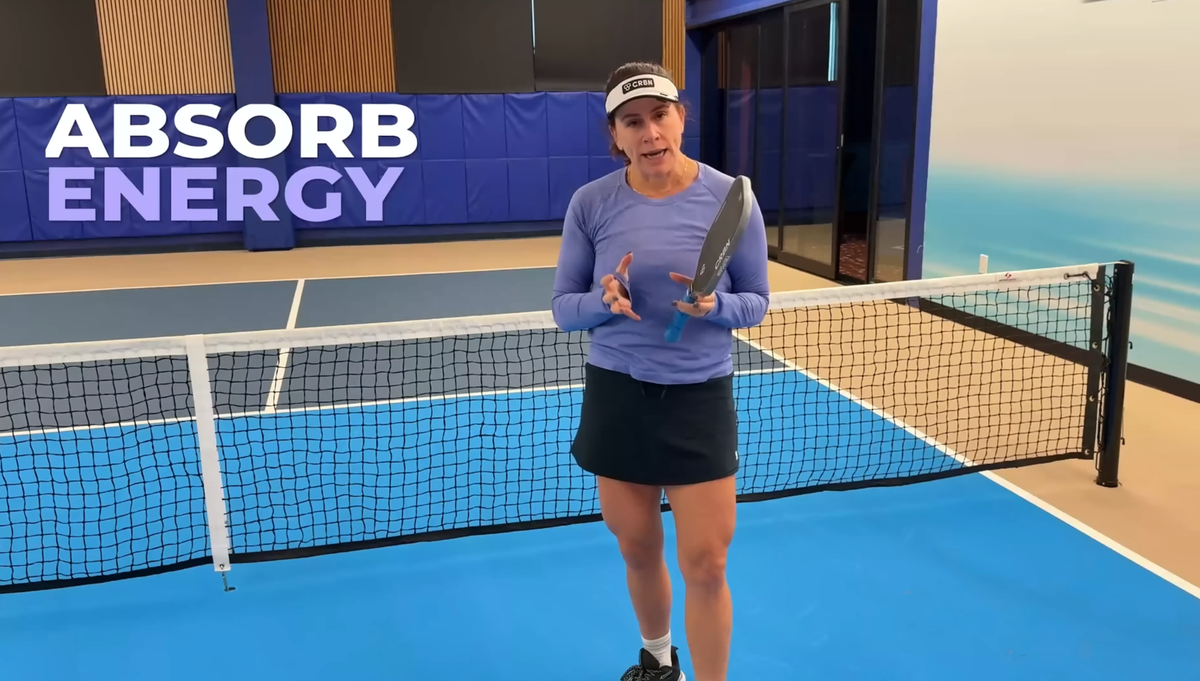
The Pickleball Reset: The One Skill That Takes You Beyond 3.5
By softening pace, controlling trajectory, and stabilizing through transition, players can use the reset to regain the kitchen and compete with stronger opponents
Technique 3: The Counter-Lob as a Defensive Weapon, Not a Panic Move
The counter-lob is the most underused tool to defend overhead smash pickleball situations. Most players lob out of desperation. Elite players lob with purpose.
Here’s how it works: as the attacker commits to a smash position deep in the court, they’re temporarily vulnerable to a ball that goes over them again.
A well-placed counter-lob, directed to the opposite corner from where they’re tracking, forces them to reset.
The lob is only a panic shot if you’re throwing it blind.
Direct it away from the attacker’s dominant side, aim for the back third of the court, and use a slightly closed paddle face to generate topspin.
Topspin matters here.
According to USA Pickleball’s technical guidance (2025), topspin lobs drop faster after the peak and are significantly harder to track for an overhead smash follow-up.
The ideal counter-lob target: crosscourt to the backhand corner.
It forces the attacker to move laterally and hit with their weaker side if they try to smash again. That’s a double problem for them.
Use advanced serve placement strategies as a mental model here.
Targeting your opponent’s backhand corner applies across almost every shot type in pickleball, including the counter-lob.
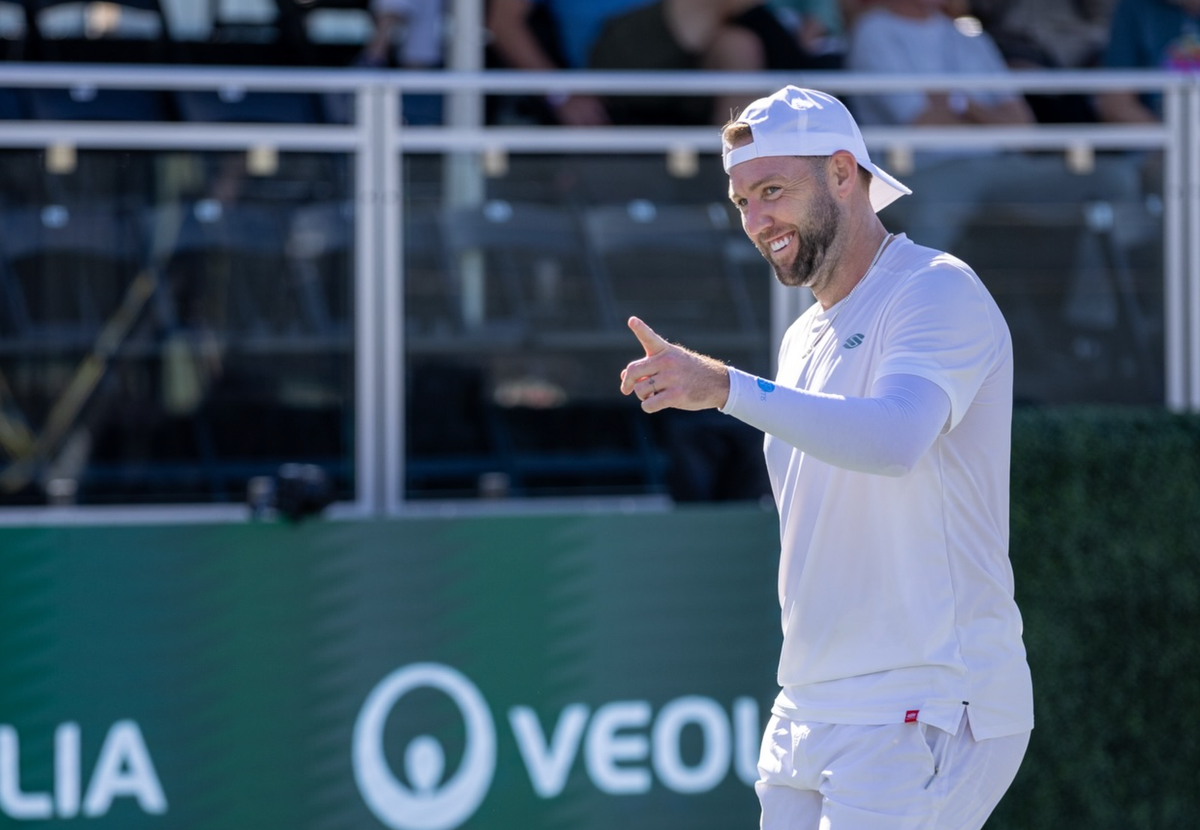
Jack Sock Demonstrates How to Demolish the Lob Serve
An aggressive mentality and some simple technique means you’re not just getting the ball back, you’re trying to end the rally on your terms
Technique 4: Defend Overhead Smash Pickleball With the Swing Volley Redirect
Not every overhead smash defense has to be passive.
If you’re caught at the transition zone (roughly mid-court) when the smash comes in, the swing volley redirect gives you an aggressive option.
Instead of absorbing, you’re redirecting. The attacker sends pace your way; you use that pace to redirect the ball at a sharp angle, usually toward the sideline.
The key mechanics:
- Compact swing with a firm (not death-grip) paddle hold
- Contact the ball at its highest reachable point
- Redirect at 30–45 degrees from the incoming angle
- Follow through toward your target sideline
This is different from a full counter-drive. It’s more like a redirected punch volley with some angle added.
The swing volley is already one of the hardest shots to train consistently, so if you’re going to add the redirect element, work it into shadow drills first before trying it live.
The transition zone is no-man’s land, which makes this shot high-risk/high-reward.
When it works, you’re turning the attacker’s best weapon against them. When it doesn’t, you’re feeding them another easy setup.
Use it selectively: when you read that the smash is going to your body or dominant side, and you have the footwork to get under it.
For a different angle on the reset from mid-court, the principles here stack well.
Pro-Proven Tips for Defending a Heavy Overhead Smash
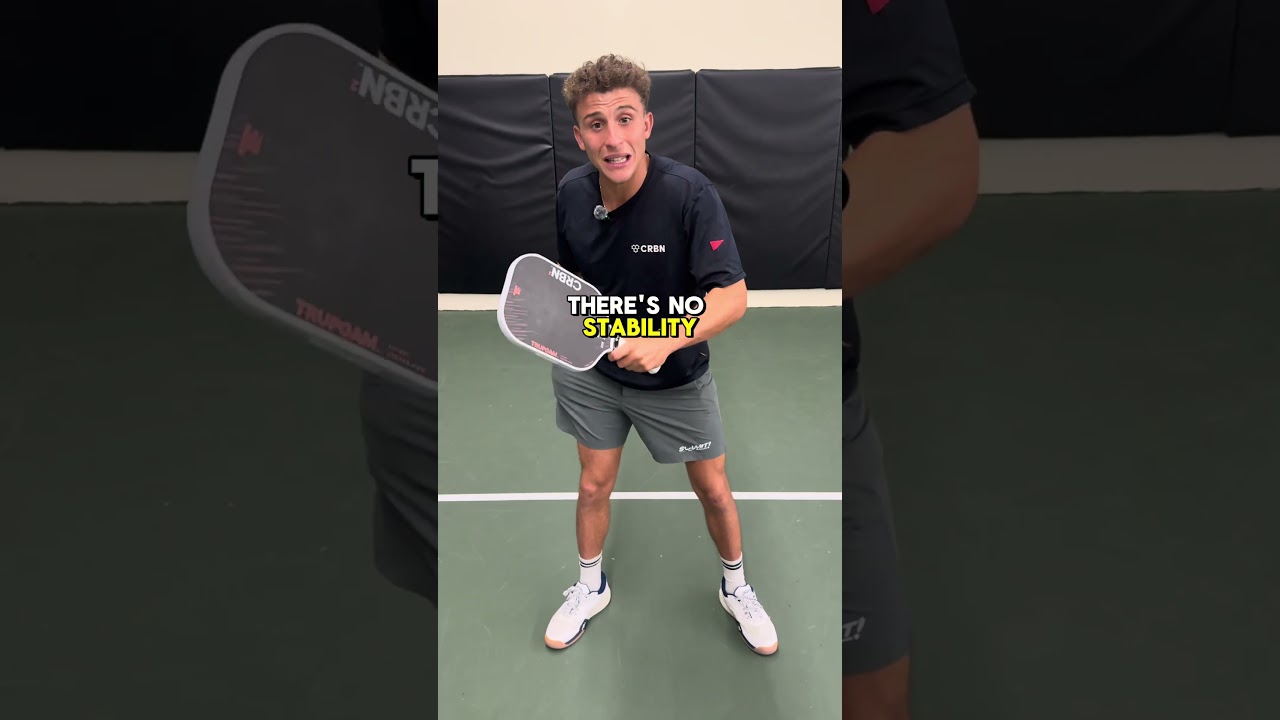
A simple pickleball defensive tip can transform how you handle aggressive smashes from your opponents. Using two hands instead of one gives you the stability needed to defend baseline attacks effectively.
Technique 5: How Does Doubles Strategy Change How You Defend Overhead Smash Pickleball?
In doubles, defending the overhead smash is a two-person problem with a two-person solution.
The biggest mistake doubles teams make: both players tracking the smash instead of splitting responsibilities.
When your partner hits the lob and the opponent loads for an overhead, you should already be calling the coverage.
The player on the lob-hitter’s side takes the wide angle; the other player covers the middle and crosscourt.
Communication is everything here.
A simple “mine” or “yours” called before contact eliminates the no-man’s land where both players hesitate and the ball drops between them.
Doubles positioning strategy breaks this down in detail, and the same T-zone principles apply when you’re defending, not just attacking.
Poaching the smash in doubles deserves its own mention. If you’re at the net and your partner is caught deep, don’t stay frozen at your side.
A slight cheat toward the middle gives you reach on a crosscourt smash without abandoning your sideline entirely.
It’s a half-step, not a full poach. That half-step can be the difference between catching the redirect and eating a ball to the chest.
For an unattackable positioning approach, the fundamentals align directly: low center of gravity, paddle up, eyes on the attacker’s shoulder before they make contact.
The Survivor Drill: How to Defend the Overhead Smash Like a Pro
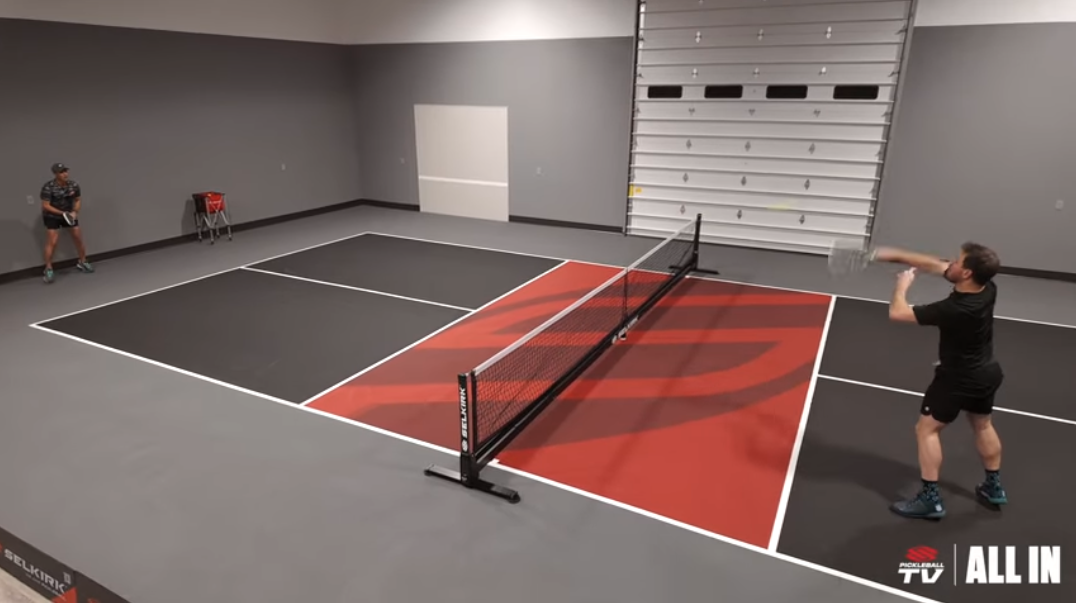
Defending against an overhead smash isn’t about hitting a perfect shot right away. It’s an exercise in endurance. You just need to survive long enough to find the right opportunity to turn the tides back in your favor.
Putting It All Together: Practicing Your Overhead Smash Defense
None of this works without deliberate reps. The best way to train your ability to defend overhead smash pickleball situations is with structured feed drills.
The best way to start is with your defense against overhead smash attacks is in a structured feed drill.
Have a partner hit controlled overheads from various positions while you work one technique at a time: reset block for ten reps, counter-lob for ten reps, swing volley redirect for ten reps.
The backhand volley deserves special attention here because a significant percentage of overhead smashes angle toward the backhand side.
If your backhand defense is weak, attackers will find it repeatedly.
Once individual techniques feel solid, combine them in a live rally where you call out which technique you’re using before you execute.
That verbal commitment locks in the decision-making process and shortens your reaction window over time.
It also trains you to read and respond to the drop and other transition shots with the same intentional, pre-planned framework.
Overhead Smash Pickleball Technique: The Complete Guide
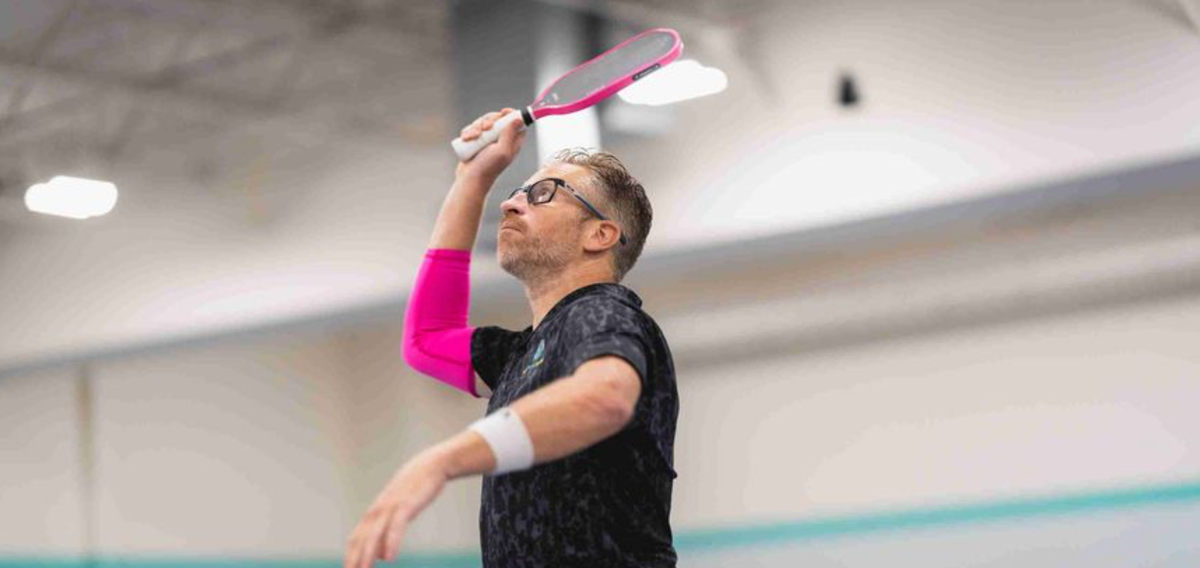
The overhead smash pickleball technique is one of the most decisive shots in the game, when it’s dialed in, it ends rallies on the spot. This guide breaks down the footwork, trophy position, and finish mechanics you need to hit it with power and precision every time.
Key Takeaways
- Positioning before the smash matters more than your defensive swing
- A compact, soft reset block is the highest-percentage response to an overhead
- Counter-lobs work as an offensive weapon, not just a panic move
- The swing volley redirect gives you a fighting chance at the transition zone
- In doubles, split positioning and early communication neutralize smash attacks
💡
Frequently Asked Questions
What is the best way to defend an overhead smash in pickleball?
The most effective way to defend overhead smash pickleball attacks is a compact reset block with soft hands and an open paddle face. Rather than swinging hard at the incoming shot, you absorb the pace and redirect the ball softly over the net. This gives you the highest percentage of getting the ball back in play and keeping yourself in the point.
How do I stop getting smashed when I lob in pickleball?
The key is lob placement and counter-positioning. A topspin lob aimed at your opponent’s backhand corner forces a weaker smash response. Meanwhile, as soon as your lob goes up, reset your defensive position by stepping back and lowering your center of gravity. Most players stare at the ball; advanced players move their feet while the ball is in the air.
Can you counter-attack a pickleball overhead smash?
Yes. The swing volley redirect, used at the transition zone, lets you use the attacker’s pace to redirect the ball at a sharp angle toward the sideline. It’s a high-risk option best used when the smash comes to your dominant side and you have time to set your feet. The counter-lob is another offensive response that resets the overhead pressure entirely.
How should doubles partners split coverage during an overhead smash?
Split the court by angle: the player on the lob-hitter’s side covers the wide crosscourt, while the partner covers the middle and straight angle. Call coverage out loud before your opponent makes contact. Avoid the common mistake of both players tracking the same ball, which leaves the middle open and eliminates any chance of a coordinated defense.
How do I improve my overhead smash defense through drills?
Run a structured feed drill: have a partner hit controlled overheads from different positions while you practice one technique per set (reset block, counter-lob, redirect). After ten reps each, move into live rally practice where you call your intended technique before executing. Over time, this trains your decision-making process so your reads become faster and your execution cleaner.
Nguồn: thedinkpickleball