The gap between pro and amateur pickleball players isn’t just about athleticism or court time. It’s about the strategic choices they make on every single point. Here are the 6 differences between pro and amateur pickleball players that separate the elite from everyone else.
If you’ve been grinding on the pickleball court and wondering why you’re not progressing as fast as you’d like, the answer might not be what you think.
The pickleball difference between pro and amateur players isn’t always about raw talent or how many hours you’ve logged.
It’s about the small, deliberate choices that separate the elite from everyone else.
Cracked Pickleball, a YouTube channel dedicated to breaking down the sport’s nuances, recently laid out the six biggest differences between pros and amateurs.
And honestly, some of them might surprise you.
If you’ve already been working to master the 5 pickleball shots before 2026, these mindset and technique gaps will land differently.
Love pickleball? Then you’ll love our free newsletter. We send the latest news, tips, and highlights for free each week.
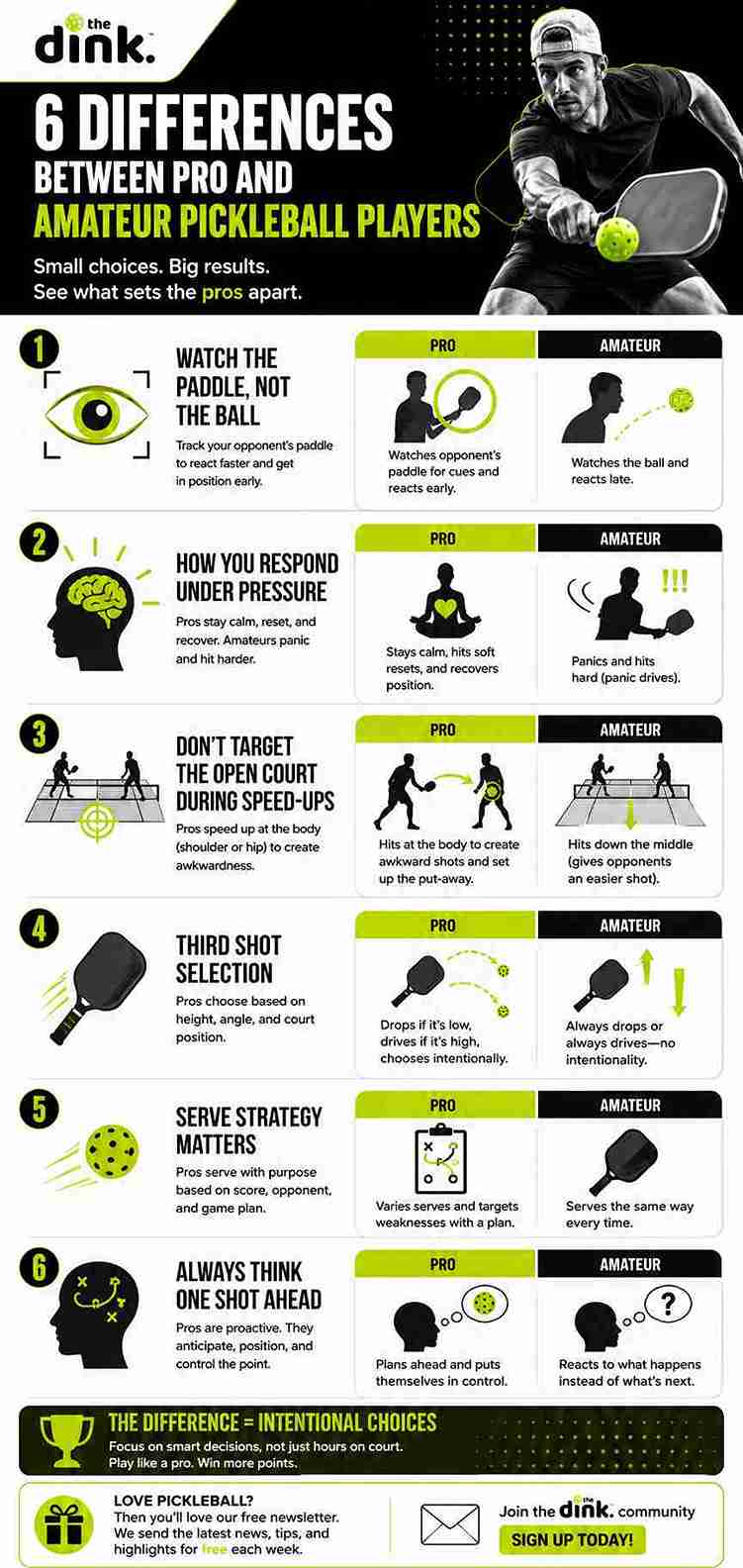
1. Watch the Paddle, Not the Ball
Here’s something that sounds completely backwards: pros don’t always watch the ball. At least not in the way you’ve been taught.
When you’re stuck in the transition zone or battling at the kitchen line, watching the ball all the way through contact becomes a liability.
You simply don’t have enough time to track it, process what you’re seeing, and react. So what do pros do instead? They watch their opponent’s paddle.
Your opponent’s paddle is basically a telegraph. If they raise it above their chest, they’re about to hit down on the ball.
Lower your paddle and prepare for an attack. If they keep it neutral in ready position, they’re probably rolling the ball or hitting flat.
Stay ready at hip level. And if they drop the paddle toward the ground? They’re forced to hit upward, which means you can counter-attack.
By tracking your opponent’s paddle and doing the opposite of what they’re doing, you buy yourself crucial reaction time.
Your paddle naturally positions itself before the ball even arrives, letting you execute rather than scramble.
This is one of the core modern pickleball strategies for winning in 2026 that separates reactive players from proactive ones.
2. How You Respond Under Pressure Shows the Pickleball Difference Between Pro and Amateur
The pickleball difference between pro and amateur players really shows when things go wrong.
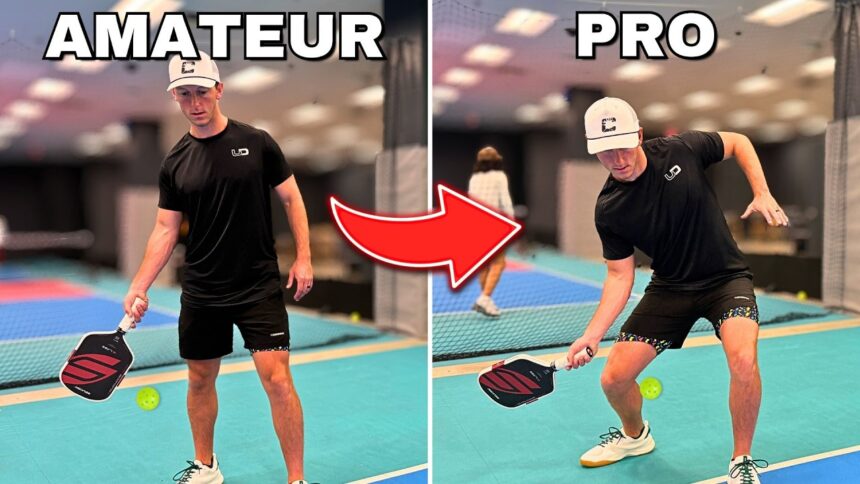
You won’t always be in the right position. But how you respond when you’re out of position separates the amateurs from the pros.
Bad positions happen. You’re stuck in midcourt after a third shot drop. A ball gets behind you. You’re running to reach a ball and you’re completely outstretched.
In these moments, amateurs panic. They think the solution is to hit the ball harder. These are called panic drives, and they almost never work.
Pros understand something crucial: the point isn’t over just because you’re in a bad position.
The point ends when you hit a terrible shot from that position and your opponent capitalizes.
According to NBC Sports, this mental composure is what consistently separates recreational players from touring professionals.
Think of your position like a scale.
When you’re low on the scale (bad position), respond with defense. Hit soft reset shots to the middle with a little arc. Give yourself time to recover.
When you’re high on the scale (strong position), attack.
The key is matching your shot selection to your position, not to your ego.
For a deeper breakdown of when to play safe versus when to go, the pickleball transition zone guide is required reading for any player looking to close the gap between amateur and professional pickleball execution.
💡
3. Don’t Target the Open Court During Speed-Ups
This one trips up a lot of intermediate players.
When you see a gap between your opponents at the kitchen line, your instinct is to speed up right down the middle, right? Wrong.
High-level players actually want you to do that. A ball sped up at the middle of their body is awkward, sure.
But a ball sped up at the edge of their reach is actually easier to handle. They can reach and counter, or shuffle and cover the gap with a free forehand put-away.
The real move? Pros speed up at their opponent’s body in places that create maximum awkwardness. Target the right shoulder or right hip.
These are the spots that force uncomfortable movements. When you hit there, your opponent is forced to pop the ball up, which sets up the real put-away.
The full pro speed-up strategy at the kitchen line gives you the complete picture on placement and timing.
This is called the one-two punch, and it’s what separates winners from point-extenders. You’re not trying to end the point on the first speed-up.
You’re setting up an even better opportunity.
The Pickleball Speedup: Pro Secrets to Win Points
The pickleball speedup is one of the most misunderstood shots in the game, but it’s also one of the most powerful when executed correctly. Pro player Ava Ignatowich breaks down exactly how to hit speedups, when to use them, and the triangle concept that separates amateurs from advanced players.
4. Third Shot Selection and the Pickleball Difference Between Pro and Amateur
The third shot is where a lot of amateurs reveal their level.
Most players fall into one of two camps: the ultra-conservative player who drops every single time, or the aggressive player who drives every single time.
Pros are different. They’re intentional about their third shot selection based on what the ball gives them and what the court situation demands.
This intentionality is one of the most telling examples of the pickleball difference between pro and amateur play, and it shows up on nearly every single point.
Here’s a simple rule: if the ball is bouncing below your knee, hit a drop. Your angle isn’t good enough to drive.
Get underneath it, hit up, and get it over the net into the kitchen. If the ball is above your knee, you have a better angle.
Hit a drive. The ball height and court positioning checklist walks through exactly this decision tree in step-by-step detail.
The exception? When you’re behind the baseline and the ball is low, sometimes a 70-percent drive makes sense.
Not to win the point, but to get your opponents to hit something back that you can work with. The key takeaway is this: use the ball you’re given.
If you get an offensive opportunity, take it. If you’re in a defensive spot, respond defensively.
Master the Third Shot Drop: 3 Keys to Consistency
The third shot drop is one of pickleball’s most misunderstood shots. Here are three fundamental mechanics that separate consistent players from those who struggle.
5. Mix Up Your Serve Like It’s a Weapon
Amateurs develop a serve routine and stick to it. Same spot, same pace, same everything.
It’s predictable, and at higher levels, predictability gets punished.
Pros treat the serve as a weapon. They’re constantly evaluating their opponent, identifying weaknesses, and choosing the right serve to exploit them.
This is professional pickleball strategy in its most basic, repeatable form.
CBS Sports has covered how elite players engineer free points before the rally even begins.
The golden rule? Aim for your opponent’s backhand. If they’re on the left side, hit the far corner. If they’re on the right side, go down the T.
But don’t stop there. Watch how they respond. If a fast serve makes them back off and hit a loopy return, repeat it.
If they start teeing off on that serve, switch to a slow, high serve and see if they can generate their own pace.
The serve is the start of every point, yet it’s one of the most neglected shots in the game.
To sharpen every shot in your arsenal alongside serve mechanics, the 6 essential pickleball shots to master for 2026 covers the full spectrum.
Pros know better than to leave this weapon unused. They use it to set the tone.
5 Pickleball Serves That Win More Points
Adding even one of these serves into your game can transform your effectiveness instantly.

6. Ignore the Middle Line and Poach Aggressively
Here’s the biggest mindset shift between amateurs and pros: there is no middle line.
Amateurs stay in their box. They don’t want to step into their partner’s side of the court.
So they give up balls down the middle because they’re afraid of getting in the way. Pros?
They poach, cut off angles, and take balls that technically aren’t theirs.
This is perhaps the most visible pickleball difference between pro and amateur doubles teams, and it shows up in every single rally at high-level play.
The shift is simple: stop thinking “my side” and “your side.” Start thinking “our side.”
Follow the ball. If it’s hit to the sideline, the person in front of it covers the sideline.
Your partner steps across the middle line to cover the gap you’ve created. The middle of the court isn’t a fixed line. It shifts based on where the ball is.
The 12 drills you need to play your best pickleball in 2026 includes specific poaching and court coverage drills to build this skill fast.
Don’t be afraid to step over that middle line. It won’t hinder your growth. It’ll accelerate it.
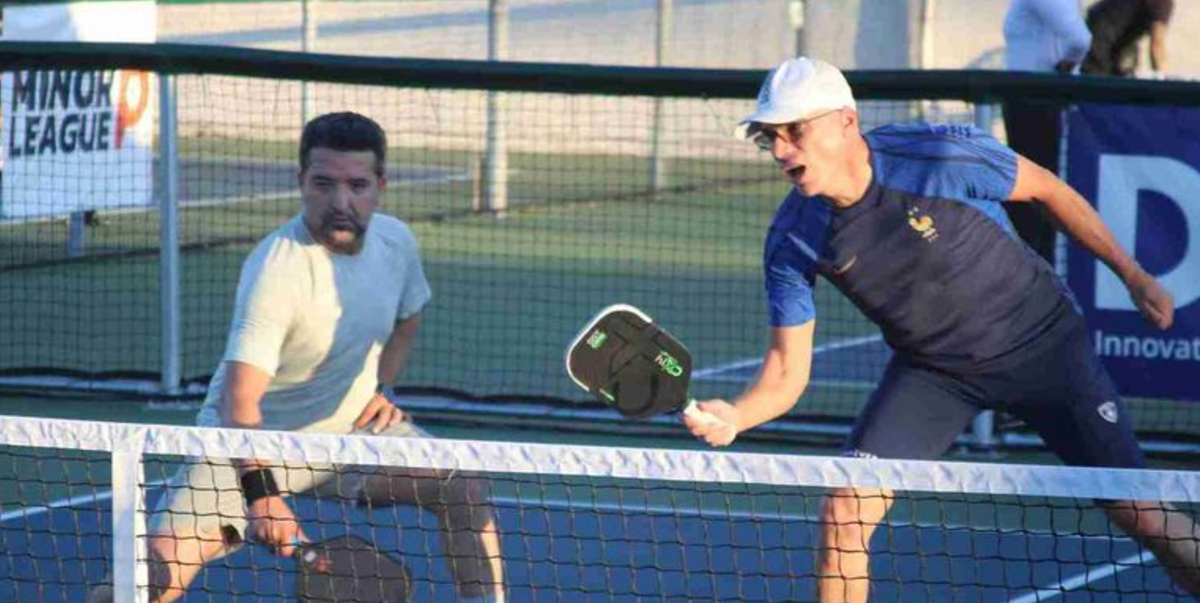
How to Poach Effectively in Pickleball
Learning how to poach effectively in pickleball is one of the fastest ways to put pressure on your opponents in doubles. This guide breaks down the exact timing, footwork, and signals that turn a hesitant net player into a match-winning weapon.
The Bigger Picture
These six differences between pro and amateur pickleball players aren’t about talent.
They’re about awareness, intentionality, and the willingness to think differently about the game.
You can implement these changes starting today, and you’ll feel the difference immediately.
If you want a structured roadmap for putting it all together, a simple 4-step system to win more pickleball games in 2026 breaks down how to layer these habits cleanly.
It also helps to understand why professional pickleball players abandoned the slice shot in 2025 to get a sense of how quickly the pro game evolves and why staying current matters.
The four amateur pickleball habits that hold most players back are mostly mental, and so are these fixes.
The pros aren’t playing a different sport. They’re just playing smarter.
💡
Frequently Asked Questions
What Is the Most Important Pickleball Difference Between Pro and Amateur Players?
The most important difference is how they respond under pressure. Amateurs panic and hit harder. Pros stay calm, match their shot selection to their position, and reset the point. This single mindset shift can transform your game faster than anything else.
Should I Always Watch My Opponent’s Paddle Instead of the Ball?
Not always. Watch the ball when you’re at the baseline with plenty of time. But in the transition zone and at the kitchen line, tracking your opponent’s paddle gives you the reaction time you need. It’s about reading the situation and adapting.
How Does the Pickleball Difference Between Pro and Amateur Show Up in Third Shot Selection?
The biggest gap is intentionality. Amateurs default to either always dropping or always driving. Pros read the ball’s height and choose accordingly, which makes their game far more unpredictable and effective. Use the knee-height rule as your starting point.
Why Do Pros Avoid Targeting the Open Court During Speed-Ups?
Because high-level players are comfortable hitting from the edge of their reach. They can counter or shuffle and put the ball away. Pros instead target the body, forcing awkward movements that lead to pop-ups they can finish.
Can I Really Improve by Just Mixing Up My Serve?
Absolutely. The serve is the only shot you control completely. By varying placement, pace, and spin based on your opponent’s weaknesses, you’re already closing the gap between amateur and professional pickleball strategy. It’s one of the fastest ways to elevate your game.
Nguồn: thedinkpickleball