If you want to win more rec doubles pickleball, you don’t need a major overhaul, you need smarter decisions on the courts you’re already playing. These 7 adjustments target the specific mistakes that cost rec players the most points.
If you want to win more rec doubles pickleball, the gap between winning and losing usually comes down to a handful of repeatable mistakes, not skill deficits.
The players who dominate local courts aren’t necessarily more athletic. They’re just making better decisions more consistently.
Most rec doubles games are decided by unforced errors, not winners.
According to USA Pickleball’s own resources on shot selection and strategy, the team that controls the kitchen line consistently holds a significant structural advantage in every rally.
Knowing that, the seven adjustments below are designed specifically to close the gap between where your game is now and where it needs to be.
Love pickleball? Then you’ll love our free newsletter. We send the latest news, tips, and highlights for free each week.
The Fastest Way to Win More Rec Doubles Pickleball: Get to the Kitchen
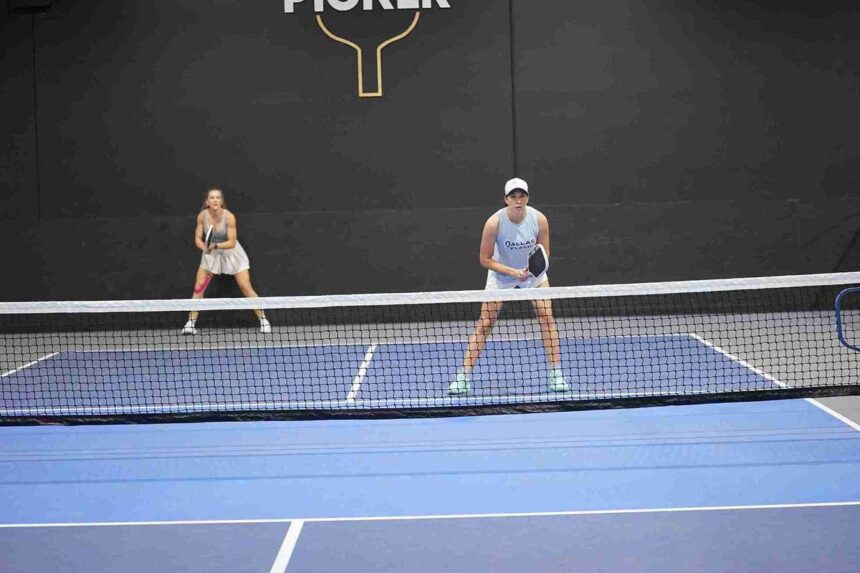
The single most effective thing you can do to win more rec doubles pickleball is simple: get to the kitchen line faster and stay there longer.
This is not a hot take. It’s the foundational truth of doubles strategy.
Here’s the thing. Most rec players hang back after their return of serve. They wait in the transition zone, half in, half out, trying to decide whether to advance.
That hesitation hands control to the other team. The team at the kitchen line controls the angles, the pace, and the pressure.
The goal after every return is to get forward. Hit a deep return that gives you time to advance, then move.
Don’t stop until both feet are near the non-volley zone line.
Your opponents will make it harder for you to position yourself at the kitchen if you give them easy balls from mid-court, so commit to the move and follow through.
Why Does the Third Shot Drop Matter So Much in Doubles?
The third shot drop is the single most important shot in doubles pickleball for the serving team.
It lands softly in the kitchen, forcing the opposing team to lift the ball, which neutralizes their positional advantage at the net.
At the rec level, most players skip it entirely. They drive everything hard, hoping for an outright winner.
That strategy works occasionally, but it fails far more than it succeeds against players who know how to reset better.
Research on decision-making in racquet sports consistently shows that players who commit to high-percentage shot selection outperform those relying on power over extended matches.
A quality third shot drop gives the serving team time to advance toward the kitchen.
A drive into the net, or a drive that pops up for an easy volley, doesn’t.
Make your third shot work harder for you and your transition to the kitchen becomes almost automatic.
💡
Adjustment 1: Serve Deep, Return Deep
This sounds basic. It gets ignored constantly.
A deep serve pushes your opponent back. It creates distance between them and the kitchen, which gives your team time to establish position.
A short serve does the opposite, it gifts your opponents a comfortable return and an easy path forward.
Same logic applies to the return of serve. Hit it deep to return of serve, to your opponent’s backhand when possible, then move forward immediately.
A short return of serve invites your opponents to drop short or attack the transition zone. Don’t give them that option.
Control the length of the rally from point one.
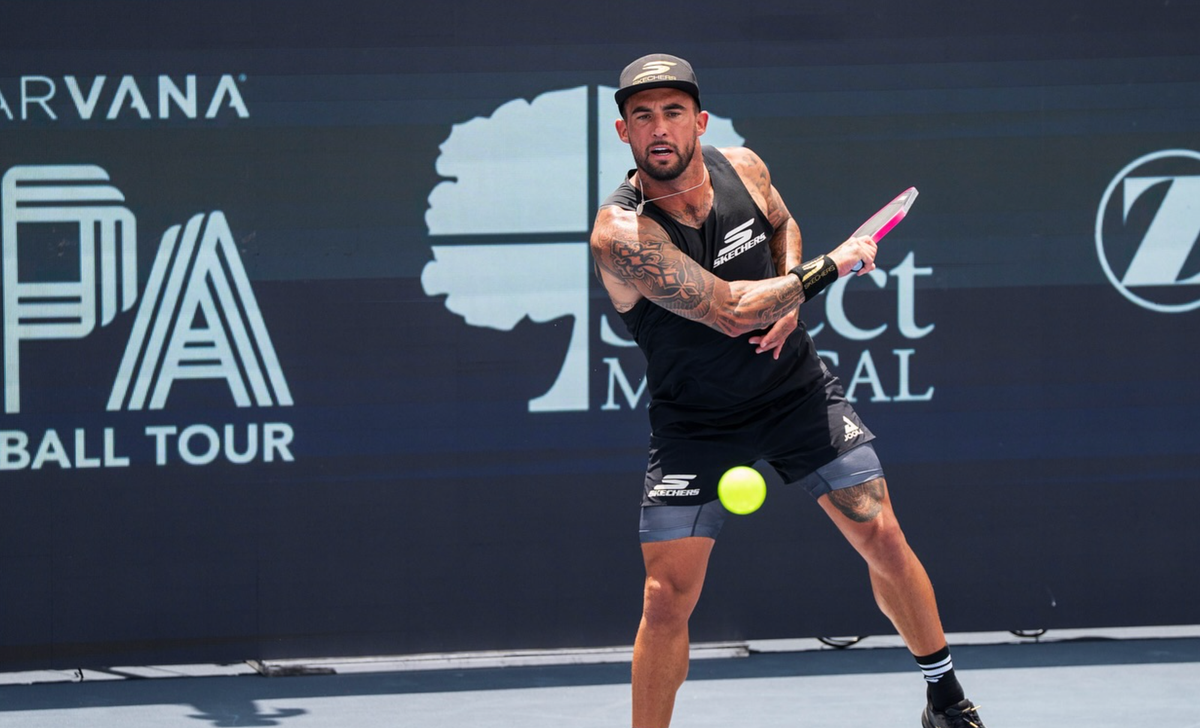
Don’t Drop from Deep Behind the Baseline: ‘Drive Yourself Out of Trouble’ Instead
Conventional pickleball wisdom dictates you play soft to get yourself out of hot water from deep on the court. Drop until you can work your way in, right? Wrong, says Tyson McGuffin.
Adjustment 2: Stop Poaching Without a Plan
Poaching, crossing to take your partner’s ball, is one of the highest-upside plays in doubles pickleball when executed correctly.
At the rec level, it’s one of the biggest sources of lost points.
The problem isn’t poaching itself. The problem is random poaching.
If you cross without signaling or without a clear read on the ball, you leave your side of the court wide open and your partner frozen in confusion.
Understanding what stagger means in doubles can help you and your partner develop better court coverage awareness.
Poach on attackable balls that cross through the middle. Communicate with your partner. A quick “mine” or a pre-agreed signal eliminates the hesitation.
When poaches are purposeful, they end rallies. When they’re reactive and unplanned, they create chaos. Choose the former.
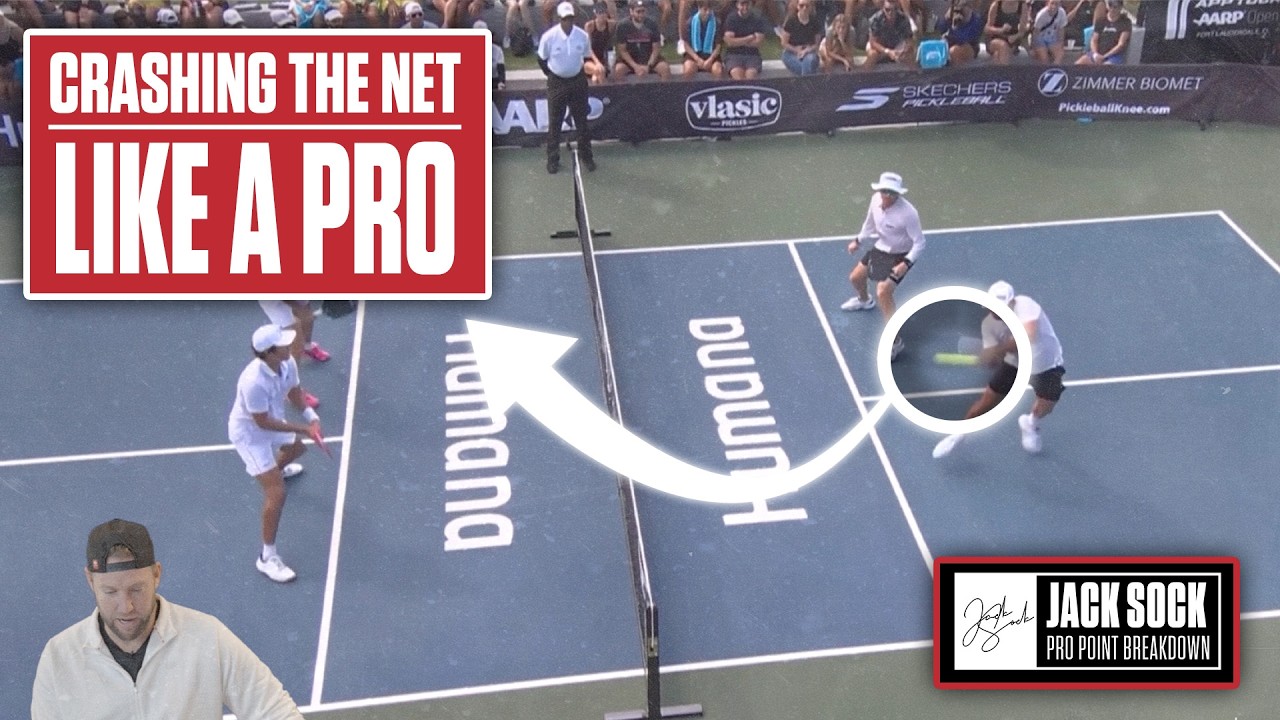
How to Read Your Opponent’s Eyes and Poach More Balls in Doubles Pickleball
The key to winning many pickleball points isn’t just quick reflexes; it’s reading what your opponent is about to do before they do it
Adjustment 3: Cover the Middle (And Stop Fighting Over It)
Here’s the most common doubles argument that never needs to happen: “Was that yours or mine?”
The middle of the court is where points are won and lost in doubles.
It’s the highest percentage target for the attacking team, it reduces angles for the defending team and creates confusion between partners.
If you’re not communicating about who takes middle balls, you’re handing opponents a free target.
The general rule: the player with the forehand in the middle takes it. But what matters more than the rule is the agreement.
Talk to your partner before the game. Know who covers middle on the right side, who covers middle on the left, and what happens when the ball is genuinely 50-50.
Simple tips to improve teamwork in doubles start with pre-game communication.
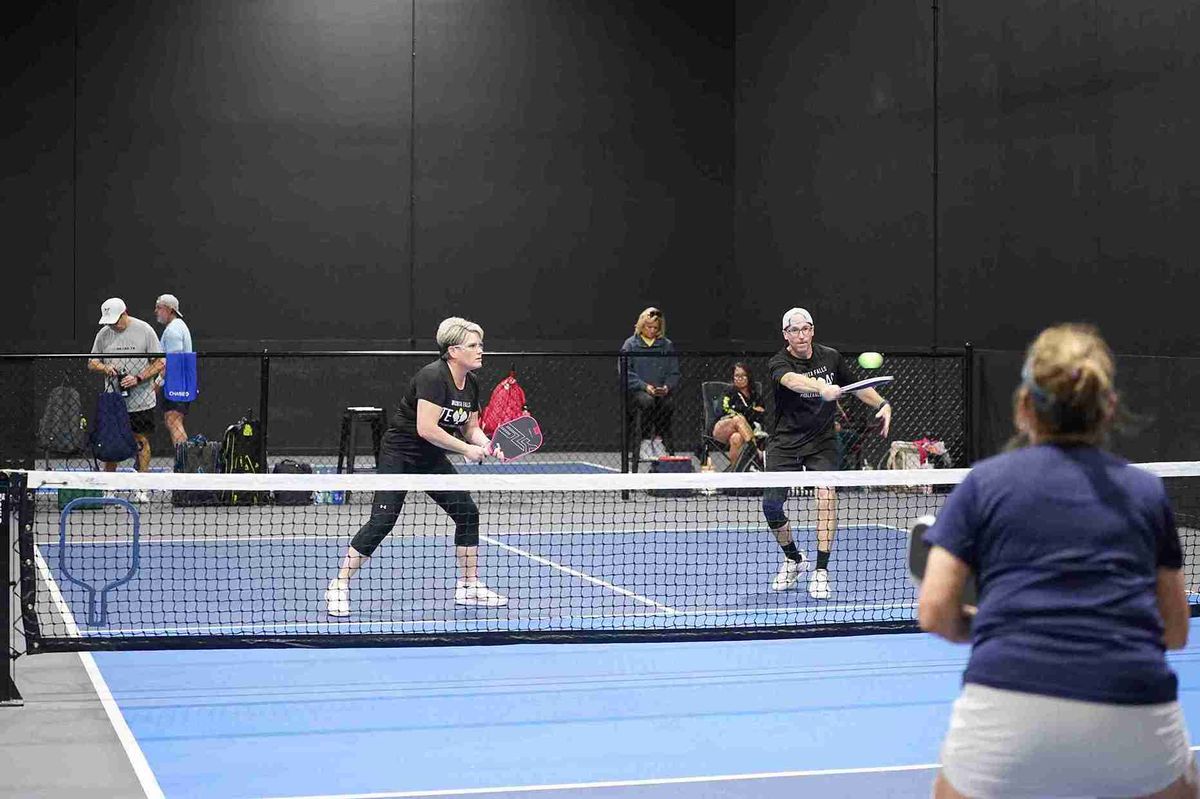
Who Covers the Middle in Pickleball Doubles?
In pickleball doubles, who covers the middle is one of the most debated questions on the court. The short answer: the player with the forehand, but the full answer is a lot more nuanced than that.
Adjustment 4: Stop Attacking When You’re Out of Position
This one costs more rec players points than almost anything else.
You’re back in the transition zone, scrambling. A ball comes at you at mid-height. You try to attack it because it feels like the right move.
The ball goes into the net or pops up for a put-away. Sound familiar?
Out-of-position attacks are low-percentage shots. When you’re not at the kitchen line, your job is to reset, not attack.
Hit a soft, low ball that lands in the kitchen. Give yourself time to move forward. The moment you’re at the line is the moment you earn the right to speed things up.
This shift in thinking, playing the percentages in pickleball rather than swinging for unreachable winners, is what separates 3.5 players from players who are stuck at 3.0.
The controlled reset is not boring. It is winning.
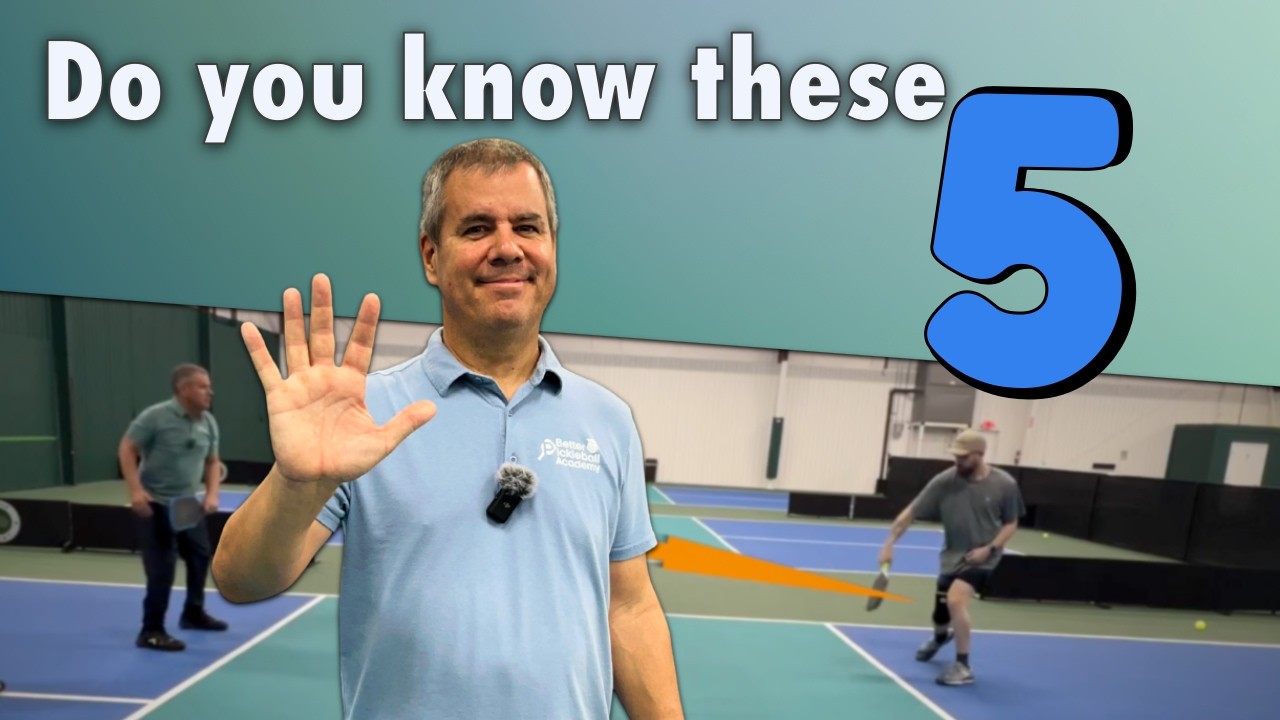
Pickleball Pull Attack: 5 Factors to Master
A pickleball pull attack can be a game-changer, but only when you understand the five factors that determine success. Coach Tony Roig breaks down exactly when you should initiate an aggressive attack and when patience pays off.
What Does “Playing Unattackable” Actually Mean in Rec Doubles?
Unattackable means keeping the ball low enough that your opponent cannot attack it.
A ball that bounces at or below net height, especially in the kitchen, cannot be driven aggressively without significant risk of hitting it into the net.
When you keep the ball unattackable, you force your opponents into mistakes.
Becoming unattackable in pickleball requires consistent dink mechanics, good ball placement (crosscourt is safer than down the line), and patience.
At the rec level, that patience is in short supply. That’s your edge.
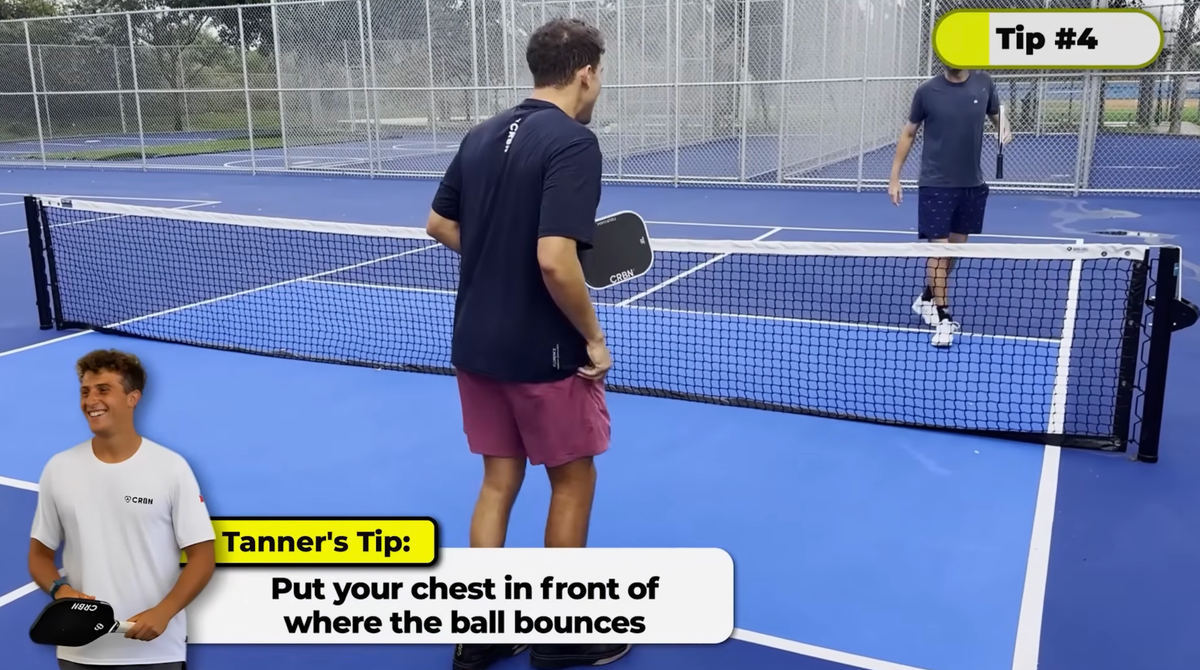
Pickleball Kitchen Line: 6 Skills to Become Unattackable
Tanner Pickleball breaks down how six simple adjustments in positioning and awareness can make you nearly impossible to attack at the kitchen line
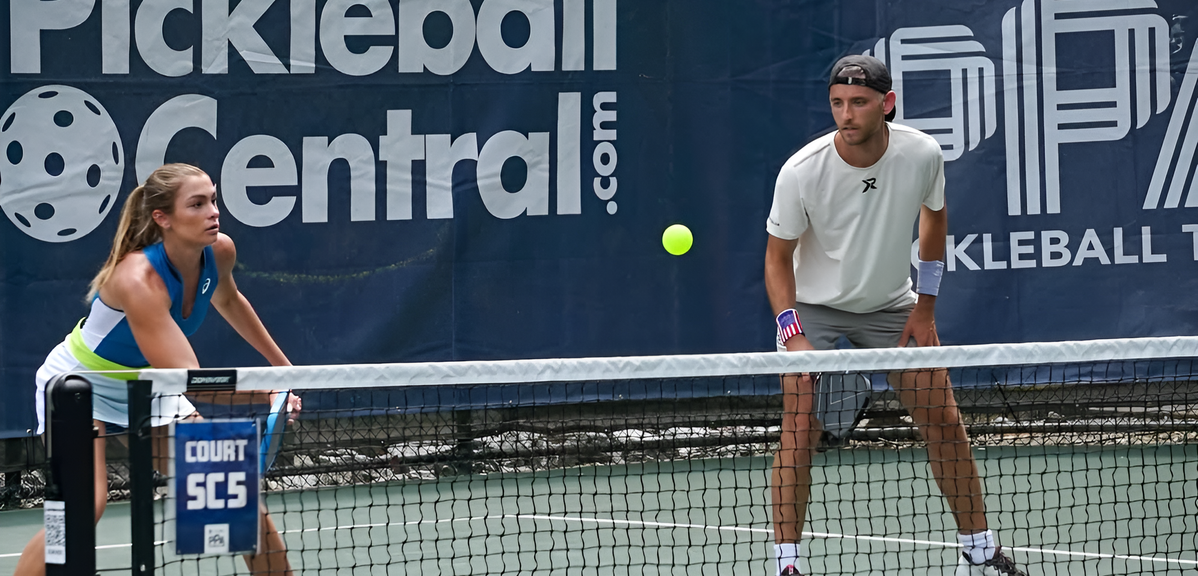
Adjustment 5: Attack the Hip, Not the Body Bag
When you do get an attackable ball, placement matters more than pace. Most rec players aim at the body, center mass, because it’s the biggest target.
A better target is the hip on the paddle side. It jams the elbow, limits the swing range, and forces an uncomfortable defensive return.
Body shots and targeting are a real tactical weapon at every level of pickleball. A ball at the hip creates a defensive situation even from a player with good hands.
Add pace to that placement and you’ve got a genuinely difficult ball to deal with.
This doesn’t mean go for the hip every time. It means when you’ve earned the attack, pick the right spot.
Aiming at the center of the body gives your opponent too many options for a clean block or redirect.
Attack the Right Spots: Win More Points in Pickleball
You can’t go to the same spot every single time you go on offense – eventually, your opponent will catch on. And make you pay for it.
Adjustment 6: Use the Lob as a Reset, Not a Weapon
The lob has a reputation as a desperation shot. It doesn’t deserve that reputation, but it does need to be used correctly.
At the rec level, most lobs are hit too short and land near the service line, giving opponents an easy overhead.
An effective lob clears the opponent at the kitchen line and lands deep in the court. It resets the point and forces your opponent off the line.
The lob as a strategic tool works best when your opponents are leaning forward or camping hard at the kitchen. Use it selectively.
One well-placed lob per game can change how aggressively your opponents crowd the net. That positional uncertainty creates openings for the rest of the match.
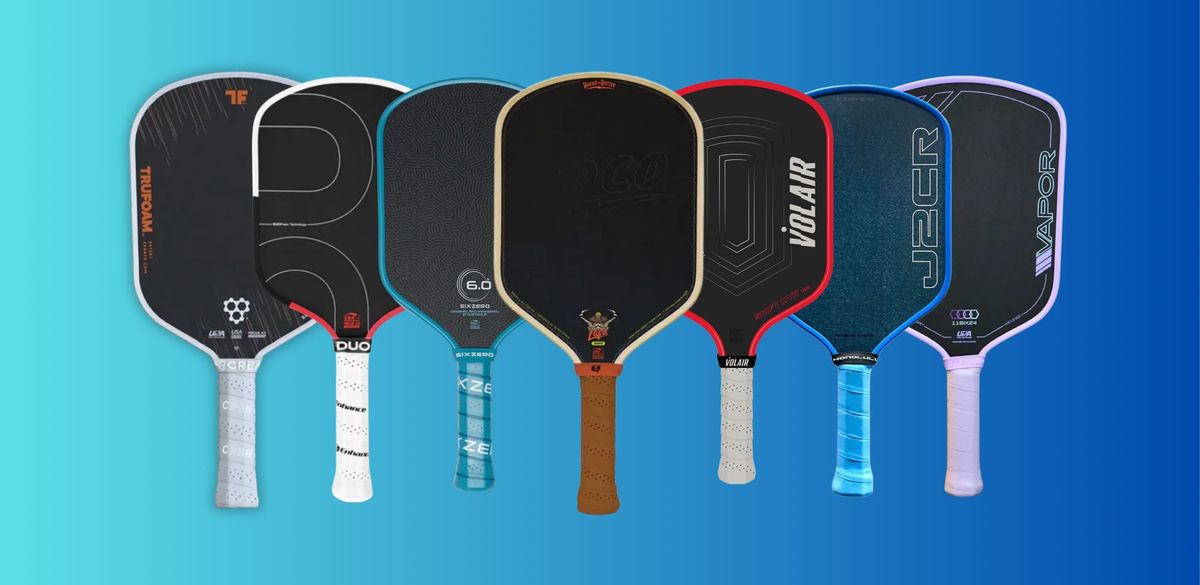
7 Hybrid Pickleball Paddles that Blend Power and Control
None of these are lacking in the oomph department. But their foam cores and hybrid shapes combine to offer more stability, control, and feel when it matters most.
Adjustment 7: Watch the Ball, Not Your Opponent
This is the adjustment that rec players are most likely to ignore because it feels like it shouldn’t matter that much.
It matters enormously.
Watching the ball through contact is the single mechanical change that eliminates the most unforced errors.
When you look up to see where your opponent is or where you’re aiming, your contact point shifts. The ball goes off-angle, too long, or into the net.
Trust your placement instincts and keep your eyes on the ball.
The truth about looking at the ball is backed by sports vision research showing that gaze control directly affects shot consistency in racquet sports, a finding supported by studies published in the Journal of Motor Behavior.
Your mechanics will improve almost immediately when your eyes do their job.
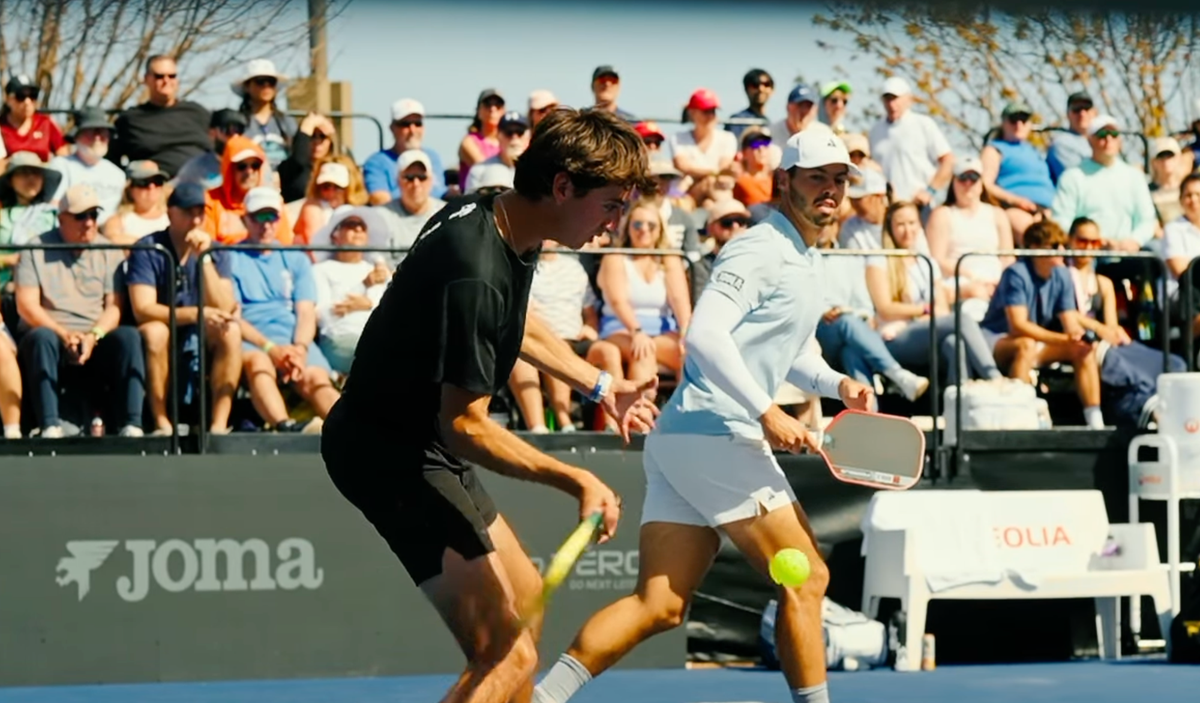
Pickleball Tips: Watch the Ball Closely Through Contact
“Keep your eye on the ball.” Does the age-old adage apply to your dinks, drives, and drop-shots?
Key Takeaways
- Get to the kitchen line after every return and stay there, this is the foundation of winning doubles strategy
- Hit deep serves and returns to push opponents back and control the rally from the start
- Use the third shot drop to transition forward instead of driving from the baseline
- Communicate with your partner about middle coverage and poaching before the game starts
- Reset out of position instead of attacking, get to the kitchen line before you speed things up
- Target the paddle-side hip when you earn an attack, not center body mass
- Keep your eyes on the ball through contact to eliminate unforced errors
💡
Frequently Asked Questions
What is the most important thing to do to win more rec doubles pickleball?
The most important adjustment to win more rec doubles pickleball is to get to the kitchen line faster and stay there. The team that controls the non-volley zone controls the rally. Most rec players lose points by lingering in the transition zone rather than committing to the advance.
What is the third shot drop in pickleball doubles?
The third shot drop is the third shot of the rally, hit by the serving team, that lands softly in the opponents’ kitchen. It forces the opposing team to hit upward, neutralizing their positional advantage at the net, and gives the serving team time to advance to the kitchen line. It is the most important tactical shot in doubles strategy.
How do you cover the middle in doubles pickleball?
The standard rule is that the player with their forehand in the center of the court takes middle balls. More important than the rule is agreement, talk with your partner before the match so there’s no hesitation mid-rally. Court strategy and middle coverage are learnable habits that improve with intentional practice.
Should I drive or drop from the baseline in rec doubles?
In most situations, the drop is the higher-percentage choice from the baseline. A drive can work, but it requires precise execution to avoid giving your opponent an easy ball at the kitchen. The drop gives your team time to advance and neutralizes the kitchen line advantage. Three options from the baseline, drop, drive, and lob, each have their place, but the drop should be your default.
How do I stop making so many unforced errors in pickleball doubles?
The biggest fixes are watching the ball through contact, resetting instead of attacking when out of position, and keeping the ball low enough to be unattackable. Most pickleball mistakes at the rec level are mechanical and positional, not athletic. Address those two categories and your error rate drops significantly.
Nguồn: thedinkpickleball