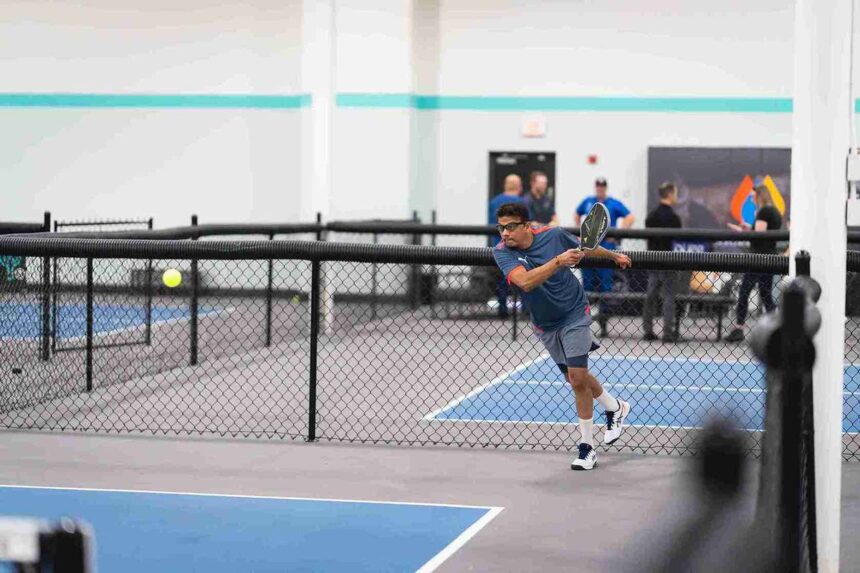
Knowing how to prevent pickleball elbow can keep you on the court longer and out of the physical therapy waiting room. Here’s what the research says about the exercises, technique fixes, and equipment changes that actually work.
Knowing how to prevent pickleball elbow before it sidelines you is the smartest thing you can do for your game. This is the injury that sneaks up on you.
One week you’re grinding through dink battles, the next you can barely shake someone’s hand.
And unlike a twisted ankle, elbow tendinopathy doesn’t announce itself with a single dramatic moment. It builds. Quietly. Until it doesn’t.
Pickleball elbow is essentially lateral epicondylitis (tennis elbow) triggered by the repetitive forearm and wrist motions that define the game.
Research published in the Journal of Emergency Medicine found that upper extremity injuries account for a significant portion of pickleball-related visits to emergency departments, and elbow injuries are among the most common overuse complaints in the sport.
The good news: most of it is preventable with the right protocol.
Love pickleball? Then you’ll love our free newsletter. We send the latest news, tips, and highlights for free each week.
What Is Pickleball Elbow, Exactly?
Pickleball elbow is lateral epicondylitis, the inflammation of the tendons that attach the forearm extensor muscles to the lateral epicondyle (the bony bump on the outside of your elbow).
When those tendons are repeatedly loaded without adequate strength or recovery, they develop microtears. Pain, stiffness, and weakness follow.
The American Academy of Orthopaedic Surgeons notes that tennis elbow affects 1–3% of the general population, but the rate is considerably higher among racquet sport players with high weekly volume.
Pickleball is especially risky because players tend to play more hours per week than they ever did in tennis or golf, accelerating the overuse cycle.
Here’s the thing: it’s not just the big swings.
The tag/pickleball-injury files are full of players who blame aggressive overhead smashes, but repetitive dinking at the kitchen line may actually be the bigger culprit.
Small motions, high frequency, minimal rest.
Why Pickleball Players Are at Higher Risk Than They Think
The sport’s demographics make this problem worse before they make it better.
Players live longer and the 50-plus crowd shows up to play four, five, sometimes six days a week.
The problem is that tendon elasticity decreases with age, per research in the British Journal of Sports Medicine, meaning older tissues need more time to recover from the same load.
Younger players aren’t immune. High ball pace, heavy topspin exchanges, and wrist-heavy drives all create the same overuse pattern.
If you’ve been working on your forehand and noticed a nagging ache creeping in, you’re already seeing the warning signs.
There’s also a grip problem hiding in plain sight. Grip pressure that’s too firm is one of the top mechanical drivers of elbow stress.
Most players grip their paddle like they’re trying to keep it from flying into the net.
That constant muscle tension in your forearm extensors, sustained across two hours of play, creates the chronic loading that leads directly to tendinopathy.
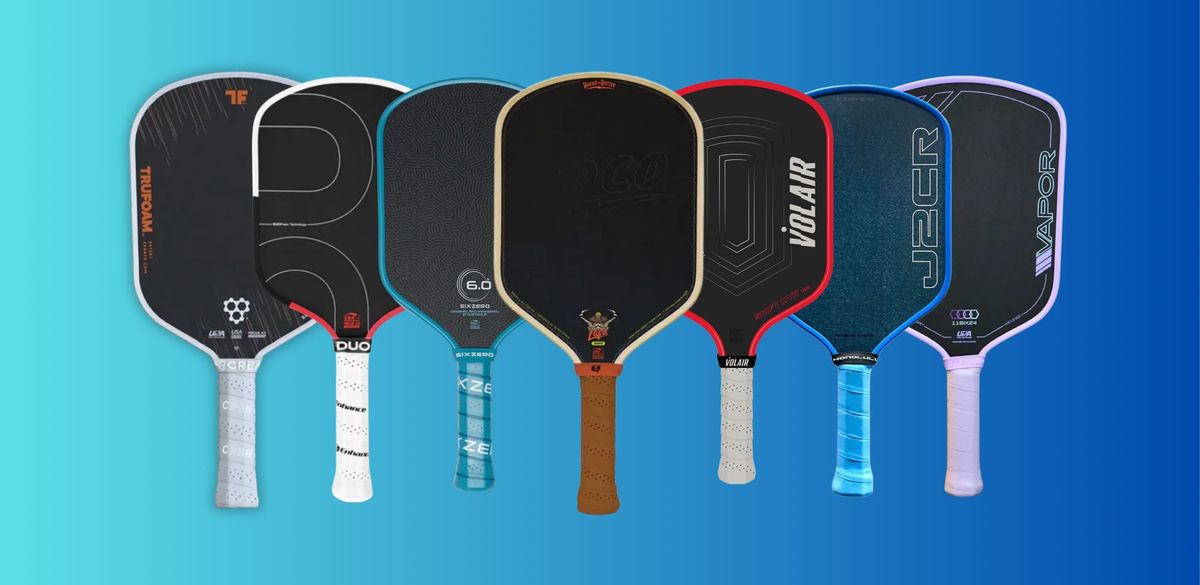
7 Hybrid Pickleball Paddles that Blend Power and Control
None of these are lacking in the oomph department. But their foam cores and hybrid shapes combine to offer more stability, control, and feel when it matters most.
The 5 Best Exercises to Prevent Pickleball Elbow
The most effective way to prevent pickleball elbow is building eccentric strength and flexibility in the forearm extensors before symptoms appear.
These are the five exercises sports medicine clinicians recommend most consistently, backed by research from the British Journal of Sports Medicine on eccentric training for tendon health.
1. Eccentric Wrist Extensions Rest your forearm on a table, palm down, holding a light weight (1–3 lbs). Use your other hand to lift the wrist, then slowly lower it over 4 seconds under control. That slow lowering is the eccentric portion that rebuilds tendon integrity. Three sets of 15, daily.
2. Forearm Pronation/Supination Hold a hammer or light weight. With your elbow bent at 90 degrees, rotate your forearm palm-up, then palm-down, slowly. This mimics the rotational demands of pickleball swings and builds the small stabilizer muscles around the elbow joint. Wrist stability work like this directly reduces elbow strain.
💡
3. Towel Wrist Curls Roll a small towel into a cylinder. Hold it in your paddle hand and perform wrist curls in both directions. The unstable surface activates deeper muscle fibers that a barbell doesn’t touch.
4. Finger Extensions with a Rubber Band Put a rubber band around your fingers and open your hand against resistance. This targets the extensor muscles on the back of the forearm and creates balance against the constant flexor work during play. 25–30 reps, three times a day.
5. Cross-Friction Massage Using your thumb, apply firm pressure perpendicular to the tendon along the outside of your elbow for 60 seconds. Research in the Journal of Orthopaedic and Sports Physical Therapy supports transverse friction massage as an effective tool for tendon health maintenance. Do this before and after play.
Roll, Lunge, Jump: The Anna Bright Method for Warming Up Right
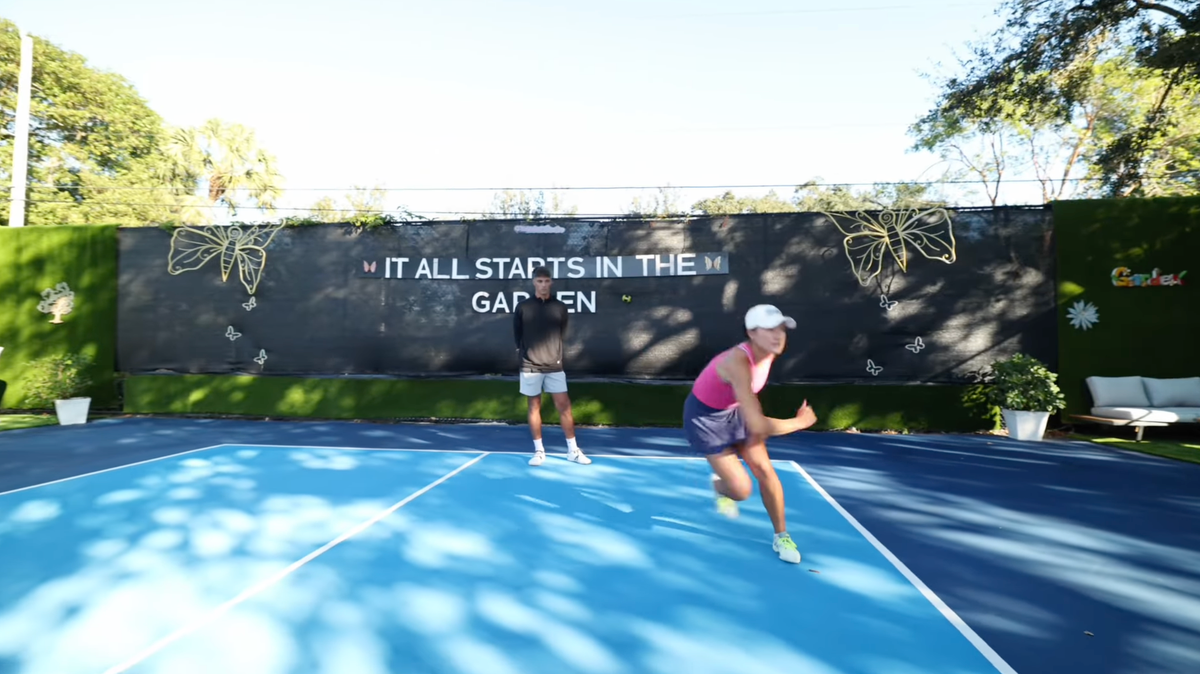
Take a page out of the pro book. Move your spine, lunge deep, and jump a little. Your knees and your win-loss record will thank you.
Does Your Swing Mechanics Need a Form Check?
Form fixes are where most players leave the most injury prevention gains on the table. And the most common mistake isn’t dramatic; it’s subtle.
Wrist flicking at contact is the number one form error that loads the lateral epicondyle.
A clean groundstroke uses hip rotation and shoulder turn to generate power, with the wrist staying relatively neutral at impact.
The wrist flick is a compensation for late footwork.
Here’s the fix: get to the ball earlier. Better footwork buys you time to set up, and when you’re set up properly you stop relying on the wrist to generate pace.
It really is that connected. That’s also why hip mobility work outside of pickleball translates directly to elbow protection on the court.
The backhand drive deserves its own call-out.
Backhand technique errors, specifically hitting with the elbow leading rather than the shoulder, are a direct mechanical cause of lateral epicondylitis in racquet sport players, per findings from the American Journal of Sports Medicine.
Keep your elbow tucked and drive through with the shoulder.
The swing mechanics of a compact, shoulder-led stroke are your best long-term defense.
Shoulder height impact also matters: hitting above shoulder height repeatedly generates downward force compensation through the elbow.
Overhead mechanics that let the paddle do the work rather than muscling the shot keep that stress off your tendons.
Let your paddle do the work is advice that sounds basic. It isn’t.
Pickleball Elbow: Prevention, Treatment and Recovery Guide
A new episode of Mayo Clinic’s “Health Matters” podcast delves deep into pickleball elbow. The bad news: it’s a common and nagging ailment. But rest assured there’s a smart way through it and back to the court.
How to Prevent Pickleball Elbow With the Right Paddle Setup
This is one of the most overlooked factors, and it’s one you can fix today without a doctor’s visit.
The wrong paddle setup can make biomechanically sound technique feel fine in the short term but steadily destroy your elbow over months of play.
- Grip size matters more than almost anything else. A grip that’s too small forces your hand to squeeze harder to maintain control, increasing forearm extensor activation throughout every shot. If you can slide your index finger of your non-dominant hand between your fingers and palm while holding your normal grip, the size is roughly correct. Grip size guides on paddle selection pages go deeper on measurement technique, but the simple rule is: when in doubt, size up.
- Paddle weight is the second variable. Heavier paddles require more muscular effort to control, especially during fast exchanges at the kitchen. If you’re playing with a paddle over 8.5 oz and you’re experiencing elbow issues, dropping to a mid-weight paddle (7.5–8.3 oz) is worth testing. Paddle selection affects more than just power; it affects how much your muscles work on every single shot.
- Core material and vibration dampening also factor in. Polypropylene honeycomb cores dampen vibration significantly better than older composite materials. Research from the British Journal of Sports Medicine on racquet sport injuries confirms that vibration transmitted through the handle directly contributes to lateral epicondylitis over time. Look for paddles that advertise vibration control or consider adding a vibration dampener to your paddle grip.
- Finally: overgrip thickness. Building up your handle with an extra overgrip layer costs almost nothing and can simulate moving up a full grip size. If you’re not sure your current setup is protecting your elbow from the outside, overgrip is the cheapest test.
Stop Popping the Ball Up: Modern Pickleball Hand Speed and Paddle Positioning
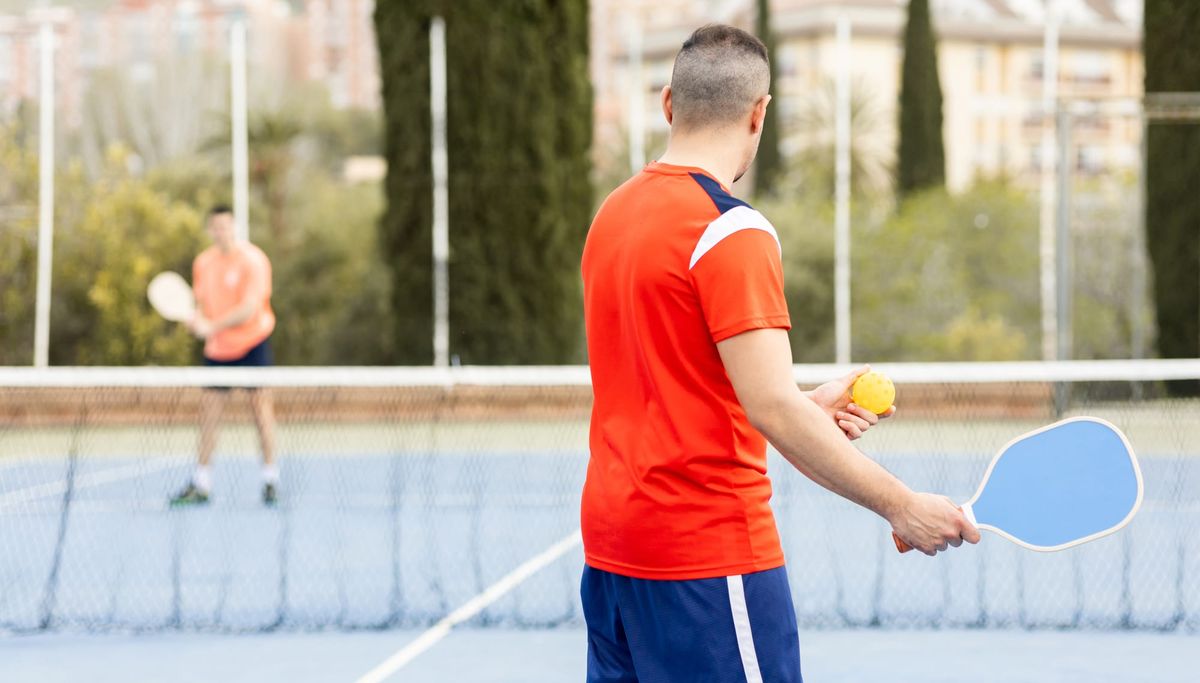
Winning the kitchen today isn’t about swinging harder—it’s about creating space with your coil and controlling contact with smarter paddle positioning
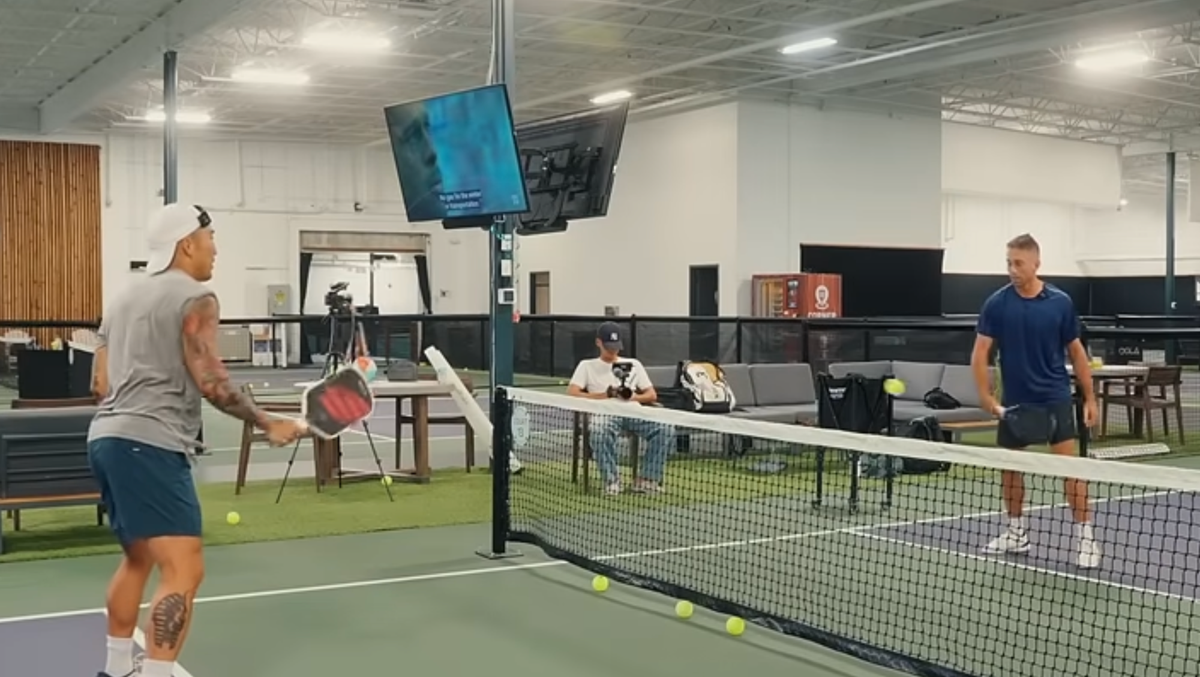
How to Prevent Pickleball Elbow With a Smarter Pre-Play Routine
Warming up matters.
A proper dynamic warm-up doesn’t just prep your muscles; it increases tendon compliance and reduces peak impact stress on the elbow during explosive movements.
According to research in the Scandinavian Journal of Medicine and Science in Sports, warm tendons absorb force significantly better than cold ones.
The warm-up should include wrist circles, forearm stretches (both flexor and extensor), shoulder circles, and dynamic arm swings.
Five minutes before you step on the court. Non-negotiable.
Too many players get ready for pickleball by walking from the parking lot to the court and hitting full speed within 60 seconds.
Post-play recovery is equally critical. Icing the elbow for 15–20 minutes after a long session reduces cumulative inflammation before it can build into something chronic.
Cold plunge protocols used by higher-level players offer similar systemic anti-inflammatory benefits.
Pair recovery work with your training routine and you’re building a system, not just playing hope-and-see.
One more thing: pay attention to total weekly volume. The research on overuse injuries consistently points to rapid load increases as the primary trigger.
If you jumped from two sessions a week to five, that’s almost certainly where your elbow problem started.
Skill investments that improve your efficiency on court also reduce the volume of effort you need per rally, which protects your body over the long season.
The Complete Pickleball Drill Routine to Reach 5.0
Reaching 5.0 in pickleball requires more than isolated skill work. A structured pickleball drill routine that builds consistency across dinking, resets, volleys, and live play is what separates competitive players from the rest.
Key Takeaways
- Pickleball elbow is lateral epicondylitis triggered by repetitive forearm loading, overuse, and poor mechanics. It’s preventable.
- Eccentric wrist extension exercises are the single most evidence-backed intervention for tendon health and prevention.
- Wrist flicking at contact is the most common form error that loads the elbow. Fix it by improving footwork and using shoulder rotation for power.
- Grip size too small and paddle weight too heavy are the two most common equipment mistakes that drive elbow injuries.
- Dynamic warm-up, post-play icing, and managing weekly volume increases are the unsexy but essential pieces of how to prevent pickleball elbow for good.
💡
Frequently Asked Questions
What is pickleball elbow and how is it different from tennis elbow?
Pickleball elbow and tennis elbow are the same condition: lateral epicondylitis. The term “pickleball elbow” refers specifically to the same tendon irritation caused by the repetitive forearm and wrist motions in pickleball. The mechanics differ slightly from tennis due to shorter swings and more frequent dinking at the kitchen line, but the underlying injury and treatment are identical.
How do I know if I already have pickleball elbow?
The main symptoms are pain or tenderness on the outside of the elbow, weakness in the grip, and pain that gets worse when gripping objects or extending the wrist against resistance. A simple test: hold your arm straight and try to bend your hand backward against resistance from your other hand. Pain on the outer elbow during that movement is a strong indicator. See a sports medicine professional for a confirmed diagnosis.
Can I still play pickleball with elbow pain?
It depends on severity. Mild discomfort may allow modified play with reduced volume, lighter paddle, and a brace. Ignoring moderate-to-severe pain and continuing to play at full volume will almost certainly worsen the injury and extend total recovery time. If pain affects your form or daily function, take time off and consult a clinician.
Does a pickleball elbow brace actually help?
A counterforce brace (worn on the forearm just below the elbow) reduces the peak force transmitted through the lateral epicondyle during activity. Research in Clinical Orthopaedics and Related Research found bracing provided meaningful symptom relief for lateral epicondylitis during activity. It’s a management tool, not a cure, and doesn’t address the underlying mechanics or strength deficits.
How long does it take to recover from pickleball elbow?
With consistent eccentric strengthening and load management, mild-to-moderate cases typically improve in 6–12 weeks. Severe or long-standing cases can take 6–12 months. The most common mistake is returning to full play as soon as pain disappears, before the tendon has fully remodeled. Gradual return-to-sport protocols are essential to avoiding immediate re-injury.
Nguồn: thedinkpickleball