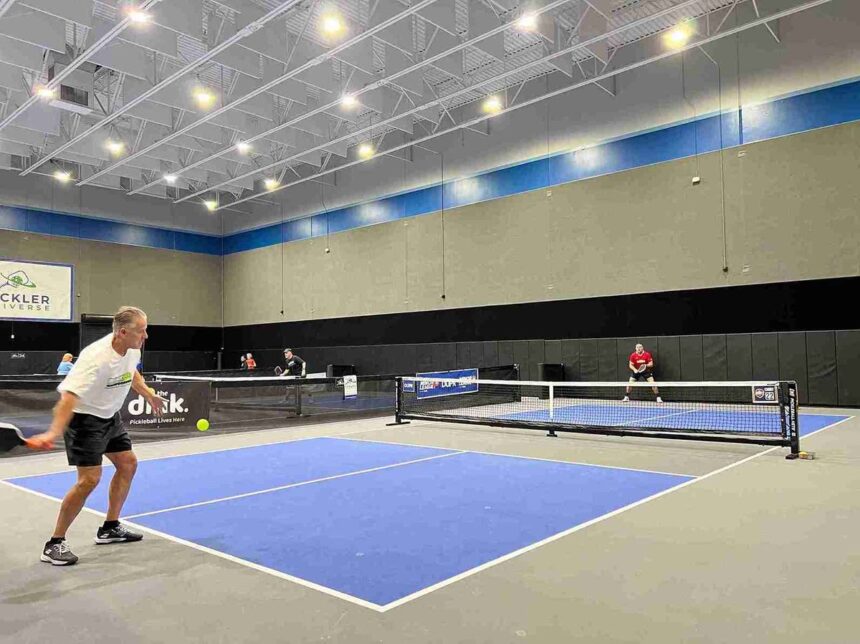
Pickleball singles rules follow most of the same framework as doubles, but the scoring system, serving rotation, and court strategy are different enough to trip up even experienced players. This complete guide breaks down every rule you need to play solo pickleball the right way.
Pickleball singles rules catch a lot of players off-guard, even ones who have been playing doubles for years.
The court is the same. The kitchen is the same. But the scoring, the serving, and the way you think about every single rally? Completely different.
Singles is raw. There’s nowhere to hide. No partner to cover the wide angle, no one to poach that floater down the middle.
It’s just you, your opponent, and 44 feet of court that somehow feels like it doubled in size the moment you step out there alone.
Whether you’re prepping for a tournament, exploring singles strategy for the first time, or just want to understand the full rule set before you challenge someone to a 1v1, this is your complete breakdown.
Love pickleball? Then you’ll love our free newsletter. We send the latest news, tips, and highlights for free each week.
What Are the Official Pickleball Singles Rules?
Pickleball singles rules are governed by USA Pickleball’s official rulebook, which is updated annually.
The core rules of the game, such as the two-bounce rule, non-volley zone restrictions, and fault definitions, apply exactly the same in singles as they do in doubles.
The key differences are in scoring, serving rotation, and positional calls.
Here’s what stays the same:
- The court dimensions (20×44 feet, including kitchen rules)
- The two-bounce rule (the ball must bounce once on each side before volleys are allowed)
- The non-volley zone (you cannot volley while standing in or touching the kitchen line)
- Fault rules for out-of-bounds balls, net violations, and double bounces
Here’s what changes:
- Scoring format. Singles uses a two-number score call, not three.
- Serving rotation. There’s no “side out” concept the way doubles players know it. Each player serves from the right or left service box based on their current score.
- Court coverage. You own the entire court alone. That changes everything.
How Does Pickleball Singles Scoring Work?
Singles scoring is simpler than doubles scoring. Games are played to 11 points, win by 2.
Tournament play may use rally scoring or alternate formats, but recreational singles almost universally uses standard scoring.
The score call in singles is two numbers only: your score first, then your opponent’s.
In doubles, you call three numbers because the third number tells you whether you’re the first or second server on your team.
In singles, there is no second server. You either hold serve or you don’t.
So if you’re winning 7-4, you call “7-4” before you serve. Clean and simple.
Server position is determined by your score.
- If your score is even (0, 2, 4, 6…), you serve from the right service box.
- If your score is odd (1, 3, 5, 7…), you serve from the left.
This mirrors the doubles convention but applies only to your own score.
Some players coming from doubles forget this rule and serve from the wrong side. That’s a fault.
According to USA Pickleball Rule 4.B.6, serving from the incorrect position is a fault if the error is discovered before the next serve.
💡
Pickleball Singles Serving Rules: What You Need to Know
The serve in singles follows the same mechanical rules as doubles.
Per USA Pickleball Rule 4.A, the serve must be hit underhand, with the paddle contact point below the wrist, and the ball must be struck below the server’s waist.
The serve must land diagonally in the opponent’s service box, clearing the non-volley zone entirely.
A serve that clips the kitchen line is a fault. A serve that hits the net and lands in (a “let”) is replayed with no penalty.
There is one serve attempt only in singles. No second serve the way you get in tennis.
After the serve, the receiver must let the ball bounce before returning it.
The server must also let that return bounce before hitting their third shot. That’s the two-bounce rule, and it applies in singles exactly as it does in doubles.
What about the drop serve? The drop serve became a legal option under USA Pickleball rules.
Instead of tossing the ball and hitting it, you can drop it from any natural height and let it bounce before striking.
There are no restrictions on how you hit a drop serve, meaning you can hit it with topspin, slice, or any motion you want.
Some players use it as an alternative to the traditional volley serve.
Pickleball Rules Explained for Beginners (2026)
Pickleball rules can feel overwhelming at first, but they break down into a handful of core concepts that click fast. This guide covers every rule you need to know to step on the court with confidence in 2026.
Does the Two-Bounce Rule Apply Differently in Singles?
No. The two-bounce rule works exactly the same in solo play. After the serve, both the return and the server’s third shot must bounce before anyone can volley.
Where it matters strategically is that in singles, the server often stays near the baseline after serving rather than rushing the kitchen the way doubles players do after a return.
Why? Because you have an entire court to cover and you need to read the return before committing to a direction.
Court positioning is a whole different animal when you’re alone.
How Is Pickleball Singles Strategy Different from Doubles?
Here’s the thing: singles rewards athleticism in a way that doubles does not.
You’re covering the full court by yourself, which means footwork and movement become primary weapons, not secondary ones.
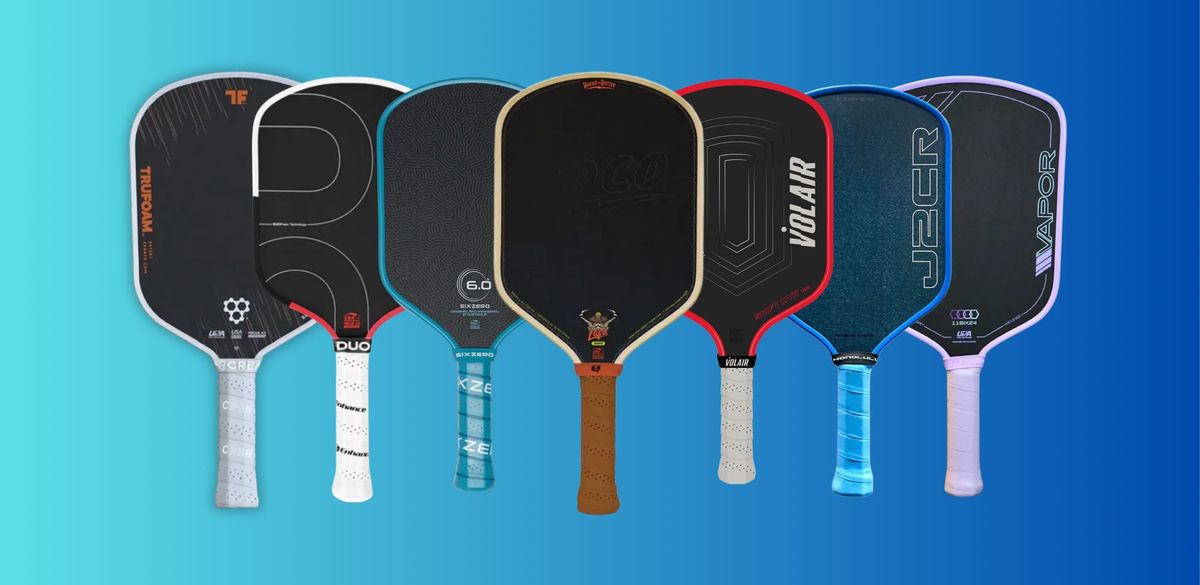
7 Hybrid Pickleball Paddles that Blend Power and Control
None of these are lacking in the oomph department. But their foam cores and hybrid shapes combine to offer more stability, control, and feel when it matters most.
The big strategic shifts in singles:
- Serve deep and target the backhand. Most players have weaker backhands, and a deep serve gives them less time to recover toward the kitchen. A well-placed serve is your first real point of pressure in singles.
- The kitchen game matters, but differently. In doubles, both teams fight to establish position at the non-volley zone. In singles, getting to the kitchen leaves you exposed wide. Many singles players opt for a mid-court or baseline-oriented game and use passing shots instead of dink exchanges.
- Attack down the line, reset crosscourt. Crosscourt shots give you more net clearance and wider angle. Down-the-line drives are aggressive but carry risk. Knowing when to drive versus when to drop is as important in singles as it is in doubles.
- Stamina is everything. Pickleball cardio matters far more in singles. You’re sprinting corner to corner on every ball. If you’re not in shape, your shot selection will deteriorate well before your skills do.
Advanced players like JW Johnson and Federico Staksrud are among the elite singles players at the professional level, and watching their movement patterns is a masterclass in solo play positioning.
5 Pro Pickleball Singles Strategy Tips to Win More
Most pickleball singles players are losing points the same way without realizing it. Here are 5 pro-level pickleball singles strategy techniques that will immediately improve your game.
What Are the Most Common Pickleball Singles Rules Violations?
Most recreational players make the same handful of mistakes when they cross over from doubles to solo play.
The most common pickleball singles rules faults include:
- Serving from the wrong side. Forgetting that your score (not your position) determines which service box you use.
- Foot faults. Stepping on or into the kitchen during a volley. The non-volley zone rules don’t change in singles.
- Wrong score call. Calling three numbers out of doubles habit. You only call two in singles.
- Volleying the return. Attempting to volley the opponent’s return of serve before it bounces, which is a direct violation of the two-bounce rule.
- Kitchen line violations on the follow-through. Your momentum carries you forward, you catch the kitchen line after a volley, and the point is over. This catches players all the time.
For a full breakdown of rules that apply to both formats, pickleball rules for beginners is a good starting point before you step into a singles match.
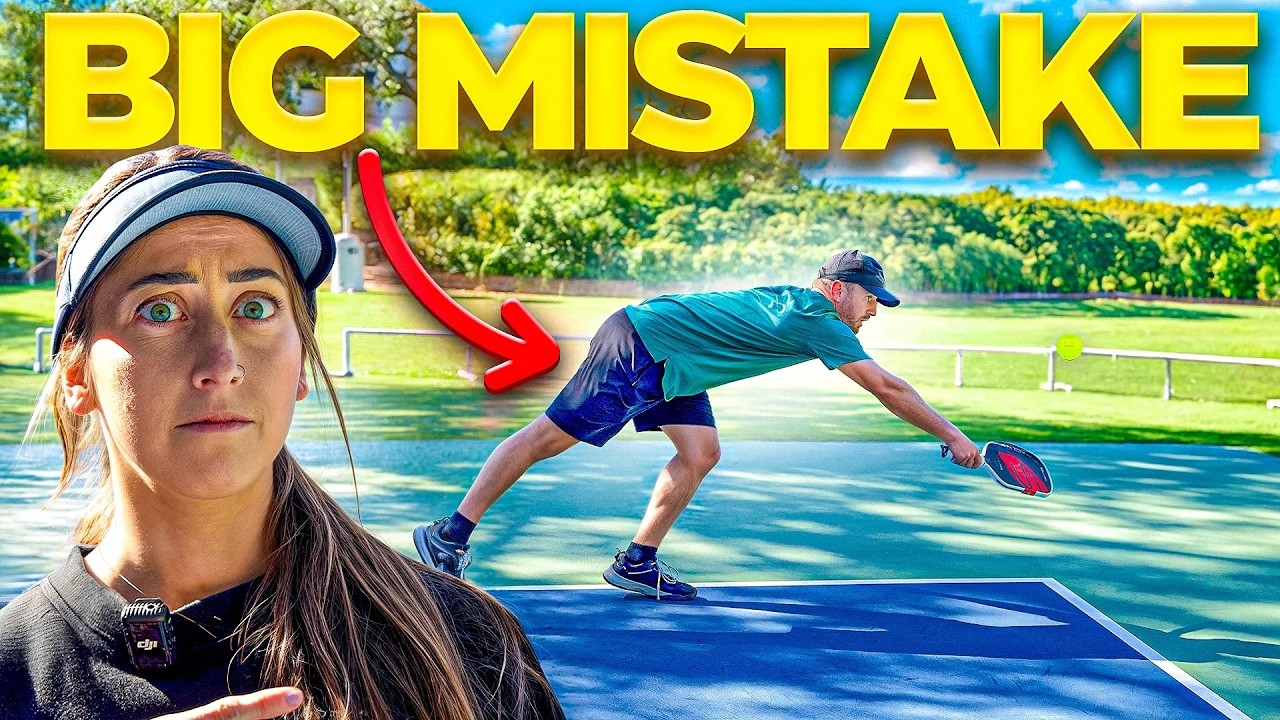
Stop Making These 5 Common Pickleball Mistakes
Sometimes, pickleball can feel hard. By fixing a couple elementary errors, suddenly it becomes a lot easier.
Pickleball Singles Rules in Tournament Play
Tournament-level singles often looks a little different from recreational singles. Here’s what changes:
- Rally scoring at the pro level. Major League Pickleball and some APP events have experimented with rally scoring formats, where a point is awarded on every rally regardless of who served. This creates a faster, more television-friendly game but also changes strategy significantly. Under rally scoring, every error is magnified.
- Match format. Tournament singles is typically best-of-three games to 11, win by 2. Some events use a single game to 15 for consolation rounds. Championship rounds are usually best-of-three to 11.
- Medical and equipment timeouts. Players get two timeouts per game. One medical timeout per match is allowed for genuine injury situations. Equipment timeouts are at the referee’s discretion.
- Line calling. In non-refereed singles, players call lines on their own side of the court. The standard is that any ball that can’t be called out with certainty is considered in. The benefit of the doubt always goes to the opponent.
5 Pro Pickleball Singles Strategy Tips to Win More
Most pickleball singles players are losing points the same way without realizing it. Here are 5 pro-level pickleball singles strategy techniques that will immediately improve your game.
Key Takeaways
- Pickleball singles rules use the same core rulebook as doubles, with key differences in scoring and serving rotation.
- Singles scoring uses two numbers: server’s score first, then receiver’s.
- Server position (right or left service box) is determined by the server’s score, not court position.
- The two-bounce rule applies identically in singles.
- Foot faults, wrong service box, and volleying the return early are the most common violations.
- Singles demands more athleticism, footwork, and stamina than doubles.
- Tournament singles may use rally scoring formats at professional events.
💡
Frequently Asked Questions
What are the basic pickleball singles rules?
Pickleball singles rules follow the same core framework as doubles: the non-volley zone, the two-bounce rule, and standard fault definitions all apply. The main differences are in scoring (two-number calls instead of three) and serving position (determined by the server’s score, not a partner rotation). Games are played to 11 points, win by 2.
How does serving work in pickleball singles rules?
In singles, you serve from the right service box when your score is even and from the left when your score is odd. There is only one server per side, no partner rotation. If you win the rally, you score a point and serve again. If you lose the rally, service transfers to your opponent. Serving from the wrong box before it’s corrected is a fault.
Is pickleball singles scoring different from doubles scoring?
Yes. In doubles, the score is called as three numbers: server score, receiver score, and server number (1 or 2). In singles, the score is called as two numbers: your score, then your opponent’s. There is no third number because there’s no second server on your side.
What is the two-bounce rule in pickleball singles?
The two-bounce rule requires that after the serve, the receiving side must let the ball bounce before returning it, and the serving side must let the return bounce before playing their shot. After those two bounces, both players can volley freely (except in the non-volley zone). This rule applies identically in singles and doubles.
Can you play at the kitchen line in pickleball singles?
Yes, but it’s less common than in doubles. Playing at the kitchen line in singles leaves you exposed to wide-angle passing shots since there’s no partner to cover. Many singles players adopt a baseline or mid-court positioning game and use the kitchen selectively. The non-volley zone rules themselves don’t change: you cannot volley while touching or inside the kitchen line.
Nguồn: thedinkpickleball