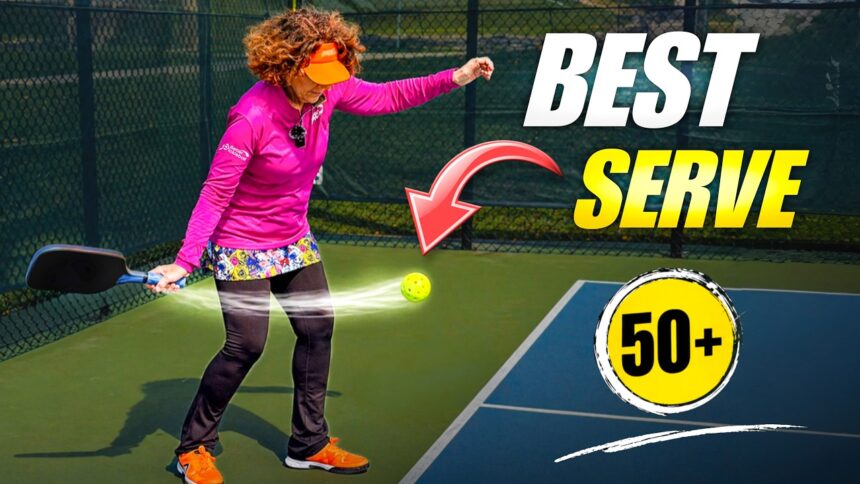
The pickleball drop serve is easier on your body and simpler to master than the volley serve. Here’s exactly how to execute it with proper mechanics and timing.
If your serve is costing you points before the rally even starts, you’re not alone.
Many pickleball players struggle with inconsistency and confidence on the serve line, but there’s a solution that’s easier on your body and simpler to execute: the pickleball drop serve.
According to CJ Johnson from Better Pickleball, a channel dedicated to helping players over 50 live their best lives on and off the court, the drop serve has become the most reliable and accessible serve in modern pickleball.
Unlike the traditional volley serve, which requires precise timing between ball release and paddle contact, the drop serve gives you more freedom, more power, and less physical strain.
Love pickleball? Then you’ll love our free newsletter. We send the latest news, tips, and highlights for free each week.
What Makes a Great Serve in Pickleball?
Before you can master the drop serve technique, you need to understand what you’re actually trying to accomplish.
Every serve in pickleball has two non-negotiable objectives, and if you nail these, you’re already ahead of most players.
- First, your serve needs to be reliable. This might seem obvious, but reliability is tied directly to confidence. When you miss the first shot of a rally, it’s psychologically harder to recover and play your best for the rest of that point. In traditional pickleball scoring, you don’t lose a point if you miss your serve, but the mental impact is real. A reliable serve keeps your head in the game.
- Second, your serve needs to be deep. Here’s where most players get it wrong: they obsess over spin, angles, and pace. But according to Johnson, depth beats spin every single time. A serve placed 2 to 4 feet from the baseline is far more effective than a tricky serve that lands short.
Why? Because a deep serve pushes your opponent farther away from the non-volley zone (the kitchen), which is where they want to be.
If they’re forced to stand deeper on the court, they have a harder time reaching the kitchen before the fourth shot.
Even if they do manage to return a deep serve successfully, it usually comes back short, giving you the advantage.
Drop Serve vs. Volley Serve: Why One Is Better for Most Players
The pickleball world has two legal serve options: the volley serve and the drop serve. For decades, the volley serve was the only option.
You simply take the ball out of the air and hit it before it bounces.
The drop serve, added to the rulebook about five or six years ago, allows you to drop the ball and hit it after the bounce.
The difference might sound minor, but it’s game-changing.
With a volley serve, you need precise timing between releasing the ball and making contact with the paddle.
If that timing is even slightly off, you’ll make contact away from the sweet spot of your paddle.
When that happens, the ball doesn’t travel as far, and it often drifts to the sides. You’re fighting physics and your own coordination simultaneously.
The drop serve eliminates this timing problem entirely. By letting the ball drop and bounce, you create space between the bounce and your contact point.
💡
This gives you time to position yourself correctly and make solid contact. You’re not racing against a falling ball; you’re waiting for the right moment.
Beyond timing, the drop serve is easier on your body.
With the volley serve, most players rely heavily on their arm, which limits power and creates unnecessary strain.
The drop serve lets you engage your core and lower body, generating more power from the ground up.
You can turn your legs, rotate your hips, and use your core to drive the ball deeper.
Finally, the drop serve gives you freedom. You can use any swing style you want. If you prefer a hinged wrist, you can do that.
If you want a more compact swing, that works too.
The volley serve has strict rules about paddle position and movement; the drop serve only has rules about how you release the ball.
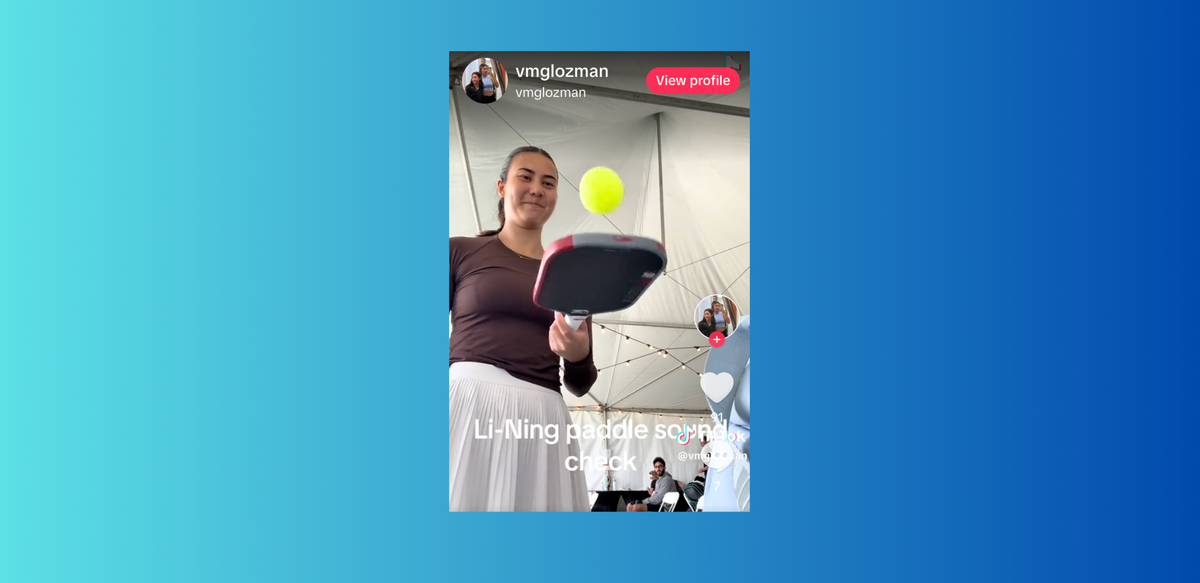
Here’s What a Busted Paddle Actually Sounds Like
Pro Vivian Glozman shares the difference in sound between a new paddle and a failed paddle.
The Step-by-Step Mechanics of the Drop Serve
Now that you understand why the drop serve is superior, let’s break down exactly how to execute it.
Johnson walks through four key components that work together to create a reliable, deep serve.
1. The Drop: Hold at 45 Degrees
The first step is the drop itself. Hold the ball out in front of you at approximately a 45-degree angle.
This positioning is crucial because it determines the apex (the highest point) of the ball’s trajectory.
When you hold the ball at 45 degrees and release it, the ball reaches its peak at the perfect height for you to make a smooth arm swing.
You’re not reaching up or bending down; you’re in a natural, athletic position.
Many players make the mistake of holding the ball at chest height before dropping it.
This forces you to bend lower to make contact, which is harder on your back and knees. Some players hold it even higher, thinking more height equals more power.
But when you hold it too high, the ball comes toward your body as it falls, which throws off your swing path.
Stick with 45 degrees. It’s the sweet spot.
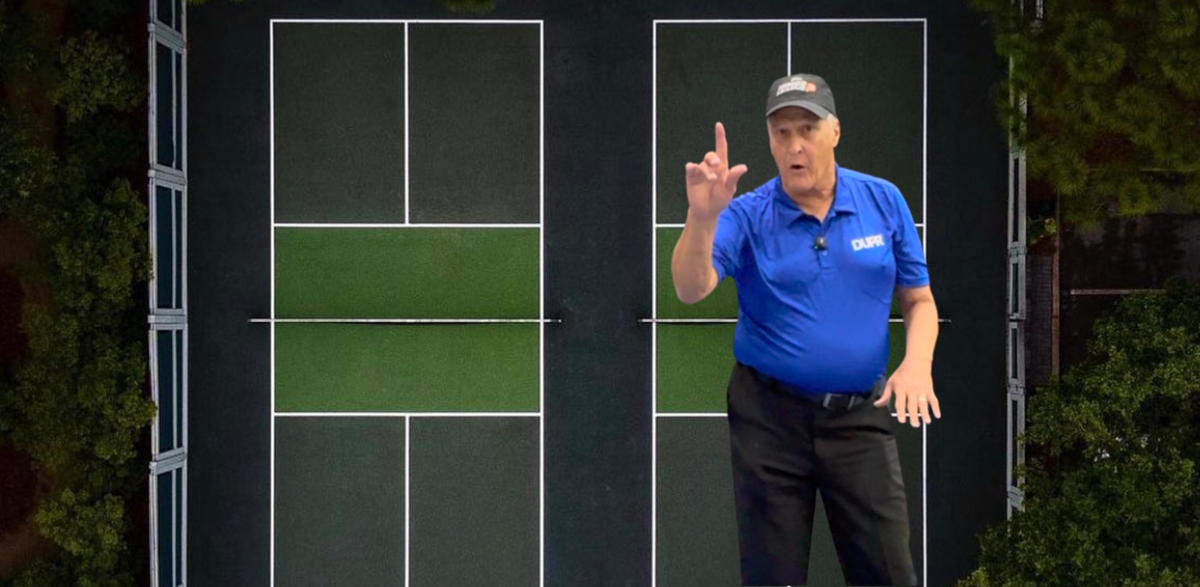
If You Use the Drop Serve in Pickleball, You Might Be Faulting Without Knowing It
“If your hand moves AT ALL on the release you have imparted force to the ball and that’s a fault.”
2. Angle Your Body Toward Your Target
The second component is body positioning. Instead of standing parallel to the baseline, angle your shoulders toward your target on the opposite court.
Your target should be somewhere in the center of the court, 2 to 4 feet from the baseline.
By angling your body, you’re setting yourself up to swing the paddle directly at your target.
This simple adjustment makes aiming easier and gives you more control over where the ball lands.
You’re not fighting your own mechanics; you’re working with them.
10 Pickleball Tips That Transform Your Game
A 5.0 pickleball player shares 10 game-changing pickleball tips that took years to learn. From grip fundamentals to wrist strength, these insights will transform your game.
3. Follow Through to Your Target
The third component is the follow-through. Think of it like throwing a paddle from your hands directly to your target.
Your follow-through should be a straight line from the point of contact all the way through to where you want the ball to land.
This follow-through is what actually controls the ball’s direction. If your follow-through is sloppy or inconsistent, your serve will be too.
A clean, purposeful follow-through toward your target dramatically improves accuracy.
If You Keep Hitting Dinks into the Net, You’re Probably Not Following Through Enough
Playing tight at the kitchen line is a recipe for lost points piling up on your, and fast. The second you start overthinking your dinks is the exact moment they’ll betray you.
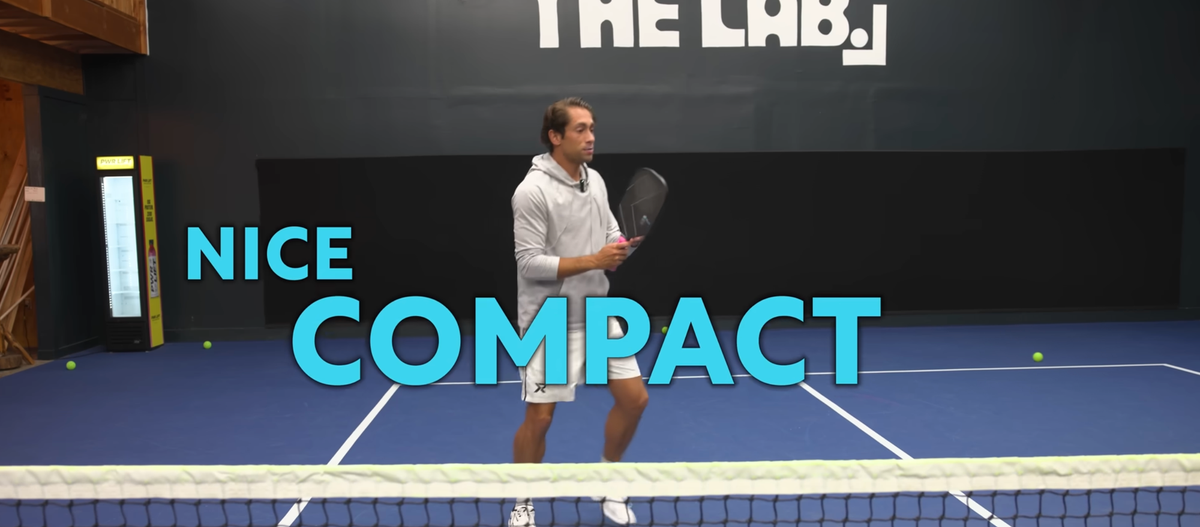
4. Timing: The “Bounce, Hit” Drill
The final component is timing, and this is where many players rush.
Between the drop and the contact, you need to let the ball reach its apex. This is the ideal moment to make contact.
If you drop the ball and then immediately rush to hit it, you’ll sacrifice control and might miss the sweet spot.
You need space and patience between the drop and the swing.
Johnson recommends using a simple verbal cue from The Inner Game of Tennis, a classic sports psychology book by Tim Galloway.
When the ball bounces, say “bounce.” When you make contact, say “hit.” This creates a rhythm and prevents you from rushing.
Practice this drill repeatedly.
“Bounce, hit. Bounce, hit.”
Each time you do it, you’re building muscle memory and consistency. Eventually, the timing becomes automatic, and you stop thinking about it.
7 Pickleball Drills That Work for Every Level
Pro player Michael Loyd shares 7 pickleball drills designed to build real consistency and fix the weaknesses keeping you stuck.
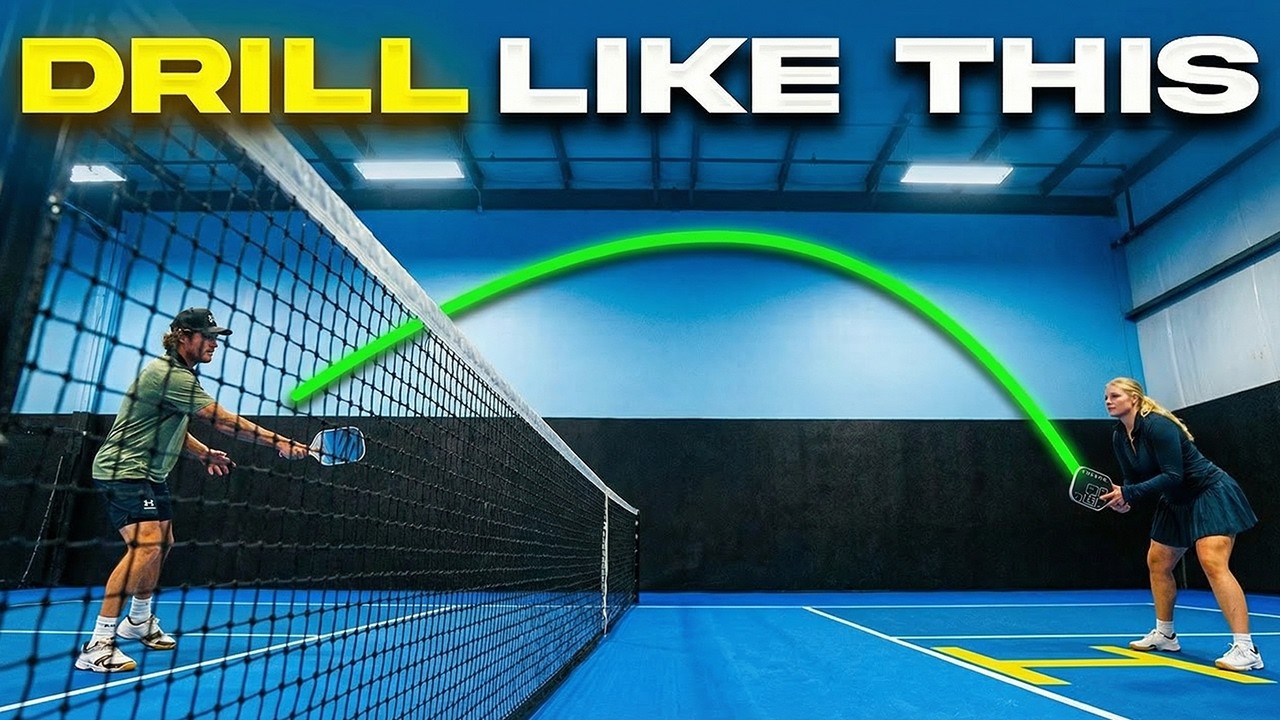
Why Depth Matters More Than You Think
Let’s circle back to depth because it’s the most misunderstood aspect of serve strategy.
Many players believe that a serve with heavy spin or a tricky angle is harder to return.
In reality, a deep serve is far more valuable.
When your serve lands deep, near the baseline, your opponent has to make a choice: stay close to the baseline and hit a defensive return, or move backward to get more time.
Either way, they’re pushed away from the kitchen, which is where they want to be.
If they stay close and hit the return, they’re often forced to hit it short because they don’t have enough court behind them.
A short return is exactly what you want; it gives you the chance to attack on the third shot.
If they move backward to get more time, they’re now farther from the kitchen, which means they have more ground to cover to reach it before the fourth shot.
You’ve gained a positional advantage without hitting a fancy serve.
This is why serve depth is the foundation of a strong serve strategy. It’s not flashy, but it works.
The Pickleball Serve Basics: Rules, Technique & Pro Tips from Michael Loyd
Fix your serve, and your entire game gets easier. You start points on offense instead of defense. Your opponent’s return is weaker. Your third shot is simpler. It all flows from that one shot you control completely.
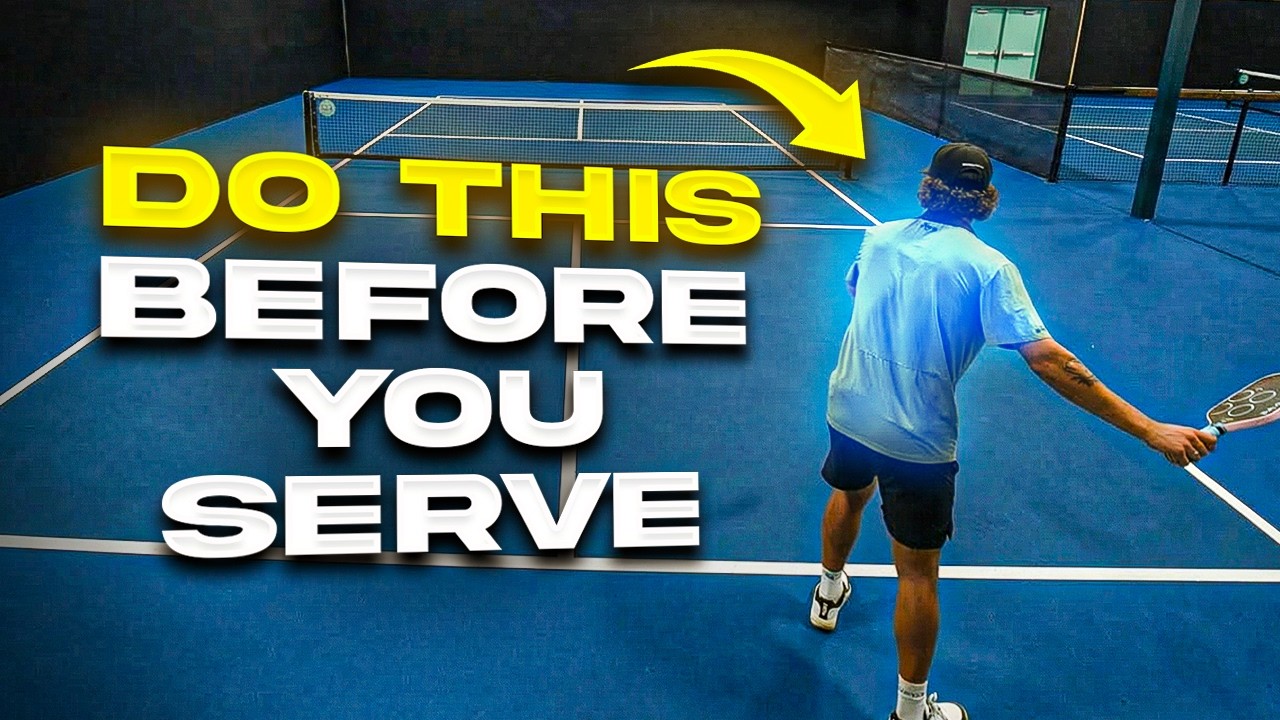
Putting It All Together: Your Serve Checklist
Here’s how to execute the complete drop serve:
- Stand with your feet shoulder-width apart, angled toward your target.
- Hold the ball out at a 45-degree angle.
- Release the ball and let it drop.
- As it bounces and rises, say “bounce” internally.
- When the ball reaches its apex, say “hit” and make contact.
- Follow through in a straight line toward your target.
- Repeat this process every single time you serve.
Consistency comes from repetition. The more you practice this sequence, the more automatic it becomes.
You stop thinking about mechanics and start trusting your body.
Why Pickleball Refs Struggle to Call Illegal Serves, and Often Don’t
Unless it’s super obvious, most referees won’t call an illegal serve. And honestly? Right now, that’s probably the right move.
Common Mistakes to Avoid
Even with the right technique, players often sabotage themselves with small errors. Rushing the shot is the most common mistake.
You drop the ball and immediately swing, not giving yourself time to set up properly.
Slow down. Let the ball come to you.
Another mistake is inconsistent body positioning. If you angle your body differently on every serve, your aim will be all over the place.
Pick a target, angle your body toward it, and keep that positioning consistent.
Finally, avoid over-thinking the mechanics during matches. Practice the “bounce, hit” drill during warm-ups and training sessions.
Once you’re in a match, trust your preparation and let your body do what you’ve trained it to do.
💡
Frequently Asked Questions
What’s the difference between the drop serve and the volley serve?
The drop serve involves releasing the ball and hitting it after it bounces, while the volley serve requires hitting the ball out of the air before it bounces. The drop serve is easier to learn, requires less precise timing, and is gentler on your body because you can engage your core and lower body for power.
How deep should my serve be?
Your target should be 2 to 4 feet from the baseline on the opposite court. If you’re just starting out, aim for 4 feet. As you improve, try to get it closer to 2 feet. The deeper the serve, the more it pushes your opponent back and limits their options.
Why do I keep rushing my drop serve?
Rushing is usually a confidence issue. You’re anxious about missing, so you swing quickly. Practice the “bounce, hit” drill to build a rhythm. The verbal cue helps you slow down and wait for the right moment. It takes time, but consistency will come.
Can I use a drop serve in tournament play?
Yes, absolutely. The drop serve is completely legal in all official pickleball tournaments and matches. Many professional and advanced players use it exclusively because it’s so reliable.
How long does it take to master the drop serve?
Most players see significant improvement within a few weeks of consistent practice. Full mastery, where the serve becomes automatic and you rarely think about mechanics, typically takes a few months of regular play and training.
Ready to level up your serve? Subscribe to our free newsletter for weekly tips, strategy breakdowns, and the latest pickleball news delivered straight to your inbox.
Nguồn: thedinkpickleball