The backhand topspin dink is one of the most practical shots in mixed doubles pickleball. Master this essential technique to keep your dinks low and your opponents on their heels.
If your backhand topspin dink keeps floating up and getting attacked, you’re not alone.
This is one of the most common problems in pickleball, especially in mixed doubles where the left side demands precision and consistency.
The good news? It’s fixable.
Emilia Schmidt from Selkirk TV recently broke down exactly how to execute this shot with the kind of detail that separates casual players from serious competitors.
The backhand topspin dink isn’t just another shot to add to your arsenal.
It’s a foundational skill that determines whether you can control the kitchen or whether your opponent will punish every soft ball you hit.
- When done correctly, it dips back into the kitchen instead of sitting up for an easy attack.
- When done wrong, it becomes a liability.
Love pickleball? Then you’ll love our free newsletter. We send the latest news, tips, and highlights for free each week.
Why Your Backhand Dinks Keep Floating Up
Here’s the thing: most players approach the backhand topspin dink with the same mentality they use for a forehand dink. They don’t.
The backhand requires a completely different engagement strategy, and that’s where most people go wrong.
When you’re hitting from the left side of the court, you’re naturally getting more balls on your backhand.
That means you need a reliable system for keeping those dinks low and consistent.
Without proper technique, you’ll either hit the ball too hard (sending it past the baseline) or too soft (letting it float up into the attack zone).
The culprit is usually one of three things: improper hand engagement, too big of a backswing, or a follow-through that doesn’t carry the ball forward with enough topspin. Schmidt addresses all three in her breakdown.
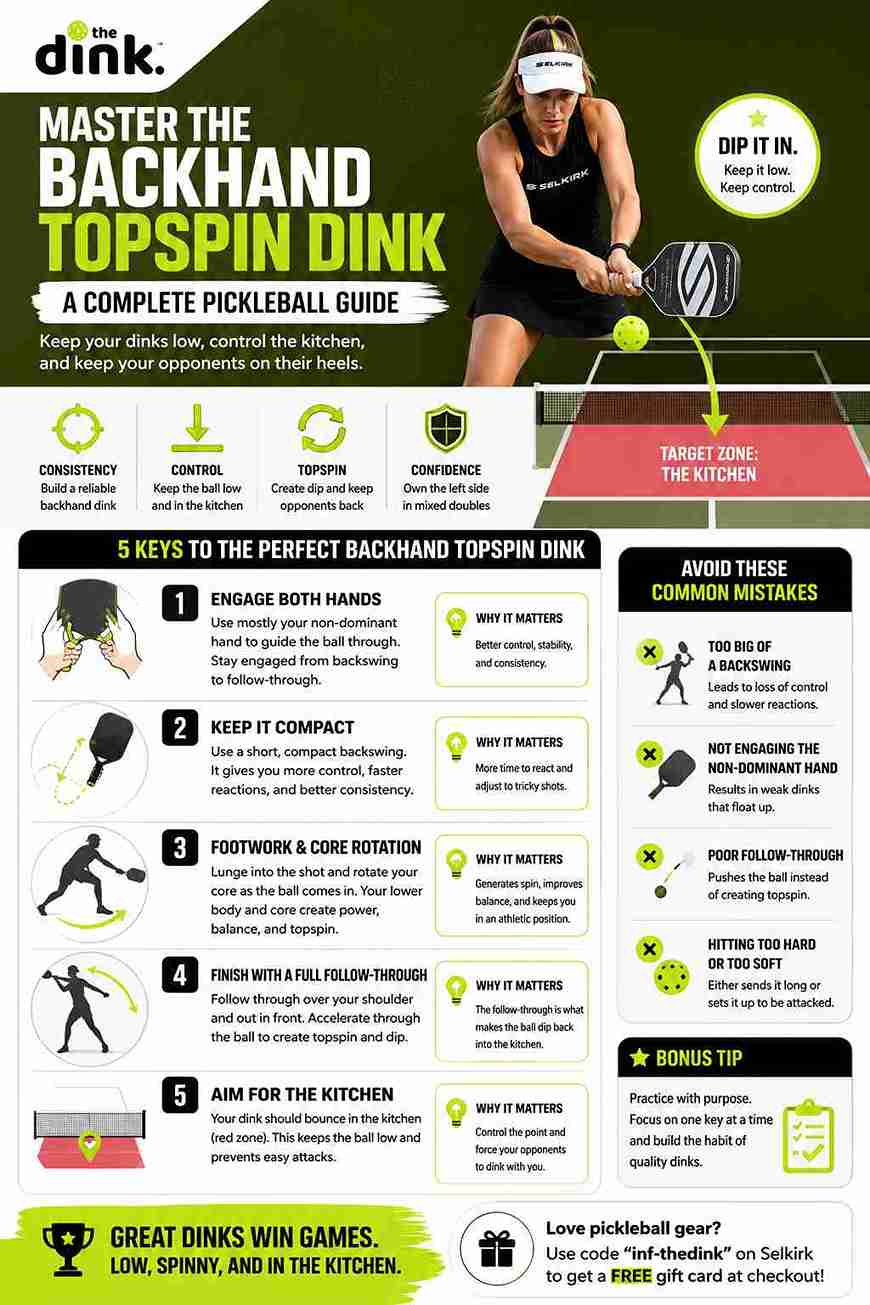
The Two-Hand Engagement Secret Behind Every Great Backhand Topspin Dink
This is where the backhand topspin dink gets interesting.
Unlike a forehand dink where your dominant hand does most of the work, the backhand requires you to actively engage your non-dominant hand throughout the entire stroke.
Here’s what Schmidt emphasizes: you’ve got two hands on the paddle, but you’re looking to use mostly your non-dominant hand as you’re pushing that ball through. This isn’t intuitive for most players.
Your instinct is to let your dominant hand take over, but that’s exactly what kills the shot.
When you engage your non-dominant hand properly, you gain control and consistency.
You’re not muscling the ball; you’re guiding it.
This distinction matters enormously when you’re trying to keep a dink low and tight to the net.
The engagement happens from the moment you start your backswing all the way through your follow-through.
It’s not a one-time thing. It’s a continuous partnership between both hands that creates the stability and spin you need.
Compact Swing, Maximum Control
One of the biggest mistakes players make with the backhand topspin dink is taking too big of a backswing.
Because it’s a dink, not a drive or a smash, you don’t need a massive wind-up. In fact, a big backswing actually works against you.
Schmidt emphasizes staying nice and compact.
A compact swing gives you better control, faster reaction time, and more consistency.
It also allows you to adjust mid-stroke if your opponent hits a tricky ball.
Think of it this way: the smaller your backswing, the more time you have to react and adjust.
The more time you have to adjust, the more likely you are to hit a quality dink.
A compact swing isn’t a limitation; it’s a feature.
💡
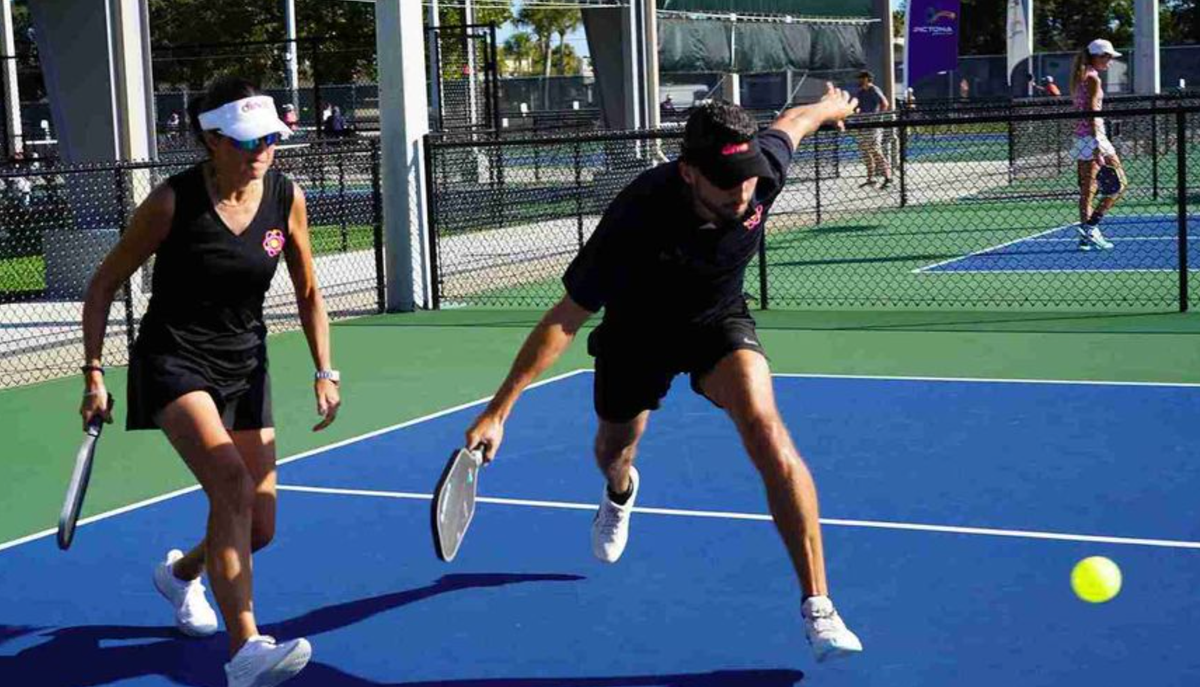
You can have perfect hand positioning and a compact swing, but if your feet aren’t in the right place, the shot falls apart.
The backhand topspin dink requires active footwork and core rotation on every single rep.
Schmidt demonstrates this by engaging her legs and looking to lunge as she’s hitting.
This isn’t passive footwork. You’re actively moving into the shot, which gives you better balance and more power transfer from your lower body to your upper body.
Core rotation is equally important. Every time that ball is coming over, you’re rotating your core to generate the spin and control you need.
This rotation happens naturally when you’re properly positioned, but it’s something you need to be conscious of during practice.
The combination of footwork, core rotation, and hand engagement creates a unified motion.
It’s not three separate things happening at once; it’s one fluid movement where each component supports the others.
The Follow-Through That Makes the Difference
Here’s something that separates good backhand topspin dink players from great ones: the follow-through.
Your follow-through isn’t the end of the shot; it’s the completion of it.
Schmidt shows that your follow-through should go over your shoulder all the way out in front. This isn’t just for show.
The follow-through determines how much topspin you impart on the ball and whether the ball will dip back down into the kitchen or float up.
A proper follow-through means you’re not decelerating through the ball. You’re accelerating through it.
This creates the topspin that makes the ball dip. Without it, you’re just pushing the ball, and pushed balls float.
Think of the follow-through as the punctuation mark on your sentence. It completes the thought and tells the ball exactly where to go.
How to Improve Pickleball Footwork: 5 Pro Drills
Pickleball footwork drills are the fastest way to close the gap between your shot-making ability and your actual on-court results. Here are five drills that competitive players use to move faster, recover quicker, and stop giving away free points.
The Kitchen: Your Backhand Topspin Dink Target Zone
Let’s talk about what you’re actually trying to accomplish with the backhand topspin dink.
You want your dink to bounce in the kitchen, which is that red zone right at the net.
If your ball bounces outside the kitchen, your opponent can attack it from the kitchen line. If it bounces inside, they can’t.
The kitchen is roughly 7 feet from the net on each side. It’s not a huge target, but it’s not tiny either.
The key is understanding that the kitchen is where your dink should land, not where it should bounce.
The bounce happens because of the topspin you’re imprinting on the ball.
When you hit a backhand topspin dink correctly, the ball comes dipping back down as you hit it.
This dip is what makes it land in the kitchen instead of floating over the baseline.
Without topspin, you’re just hoping the ball lands in the right spot. With topspin, you’re controlling it.
Master the Kitchen Dink: Pro Tips for Better Play
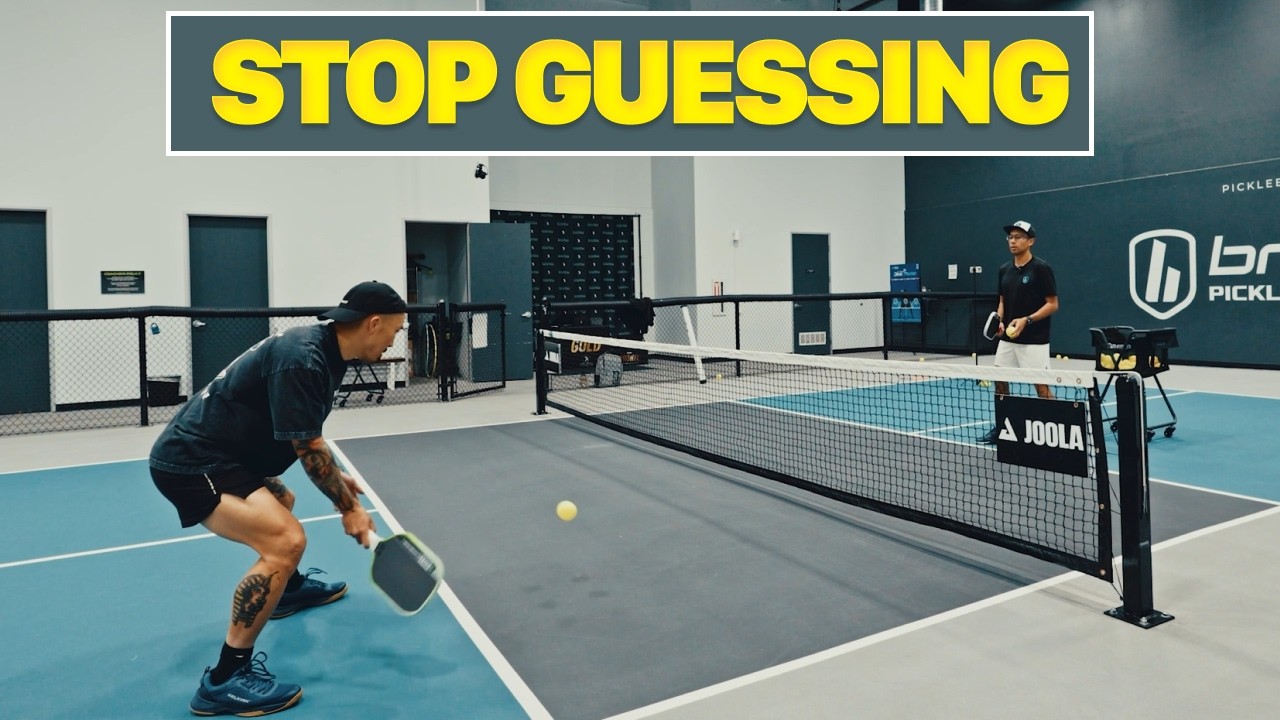
The kitchen dink is the foundation of modern pickleball strategy. Master depth control, target placement, and counter-anticipation to dominate at the net.
The Crosscourt Drill That Works
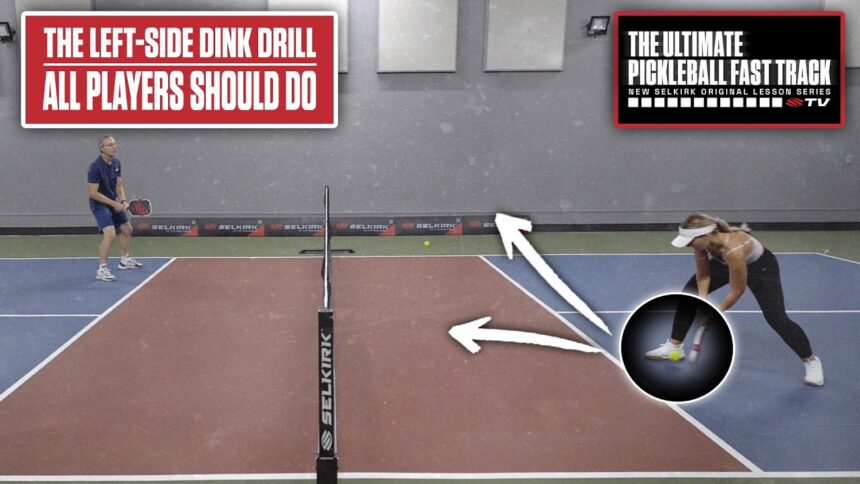
Schmidt demonstrates the backhand topspin dink using a specific drill: crosscourt dinking with a partner.
This isn’t random practice. It’s structured, purposeful work that builds the muscle memory you need.
Here’s how it works: you position yourself on the left side of the court so you’re getting most of the balls on your backhand.
Your partner hits to your backhand, and you hit back crosscourt. You’re both trying to keep the dink in the kitchen.
This forces you to be consistent and accurate.
The beauty of this drill is that it’s game-realistic. In actual matches, you’ll be in similar situations.
You’ll be on the left side, getting backhand dinks, and you’ll need to keep them low and tight. This drill replicates that pressure.
Start slow. Get comfortable with the motion.
Once you’ve got the basics down, you can increase the pace and add complexity.
But the foundation is always the same: compact swing, engaged hands, proper footwork, and a follow-through that creates topspin.
How to Hit a Crosscourt Dink in Pickleball
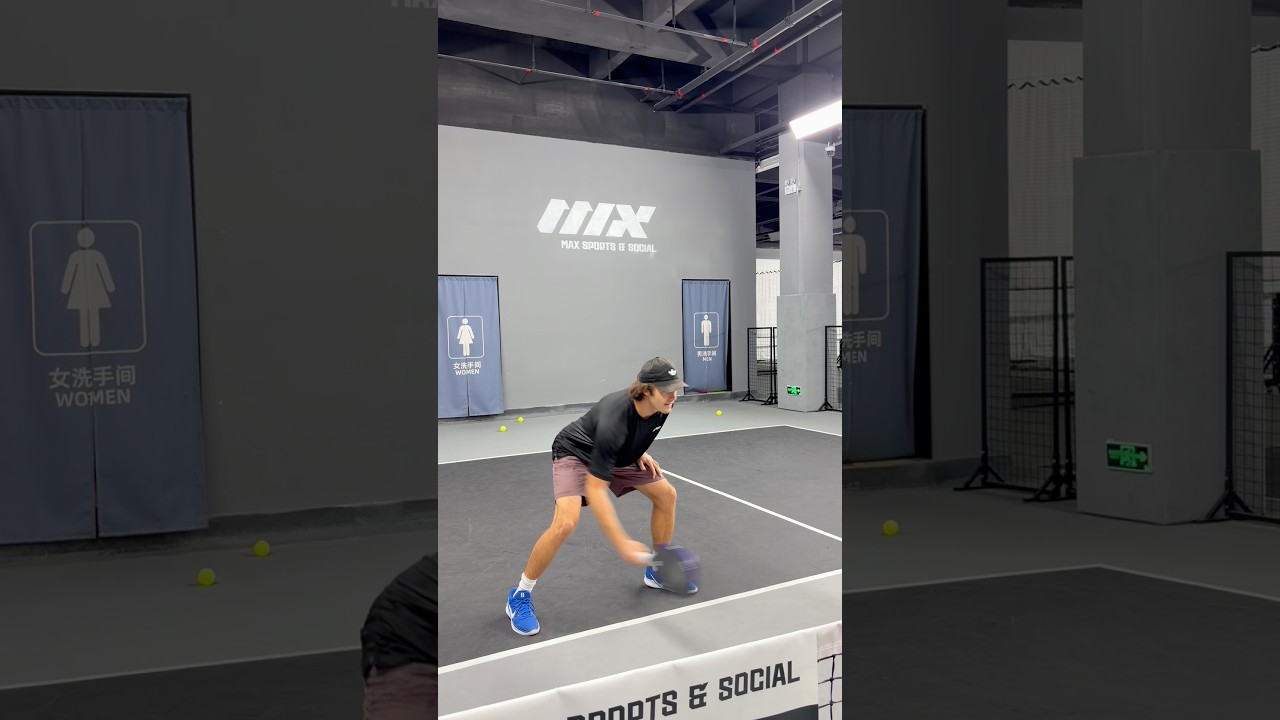
The crosscourt dink is one of pickleball’s most versatile shots, and mastering it requires understanding paddle positioning and footwork fundamentals. Learn the exact technique used by top players to control the net and dominate rallies.
Why This Matters for Mixed Doubles
Mixed doubles is where the backhand topspin dink becomes absolutely critical.
In mixed doubles, the left side is typically where the woman plays, and that side demands precision.
The left side is also where a lot of attacks come from, so your dinks need to be unreturnable.
If you can’t hit a reliable backhand topspin dink, you’re putting your partner in a tough spot.
They’ll be forced to cover more court and deal with more aggressive shots.
But if you can hit this shot consistently, you control the kitchen and dictate the pace of the rally.
This is why Schmidt emphasizes that the backhand topspin dink is one of the most practical shots in mixed doubles.
It’s not flashy. It’s not exciting. But it’s absolutely essential.
Pickleball Dinking Over 50: 3 Essential Tips for Seniors
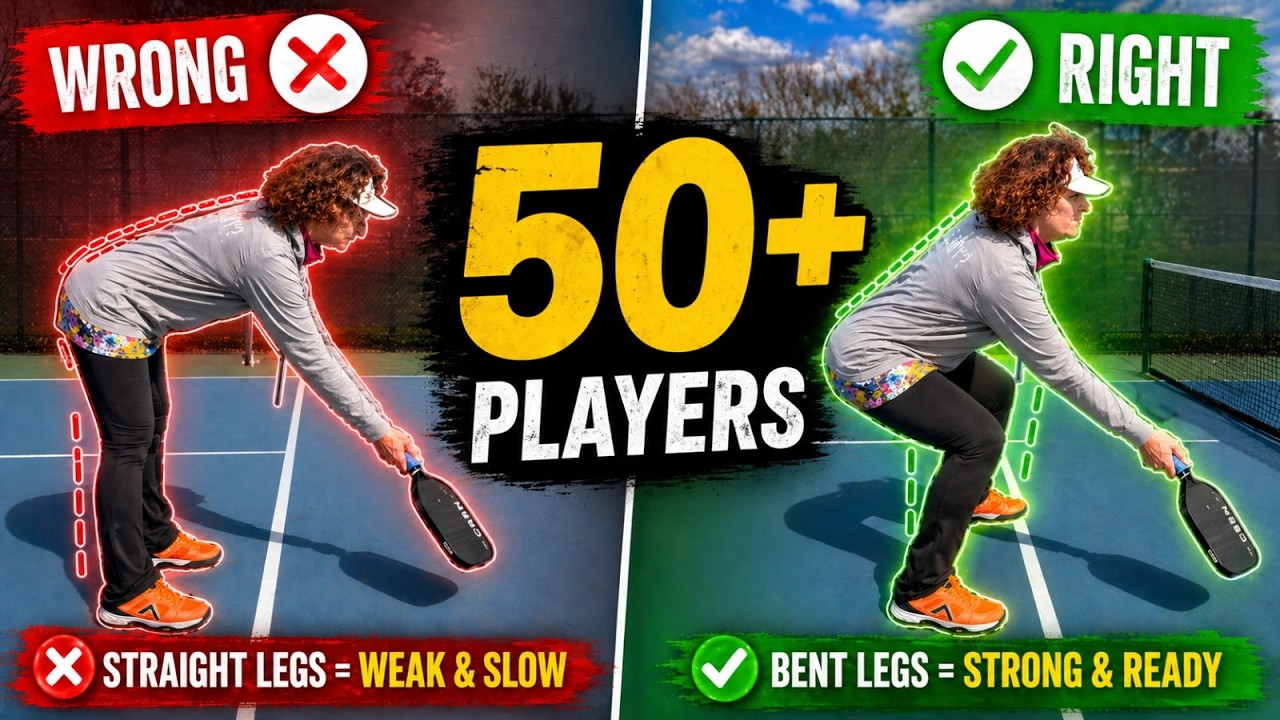
The pickleball dink is the foundation of kitchen dominance, but most players over 50 are missing three critical pieces that separate consistent dinking from endless pop-ups. C.J. Johnson from Better Pickleball breaks down exactly what those pieces are and how to put them together.
Putting It All Together: The Backhand Topspin Dink Checklist
The backhand topspin dink isn’t complicated, but it does require attention to detail.
You need proper hand engagement, a compact swing, active footwork, core rotation, and a follow-through that creates topspin.
Each of these elements matters.
The good news is that this is a learnable skill. You don’t need to be naturally gifted to hit a solid backhand topspin dink.
You just need to understand the mechanics and put in the practice reps.
The drill Schmidt demonstrates is simple enough that you can do it at any level, but sophisticated enough that you can spend years refining it.
- Start with the basics.
- Focus on one element at a time.
- Get your hand engagement right.
- Then work on your footwork.
- Then dial in your follow-through.
- Once you’ve got all the pieces, put them together and practice under pressure.
The backhand topspin dink will become one of your most reliable shots. And when that happens, you’ll notice a difference in your matches.
Your dinks will be lower, tighter, and more consistent. Your opponents will have fewer opportunities to attack. And you’ll be in control of the kitchen.
💡
Frequently Asked Questions
What’s the difference between a backhand topspin dink and a regular backhand dink?
A regular backhand dink is hit with a flat or slightly open paddle face, while a backhand topspin dink is hit with a closed paddle face and upward brush motion. The topspin causes the ball to dip back down into the kitchen instead of floating up. This makes it much harder for your opponent to attack.
How much topspin should I put on a backhand topspin dink?
You don’t need a ton of topspin on your backhand topspin dink; just enough to make the ball dip back down into the kitchen. Too much and the ball dips too early and lands short; too little and it floats up into the attack zone. The goal is to find the sweet spot where the ball lands consistently inside the kitchen. For a deeper breakdown of spin types, slice vs. topspin is worth reading next.
Can I hit a backhand topspin dink from the right side of the court?
Yes, you can, but it’s less common. Most players position themselves on the left side to get more backhand topspin dinks because that’s where the majority of balls come. However, being able to hit a backhand topspin dink from anywhere on the court is a valuable skill.
How long does it take to master the backhand topspin dink?
It depends on your current skill level and how much you practice. If you’re a beginner, you might need a few weeks of consistent practice to get the mechanics of your backhand topspin dink down solid. The key is deliberate practice with a clear focus on each individual component. Once you’re comfortable, these 12 drills for 2026 will help you take it further.
Should I practice the backhand topspin dink alone or with a partner?
Both. Solo practice helps you develop the muscle memory and mechanics behind your backhand topspin dink. Partner practice builds the consistency and game-readiness you need when the pressure is on. The drill Schmidt demonstrates is best done with a partner, but 2 essential kitchen techniques can also be drilled solo to build your confidence at the net.
Nguồn: thedinkpickleball