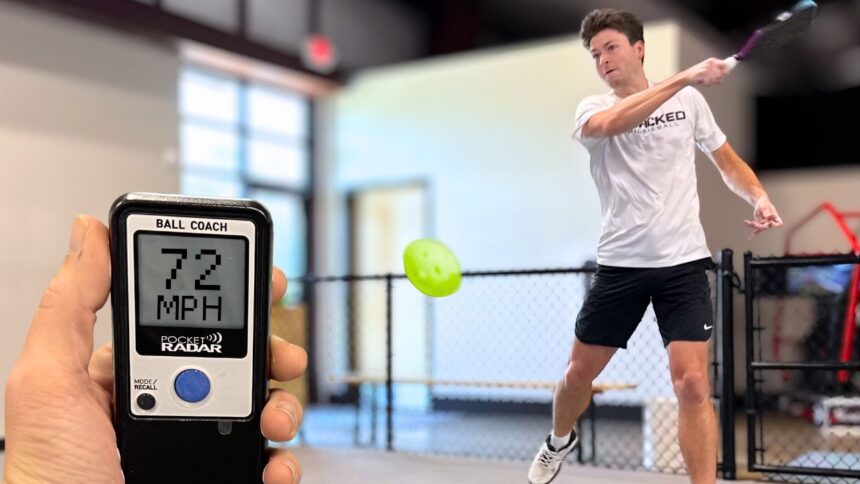
Want to dominate your serves? Cracked Pickleball breaks down exactly how to increase pickleball serve speed from beginner to pro level. Follow these 7 steps to transform your game.
Your serve is the only shot in pickleball where you have complete control, and increasing pickleball serve speed is one of the most effective ways to start every point with an advantage.
The problem? Most players hit slow serves because they don’t understand the mechanics that actually generate power.
Cracked Pickleball, a leading instructional channel, recently released a comprehensive breakdown of exactly how to build serve speed from 30 mph all the way up to 65+ mph using seven simple, sequential steps.
The beauty of this approach is that it’s not about raw strength or athleticism.
It’s about understanding the biomechanics of the serve and layering techniques on top of each other so that each step compounds the power of the last.
Love pickleball? Then you’ll love our free newsletter. We send the latest news, tips, and highlights for free each week.
Step 1: Master Paddle Face Alignment (30 mph)
The foundation of any serve starts with one simple principle: aim your paddle face toward your target. This is where most beginners fail.
They either open their paddle face too much, creating excessive arc that kills pace, or they close it too much and hit the ball into the net.
The solution is straightforward.
Pick a target on the opposite side of the net, position your paddle face in a neutral position pointing directly at that target, and use a simple pendulum motion with your arm to deliver the ball.
You don’t need body weight, hip rotation, or any fancy footwork at this stage. Just clean contact and proper alignment.
Think of it like this: if you can’t aim correctly, you’ll never build on the foundation.
This step alone gets you to 30 mph, which is a reasonable baseline for consistency.
For a broader look at what shots belong in your arsenal, check out these 6 essential pickleball shots to master for 2026.
Step 2: Add Wrist Lag for Pickleball Serve Speed Acceleration (35+ mph)
Here’s where most intermediate players leak power without realizing it.
When they serve, their wrist stays completely still at the point of contact, meaning their paddle head moves at the same speed as their arm.
That’s leaving free speed on the table.
Wrist lag is the secret. Position your wrist slightly back before you swing, then snap it forward as you make contact.
This creates a whipping effect where the tip of your paddle accelerates dramatically compared to the rest of your body.
It’s the same principle that makes a whip crack so loud.
The added benefit? Wrist lag also helps with aiming.
Use the base of your palm as your aiming point toward the ball, and as the ball drops, snap your paddle head forward.
This combination gets you past 35 mph without needing any lower body involvement.
This same hand-speed mechanic is what separates average hitters from players who can generate modern pickleball hand speed and paddle positioning at the net.
What Is Wrist Lag in Pickleball? The Pro Technique for Power, Spin & Control
Pros use this technique to generate more power, more spin, and better control on serves, returns, drives, and speedups. And you should, too.
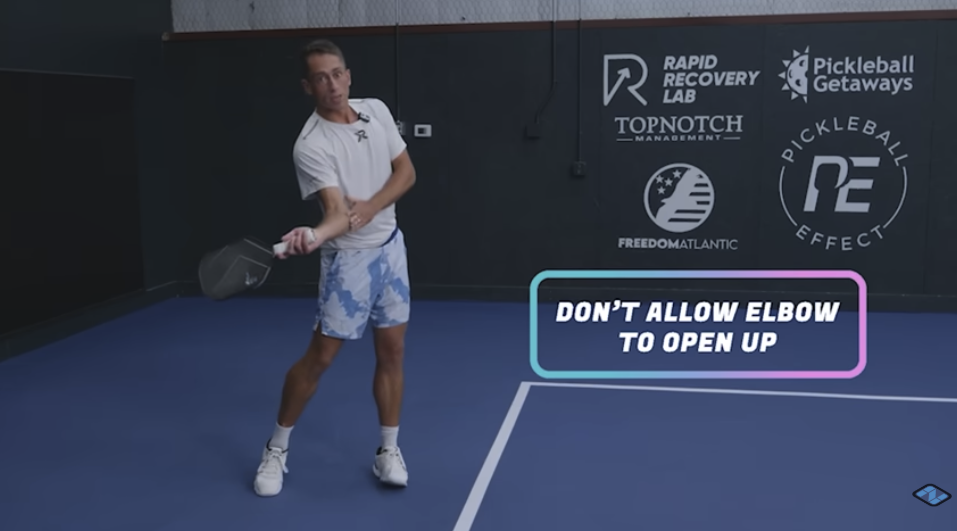
Step 3: Introduce Follow-Through for More Pickleball Serve Speed (40 mph)
Once you’ve nailed paddle alignment and wrist snap, the next layer is follow-through over your shoulder.
This isn’t just about finishing the motion; it’s about adding momentum to the ball and solidifying your stroke for consistency.
Instead of stopping short after contact, continue your arm motion over your shoulder.
This adds extra miles per hour and helps you repeat the same motion every time.
If you’ve played tennis or learned the forehand in pickleball, this motion should feel familiar.
It’s the same pendulum principle, just extended.
If You Keep Hitting Dinks into the Net, You’re Probably Not Following Through Enough
Playing tight at the kitchen line is a recipe for lost points piling up on your, and fast. The second you start overthinking your dinks is the exact moment they’ll betray you.
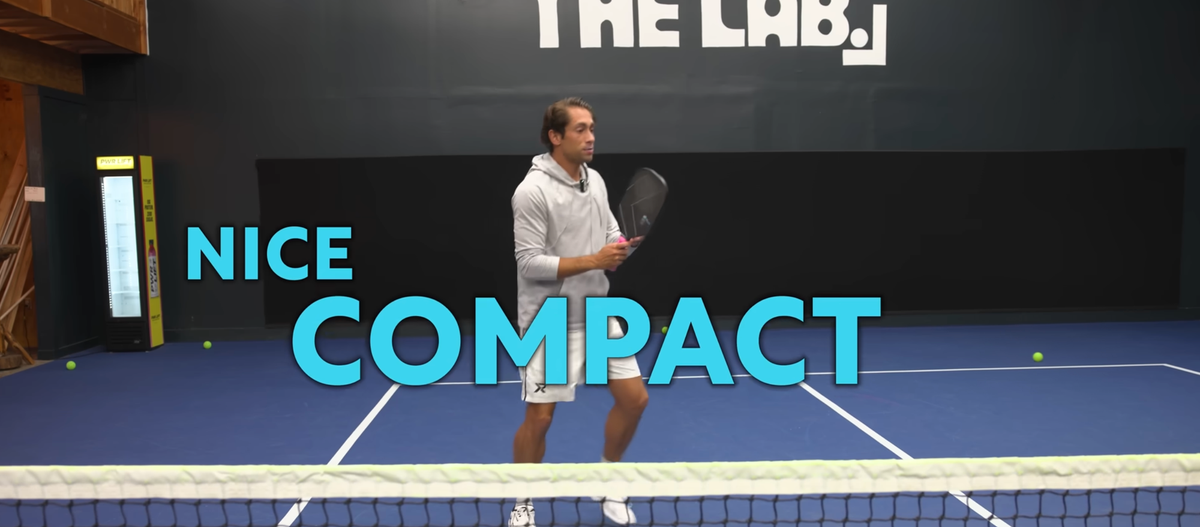
Step 4: Engage Your Legs and Hips (45+ mph)
Now we’re moving into intermediate territory. Up to this point, you’ve been using mostly your arm.
To break through the 45 mph barrier, you need to start using your lower body.
Bend your knees and load your weight onto your back foot. This creates potential energy.
As you swing forward, that potential energy converts to kinetic energy, and you shift your weight forward.
You’re also opening your feet slightly and adding a small amount of hip rotation.
The combination of bent knees, weight shift, and hip action gets you well past 45 mph.
This is where beginners often struggle because they’re used to arm-dominant serves.
But here’s the thing: most of your power comes from the ground, not your shoulder. You can’t access that power unless you bend your legs and push off.
This same lower-body loading principle is what drives powerful shots in the pickleball drive crash course that pros rely on.
What Makes Hip Rotation So Important for Serve Velocity?
Hip rotation is the engine behind every elite-level serve.
Without it, your upper body is doing all the work, which caps your ceiling.
When your hips open through contact, they pull your arm and paddle through the hitting zone with far more force than your shoulder can generate alone.
If you want to improve your pickleball serve speed meaningfully, committing to hip rotation at this stage is non-negotiable.
You can also see how these 12 drills for your best pickleball in 2026 train lower-body engagement across all shots.
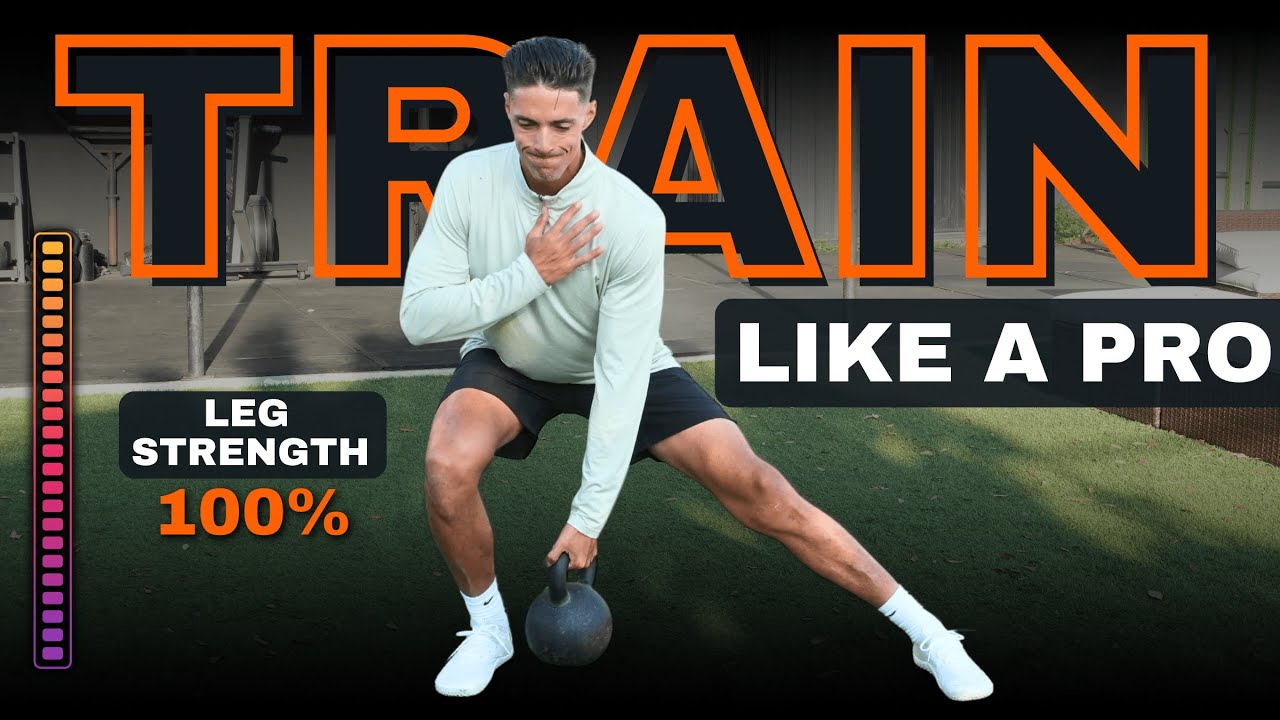
8 Lower Body Exercises for Explosive Pickleball Legs — No Gym Required
Pickleball is a game of quick lateral movements, explosive pushes, and stable positioning – your legs are doing most of the heavy lifting
Step 5: Engage Your Core (50+ mph)
At 50 mph, you’re entering advanced territory. To push past this threshold, you need to engage your entire body, not just your arm and legs.
That means your core.
Instead of just getting low and snapping your wrist, you’re now creating rotational power through your torso.
Wind up your body, snap your hips at the same time you snap your wrist, and step into the ball as you swing.
This creates a compounding effect where your hips go forward, your arm lags behind, your wrist lags even further behind, and then everything accelerates through the contact point.
When you do this correctly, you’ll feel your core engaged and your hips twisting at contact.
That’s the sign you’re using your full body weight to generate power.
How Core Engagement Translates Directly to Serve Speed
Core engagement isn’t just about strength. It’s about sequencing. Your hips fire first, your torso follows, and your arm and wrist snap last.
When these movements chain together in the right order, the energy transfer is exponential, not additive.
That’s why players who’ve mastered this step often report their pickleball serve speed jumping 8 to 10 mph in a single session.
The same rotational mechanics apply to hitting a heavy topspin drive in pickleball.
US Senior Pickleball: The Only Tour Built by Seniors for Seniors
Everything you need to know about US Senior Pickleball, how to get involved, and why this year’s National Championship will be their biggest one yet
Step 6: Perfect Your Backswing to Maximize Pickleball Serve Speed (55+ mph)
Getting to 55 mph requires efficiency. One of the biggest power leaks happens in the backswing, and it’s called hitching.
This is when you go back, pause, and then go forward, breaking the rhythm of your motion.
There are two ways to fix this. The first is using a C motion: as you coil up, your arm traces a C shape (out and then down).
The second is a U motion: you go straight back and then straight forward. Either way, there’s no pause, no hitch, no break in momentum.
The same principle applies to your feet. If you stop your momentum when you hit, you’re not properly using your hips.
Keep your feet moving through the contact point so that your hips can fully rotate and transfer energy up through your paddle.
This is also when it’s worth exploring how modern pickleball strategies for winning in 2026 integrate serve mechanics with overall game strategy.
If you’re at this level, you may also want to add a backhand serve to your arsenal as a secondary weapon.
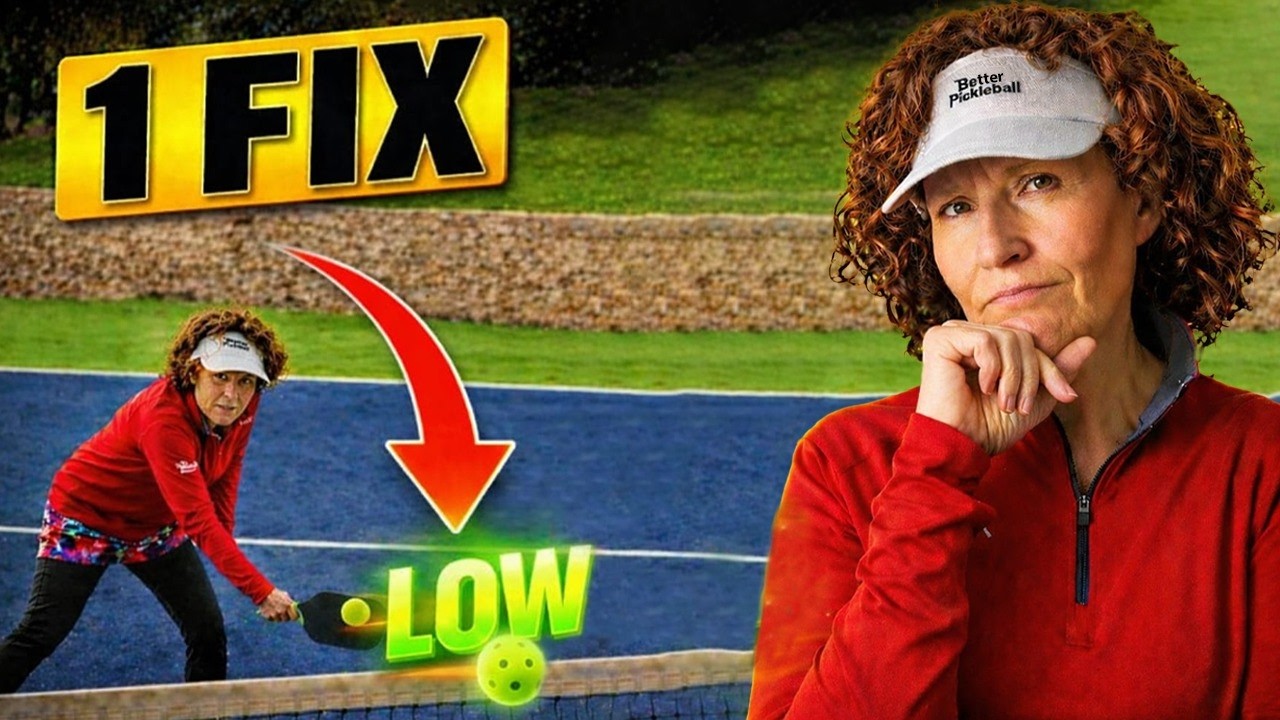
Fix Your Pickleball Backswing to Stop Pop-Ups
Pop-ups aren’t about hitting the ball too high—they’re about energy control. C.J. Johnson from Better Pickleball breaks down why your pickleball backswing is the #1 culprit and shares the exact drill to fix it.
Step 7: Master the Pro-Level Pickleball Serve Speed (60+ mph)
Getting to 60+ mph is where things get tricky. At this speed, you’re sacrificing some consistency for raw power.
Cracked Pickleball recommends expanding your target area significantly.
Instead of aiming for a specific placement like down the line, aim for a big circle in the back of the service box.
Why? Because at these speeds, timing becomes incredibly difficult.
You’ll miss your target occasionally, and that’s okay.
The trade-off is that you’re catching your opponent off guard with a serve they can’t handle.
Here’s the honest truth: consistency beats speed in most pickleball scenarios.
Unless you’re in a singles match and you need to throw your opponent off, stick to 55 mph or below until you can hit it 90% of the time.
Then, and only then, should you start experimenting with the fastest serves.
For singles-specific serve tactics, see how to break 5.0 with the 5 pickleball shots you must master before 2026.
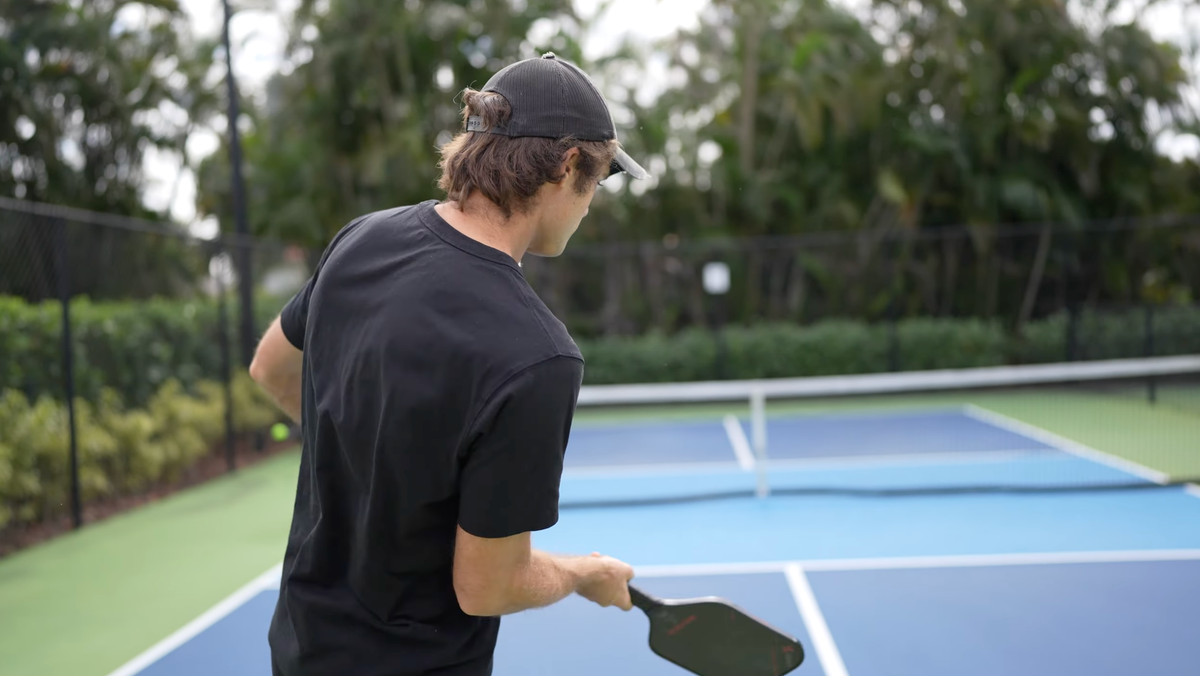
2 Pro Serve Tips to Eliminate Common Mistakes
The beauty of these two fixes is that they work together – a palm-down toss gives you the space to swing, weight transfer gives you the power to swing hard
Why This Progression Actually Works for Building Pickleball Serve Speed
The genius of this seven-step approach is that each layer builds on the previous one.
You’re not trying to do everything at once. You’re progressively adding complexity and power in a way that your body can actually learn and repeat.
Most players try to jump straight to step five or six without mastering the fundamentals. That’s why they plateau.
They’re trying to use their core without proper wrist lag, or they’re trying to add hip rotation without proper paddle alignment.
The foundation crumbles, and they can’t generate consistent power.
By following this progression, you’re building a serve that’s both powerful and reliable.
You’re also training your nervous system to layer these movements together, which is how you eventually get to pro-level serve speeds.
If you want to see how these fundamentals connect to a complete game system, this simple 4-step system to win more pickleball games in 2026 is worth bookmarking.
How to Approach the Kitchen Line Safely in Pickleball
Knowing how to approach the kitchen line safely in pickleball is the difference between controlling a rally and getting picked apart in transition. This guide breaks down the footwork, shot selection, and timing you need to move forward without getting punished.
The Real Secret: Repetition and Patience
Here’s what Cracked Pickleball emphasizes that most instructional content misses: getting to 65+ mph isn’t about one magic tip.
It’s about mastery over the principles you’ve already learned. It’s about perfect timing, perfect contact point, and hundreds of repetitions.
The radar gun is fun, and chasing big numbers is tempting.
But the players who actually dominate are the ones who focus on consistency first and speed second.
Master steps one through six, hit them reliably, and then start experimenting with step seven.
It’s also worth noting that serve speed alone won’t carry your game.
Professional pickleball players abandoned the slice shot in 2025 largely because they found that serving variety, not just pace, created more disruption.
The best servers in the game combine speed with disguise and placement. That combination is what makes a serve genuinely unreturnable.
You can also sharpen your 5 tips to instantly improve your pickleball drive to carry this same power philosophy into your full groundstroke game.
If you’re playing singles, maximizing your serve velocity is especially critical.
These 7 essential pro tips to dominate pickleball singles play break down how a stronger serve can change the entire match dynamic.
💡
Frequently Asked Questions
What’s the fastest serve speed in professional pickleball?
Professional pickleball players regularly hit serves in the 60 to 70+ mph range. However, speed isn’t everything. Placement, spin, and consistency matter just as much, if not more. Most pros focus on hitting reliable serves in the 55 to 60 mph range rather than going all-out for maximum speed every time.
How long does it take to increase pickleball serve speed?
It depends on your starting point and how much you practice. If you’re a beginner, you could see noticeable improvements in a few weeks of consistent practice. Getting to advanced serve speeds (50+ mph) typically takes several months of dedicated work. The key is deliberate practice focused on one step at a time, not random serving.
Do I need to be strong to hit a fast serve?
Not necessarily. While strength helps, technique matters far more. The seven-step progression shows that you can reach 55+ mph using proper biomechanics and body positioning, not raw muscle. That said, general fitness and core strength will help you execute these techniques more effectively.
Should I always try to hit my fastest serve?
No. In most pickleball matches, a consistent 50 to 55 mph serve is more effective than an inconsistent 65 mph serve. Speed is only valuable if you can control it. Focus on hitting your reliable serve speed first, then gradually push the envelope as your consistency improves.
What’s the most common mistake when trying to increase serve speed?
Trying to do too much at once. Players often skip the fundamentals and jump straight to hip rotation and core engagement without mastering paddle alignment and wrist lag. This creates a weak foundation that can’t support faster serves. Always build from the ground up.
Nguồn: thedinkpickleball