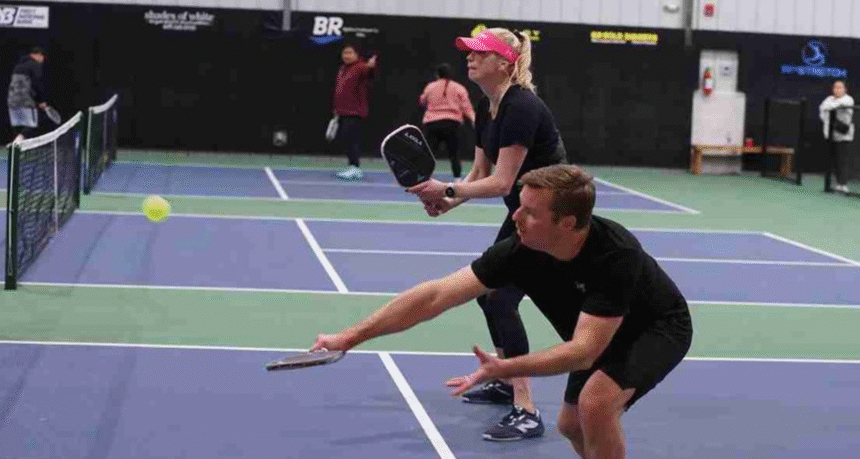
The third shot drop skill levels in pickleball range from basic high-arc attempts to elite spin-loaded weapons that force opponents into defensive positions. Understanding which level you’re at, and what separates you from the next one, is the fastest way to stop leaving points on the table.
Mastering the third shot drop skill levels in pickleball is the single fastest way to jump a rating bracket, and most players are stuck at the wrong level without even knowing it.
They think they have a drop. What they actually have is a high, hittable ball that their opponents are converting into put-aways at an alarming rate.
The third shot drop is not just a soft shot. It’s a system.
There are distinct skill tiers between “I can get it over the net sometimes” and “I’m neutralizing pros at the kitchen line,” and each tier has specific technical markers that separate it from the one above.
Here’s exactly where those lines are drawn, and how to climb them.
Love pickleball? Then you’ll love our free newsletter. We send the latest news, tips, and highlights for free each week.
What Is a Third Shot Drop in Pickleball, Exactly?
The third shot drop is a soft, arcing groundstroke hit from the baseline or transition zone on the third shot of a rally, designed to land in the non-volley zone and neutralize the serving team’s positional disadvantage.
That definition is the one worth memorizing, because it contains the entire strategic point: the purpose isn’t softness for softness’s sake.
It’s to make the ball unattackable so you can get to the kitchen line without getting a ball drilled at your feet during the transition.
The returning team starts at the NVZ. You don’t. The third shot drop is how you close that gap without gifting them an easy volley.
Get this wrong and you’re playing the transition zone for the rest of the point, a position that very few players win from consistently.
According to USA Pickleball’s 2025 rulebook, the non-volley zone extends 7 feet from the net on each side.
That 7-foot window is your target. Miss it long and you’ve created an attackable ball. Miss it short and you’ve created a net error. The margin is real.
Level 1: Can You Actually Hit the Third Shot Drop Consistently?
At Level 1, a player successfully lands the third shot drop in the kitchen roughly 4–5 times out of 10 attempts under neutral conditions: no movement, no pressure, and no variety.
This is where most beginners and early intermediate players live.
The mechanics are somewhere between correct and close: continental or modified continental grip, a pendulum swing, eyes on the ball through contact.
But the fundamentals aren’t yet automatic, so execution breaks down under any added stress.
The biggest Level 1 tell is the error pattern. Drops landing long (past the kitchen line) mean too much pace or a flat contact angle.
Drops going into the net mean the player is hitting down instead of lifting through the ball.
Both errors point to the same root problem: the player is thinking about the shot mechanics while hitting it, instead of just executing.
The fix at Level 1 is pure repetition. Solo drills , feed a ball, drop it, repeat, until the swing is grooved.
You can’t train the drop under pressure until the mechanics are automatic, and there are no shortcuts here.
💡
Level 2: Why Does the Third Shot Drop Break Down When You’re Moving?
At Level 2, a player can execute the third shot drop with high consistency from a static position but loses roughly 50–60% of that consistency when required to move to the ball first.
This is the plateau that traps the largest portion of 3.5–4.0 players.
They hit beautiful drops in drilling sessions and then spray them long in actual games because real points don’t serve them perfectly placed balls at a comfortable height.
The drop shot technique falls apart because footwork and shot mechanics are competing for the same cognitive bandwidth.
The Level 2 player also tends to telegraph their intention early.
Opponents read “drop incoming” before the paddle even swings, which allows them to load up for an attack on anything remotely hittable.
This is where the third shot drive becomes essential as a complement, not a replacement.
Training the fix: Have a partner feed balls to your backhand side, forehand side, and directly at your feet alternately, and require yourself to drop every single one.
The fridge-and-toaster drill is excellent for simulating directional variety. The goal isn’t just making the shot.
It’s making it while recovering to the transition zone simultaneously.
Pickleball Third Shot Drop by Skill Levels: 3.0 to 4.0 Guide
Third shot drop skill levels pickleball players need to master vary dramatically between 3.0 and 4.0 rated competitors. This guide breaks down exactly what to focus on, fix, and refine at each rating so you stop training the wrong things.
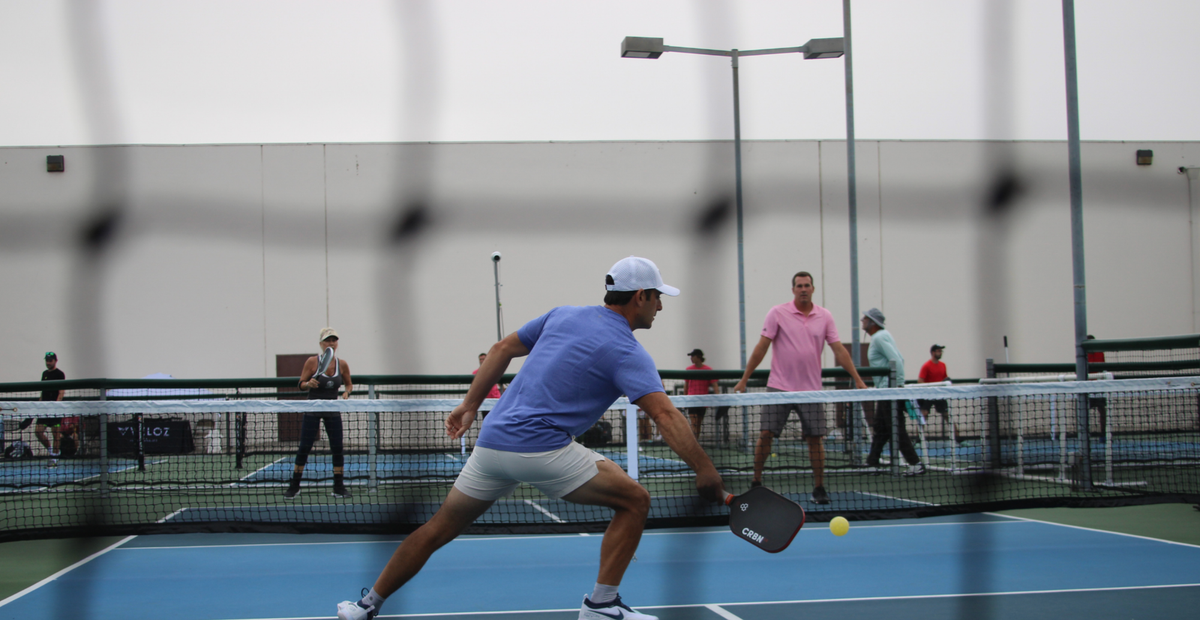
Level 3: How Do You Control Third Shot Drop Trajectory Like a 4.5 Player?
At Level 3, a player can choose between a high-arc drop (clearing the net by 2–3 feet) and a flatter, faster drop (clearing by 6–8 inches) based on opponent positioning, and can execute both at 70%+ consistency from movement.
This is where the shot becomes a genuine weapon instead of just a survival mechanism.
Trajectory control is what separates 4.0 from 4.5 on most rating scales.
The high-arc drop buys you time to advance but sits up longer for opponents who are patient at the line.
The flat, faster drop gives opponents less reaction time but carries more net-clip risk.
The 4.5-level player reads which trajectory to use based on one primary cue: where the opponents are standing.
If they’re camped at the NVZ line with paddles up, the flat-angle drop that arrives at their shoelaces is the right call , forcing them to volley upward with backspin, generating a reset opportunity.
If they’ve backed off the line even slightly, the high arc is safer and still effective.
According to research published in the Journal of Sports Sciences (2025), reaction times to balls below the net height average 180–220 milliseconds.
A well-placed, low-bouncing drop at the NVZ line is functionally unattackable even for experienced players. The physics are on your side if the trajectory is right.
Simplifying the Third Shot Drop: Fix These 5 Common Mistakes
The third shot drop becomes consistent when players stop overthinking mechanics and focus on smart positioning and progression
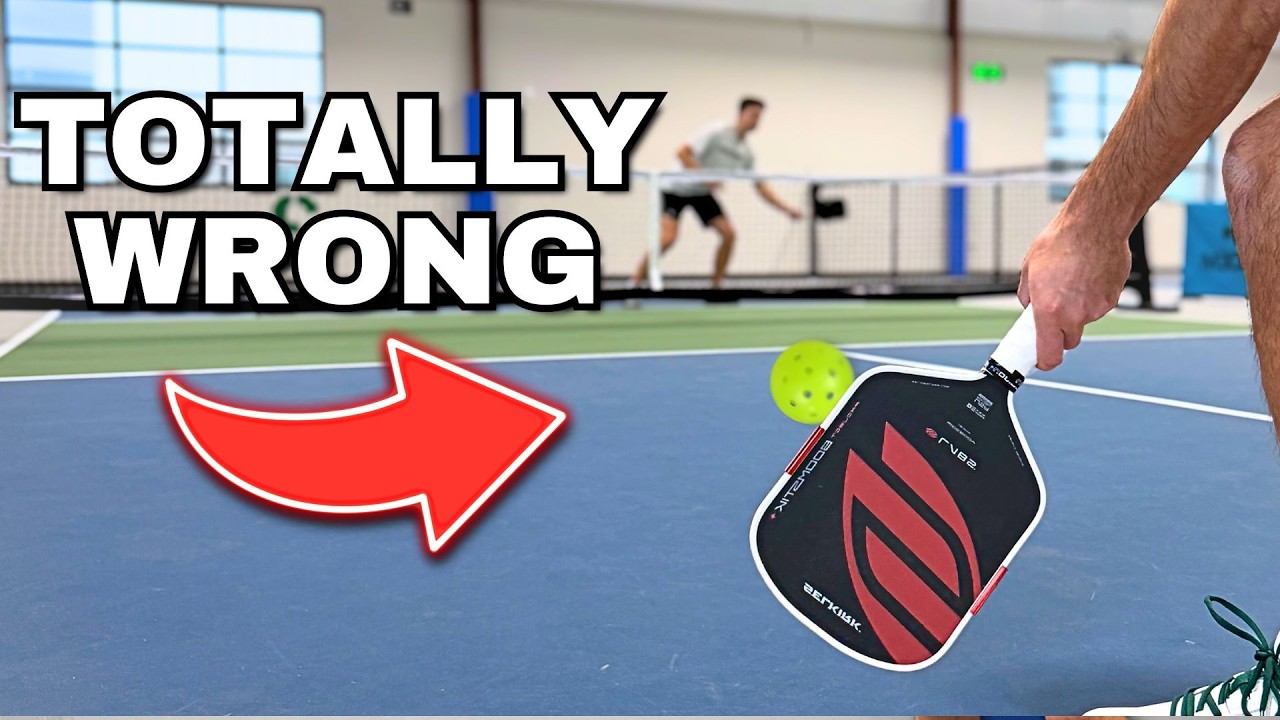
Level 4: What Does a Spin-Loaded Third Shot Drop Actually Do?
At Level 4, a player integrates topspin and slice into the third shot drop to manipulate the ball’s bounce and force opponents into defensive responses they cannot control.
This is advanced pickleball third shot territory. Most players at or below 4.5 don’t use spin intentionally on drops .
Most just try to get the ball to land in the kitchen. Level 4 players understand that where the ball lands matters less than what it does after it lands.
A topspin drop kicks forward and low off the bounce, staying close to the court surface and forcing opponents to dig up with a short swing.
That’s the exact kind of response that opens up the NVZ for the advancing team.
A slice drop bites and stays low (sometimes below knee height), and the backspin makes it hard to generate pace on the return.
Pro players like Ben Johns and Anna Leigh Waters have been documented using slice-heavy drops specifically against opponents who tend to attack early.
To train spin on the drop: grip down slightly on the paddle, contact the ball just below its equator for topspin, or brush under and through for slice.
Start from a static position before adding movement.
The spin is added, not substituted . The fundamental pendulum mechanics still have to be there underneath it.
The go-to slice dink is a strong companion shot at this stage.
Once you can slice both the drop and the dink, you’re presenting opponents with two very different looks from what appears to be the same swing pattern.
How to Improve Third Shot Drop Consistency
If you want to improve third shot drop consistency, the answer isn’t more court time, it’s structured, intentional repetition. This guide breaks down the exact drill protocol that builds a reliable drop you can trust under pressure.
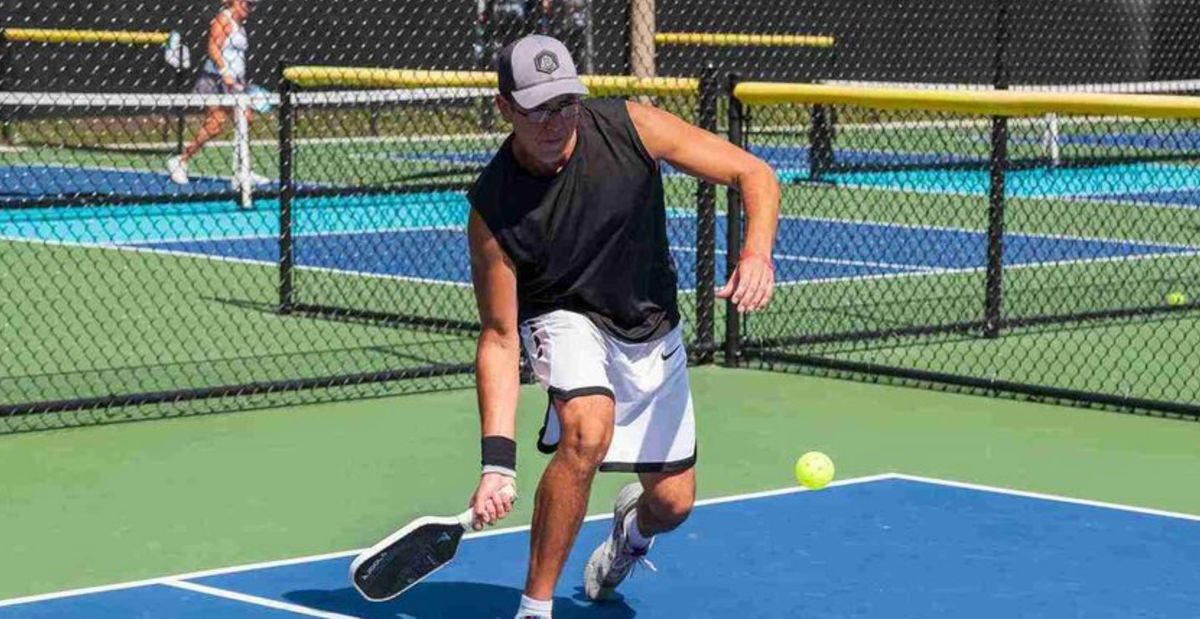
Level 5: How Do Pros Use the Third Shot Drop as a Deception Weapon?
At Level 5, the third shot drop is indistinguishable from the third shot drive until the last possible moment, and players deploy location, spin, pace, and trajectory variations in combination based on live opponent reads.
This is pro-level shot mastery. The mechanical execution is completely automatic . There’s no conscious thought about footwork, contact point, or swing path.
All of that mental bandwidth has been freed up for reading the opponent.
Where are their paddles? How deep are their feet? Are they cheating toward the crosscourt?
Elite players see all of that and select from a menu of drop variations in real time.
The disguise element is the hardest part to develop and the most decisive in competitive play.
Both the drive and the drop use the same setup: wide stance, low paddle, weight transferring forward.
The split-second difference happens at contact. Advanced shot selection drills that require players to decide drive vs. drop based on a visual cue (rather than a predetermined plan) are the fastest way to build this.
Doubles strategy at this level also factors in the partner’s movement.
The drop isn’t just neutralizing one opponent. It’s neutralizing both while creating an asymmetric situation that allows the advancing team to dictate the next exchange.
Demystifying the Third Shot Drop: 3 Simple Tips from a Pro
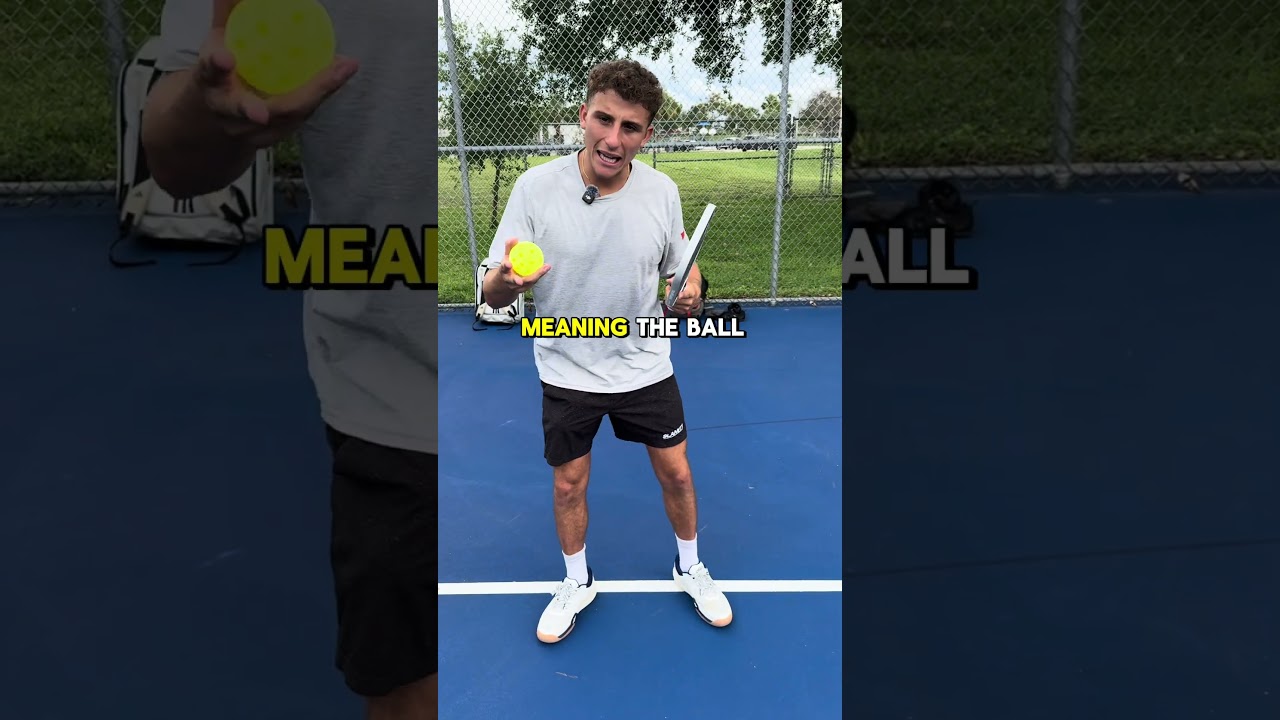
A pro pickleball player reveals the three most common mistakes that are sabotaging your third shot drop. Here’s what you need to fix to improve consistency and control.
From Where You Are to Where You Want to Be
The path through the third shot drop skill levels in pickleball isn’t linear. Most players bounce between Level 2 and Level 3 for months before something clicks.
That’s normal. The tell that you’ve moved up is simple: stop measuring by whether the drop landed in the kitchen and start measuring by whether it forced a defensive response.
If opponents are punching down on your drops, you’re still at Level 1 or 2. If they’re digging up from below the tape, you’re at Level 3 or higher.
Improving your game at this shot means tracking outcomes, not just makes and misses.
And don’t forget: the five shots you need to know in pickleball all connect to the drop. See that full breakdown here.
How to Practice the Third Shot Drop Alone: Solo Drill Guide
The third shot drop is the single most important shot in pickleball, and you don’t need a partner to get reps in. This guide walks you through the best solo drills to practice the third shot drop alone and build real, transferable court feel.
Key Takeaways
- The third shot drop skill levels in pickleball progress through five distinct tiers: mechanical basics, consistency under pressure, trajectory control, spin integration, and elite-level disguise.
- Landing the drop in the kitchen is not the goal. Landing it at the opponents’ feet while they’re at the NVZ line is.
- Most 3.5–4.0 players stall at Level 2 because they never train the drop from movement, only from a static stance.
- Topspin and slice drops behave differently off the bounce and require opponents to make fundamentally different adjustments.
- The drop and the drive are a package deal. You need both to make either one effective.
💡
Frequently Asked Questions
What are the third shot drop skill levels in pickleball?
The third shot drop skill levels in pickleball progress through five tiers: Level 1 (basic mechanical execution with ~50% consistency), Level 2 (consistency under static conditions but breakdown during movement), Level 3 (trajectory control between high-arc and flat drops), Level 4 (spin integration using topspin and slice to manipulate bounce), and Level 5 (full disguise and live opponent reading at pro or elite amateur level). Each tier has specific technical markers and training methods that separate it from the next.
How do I know what third shot drop skill level I’m at?
The clearest diagnostic is your error pattern under game conditions. If you miss long or into the net more than 50% of the time in live play, you’re at Level 1. If you hit it well in drilling but break down during rallies, that’s Level 2. If your drop consistently lands in the kitchen but opponents are still attacking it, you haven’t yet reached Level 3 trajectory control. Track opponent responses, not just whether the ball cleared the net.
How long does it take to master the third shot drop in pickleball?
Most players see measurable improvement in third shot drop consistency within 4–8 weeks of focused, deliberate practice according to sports skill acquisition research published in Human Kinetics (2025). However, moving from Level 2 to Level 3 . Moving from Level 2 to Level 3, where trajectory and movement are fully integrated, typically requires 3–6 months of regular play and drilling at competitive sessions. Elite-level disguise (Level 5) is a multi-year development arc.
Should beginners learn the third shot drop before the third shot drive?
Yes. The third shot drop is the foundational shot for transitioning from the baseline to the kitchen line in pickleball. The drive is a complementary option used strategically, but without a reliable drop, the drive becomes predictable and opponents adjust quickly. Learn the drop first, groove it to Level 2 or higher, then introduce the drive as a variable to prevent opponents from camping and loading up.
Does spin on the third shot drop actually matter at the recreational level?
Spin matters more than most recreational players think, even below the 4.0 rating. A well-executed slice drop that stays below net height after bouncing is functionally unattackable regardless of the player’s level. The physics don’t change. You don’t need pro-level spin to benefit from it. Even a moderate amount of backspin on a drop that lands short in the kitchen will create an upward response from opponents, giving you time to advance and take control of the NVZ.
Nguồn: thedinkpickleball