Knowing how to cover for your pickleball partner is what separates scrambling teams from ones who control the whole court. This guide breaks down positioning, stacking, switching, and the communication habits that close every gap.
How to cover for your pickleball partner comes down to one uncomfortable truth: somebody has to be in two places at once, and it’s usually you.
Your partner poaches a ball out of the middle, gets pulled wide chasing a lob, or just gets caught flat footed at the kitchen line.
What happens next decides the point. Most rec players freeze. Good doubles teams have already rotated into the gap before the ball lands.
This isn’t about being faster.
It’s about knowing exactly where the hole opens up and getting there before your opponent even sees it, the same instinct that separates high pickleball IQ players from everyone else on the court.
Every team we’ve watched climb from 3.5 to 4.5 made this exact shift before anything else clicked.
Love pickleball? Then you’ll love our free newsletter. We send the latest news, tips, and highlights for free each week.
What Does It Actually Mean to Cover for Your Partner?
Covering for your partner means shifting your court position the instant they leave theirs, so the two of you still control the full width of the court as a unit.
Think of it less like defense and more like inventory management. Every square foot of the court needs an owner at all times.
The moment your partner steps out of their lane, that square footage is unowned property, and unowned property gets attacked.
Here’s the part beginners miss. Coverage isn’t reactive. By the time you’re watching the ball to see where it’s going, you’re already a half step late.
The best doubles players read the shot their partner is about to hit and start moving before contact.
This holds true even around the kitchen rules, where the middle isn’t split by an invisible line the way most rec teams assume.
That’s why tightening your third shot drop mechanics matters just as much for your partner’s coverage as it does for your own shot quality.
A clean drop buys both of you time. A weak one strips it away.
Why Doubles Positioning Falls Apart Without Real Coverage
Doubles positioning only works when both players treat the middle as shared territory, not a demilitarized zone.
Most club-level teams still play like the court is split down the center with an invisible wall. Solid doubles strategy starts by tearing that wall down.
That wall is a myth, and opponents exploit it constantly.
The Middle Isn’t No Man’s Land, It’s Prime Real Estate
The middle of the court produces more unforced errors between partners than any other zone, mostly because nobody wants to admit it’s their ball. Whoever has the forehand into the middle should take it, full stop, and the non-hitting partner should already be sliding to protect the space that shot just vacated. Good court positioning starts with killing the idea that the middle belongs to whoever is closer. It belongs to whoever can hit it cleanest.
When Your Partner Poaches, You Inherit the Whole Court
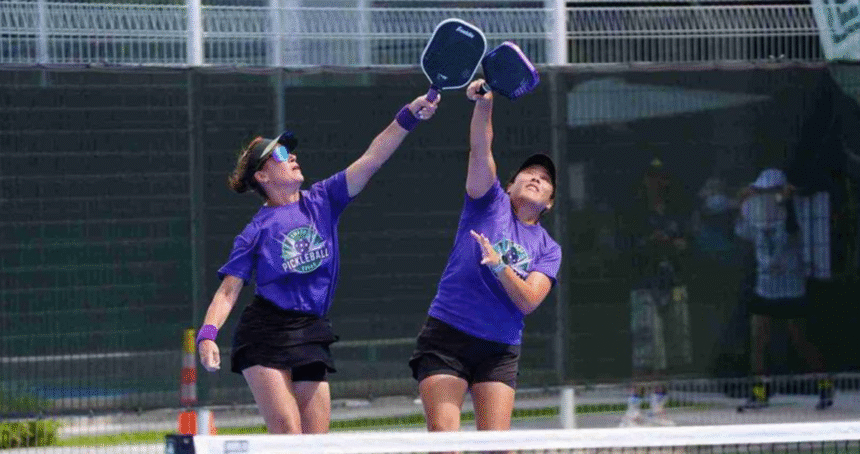
Poaching in pickleball is one of the highest value plays in the sport, right alongside an aggressive erne, and also one of the most abandoned. A well timed poach ends points fast. But the second your partner crosses into your side to snatch a dink or put away a pop up, you own everything they left behind. That means sliding toward the middle immediately, not watching the shot like a spectator. Good poaching also relies on disguise, and sharpening your deception at the net makes the poach itself harder for opponents to anticipate in the first place. If your partner poaches and you don’t rotate, you’ve turned a great offensive play into a wide open door. Sharpening shot selection on poaches and put aways is worth drilling specifically so this rotation becomes automatic instead of a conversation you have mid-rally.
💡
How to Cover for Your Partner on the Return of Serve
How to cover for partner pickleball on the return starts before the serve even happens.
Set your split step and your lane assignment while the server is loading up a weapon, not after the ball is already bouncing.
If your partner returns crosscourt and creeps forward, you should already be shading toward the middle third to protect the seam between you.
The return is also where mismatches get exposed fastest.
A short or weak return pulls your partner wide and out of position for the next shot, which means you’re covering more court on the very first exchange of the point.
Where you return serve directly determines how much ground you’ll need to make up two shots later, so treat return placement as a team decision, not a solo one.
Teams that talk through return strategy before the point starts recover from bad returns far faster than teams who don’t.
How to Be a Better Doubles Partner in Pickleball
Becoming a better doubles partner in pickleball starts with two things: clear communication and smart court coverage. This guide breaks down the tactics, habits, and positioning strategies that separate good doubles teams from great ones.
How to Cover for Your Partner When You’re Pulled Wide
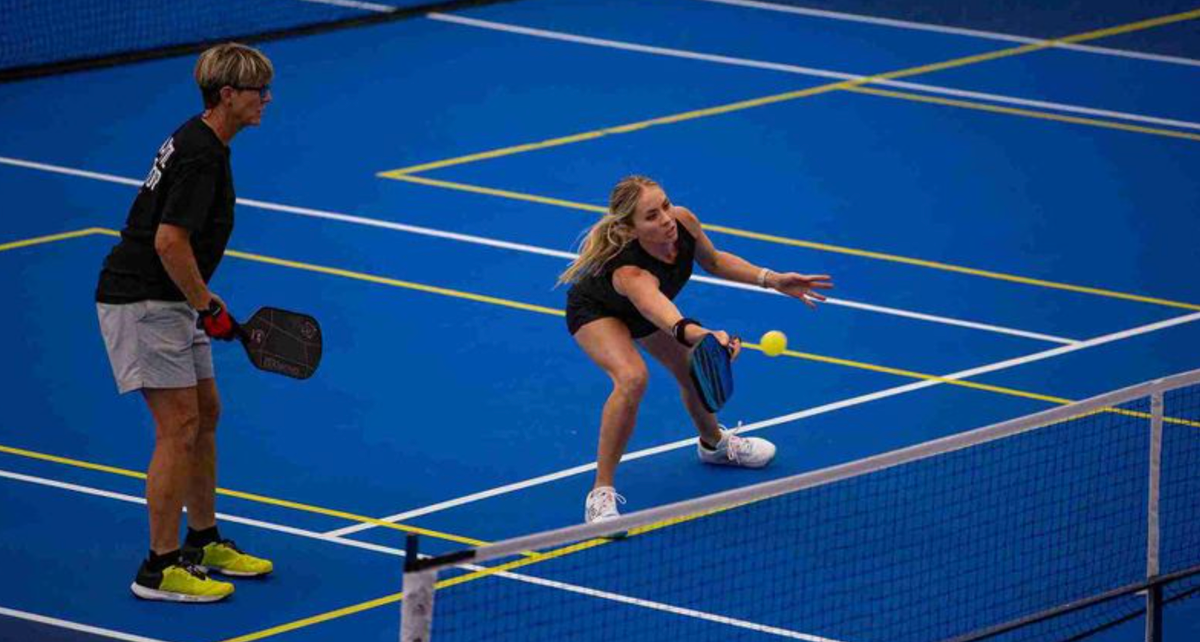
Getting pulled wide is the single most common way court coverage in doubles breaks down, and it happens to every team eventually.
An opponent hits a sharp angle, your partner has to run it down, and suddenly there’s a canyon between the two of you.
How to Cover for Your Partner After a Weak Third Shot
A weak or popped up third shot drop is an invitation for your opponents to attack the open court, and it’s usually the moment coverage collapses. The instant you see your partner’s drop sit up, start crashing forward and toward the center. Don’t wait to see if the attack actually comes. Assume it will. A cleaner drop mechanic reduces how often you’re forced into this scramble in the first place, which is the cheapest coverage fix most teams never make.
How to Cover for Your Partner at the Kitchen Line
Once both players reach the kitchen line, coverage becomes almost entirely about lateral quickness and trust. If your partner gets jammed on a body shot and can only block weakly, you need to already be sliding to cut off the angle before the ball crosses the net. Positioning yourself correctly at the kitchen is the foundation this entire skill is built on. Without solid footwork at the line, no amount of anticipation saves you.
A quick gut check for kitchen line coverage:
- Is my partner stretched or off balance? Shift toward their side immediately.
- Did the ball just get attacked down the middle? Split the difference, don’t guess a side.
- Am I still even with my partner, or drifting behind the play? Reset your line before the next shot.
Pickleball Doubles Strategy for Beginners: 5 Simple Tips
Pickleball doubles strategy for beginners starts with five core concepts that separate rally-clickers from players who actually win points. Get these five things right and your doubles game will look completely different in two weeks.
Stacking and Switching: The Coverage Tools Nobody Talks About
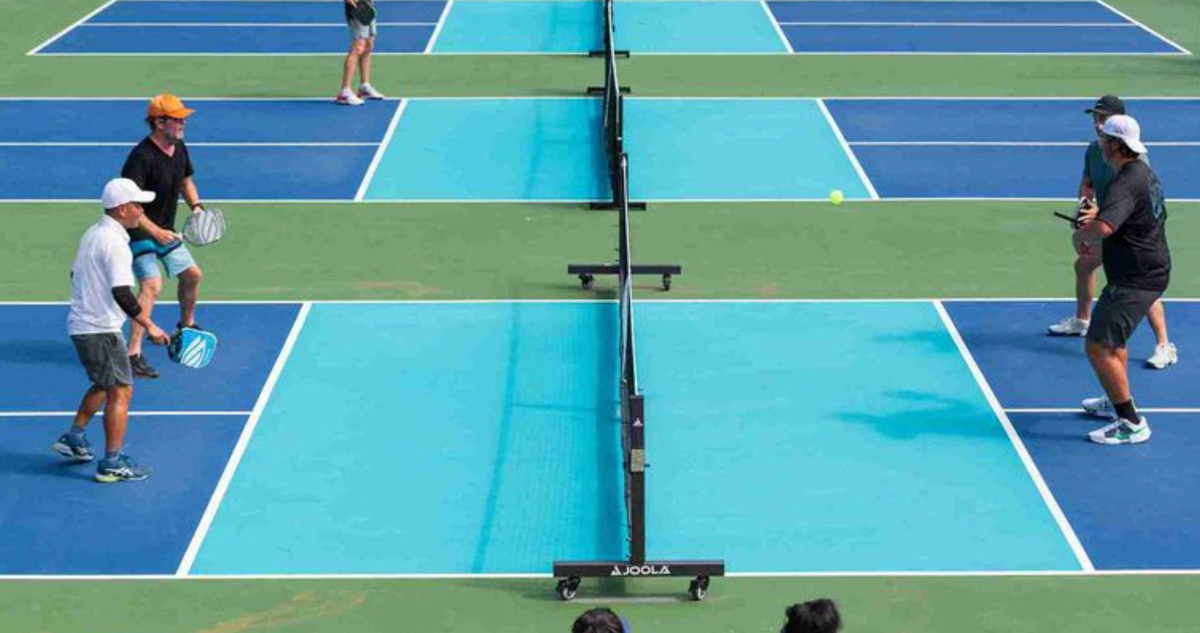
Stacking lets a team keep a stronger player in a specific position regardless of who served or returned, which solves a lot of coverage problems before the point even starts.
Even a few fundamentals every beginner needs include understanding this concept early, because it changes how you think about position from day one.
If one partner has a significantly better backhand or forehand in the middle, stacking keeps that strength where it matters most instead of leaving it to chance.
Pickleball stacking rules allow this legally as long as both players are in the correct service order at the moment of the serve, so there’s no reason a competitive team should skip it.
Switching sides mid-rally is the other tool, and it’s more common than most rec players realize.
When you or your partner get pulled hard to one side chasing a ball, sometimes the fastest fix is a full switch rather than trying to scramble back to your original lane.
It looks unconventional. It works because it prioritizes covering the open court over covering your assigned side, and it demands the kind of fast hands and faster feet that separate scrambling from recovering.
8 Pickleball Doubles Strategy Tips Nobody Talks About
Pickleball doubles is a game of angles, positioning, and reading your opponent. But there’s a gap between what coaches teach and what actually wins matches.
Communication Habits That Close Every Gap
Communication in doubles pickleball is the difference between two players who happen to share a court and an actual team.
Call the ball loudly and early, especially on anything down the middle or lobbed overhead.
“Mine” and “yours” take half a second to say and save entire points.
Talk between points too, not just during them.
A ten second conversation about who’s taking middle balls on the ad side, or how you’ll rotate after a poach, does more for your coverage than an hour of solo drilling.
Even something as simple as figure 8 footwork patterns can sharpen the exact movement you rely on to close gaps mid-rally.
Teams with strong DUPR ratings communicate constantly, and it shows up directly in how few balls hit the ground untouched between them.
If you want to see this in practice, solo drilling your reaction speed helps individually, but coverage is ultimately a partnership skill that only improves with reps together.
Research on doubles sports positioning backs this up too. A 2025 review in the Journal of Sports Sciences found that elite doubles pairs in racquet sports close positional gaps roughly 30 percent faster than recreational pairs, largely due to anticipatory movement rather than raw speed.
That gap is learnable, and it starts with the habits above.
Pickleball Doubles Communication: Calls Every Team Needs
Pickleball doubles communication is the hidden variable that separates teams that grind out wins from teams that implode on big points. Learn the exact calls, signals, and habits that keep you and your partner moving as one unit on the court.
Key Takeaways
- Coverage is anticipatory, not reactive. Move before the ball tells you to.
- The middle belongs to whoever hits it cleanest, not whoever is closest.
- When your partner poaches or gets pulled wide, you automatically inherit more court.
- Stacking and switching are legal, underused tools for solving positional mismatches.
- Loud, early communication in doubles pickleball closes more gaps than footwork alone, and pairing it with a sharp return of serve closes the rest.
💡
Frequently Asked Questions
What does it mean to cover for your partner in pickleball?
Covering for your partner means adjusting your court position the moment they move out of theirs, so your team never leaves open space unguarded. It requires anticipating your partner’s movement rather than reacting to it after the fact.
How do you know when to shift toward the middle?
Shift toward the middle any time your partner hits a shot that pulls them away from center, or when a poach happens on either side. If the ball is struck anywhere near the seam between you two, assume you need to help cover it.
What’s the biggest coverage mistake rec players make?
Most rec players stand still and watch their partner’s shot instead of moving during it. By the time the ball is already in the air toward an opponent, it’s too late to close the gap that just opened, which is exactly why serve side positioning near the kitchen trips up so many teams early in a match.
Is switching sides during a rally legal in pickleball?
Yes, switching sides mid-rally is completely legal as long as it happens after the serve, and many competitive teams use it to recover from being pulled out of position. It’s different from stacking, which is arranged before the point starts.
Does stacking help with court coverage?
Stacking helps because it keeps each partner’s stronger side positioned where it will be used most, reducing the number of forced coverage rotations during a point. It’s a pre-point decision that pays off throughout the entire rally, and it’s one more reason how to cover for partner pickleball is a team skill, not a solo one.
Nguồn: thedinkpickleball