Pickleball rules can be deceptively tricky, especially once you move past the basics. This guide breaks down the 10 most misunderstood rules that every intermediate player needs to get right to play smarter and win more.
Pickleball rules sound simple until you’re in the middle of a rally and someone calls a kitchen violation you didn’t see coming.
That’s the trap. The basics are easy.
It’s the gray-area stuff, the technicalities that separate the 3.0s from the 4.0s, that most intermediate players never fully lock down.
If you’re hovering in that 3.5 to 4.0 range and want to stop losing points to unforced rule errors, this is your guide.
Love pickleball? Then you’ll love our free newsletter. We send the latest news, tips, and highlights for free each week.
Here’s the thing: most intermediate players learned the game by watching and mimicking, not by reading the USA Pickleball Official Rulebook.
That works fine at 3.0. At 3.5 and above, the gaps start showing.
The rules that bite intermediate players are almost never the obvious ones. Nobody forgets you have to keep score.
What gets missed is the kitchen momentum rule, the serve contact height requirement, or the subtle difference between a fault and a “let.”
These are the mistakes that cost you games, and they’re all preventable once you know the rulebook cold.
Pickleball Rule 1: The Kitchen Is a Momentum Zone
The non-volley zone rule is the most misunderstood pickleball rule at every level.
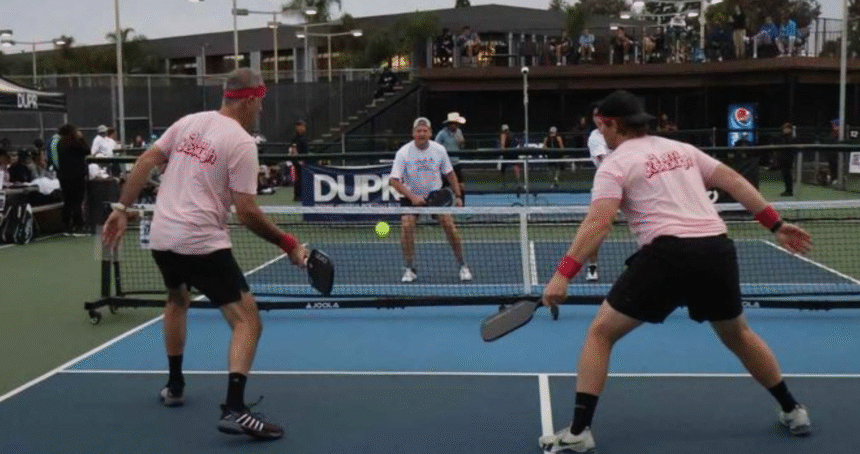
The kitchen, the 7-foot zone on either side of the net, isn’t just a place you can’t stand while volleying. It’s a momentum trap.
Under USA Pickleball Rule 9.B, if your momentum carries you into the kitchen after a volley, even if you were behind the line at contact, it’s a fault.
Your paddle, your hat, your follow-through, your partner: if any of it touches the kitchen zone as a result of a volley, you lose the rally.
The definition you need: a volley is any ball hit out of the air before it bounces. Volleying from the kitchen, regardless of circumstances, is always illegal.
Positioning at the kitchen line is one of the highest-impact skills in the game. Get the rule right first.
💡
Rule 2: The Two-Bounce Rule Has No Exceptions
The two-bounce rule (also called the double-bounce rule) requires that the serve bounces once on the receiving side, the return bounces once on the serving side, and then either team may volley.
No exceptions. No workarounds.
Why this trips people up: intermediate players start anticipating the third shot and creep toward the net too early.
They end up volleying the return when they should have let it bounce. That’s a fault every time.
The third shot drop exists precisely because of this rule. The serving team has to let that return land before doing anything with it.
Understanding why the third shot matters starts here.
Pickleball Rules Explained for Beginners (2026)
Pickleball rules can feel overwhelming at first, but they break down into a handful of core concepts that click fast. This guide covers every rule you need to know to step on the court with confidence in 2026.
The serve has its own set of pickleball rules, and they’ve evolved.
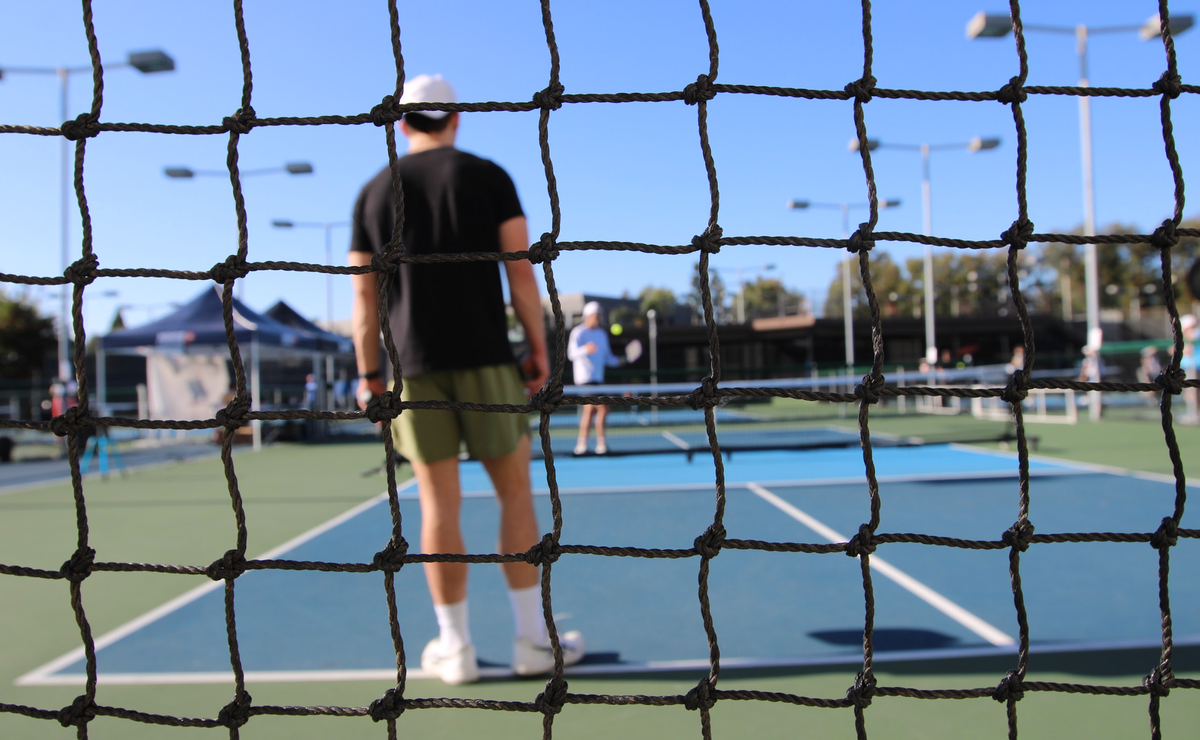
Under the current USA Pickleball rules effective 2025, a legal serve must meet three criteria simultaneously:
- The paddle head must be below the wrist at contact
- Contact must be made below the waist (navel height)
- The arm motion must be upward or forward (an upward arc, not a sidearm or overhead swing)
The spin serve was banned in 2023. The chainsaw serve is gone.
What’s left is the volley serve and the drop serve, and both have their own contact requirements.
Weaponizing your serve within those rules is still very much possible, but you need to know the boundaries.
If you’re not sure about your serve mechanics, your grip is a good place to start.
The Pickleball Serve Basics: Rules, Technique & Pro Tips from Michael Loyd
Fix your serve, and your entire game gets easier. You start points on offense instead of defense. Your opponent’s return is weaker. Your third shot is simpler. It all flows from that one shot you control completely.
What Are the Pickleball Rules for Let Serves?
This is the one that surprises people the most. There is no let serve in pickleball.
As of USA Pickleball Rule 4.B.8, a serve that clips the net and lands in the correct service box is live. Play it.
Tennis players, especially, struggle with this. The instinct is to stop playing and wait for a re-serve. Don’t.
If the ball clears the net and lands in bounds, the rally is on. This rule has been in place for years and still catches people off guard at recreational play all the time.
Pickleball Singles Rules: The Complete Guide to Solo Play
Pickleball singles rules follow most of the same framework as doubles, but the scoring system, serving rotation, and court strategy are different enough to trip up even experienced players. This complete guide breaks down every rule you need to play solo pickleball the right way.
Pickleball Rules for Doubles: What Changes?
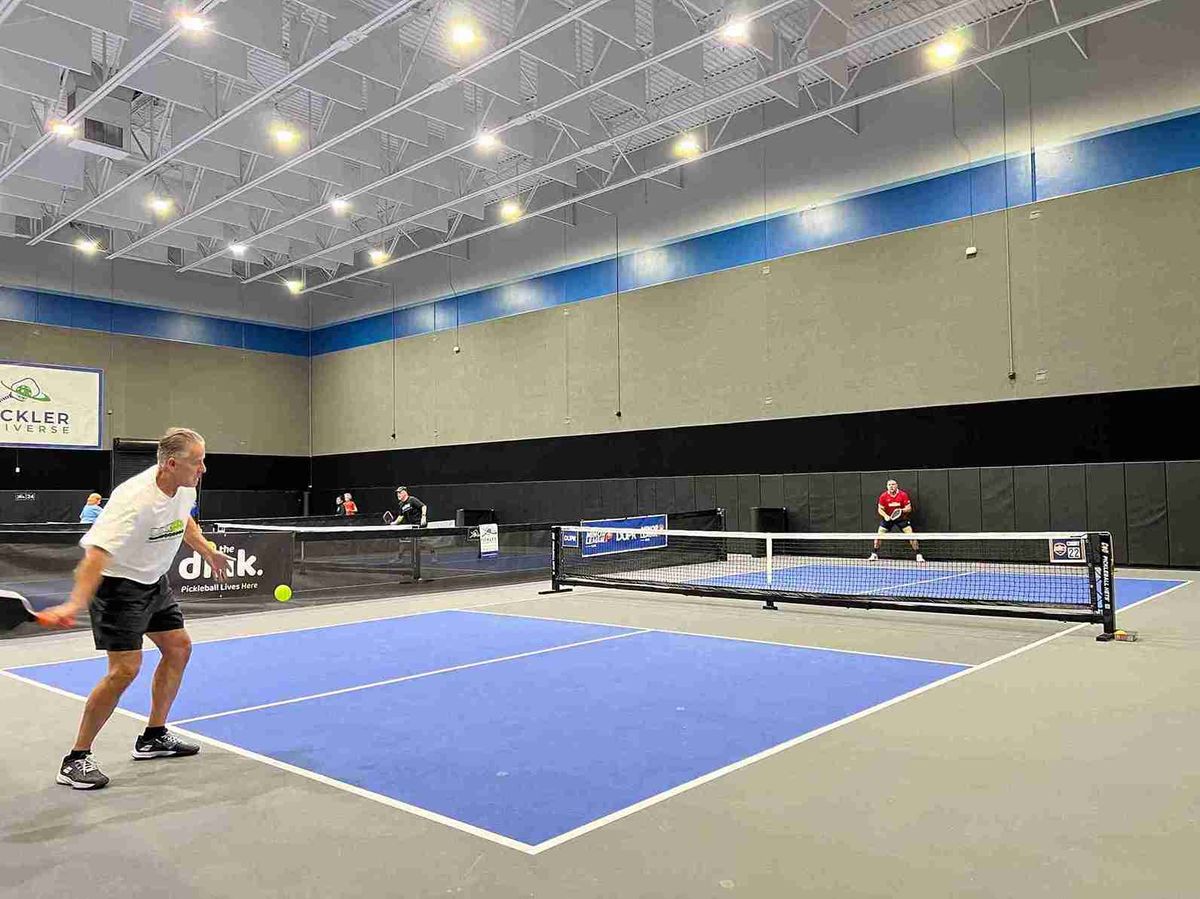
Doubles introduces its own layer of pickleball rules that don’t apply to singles. The biggest one: the serving rotation.
In doubles, the first server of the game starts from the right service court.
Only one fault is allowed before the serve passes to the other team (except the very first serve of the game, where the serving team gets only one server, not two).
After that, both partners serve before the side-out occurs.
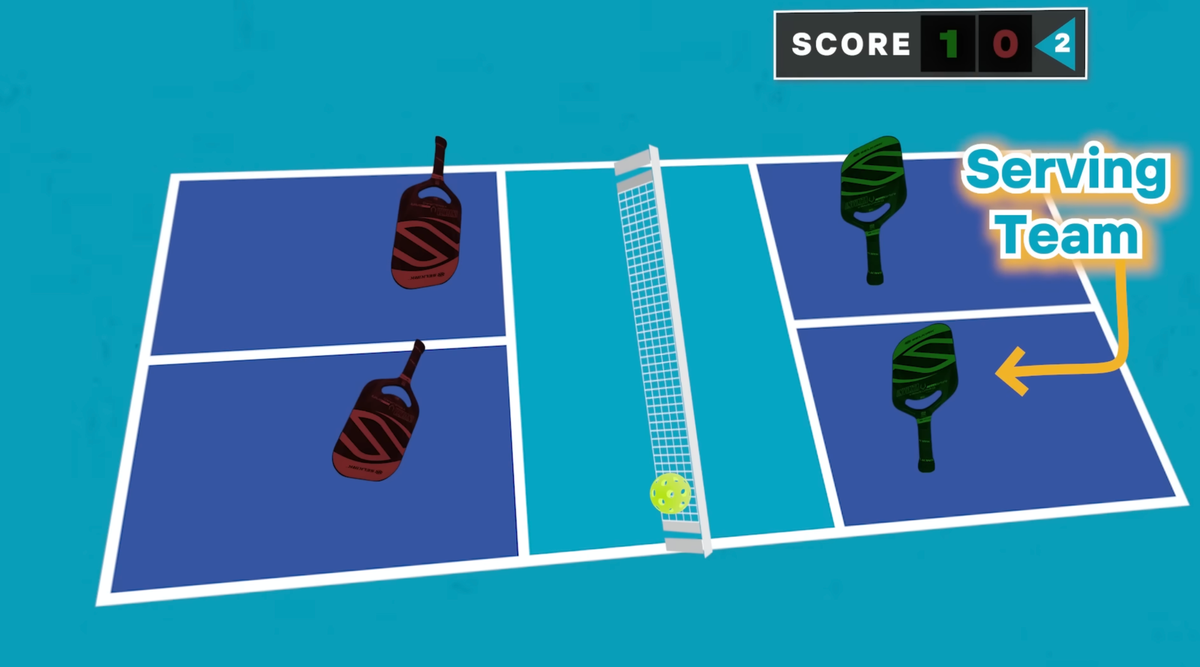
The score in doubles is called with three numbers: the serving team’s score, the receiving team’s score, and the server number (1 or 2).
If you’ve ever heard someone call “4-2-2,” that’s what they mean.
Getting this wrong isn’t just confusing; it can lead to a fault if you serve from the wrong position.
Doubles strategy only works when you have the serving rotation right. Build that foundation first.
Pickleball Rules for Doubles: The Complete Breakdown
The beauty of pickleball is that once you understand these fundamentals, the game opens up. You start thinking about strategy, positioning, and shot selection. Pretty soon, you’re hooked.
Why Does the Line Call Rule Matter More Than You Think?
Line calls are the player’s responsibility in recreational and most tournament play.
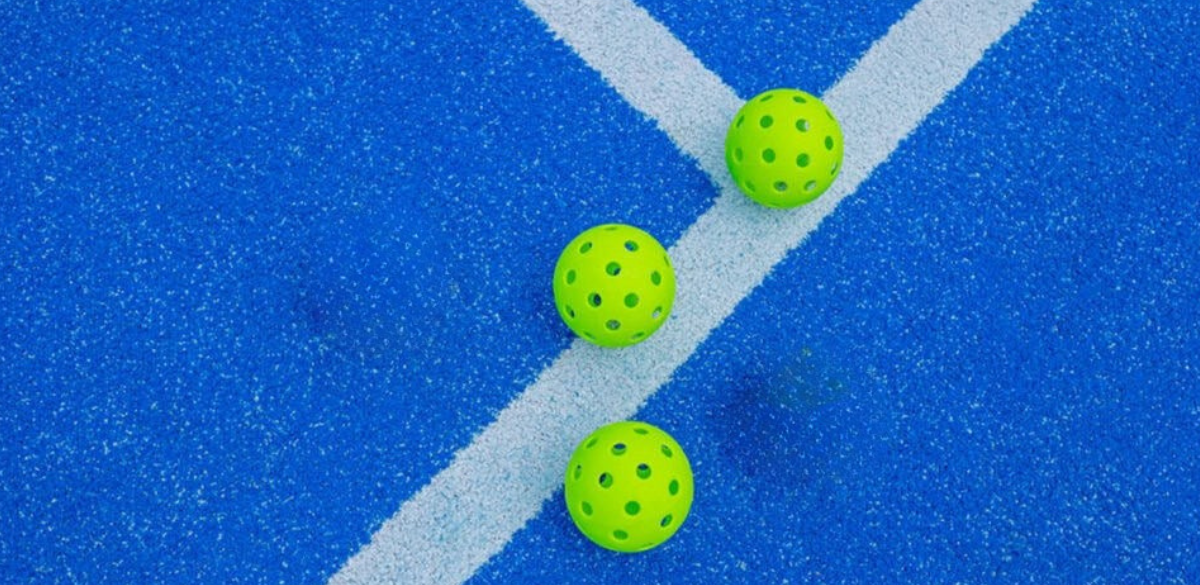
The rule is simple: a ball is out only if you can clearly see daylight between where it lands and the line. If you’re not sure, it’s in.
Out calls must be made before the next shot is struck. Under USA Pickleball Rule 6.D, late calls are not valid.
The ball is in if you hesitate.
And if your opponents make a call you disagree with, the dispute process is clear: in non-officiated play, if you can’t agree, replay the point.
Intermediate players lose points constantly to late line calls. Know the rule. Make calls immediately and clearly.
Pickleball Line Calls: When Does Bad Calling Mean Cheating?
PPA Tour pro Zane Navratil discusses a pattern of questionable line calls at a recent event — and what the league should do about it.
Rule 6: Double-Hit and Carry Calls Follow Specific Criteria
A double-hit is legal under specific conditions.
Here’s the exact standard: if the double-hit occurs in a single, continuous stroke and is unintentional, it is not a fault.
This was clarified explicitly in the 2024 USA Pickleball rules update.
The same applies to a “carry,” where the ball rests momentarily on the paddle.
If it’s unintentional and part of a single motion, it’s legal.
If you intentionally redirect the ball mid-swing, that’s a fault.
This matters most on soft shots at the kitchen line. Dinking exchanges get messy at close range.
Knowing when a double-hit is legal gives you confidence in your soft game.
Stop Hitting Stupid Shots: Why Balance Changes Everything in Pickleball
It’s not about being passive. It’s about being strategic. You’re not giving up the point; you’re buying yourself the chance to win it on your terms, not theirs.
Pickleball Rules for Ball-in-Play Interference
What happens when a stray ball rolls onto your court mid-rally? Call “hindrance” immediately.
Under USA Pickleball Rule 11.J, if a distraction interferes with the rally and is called before the next shot, the point is replayed.
If you wait until after you miss, tough luck. The rally stands.
This also applies to noise, errant shouts from adjacent courts, and similar disruptions. The call has to be immediate.
Advanced players know how to use distraction to their advantage within legal bounds; knowing the interference rule makes sure you don’t get played by it.
5 Rules for Beating Bangers in Pickleball (Zane Navratil)
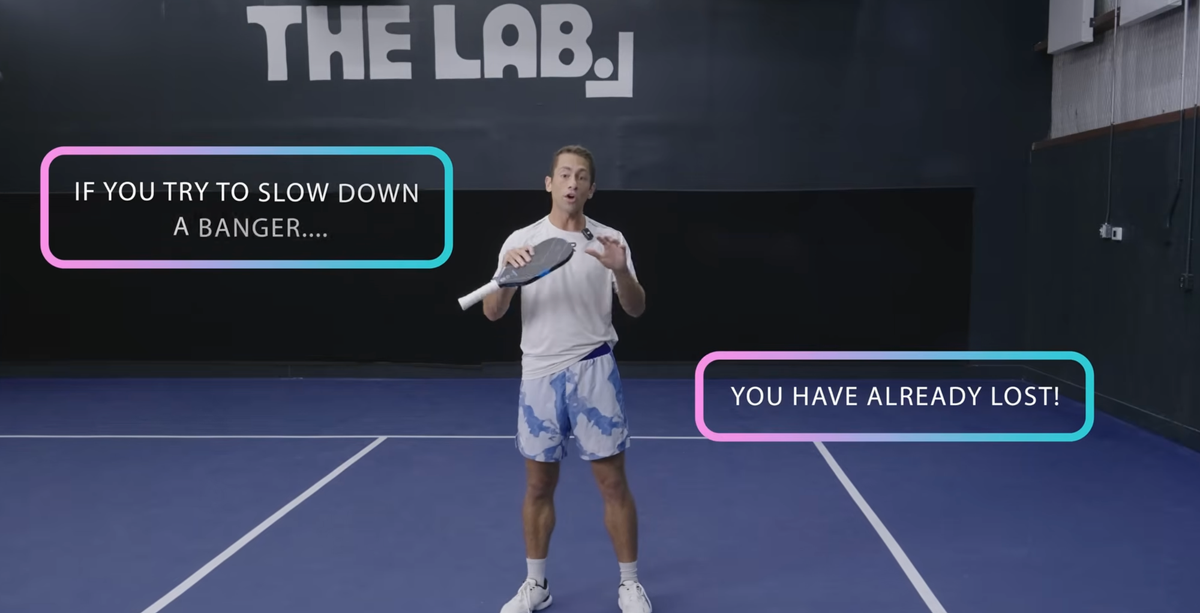
“If you start out with the mentality of slowing down the banger, you’ve already lost to the banger.”
Does Crossing the Kitchen Line After a Bounce Matter?
No. This is one of the most common misconceptions in intermediate play. You can step into the kitchen any time the ball has bounced.
The restriction is only on volleys, balls hit out of the air.
You can stand in the kitchen all day if you want.
You just can’t volley from there. So if a ball bounces in the kitchen (a short dink, for example), walk right in, hit it, and walk back out. No fault.
The go-to slice dink is designed specifically to exploit this, drawing opponents into awkward kitchen entries.
Knowing when you can step in is as important as knowing when you can’t.
Understand Pickleball Volley Control: Physics & Technique
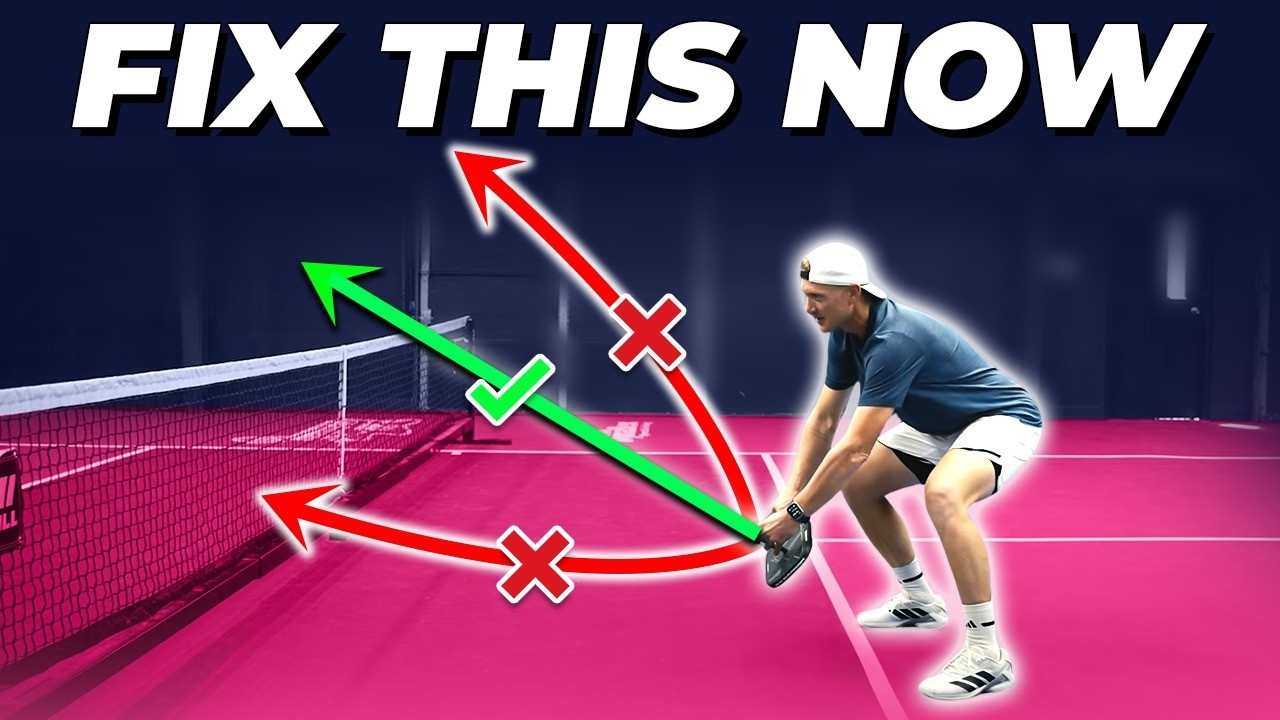
Pickleball volley control isn’t about luck or natural talent—it’s about understanding two fundamental principles: paddle angle and energy.
Rule 9: Replay Scenarios Are More Limited Than You Think
Replays (lets) are limited under current pickleball rules. The specific scenarios that allow a replay include:
- A ball from another court rolling onto your court during play (if called immediately)
- A player being distracted by an outside element beyond their control
- A service before the score is called (Rule 4.E)
What does not get a replay: a serve that clips the net (it’s live), a ball that hits the ceiling or overhead obstruction (fault, not replay), or a disputed call where no consensus is reached.
Knowing which situations actually warrant a replay stops you from expecting one when it isn’t coming.
The Unwritten Rules of Pickleball
Respect the elderly. Leave the paddle rack alone. And whatever you do, never offer unsolicited advice.
Pickleball Rules for Scoring: Rally vs. Traditional
Traditional pickleball scoring is side-out: only the serving team can score. You play to 11, win by 2.
Rally scoring, where either team can score on any rally, is used in some tournament and recreational formats.
Major League Pickleball has used rally scoring formats. It’s a different strategic game entirely.
In tournament play, USA Pickleball still uses traditional scoring as its default.
Know which format you’re playing before the match starts; the strategic implications are significant.
How you return the serve changes considerably when every rally can swing the score.
Pickleball Scoring Rules: Complete Guide (2026)
Pickleball scoring rules aren’t complicated, but they trip up new and experienced players alike. This guide breaks down side-out and rally scoring so you can step on the court knowing exactly what’s happening.
Key Takeaways
- The non-volley zone (kitchen) applies to your momentum, not just your feet at contact
- The two-bounce rule is mandatory on every serve and return, no exceptions
- Pickleball rules allow only one service fault per server (except in certain doubles formats)
- Volleys from inside the kitchen are always illegal, regardless of where the ball bounced
- Line calls are your responsibility; “out” must be called before the next shot
- A let serve is no longer replayed under official USA Pickleball rules
- Double-bounce and double-hit calls follow specific, nuanced criteria
- Serving rules have changed significantly since 2021; know the current standard
💡
Frequently Asked Questions
What are the most important pickleball rules for beginners to learn first?
The two-bounce rule, the non-volley zone rule, and the basic serving requirements are the foundation. Pickleball rules build on these three: understand them completely before worrying about edge cases. Once you’ve got the serve, the kitchen, and the double-bounce locked in, everything else becomes easier to layer in.
What are the pickleball rules around the kitchen (non-volley zone)?
The kitchen rules prohibit any player from volleying the ball while standing in the non-volley zone or while their momentum carries them into it after a volley. You can enter the kitchen to play a ball that has bounced. The 7-foot zone applies to both sides of the net and extends the full width of the court.
Are pickleball rules the same for singles and doubles?
Most pickleball rules are the same, but serving rotation and scoring differ in doubles. In doubles, both partners serve before a side-out (with one exception at the game’s start), and the score is called with three numbers. Singles uses a simpler rotation where the server switches sides based on whether their score is even (right court) or odd (left court).
What happens if the ball hits you in pickleball?
If the ball hits you or your clothing before bouncing, it is a fault against you, even if you are outside the court boundaries. This applies regardless of whether the shot was going out. Under official pickleball rules, the ball must be played with the paddle face only, and any contact with the body or clothing ends the rally as a fault.
Can the ball touch the kitchen line on a serve?
No. The serve must land in the diagonal service box, and the kitchen line is not part of the service box. A serve that lands on the non-volley zone line is a fault. All other lines, including the centerline and the baseline, are good if the ball lands on them.
Nguồn: thedinkpickleball