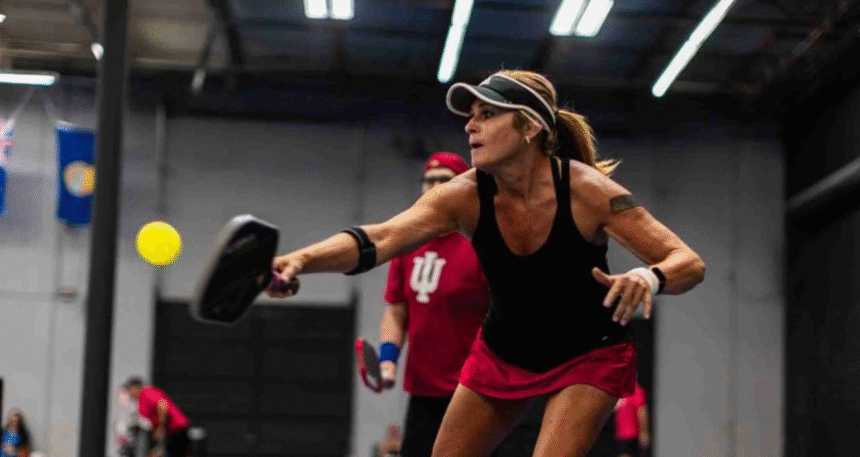
No man’s land in pickleball is the mid-court danger zone where most points are lost before players even realize they’re stuck there. Learn how to avoid no man’s land in pickleball with smarter movement, better shot selection, and a transition game that actually works.
If you want to know how to avoid no man’s land in pickleball, the answer starts before you even think about moving forward: it starts with understanding why you keep ending up there in the first place.
No man’s land isn’t just a bad spot on the court. It’s the place where your opponents have every advantage and you have almost none.
You’re too far from the kitchen to attack, too close to the baseline to reset comfortably, and you’re defending shots at your feet while trying to stay balanced.
It’s a losing position, and most rec players spend way more time there than they realize.
Love pickleball? Then you’ll love our free newsletter. We send the latest news, tips, and highlights for free each week.
What Is No Man’s Land in Pickleball?
No man’s land in pickleball is the area between the non-volley zone (the kitchen) and the baseline, roughly spanning the space between the service line and about seven feet from the net.
When you are standing in this zone, you are in the worst possible court position in the game.
According to USA Pickleball’s official rules and court diagram, the non-volley zone extends seven feet from the net on both sides, which means the transition zone sits directly between that line and the 22-foot baseline.
Here’s why it’s so brutal. Balls dipping at your feet are the hardest shots to handle in pickleball.
You can’t let them bounce (they die too low) and you can’t attack them (you don’t have the angle).
You’re forced into a defensive, awkward reply that floats up and invites a put-away from your opponent.
Good shot selection and positioning are deeply linked, and no man’s land is where that connection becomes most painful.
The zone has another name in coaching circles: the transition zone. The name actually helps clarify the mindset.
You’re not supposed to live there. You’re supposed to move through it, quickly and deliberately.
Most players who struggle with court positioning aren’t making bad decisions. They’re just moving without a plan.
Knowing how to position yourself at the kitchen is the destination; the transition zone is just the road you have to cross to get there.
How to Avoid No Man’s Land in Pickleball: The Core Strategy
The most direct answer to how to avoid no man’s land in pickleball is this: never move forward without a shot that earns your movement.
Every step toward the kitchen should be paid for by a ball you’ve just put in a position that is hard for your opponent to attack.
That ball is almost always the third shot drop.
The third shot drop is designed specifically to neutralize the transition zone.
You hit a soft, arcing shot from the baseline that lands in your opponent’s kitchen, forcing them to hit upward.
While the ball is in the air and they’re preparing a soft reply, you close toward the kitchen.
You move through no man’s land with the transition zone covered by the shot itself.
Research on reactive agility and movement economy in racket sports published in the Journal of Sports Sciences consistently shows that players who time their forward movement to coincide with opponent contact windows, rather than moving continuously, maintain better balance and reaction readiness.
That principle is at the heart of every well-timed transition in pickleball.
This is the fundamental exchange: a quality drop buys you the right to move.
A drive or a hard ball that sits up gives your opponent an attack, and suddenly you’re frozen mid-court with a fastball coming at your feet.
Learning how to make your third shot spicy helps you vary your drops with purpose rather than just floating the ball and hoping.
And understanding why players get stuck in mid-court starts with recognizing the shot that put them there.
💡
Why Do Players Keep Getting Stuck in the Transition Zone?
Most players end up in no man’s land for one of three reasons, and they happen in order.
Understanding doubles strategy and court positioning makes each one easier to recognize in real time.
- First: They hit a mediocre third shot, usually a drive or a pop-up, and their opponent attacks it. Instead of retreating or resetting at the baseline, they try to stay aggressive and creep forward while managing a defensive ball. That’s a recipe for a lost point.
- Second: They move too early. They start walking toward the kitchen before they’ve seen where their ball lands. By the time their opponent’s reply arrives, they’re mid-stride and completely off-balance.
- Third: They don’t have a reset shot they trust. When the transition zone gets uncomfortable, the instinct is to swing hard and get the ball past the opponent. That almost never works. Resetting better from mid-court is a learnable skill, and it’s the safety valve that keeps you from giving away points when you’re not quite ready to move in.
Mid-court pickleball tips go deeper on managing each of these scenarios, but the through-line is the same: control your movement, and the transition zone stops being a trap.
If you’re newer to understanding court zones, 3 tips every beginner needs to know lays out the foundational positional awareness that makes everything else click.
Master the Pickleball Transition Zone: Attack or Reset
The best players in the world aren’t just comfortable in the transition zone – they actively use it to their advantage
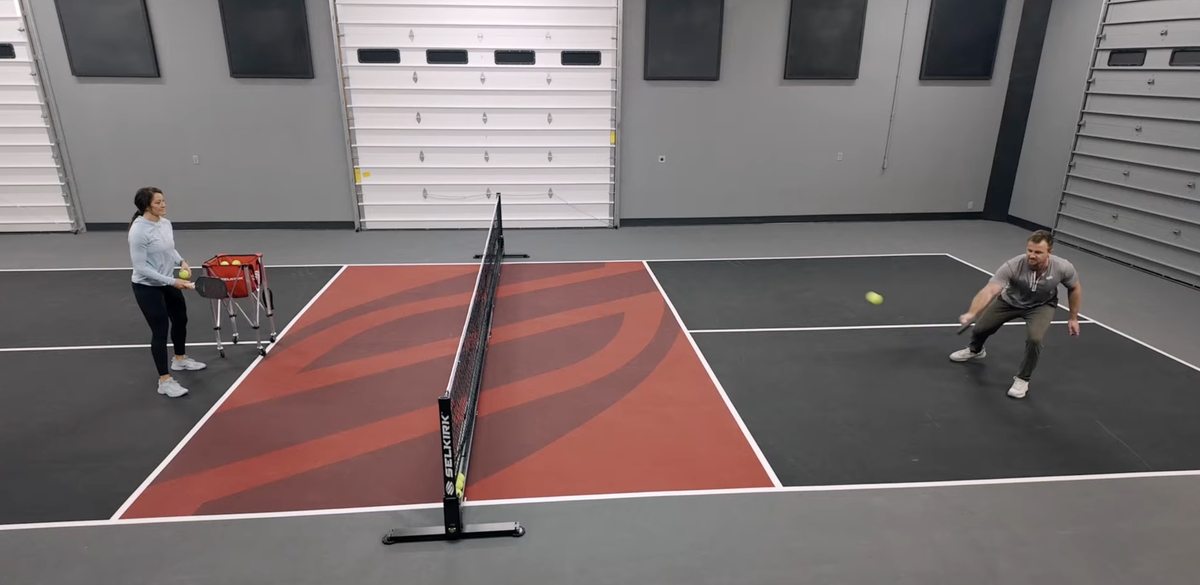
How to Move Through No Man’s Land Without Getting Burned
Footwork is where most players’ transition game falls apart, even when their shot selection is solid.
Backhand volley positioning is one of the clearest indicators of whether your footwork is actually set when you arrive at the kitchen.
The split step is the foundation: a small hop that lands you in a balanced, ready stance just as your opponent is about to make contact with the ball.
Sports science research on split-step timing in net sports, documented in the British Journal of Sports Medicine, confirms that players who initiate a split step synchronized with the opponent’s racket contact show significantly faster first-step reaction times than those who move continuously.
Same principle applies on the pickleball court. Pickleball footwork resources go deeper on developing that timing instinctively.
Here’s the sequence that works:
- Hit your third shot drop from the baseline.
- Take two or three steps forward.
- Split step as your opponent is about to strike.
- Read the reply, then either continue moving forward or hold your ground.
- Repeat until you reach the kitchen line.
This “move, stop, read” rhythm is what separates players who transition cleanly from those who get burned. You’re not sprinting blindly to the kitchen.
You’re earning each step. Talking transitions breaks this rhythm down further if you want to drill the details.
The split step also solves one of the sneakiest problems in the transition zone: arriving at the kitchen without being ready to play.
Players who sprint all the way to the NVZ line often get there off-balance, paddle down, and completely unprepared for the next ball.
A controlled approach to the kitchen beats a fast one every time.
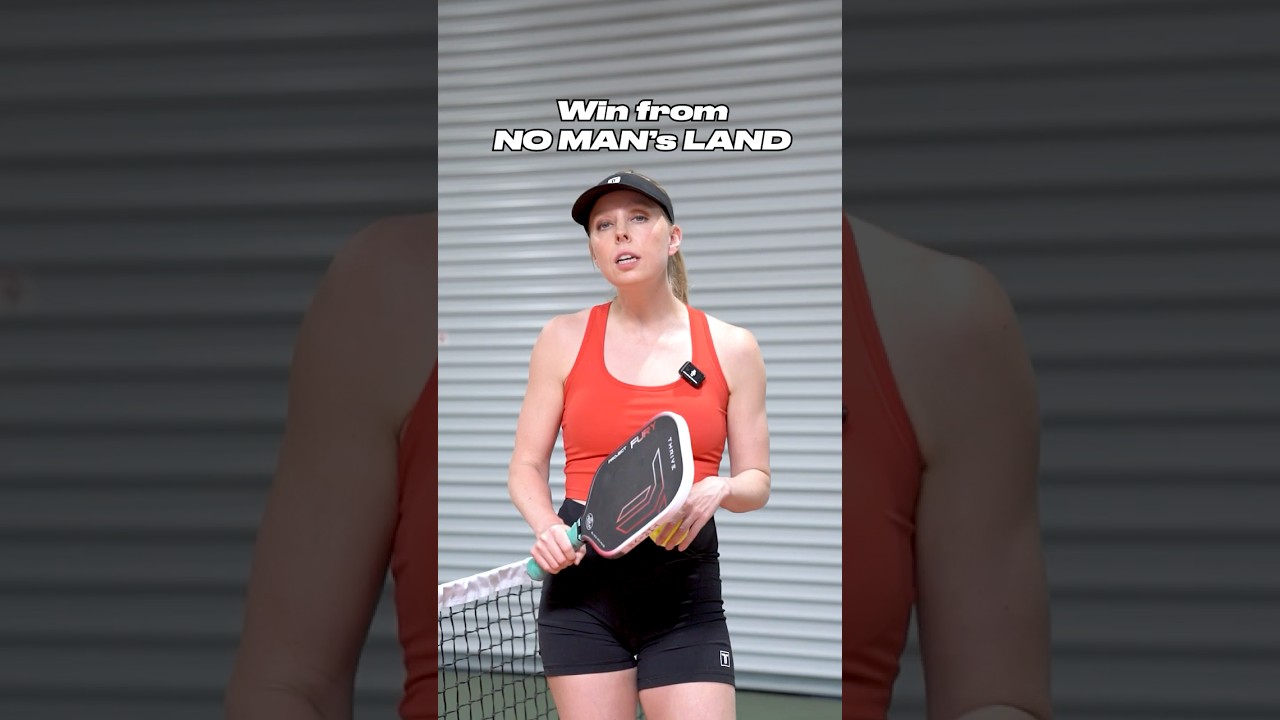
The Pickleball No Man’s Land: Pro Escape Strategy Guide
No man’s land pickleball is where most players panic and lose points unnecessarily. Learn how to survive the midcourt zone and reset your way to the kitchen.
How to Avoid No Man’s Land in Pickleball When the Drop Isn’t Working
Sometimes your drop just isn’t dropping.
Maybe the wind is up, maybe your opponent is on you early, or maybe you’re just having one of those days where the third shot feels like a coin flip.
What do you do when your primary exit strategy isn’t reliable?
This is where making your opponents hit difficult shots becomes just as important as your own technique.
- Option one: reset from the transition zone. A soft, low dink hit from mid-court that lands in your opponent’s kitchen buys you neutral footing. It’s not a winner. It’s not even close to a winner. But it stops the bleeding and gets the rally back to a dinking exchange where you can work your way to the NVZ line. A different kind of reset covers the specific mechanics that make mid-court resets actually land in the kitchen instead of floating.
- Option two: drive with intent, then retreat. If you decide to drive, actually decide to drive. Hit it hard and low, then immediately move backward to reset your court position. Don’t half-commit to the drive and then shuffle forward hoping it worked. Commit to the shot, commit to the recovery. Drive vs. drop on the fifth shot covers when each choice makes strategic sense.
- Option three: hold the baseline longer. This one gets underused. There’s no rule that says you have to rush the kitchen. If your opponent is returning everything deep and your drops are floating, staying back as a baseline player until you get a better opportunity is completely valid. You might lose some net advantage, but you won’t lose points to your own impatience.
The worst thing you can do in the transition zone is hit a soft, weak shot while standing in the middle of the court. That’s giving away the kitchen and the point
Changing the way you think about doubles positioning can reframe how you approach the whole offensive-defensive balance in these situations.
Master the Pickleball Drop Serve: Complete Guide
The pickleball drop serve is easier on your body and simpler to master than the volley serve. Here’s exactly how to execute it with proper mechanics and timing.
Drills to Stop Living in No Man’s Land
The fastest way to fix your transition game is to practice it on purpose, not just notice the problem during play.
Motor learning research published via the National Strength and Conditioning Association (NSCA) supports the principle that sport-specific movement patterns become automatic only through deliberate, isolated repetition before being integrated into full-game scenarios.
Pickleball deception and shot variety become far more effective once your transition movement is automatic and your opponents can’t predict where you’ll land.
- Drill 1: The three-step advance. Start at the baseline with a partner at the kitchen. Hit a drop, take three steps, split step, and hold your ground until your partner’s reply lands. Repeat. The goal is controlled movement, not speed. Advanced shot selection drills can layer onto this once the footwork is clean.
- Drill 2: Transition zone reset rally. Both players start at the service line (in no man’s land) and hit soft dinks back and forth, trying to keep the ball low over the net. The first player to lift the ball above net height loses the point. This builds the soft hands and control you need to survive in the transition zone when you’re stuck there. Working on mediocre dinks and turning them into effective shots directly accelerates this drill’s payoff.
- Drill 3: Drop and close. Hit five third-shot drops in a row, closing to the kitchen after each. Your partner feeds you the same ball from the kitchen each time. Track how often your drop forces a soft reply vs. a floater. If your partner can attack more than two out of five, your drop needs work before your footwork does. Fourth shot tips for court coverage in doubles pairs well here.
Practice these three drills consistently and the transition zone will start to feel like a momentary hallway rather than a dead end.
And when you return your serve deep and your opponents have to hit up?
That’s your signal to make the most of your return position and start the rally on your terms.
The 12 Pickleball Drills You Need for Your Best Game in 2026
You can’t just show up and hit balls – you need a plan, and that plan should build progressively from simple to complex
Key Takeaways
- No man’s land in pickleball is the mid-court transition zone, roughly between the service line and the kitchen line, where you are most vulnerable to attacks at your feet.
- The primary cause of getting stuck there is moving forward without a plan, usually after a weak third shot or a return that sits up.
- The third shot drop is your exit ticket: a well-executed drop lets you move forward safely and reach the kitchen line under control.
- When you can’t drop, reset. A neutral dink or soft reset keeps the rally going without handing your opponent a free winner.
- Split-step timing and deliberate footwork are what separate players who transition well from those who live in no man’s land.
- Practicing transition zone drills regularly is the fastest way to stop giving away free points.
💡
Frequently Asked Questions
What exactly is no man’s land in pickleball?
No man’s land in pickleball is the mid-court area between the kitchen line and the baseline, roughly the region from the service line to about seven feet from the net on each side. It’s considered the worst place to stand because balls landing at your feet in this zone are extremely difficult to return effectively. You’re too close to attack and too far back to defend comfortably. Make the most of your return of serve to start each point closer to the kitchen and reduce your time in this zone. Routine shot-making from a solid position is always more valuable than hero shots from no man’s land. Studying the go-to slice dink is a good example of how a reliable, low-risk shot beats an ambitious one from a bad position. According to USA Pickleball’s court specifications, the non-volley zone extends seven feet from the net, making the transition zone the remaining distance back to the baseline. Understanding this zone is one of the first steps to developing smart court positioning.
How do I stop ending up in the transition zone during a rally?
The biggest fix is committing to a deliberate movement pattern rather than drifting forward out of habit. Hit a quality third shot drop, take a few controlled steps, split step as your opponent contacts the ball, then decide whether to advance or hold. Never move while the ball is on your side of the net, and never rush to the kitchen before your drop lands. Talking transitions walks through this rhythm in detail.
Is the third shot drop the only way to avoid no man’s land in pickleball?
It’s the most reliable method, but not the only one. A well-placed drive that forces your opponent back can also create space to advance, though this is riskier at the rec level. You can also hold the baseline intentionally if conditions aren’t right to move in. The key is making a deliberate choice rather than drifting. Five shots you need to know covers the full arsenal that supports smart court movement.
What should I do if I get caught in no man’s land during a point?
Reset immediately. Hit the softest, lowest ball you can over the net, ideally into your opponent’s kitchen. The goal isn’t to win the point from mid-court; it’s to neutralize the threat so you can get the rally back to a dinking exchange. Avoid the temptation to swing hard from a bad position. A soft reset shot keeps you in the point; a hard swing from no man’s land usually ends it.
How long does it take to fix transition zone problems?
Most players see noticeable improvement within a few weeks of dedicated transition drills. The footwork pattern (move, split step, read) becomes automatic relatively quickly. The harder part is fixing shot quality, especially the third shot drop, which can take longer to groove under pressure. Consistent practice with dinking drills and transition-specific reps is more effective than just playing more games.
Nguồn: thedinkpickleball