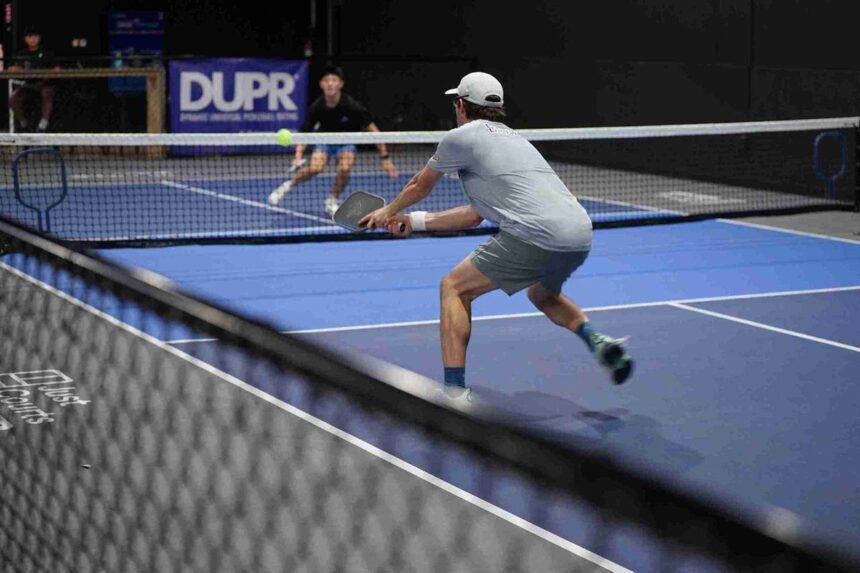
Pickleball vs tennis isn’t just a debate about noise complaints — the two sports differ in court size, scoring, serve mechanics, and strategy in ways that surprise even experienced athletes. If you’re a tennis player thinking about making the switch, here’s exactly what you need to know.
Pickleball vs tennis is the sporting world’s most entertaining rivalry right now — and if you’ve been playing tennis for years and finally want to understand why everyone is losing their mind over a Wiffle ball and a paddle, this is your guide.
The two sports look similar on the surface. They’re both racquet sports played on rectangular courts with a net.
But once you step on a pickleball court for the first time, you’ll realize the similarities stop there pretty fast.
This isn’t a “which sport is better” argument. Both have real merit.
But if you want to know how pickleball actually compares to tennis — technically, physically, and strategically — here are the nine differences that matter most.
Love pickleball? Then you’ll love our free newsletter. We send the latest news, tips, and highlights for free each week.
The Courts Are Way Smaller Than You Think
A standard pickleball court measures 20 feet wide by 44 feet long — the same footprint whether you’re playing singles or doubles.
A tennis court, by comparison, is 78 feet long and 27 feet wide for singles (36 feet for doubles).
This size difference changes everything. In tennis, you’re covering serious ground.
In pickleball, the game is compact, and the premium is on placement, patience, and control rather than footwork and court coverage.
The Serve Is Completely Different
Here’s where tennis players often get caught off guard. In tennis, the serve is a weapon.
Aces, kick serves, slice down the T — the serve can end a point before it starts. In pickleball vs tennis, the serve is almost a neutral shot by design.
Pickleball serving rules require the ball to be hit underhand, below the waist, in a smooth, upward arc. No spin serves. No power bombing.
The intent is to start a rally, not win the point outright.
You only get one serve attempt (unlike tennis’s two), and it must land in the opposite diagonal service box without touching the kitchen (the non-volley zone).
One more wrinkle: the two-bounce rule.
After the serve, the return must bounce before the server’s team can hit it, and the server’s team must also let that return bounce before they play the ball.
Both sides must let it bounce once. After those first two shots, volleys are fair game.
If you’re a tennis player used to coming out swinging off the return, this rule will feel strange at first.
It neutralizes the serve completely and levels the playing field. Here’s how to make the most of your return of serve in pickleball.
💡
What Is the Kitchen? (And Why Can’t You Go There?)
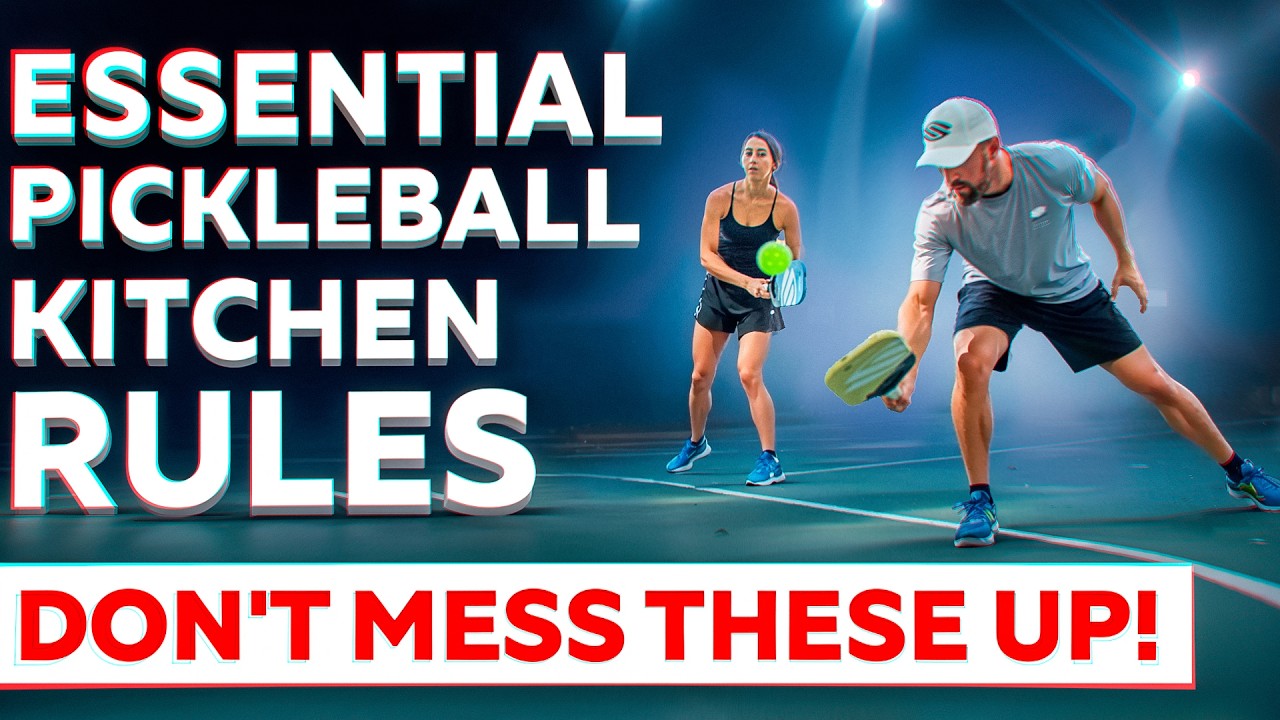
If pickleball has one rule that confuses newcomers most, it’s the non-volley zone — commonly called the kitchen.
This 7-foot area on both sides of the net is off-limits for volleys. You cannot stand in the kitchen and hit a ball out of the air. Period.
This single rule fundamentally changes how the sport is played. In tennis, you can approach the net and volley freely.
In pickleball, the kitchen creates a mandatory buffer zone that slows the game down near the net, makes patience a competitive advantage, and elevates the dinking game — soft, controlled shots that arc just over the net and land in the opponent’s kitchen.
Understanding how to position yourself at the kitchen line is one of the most important skills you’ll develop as a new player.
Getting to the kitchen and staying there is basically the whole point of intermediate and advanced pickleball.
The player who controls that 7-foot zone controls the game.
Don’t Fear the Pickleball Kitchen: Essential Non-Volley Zone Rules Explained
The best way to internalize the kitchen rule is to play. Pay attention to where your feet are when you volley. Feel your momentum. After a few matches, it becomes second nature.
How Does Pickleball Scoring Compare to Tennis?
This is another big one. In pickleball vs tennis, the scoring systems are almost entirely different.
Pickleball scoring:
- Most games are played to 11 points, win by 2 (tournament play often uses 15 or 21)
- Only the serving team can score (in traditional scoring)
- The score is called as three numbers: server score, receiver score, and server number (in doubles)
Tennis, by contrast, uses a point-game-set structure with love, 15, 30, 40, deuce, and advantage — a system that takes real time to internalize if you’re new to it.
Pickleball scoring is more straightforward, though the three-number call in doubles (“4-2-1” for example) trips up almost every beginner at least once.
The fact that you can only score on your own serve creates a different kind of tension. You can have extended stretches where neither team scores.
Momentum shifts feel dramatic. And a 10-9 game feels nothing like a 10-9 score in most other sports — every point is earned.
Pickleball Scoring Explained: How to Keep Score
Pickleball scoring can trip up even experienced players, especially with rally scoring changing the game at the pro level. Here’s everything you need to know about how pickleball scoring works in every format, recreational doubles all the way to Major League Pickleball.
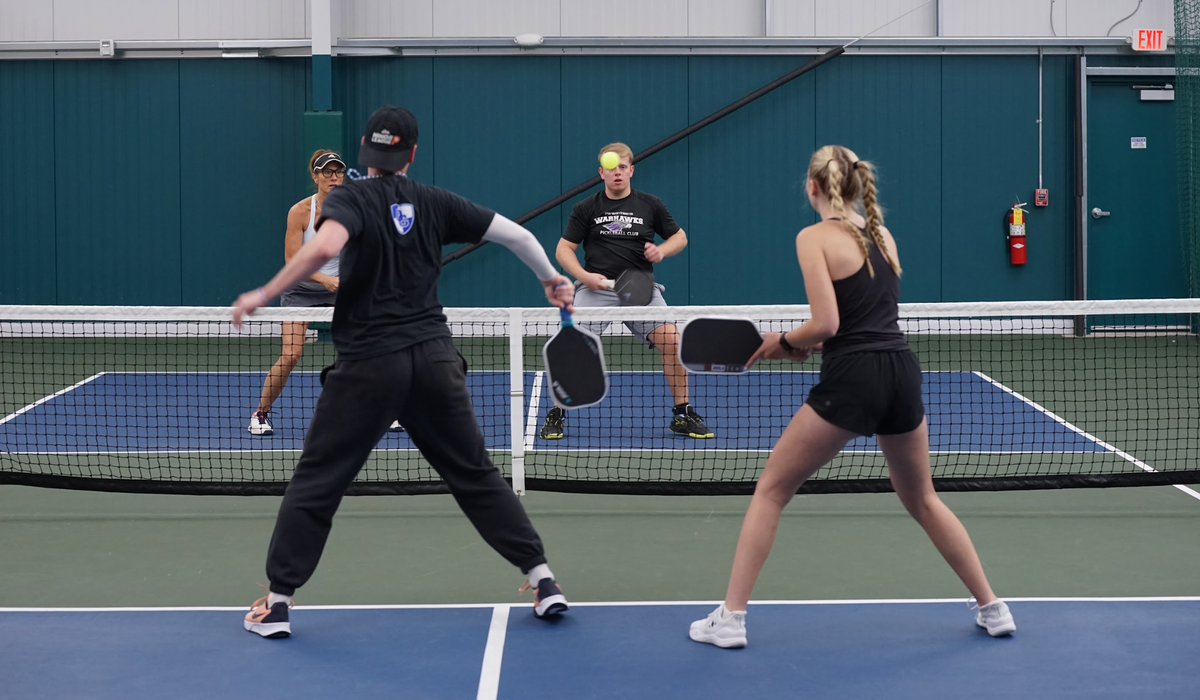
Paddles and Balls: Not What You’re Used To
In the pickleball vs tennis equipment comparison, everything is smaller and lighter.
A pickleball paddle is typically 7 to 8.5 ounces (compared to a tennis racquet’s 10-12 ounces) and features a solid face rather than strings.
Modern paddles use carbon fiber or fiberglass surfaces to generate spin and control, and the technology has exploded in recent years.
The ball itself is a hard, perforated plastic ball — similar to a Wiffle ball, though the pickleball used in competition is more rigid.
Outdoor balls have smaller, more numerous holes for wind resistance; indoor balls have larger holes for softer play.
The ball doesn’t compress the way a tennis ball does, which means the game relies on placement and touch rather than topspin and pace.
One thing tennis players often notice immediately: the sweet spot is smaller on a pickleball paddle. Miss-hits feel different.
The learning curve on consistent ball-striking is real, even for elite tennis players. See why even tennis pros have to rethink their game.
Best Pickleball Paddle for Beginners: Expert Buying Guide
The truth is, no paddle will magically fix your game, but the wrong one can absolutely make it harder to improve.
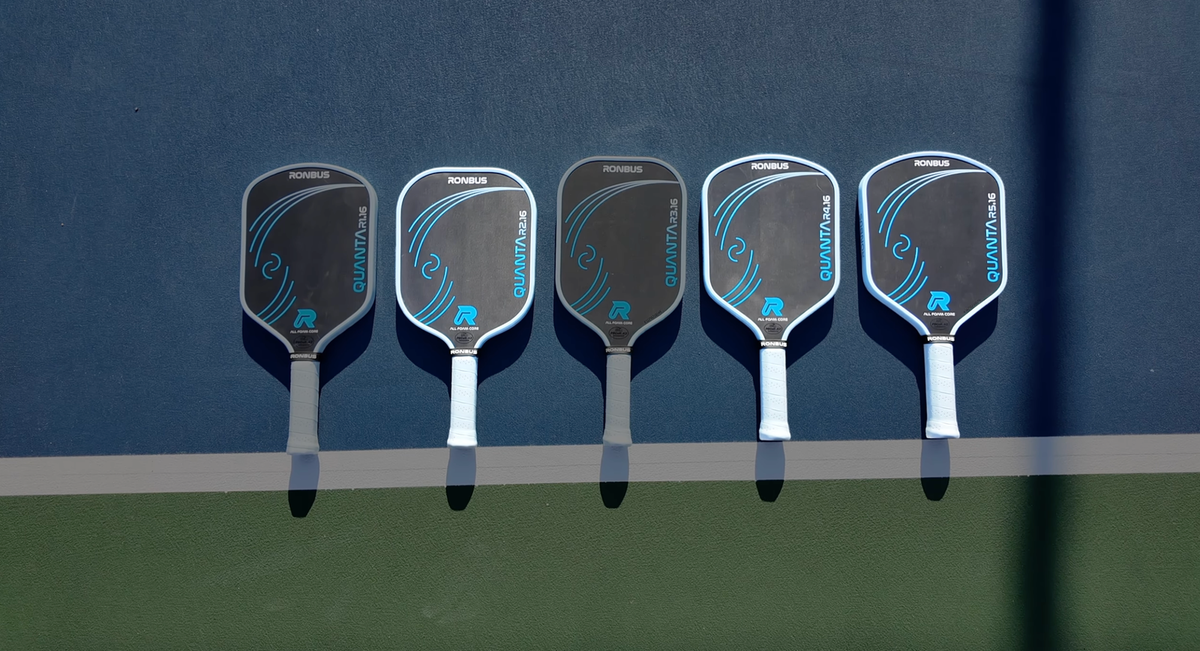
Doubles Is the Default (and It’s a Different Animal)
Tennis players know doubles, but pickleball is fundamentally a doubles sport.
The compact court size means four players fit naturally, and the game is designed around doubles strategy — stacking, poaching, and coordinating kitchen line coverage with a partner.
In tennis doubles, the back court still matters. Players hang back and approach.
In pickleball vs tennis doubles, the goal is to get both players to the kitchen line as fast as possible and stay there.
The team that controls the non-volley zone almost always wins.
Singles pickleball exists and is growing at the pro level, but for recreational players, doubles is the experience.
That partnership dynamic also changes the mental game.
You’re making split-second decisions about who covers the middle, who poaches, and when to speed up or reset.
It’s chess with reflexes. Here’s what you need to know to thrive at the doubles game.
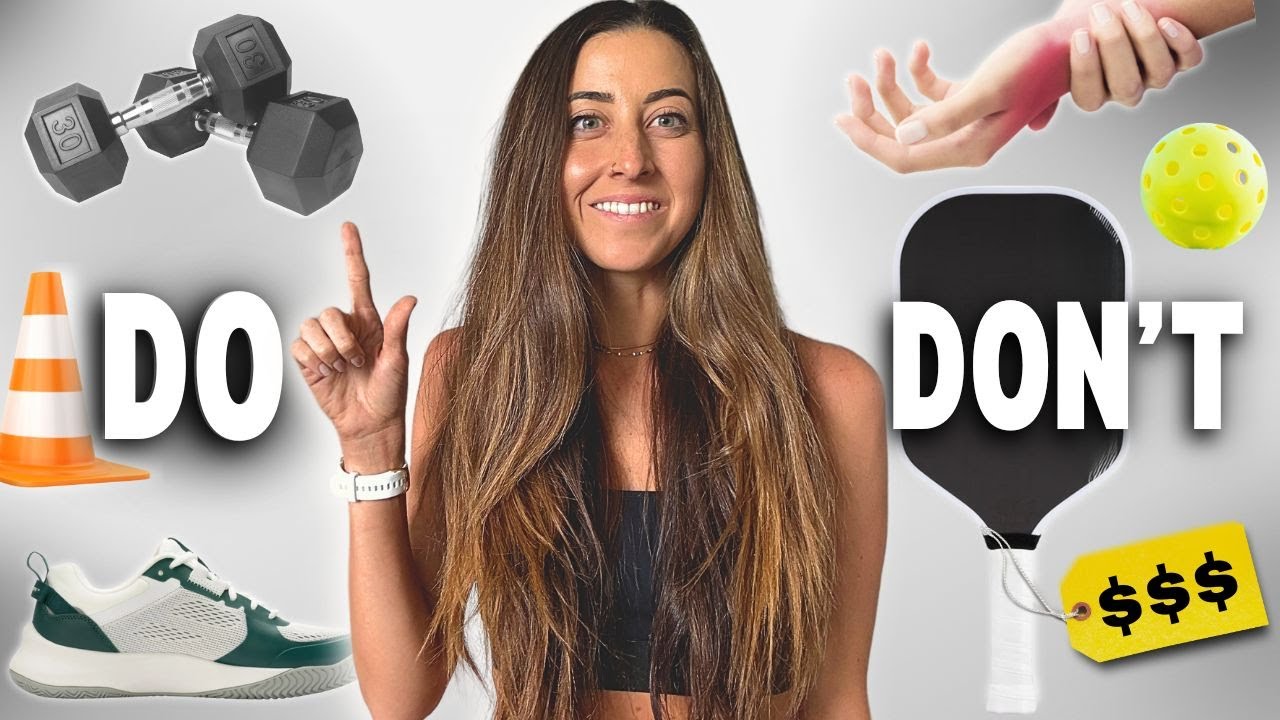
10 Pickleball Tips That Transform Your Game
A 5.0 pickleball player shares 10 game-changing pickleball tips that took years to learn. From grip fundamentals to wrist strength, these insights will transform your game.
Physical Demand: Is Pickleball Easier on Your Body?
Honestly? Yes. And that’s not an insult — it’s a feature.
The smaller court means less running. The underhand serve removes shoulder stress. The lighter paddle reduces arm fatigue.
Research published in the Journal of Aging and Physical Activity found that pickleball provides moderate-intensity exercise comparable to walking briskly — with a significantly lower injury rate than tennis.
For aging athletes, this is a real advantage.
That said, pickleball isn’t easy on the body in every way.
Knee injuries, elbow strain (“pickleball elbow”), and ankle rolls are common — especially as players move up in skill level and the game gets faster.
The quick lateral movements near the kitchen can be explosive.
Players who stay active in racquet sports live longer, and pickleball’s accessibility makes it easier for more people to keep playing into their 60s, 70s, and beyond.
The lower physical ceiling also means you can play multiple sessions a day without the burnout that comes with hours of tennis.
That’s part of why pickleball calorie burn is real — the cumulative play time adds up.
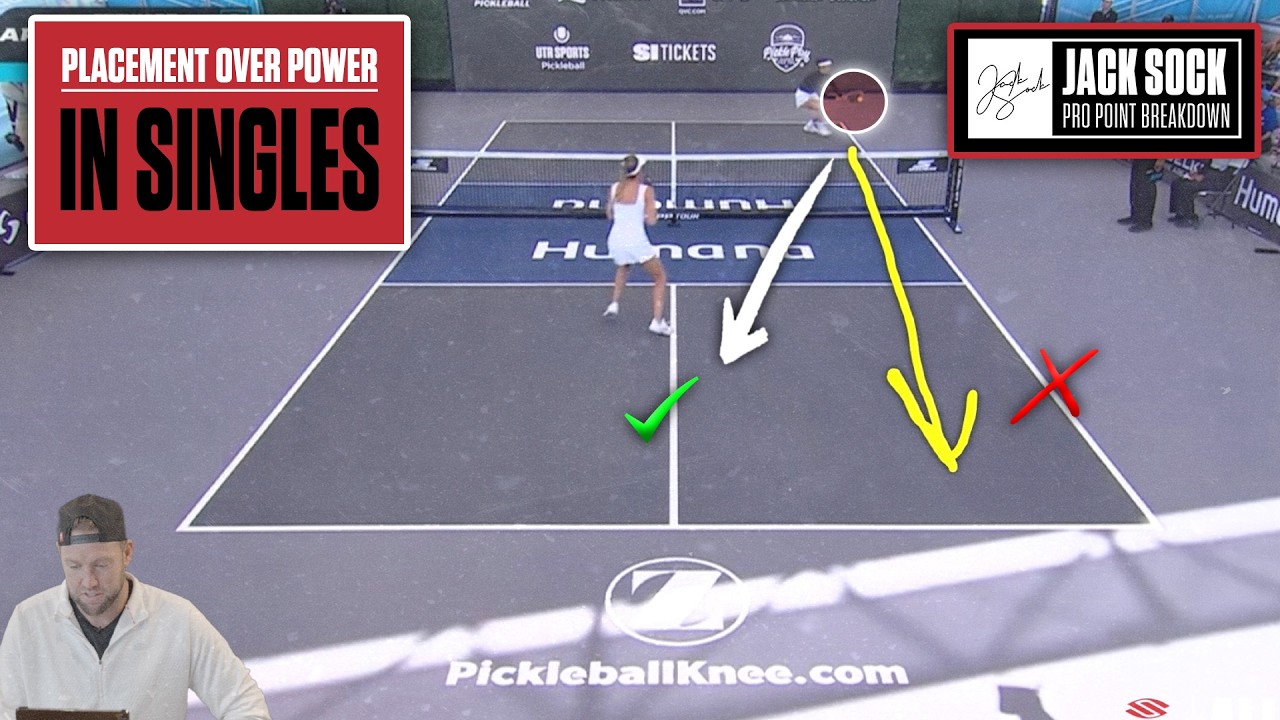
Finesse Shot in Pickleball: Jack Sock’s Strategy
In pickleball, a finesse shot often wins the point when power fails. Jack Sock analyzes a women’s singles rally to show why reading the court and choosing touch over aggression separates good players from great ones.
The Dinking Game: Pickleball’s Biggest Strategic Difference
There’s no equivalent to dinking in tennis. Full stop.
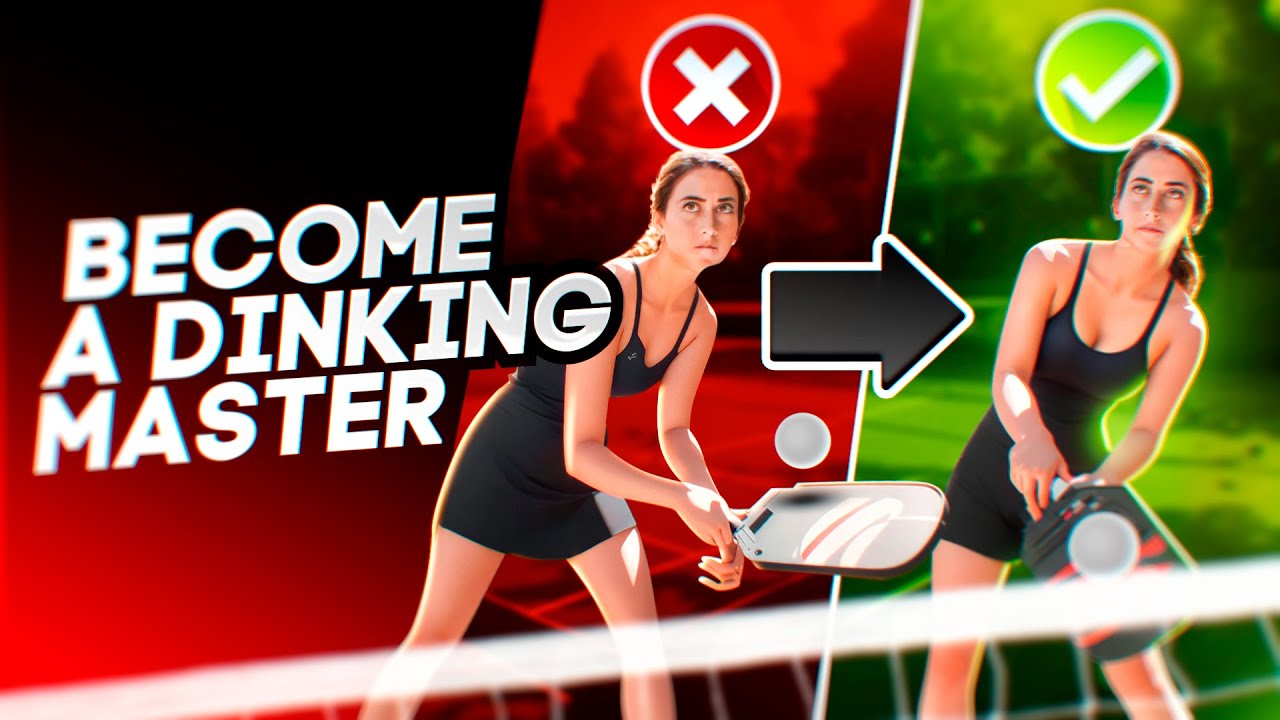
Dinking is the art of hitting a soft, controlled shot that barely clears the net and lands in the opponent’s kitchen, forcing them to hit upward and preventing an attacking shot.
It’s the strategic core of pickleball — especially at intermediate and advanced levels.
Rally after rally ends or begins with a dink exchange at the kitchen line that can last dozens of shots.
In pickleball vs tennis, this shift from power to patience is the hardest adjustment for tennis players. Your instinct is to attack.
Pickleball punishes impatience. A ball sitting up in the air invites a speed-up, but a low ball dragged into the kitchen resets the rally and keeps you in control.
Learn the art of dinking and why it separates average players from great ones. It’s not glamorous. It’s absolutely essential.
Pickleball Dinking Technique: The Complete Beginner’s Guide
This guide breaks down everything you need to know about proper dinking form, grip, stance, and drills to dominate at the kitchen line.
The Social Element: Why Pickleball Wins
Pickleball has something tennis often doesn’t — built-in community. The smaller court means more courts fit in the same space as one tennis court.
Drop-in play is common everywhere. You can show up to a public facility, get into a game within minutes, and play with strangers who become regulars.
The sport’s reputation for social play isn’t just good marketing. It’s baked into the structure.
HBO’s Real Sports covered the cultural collision between tennis and pickleball — and the friction is real, mostly because pickleball’s growth is pushing tennis players off shared courts.
That tension isn’t going away anytime soon.
The accessibility also lowers the barrier to entry for new players. You don’t need a private club membership or years of lessons to enjoy a competitive game.
Three tips every beginner needs to know can get you competitive faster than almost any other sport.
That’s exactly where pickleball is capitalizing where tennis has historically struggled.
How Do You Play Pickleball? Complete Beginner’s Guide
Wondering how do you play pickleball? This complete beginner’s guide breaks down the rules, scoring system, essential shots, and court setup so you can step on the court ready to play. From the two-bounce rule to mastering your first dink, everything you need to know is right here.
Key Takeaways
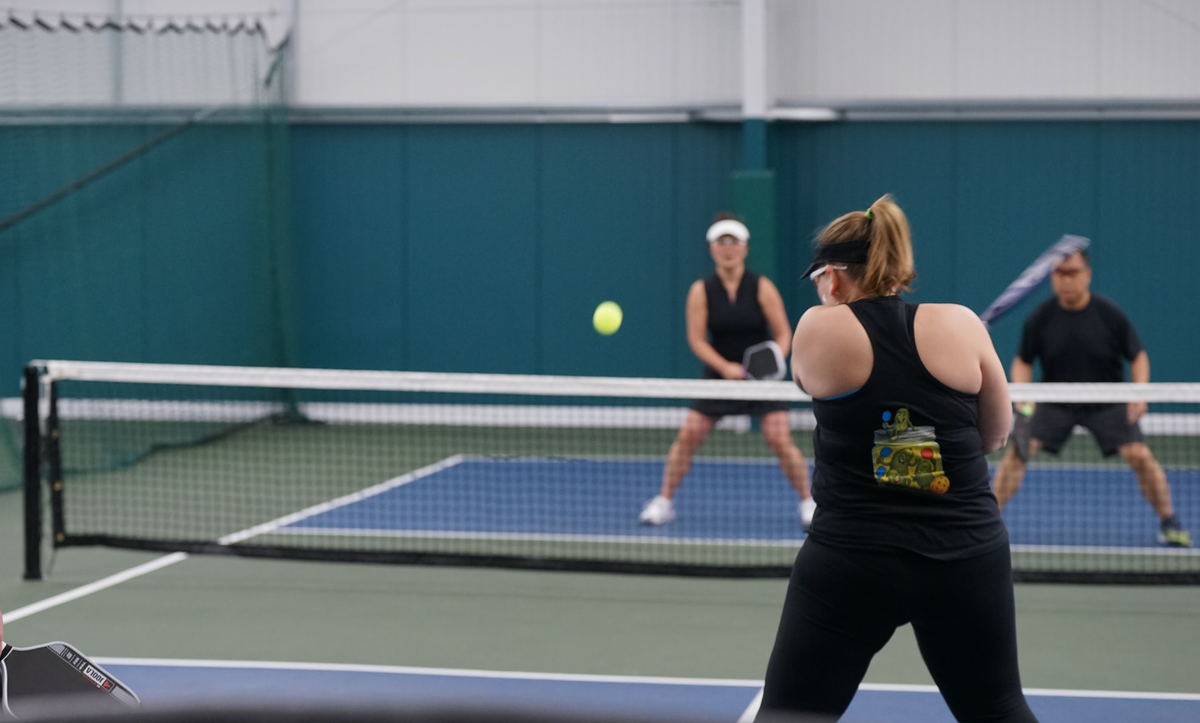
- A pickleball court is roughly one-third the size of a tennis court, making it accessible and community-friendly
- Pickleball serving is underhand, below the waist, and designed to start rallies rather than win points
- The two-bounce rule and the kitchen (non-volley zone) are unique to pickleball and shape the entire strategic framework
- Scoring is to 11 (or 15/21), and only the serving team can score in traditional play
- Paddles are solid-face and lighter than tennis racquets; the ball is hard plastic with holes
- Doubles is the dominant format; getting to the kitchen line is the primary objective
- Pickleball is lower-impact than tennis, making it more sustainable for older or injury-prone athletes
- Dinking — soft, kitchen-targeted shots — is pickleball’s most important skill and has no real tennis equivalent
- The social and community aspects of pickleball make it one of the fastest-growing sports in the country
💡
Frequently Asked Questions
Is pickleball easier to learn than tennis?
Most people find pickleball easier to pick up initially. The smaller court reduces the amount of ground you need to cover, the underhand serve is more forgiving than a tennis serve, and you can have a competitive rally much faster. That said, advanced pickleball has significant depth — the dinking game, kitchen strategy, and hand-speed battles at the net reward years of practice.
Can tennis players pick up pickleball quickly?
Tennis players typically have a faster-than-average learning curve in pickleball because of shared fundamentals like footwork, court awareness, and hand-eye coordination. The adjustment, though, is real: you have to unlearn the power-first instinct. Many tennis converts struggle with the dink game early because patience doesn’t come naturally after years of playing a pace-based sport. See how one tennis star made the switch.
What are the main rules differences between pickleball vs tennis?
The biggest rule differences are: (1) pickleball uses an underhand serve with only one attempt, (2) the two-bounce rule requires both the serve and the return to bounce before volleying, (3) the kitchen (non-volley zone) prohibits volleys within 7 feet of the net, and (4) scoring goes to 11 and only the serving team earns points. Tennis uses overhand serves, two attempts, no mandatory bounce rule after the serve, and a love-15-30-40 point structure.
Is pickleball better exercise than tennis?
Both sports offer solid cardiovascular workouts. Tennis involves more court coverage and longer rallies at higher intensity, making it slightly higher-calorie-burn per hour for competitive players. Pickleball’s shorter court means lower peak intensity, but the social play format often results in more total time on the court. According to research, pickleball offers moderate-intensity exercise comparable to brisk walking — with a significantly lower injury rate than tennis, which makes it more sustainable long-term.
Why are tennis players switching to pickleball?
Several reasons converge. The lower physical demand makes pickleball more accessible for players dealing with age-related wear or injury. The social structure — drop-in games, easy access, and fast play — fits modern schedules better than booking tennis court time. And frankly, the game is addictive. Roger Federer himself admitted pickleball is fun, and the list of professional tennis players transitioning or cross-training in pickleball keeps growing. It fills a gap that competitive tennis often can’t. That gap is exactly what pickleball has been built to exploit.
Nguồn: thedinkpickleball