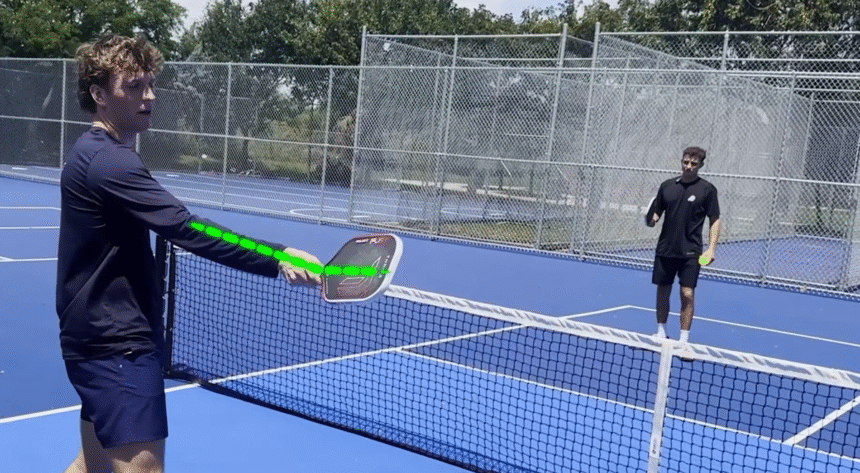
Fourth ball pressure is the shot that separates elite players from the rest. This aggressive midcourt technique applies relentless pressure on opponents and makes it nearly impossible to establish net control.
Fourth ball pressure is the shot that separates elite players from recreational competitors.
If you’re not using this technique, you’re essentially handing your opponents a free pass to the kitchen line.
According to APP pro Tanner Tomassi, this aggressive midcourt approach has completely transformed how he applies pressure during rallies, and it’s becoming the standard at the highest levels of competitive play.
Love pickleball? Then you’ll love our free newsletter. We send the latest news, tips, and highlights for free each week.
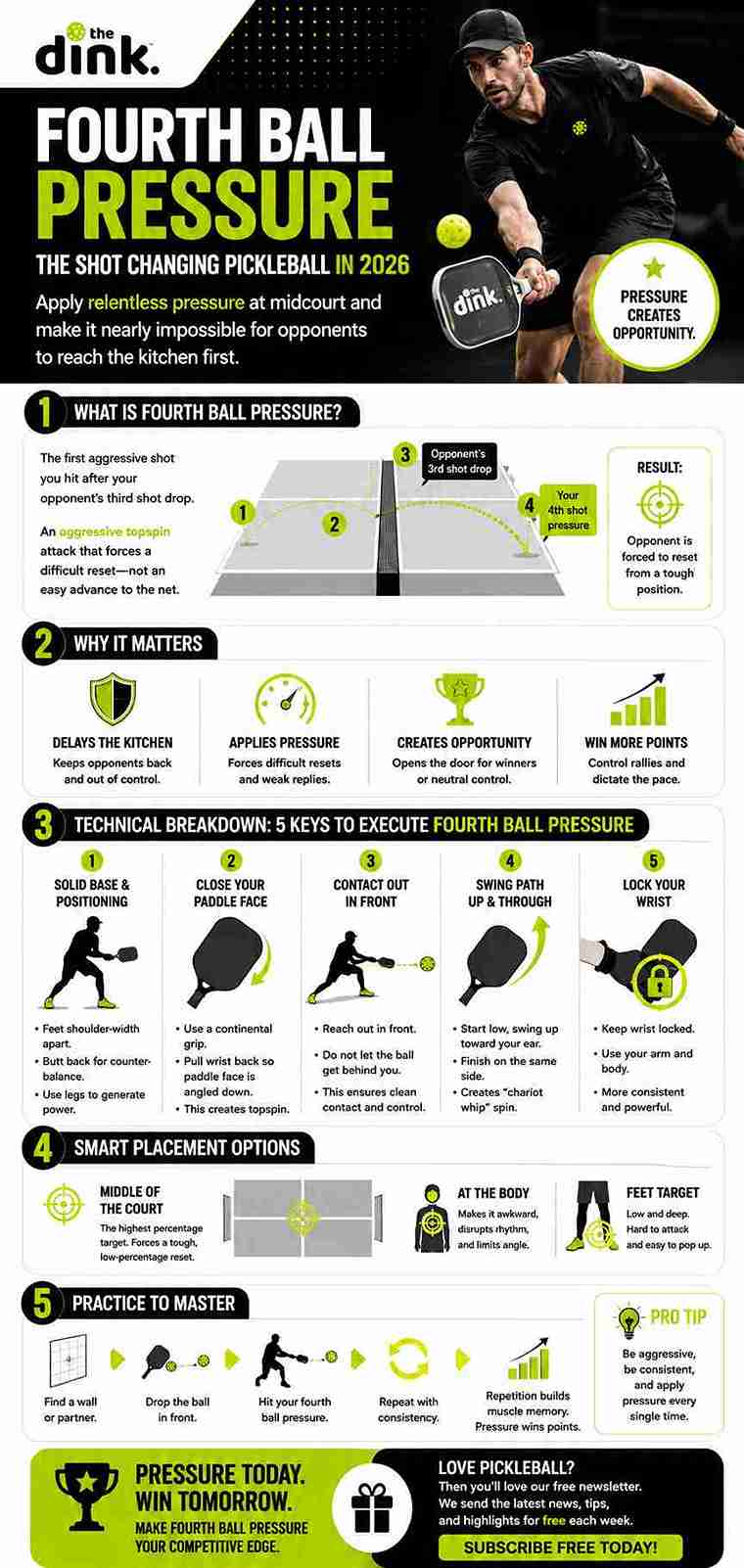
What Exactly Is Fourth Ball Pressure?
The fourth ball is the first aggressive shot you hit after your opponent’s third shot drop.
Most recreational players treat this ball passively, tapping it back with minimal pace or spin.
Fourth ball pressure, by contrast, is an aggressive topspin attack that forces your opponent into a difficult reset rather than allowing them to comfortably advance to the net.
Here’s the critical difference: when you apply fourth ball pressure, you’re not just returning the ball.
You’re actively making it harder for your opponent to execute their next shot.
The spin, pace, and placement combine to create a situation where even a perfect reset leaves them vulnerable.
That’s the foundation of modern pickleball at its most aggressive.
Zack Marceau, ranked top three on the college pickleball tour, demonstrated this concept on court with Tanner. The contrast was striking.
When Tanner used his old approach (a light wrist flick), Zack could easily advance to the kitchen and establish net control.
When Tanner switched to fourth ball pressure, Zack struggled to even get a reset back in play.
Why Fourth Ball Pressure Matters So Much
The kitchen line is where pickleball is won and lost. If your opponent gets there first, they control the point.
Fourth ball pressure delays that arrival and forces them to hit from a compromised position.
Understanding how to win more pickleball games in 2026 starts with understanding this exact dynamic.
Think about the rally sequence: you hit a third shot drop, your opponent hits a fourth shot, and now it’s your turn.
If you’re not applying pressure on that fourth ball, your opponent has time to reset, advance, and set up an offensive position.
They’re no longer in survival mode; they’re in control mode.
When you master fourth ball pressure, the entire dynamic flips.
Your opponent is forced to focus on just getting the ball back in play rather than advancing their position.
This creates opportunities for you to finish the point or at least maintain neutral court position.
💡
The Technical Breakdown: How to Execute Fourth Ball Pressure
Executing fourth ball pressure requires precision across several technical elements.
These aren’t suggestions; they’re the 6 essential pickleball shots to master for 2026 at the mechanical level. Let’s break down each component.
Step 1: Establish a Solid Base and Positioning
Your foundation matters. Zack Marceau emphasizes starting with your feet about shoulder-width apart, with your butt pushed back slightly to create counterbalance. This positioning allows you to reach further into the court and generate more power through your legs rather than relying solely on your arms.
The base is non-negotiable. Without it, you’ll struggle to generate consistent topspin and control. Perfecting your pickleball posture is the first step toward making this shot repeatable under pressure.
Step 2: Close Your Paddle Face for Topspin
This is where many players go wrong. Instead of keeping your paddle in a neutral position, you need to close the paddle face before you even swing. Using a continental grip, pull your wrist back so the paddle face is angled downward. If you’re not sure which grip fits best, understanding the three pickleball grips is worth your time before drilling this shot.
When you close the paddle face and swing upward on the ball, you’re effectively creating topspin.
This is the foundation of fourth ball pressure. The closed face combined with an upward swing path generates the spin that makes the ball difficult to handle.
Step 3: Contact the Ball Out in Front
This is critical. If the ball gets behind you, your closed paddle face will point straight at the ground, and you’ll either miss or hit the ball into the net. You need to make contact well in front of your body.
Zack Marceau stresses this point repeatedly: starting out in front and swinging up is what separates consistent fourth ball pressure from erratic attempts. It’s the same principle that makes a heavy topspin drive work at the pro level.
Step 4: Swing Path for Maximum Fourth Ball Pressure
Your swing path should start from the ground and pull straight up toward your ear. You’re not pulling across your body; you’re finishing on the same side where you started.
Why does this matter? Finishing toward your ear gives you more margin toward the middle of the court, allowing you to put more aggressive midcourt pressure on your opponent. Pulling across your body reduces margin and directs the ball away from the court. Think of it this way: the swing path is what makes this shot a weapon, not just a rally ball.
Ben Johns, widely considered the greatest pickleball player, calls this the “chariot whip” effect. It generates extra spin and allows you to control pace more effectively.
Step 5: Lock Your Wrist for Fourth Ball Pressure Consistency
Here’s a counterintuitive insight: fourth ball pressure is more consistent when you don’t use your wrist. Lock your wrist in place and let your arm and body do the work. Developing that kind of faster hand control is what lets you repeat the shot under match conditions.
This removes timing from the equation. You don’t need to snap your wrist at the perfect moment; you’re just swinging through with a locked wrist.
The result is more predictable, more repeatable, and ultimately more effective.
5 Drop Shot Techniques to Elevate Your Pickleball Game
The drop shot is one of pickleball’s most essential skills, yet it’s also one of the most misunderstood.
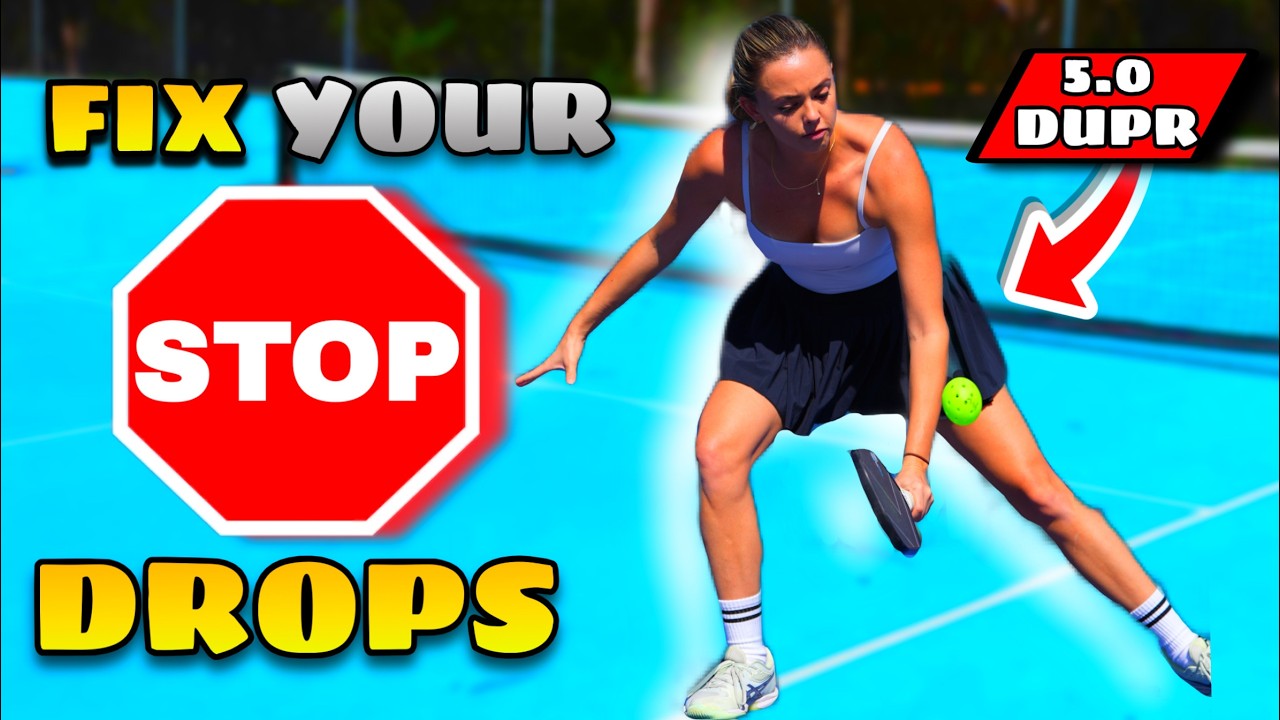
Adjusting Your Fourth Ball Pressure for Ball Height
Not every fourth ball comes at the same height. Fourth ball pressure requires adjustments based on where the ball is when you make contact.
The core mechanic stays the same; only the size of your swing changes.
For low balls, you’re not taking a big backswing. You’re starting just below the ball and coming through with a compact swing.
The goal is to apply midcourt pressure without overcommitting to the shot.
For higher balls, you can take a bigger swing and really pull the ball with more angle on your paddle face.
This creates more curve and can pull your opponent off the court, exposing more court for your next shot.
Tanner demonstrated this adjustment on court, showing how the same fundamental technique adapts to different ball heights while maintaining the core principle of applying aggressive midcourt pressure.
The 12 drills you need to play your best pickleball in 2026 include height-specific reps that build this adaptability fast.
Master the Fourth Shot in Pickleball to Win More Points
The fourth shot in pickleball is your chance to seize control of the rally. By engaging your body and legs with a longer swing, you can generate maximum power and spin that forces errors from your opponents.
The Real-World Impact: Live Point Examples
Watching fourth ball pressure in live points reveals its true power.
When Tanner and Zack Marceau played out actual rallies, the difference was unmistakable.
This is where technique meets topspin in pickleball at the competitive level.
Points where Tanner applied fourth ball pressure were significantly harder for Zack to win.
Even when Zack managed to get a reset back in play, he was forced to hit from a defensive position rather than an offensive one.
The shot isn’t about hitting winners. It’s about controlling the rally and forcing your opponent into uncomfortable situations.
Over the course of a match, this compounds. Your opponent gets fatigued from constantly defending rather than attacking.
That fatigue is where matches shift. When your opponent is stuck in reset mode, you’re in rally control. Every point becomes yours to lose rather than theirs to win.
The Fourth Shot in Pickleball: 3 Variations That Win Points
The fourth shot in pickleball is where rallies get decided. Most players obsess over the serve, return, and third shot, but if your fourth shot is weak, everything falls apart.
Common Mistakes That Kill Your Fourth Ball Pressure
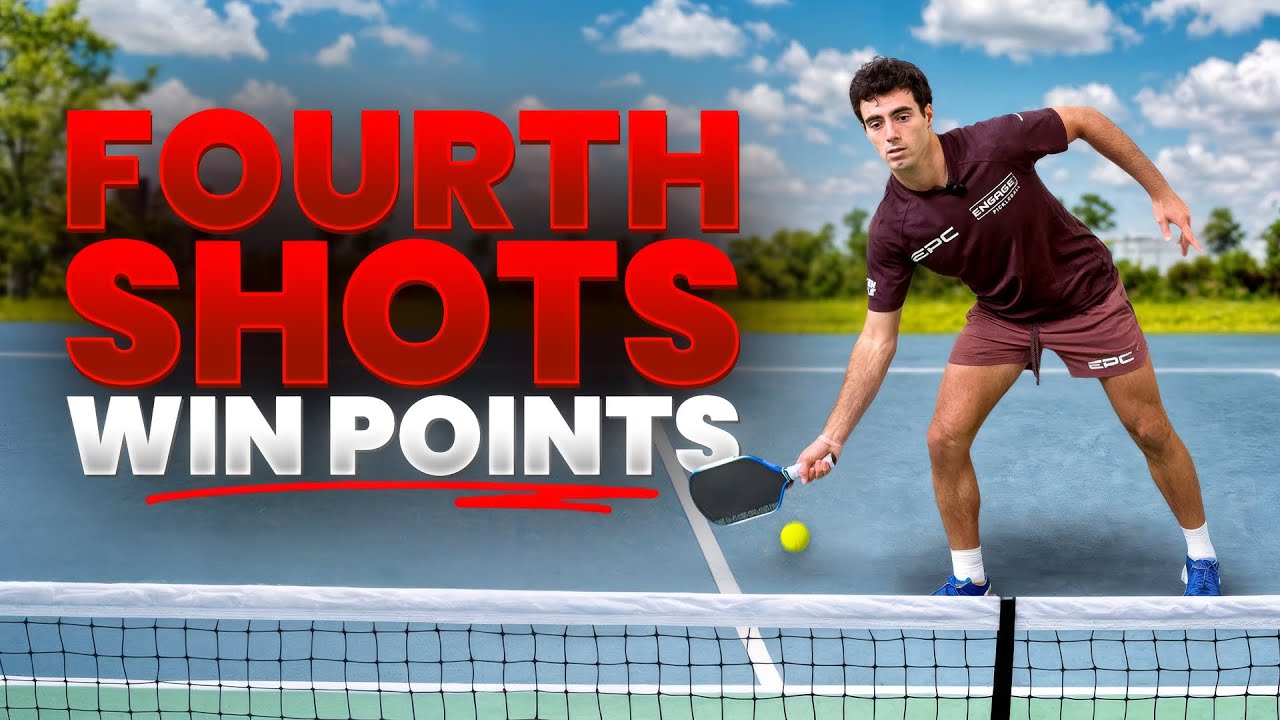
The biggest mistake Tanner was making before learning fourth ball pressure was allowing the ball to get behind him.
When the ball gets behind your body with a closed paddle face, you’re pointing straight down at the court.
It’s one of the reasons so many players plateau in the transition zone, which is exactly why learning 2 tactics to escape trouble in the transition zone pairs perfectly with this shot.
Another mistake is using too much wrist. The wrist snap introduces timing variables that make the shot inconsistent.
Lock it in place and let your body generate the power.
Finally, don’t underestimate the importance of your base.
Without proper positioning and balance, you can’t generate the spin and pace that make fourth ball pressure effective.
Most players skipping this base step are the same ones wondering why their pickleball reset keeps breaking down under pressure.
Mastering Pickleball Topspin: 5 Common Mistakes and How to Fix Them
By maintaining a stable face and letting the path of the paddle create the spin, you widen your margin for error and maximize consistency
Why Fourth Ball Pressure Is Becoming the Standard in Modern Pickleball
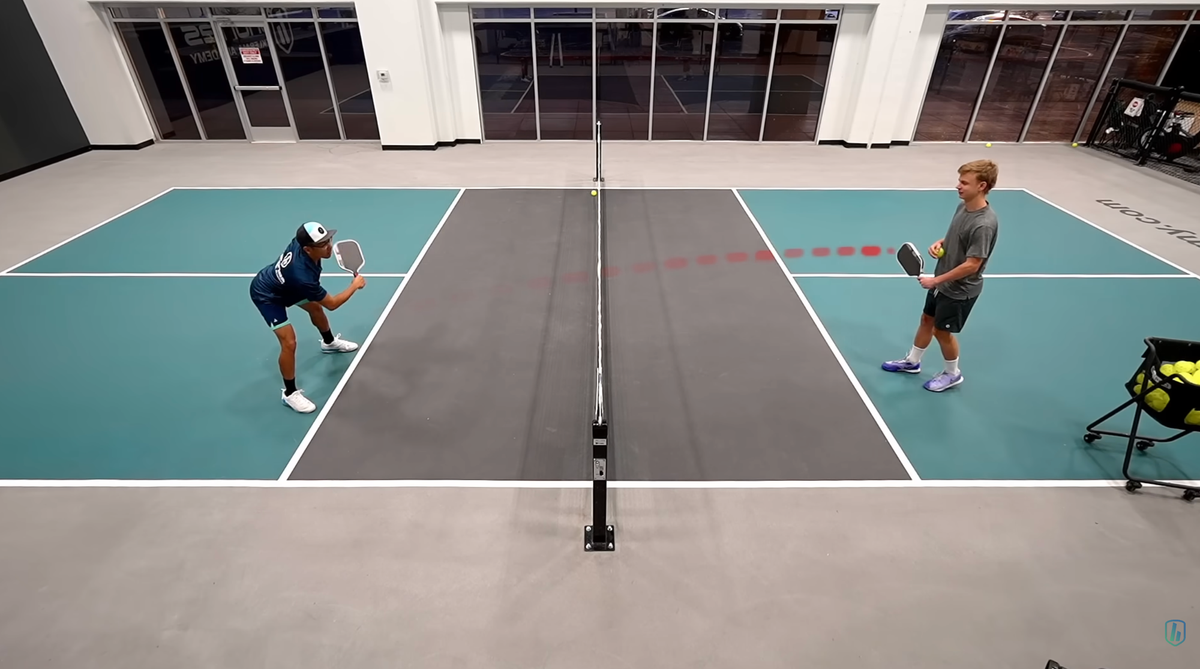
Fourth ball pressure is spreading through the pickleball community because it works.
Top players like Zack Marceau are using it consistently, and it’s becoming the expectation at higher levels of play.
Professional pickleball players have been quietly evolving their midcourt games throughout 2025, and this shot is central to that shift.
If you’re not using fourth ball pressure, you’re allowing your opponent to get established at the net without resistance.
In modern pickleball, that’s a losing strategy. The 5 pickleball shots you must master before 2026 all build toward this kind of midcourt aggression.
The shot isn’t complicated. It doesn’t require years of practice to develop basic competency.
But it does require understanding the technical elements and committing to the fundamentals.
Pair it with a sharp kitchen line attack strategy and you’re building a complete offensive game that holds up at 5.0 and above.
Fourth ball pressure isn’t a gimmick or a trend. It’s a fundamental shift in how modern pickleball is played.
If you want to compete at higher levels, this shot needs to be in your arsenal.
Start with the basics, focus on the technical elements, and practice until it becomes second nature. Your opponents won’t know what hit them.
💡
Frequently Asked Questions
What’s the difference between fourth ball pressure and a regular fourth ball?
A regular fourth ball is often a passive tap or reset attempt with little spin or pace. Fourth ball pressure is an aggressive, topspin-heavy shot designed to force your opponent into a difficult position. The key difference is intent and execution: fourth ball pressure prioritizes pace and spin over passive placement.
Can beginners learn fourth ball pressure?
Absolutely. Tanner noted that he hadn’t been practicing fourth ball pressure for more than 20 minutes before feeling like he had the basics locked in. The fundamentals are straightforward: closed paddle face, upward swing path, locked wrist, and contact out in front.
How does fourth ball pressure fit into my overall pickleball strategy?
Fourth ball pressure is part of a larger strategy to control the midcourt and delay your opponent’s advance to the net. It works best when combined with solid third shot drops and disciplined court positioning. The goal is to make every rally difficult for your opponent from the moment they drop in.
What if my opponent hits a really low fourth ball?
Adjust your swing. For low balls, take a more compact swing and start just below the ball. You’re still applying pressure, but you’re not overcommitting to the shot. The principle remains the same: closed paddle face, upward swing path, and contact out in front.
Is fourth ball pressure effective at all skill levels?
Yes. While elite players execute it with more consistency and precision, the fundamental concept works at any skill level. Even recreational players will see immediate improvement in their ability to control rallies when they start applying fourth ball pressure correctly.
Nguồn: thedinkpickleball