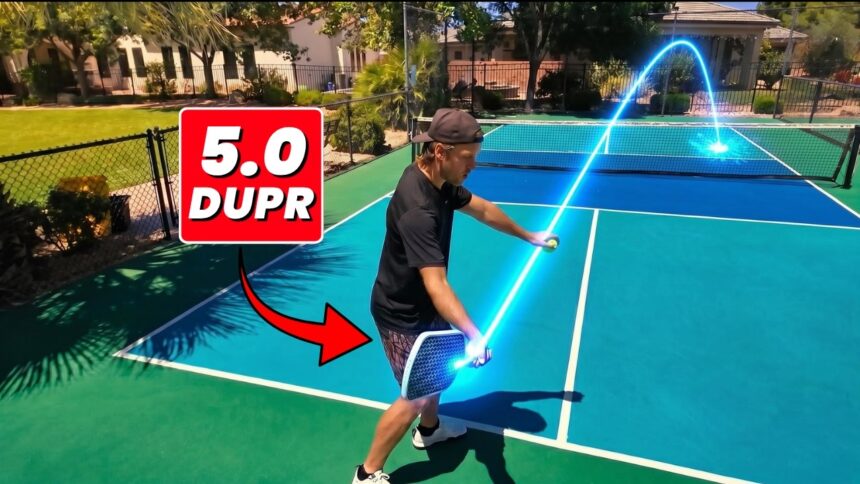
Most recreational pickleball players leave 30 to 40 percent of their power on the table because they don’t understand pickleball serve lag. This wrist and elbow delay is the secret weapon that transforms your serve from patty-cake to a powerful slap.
Most recreational pickleball players leave 30 to 40 percent of their power on the table because they don’t understand pickleball serve lag.
This wrist and elbow delay is the secret weapon that transforms your serve from patty-cake to a powerful slap.
Love pickleball? Then you’ll love our free newsletter. We send the latest news, tips, and highlights for free each week.
What Exactly Is Pickleball Serve Lag?
Let’s start with the fundamentals.
Pickleball serve lag is the delay between when your wrist and elbow begin their motion and when your paddle actually makes contact with the ball.
Think of it as loading energy into your arm before you release it, similar to how a whip works.
Your wrist stays cocked back while your arm moves forward, and then at the last moment, your wrist snaps through the ball with explosive force.
According to Austin Hardy of PickleballPlaybook, most recreational players swing with their whole arm at once, which means they’re essentially patty-caking the ball rather than slapping it.
This approach leaves serious power on the table.
The pros, by contrast, create that lag intentionally, allowing them to generate pace without tension.
Here’s the thing: when you’re tense, you can’t create lag.
When you’re relaxed, lag happens naturally because your wrist has room to move independently from your arm.
The Drill That Changes Everything in a Week
Hardy shares a drill he learned from Travis Retinmeer that can help you develop lag mechanics in as little as seven days.
This isn’t some complicated footwork pattern or a drill that requires special equipment. You just need your paddle and the net.
Start by standing directly at the net. Point your paddle’s butt cap toward the side fence, as if you’re pointing a flashlight at the fence.
Then simply come off the net with a rolling motion, brushing through where the ball would be. Repeat this motion over and over.
The goal is to feel that lag building in your wrist as you move through the motion.
The key insight here is understanding the difference between two motions: the “will smith” (a slap) versus the “patty cake” (a push).
You want to slap through the ball, not push it.
TIME’s ’100 Most Influential’ Sports List: Anna Leigh Waters
“As pickleball popularity has soared since the COVID pandemic… one player has set a standard of excellence.”
If you want to stack more tools alongside this one, check out the 12 drills you need to play your best pickleball in 2026.
How the Lag Drill Builds Wrist Snap
The drill works because it isolates the wrist snap from the full swing.
Repetition trains your arm to stay behind your wrist, which is exactly the sequencing you need to generate explosive contact.
Keep your grip relaxed throughout the motion.
A tight grip kills the snap before it even starts. Think of your hand as a loose hinge, not a locked vice.
💡
Building Pickleball Serve Lag With Your Feet
One mistake that kills serve power is having your feet positioned too closed.
When your stance is too narrow or your feet are parallel, you can’t rotate through the shot.
Proper foot positioning is essential for generating the rotation that feeds power into your pickleball serve lag.
Point your front toe at a slight angle, almost directly forward, rather than having both feet parallel to the baseline.
This small adjustment allows your hips and shoulders to rotate fully through the shot, which means more forward momentum transfers through your arm and into the paddle.
Dialing in your footwork technique is one of the fastest ways to unlock power you didn’t know you had.
Once you’ve mastered the basic lag drill at the net, move to the next progression.
Stand farther away from the net, far enough that you have to bend down to touch it.
From this distance, perform the same lag motion, but now you’re creating what Hardy calls a “windshield wiper” motion.
Your paddle tip moves from back to up, from behind you to in front of you, all while your wrist stays relaxed.
The Windshield Wiper Motion and Serve Mechanics
The windshield wiper pattern is where spin and pace start working together. Your wrist doesn’t just snap forward; it rolls through the ball.
That roll is what puts rotation on the ball and makes your serve harder to read.
Most players never discover this because they’re focused on hitting harder rather than moving better.
Shift your focus to the motion and the pace and spin will follow automatically.
5 Pickleball Serves That Win More Points
Adding even one of these serves into your game can transform your effectiveness instantly.

Why Ground Force Matters More Than Arm Strength
Here’s something that separates good serves from great ones: ground force.
All the power your body generates comes from the ground upward, not from your shoulders downward. Think about doing a push-up.
The power doesn’t start in your shoulders; it starts when you push off the floor.
The same principle applies to your pickleball serve. Your legs are the engine.
As you stand up and drive through the ball, your arm automatically extends in front of you because you’re moving forward and upward.
The faster and more powerfully you stand, the more power your hand will have at the point of contact.
This is exactly the principle behind generating effortless power through proper body rotation.
This is why so many players who try to hit harder with their arm alone end up tense and ineffective. They’re fighting against their own body mechanics.
When you focus on your legs instead, everything else falls into place.
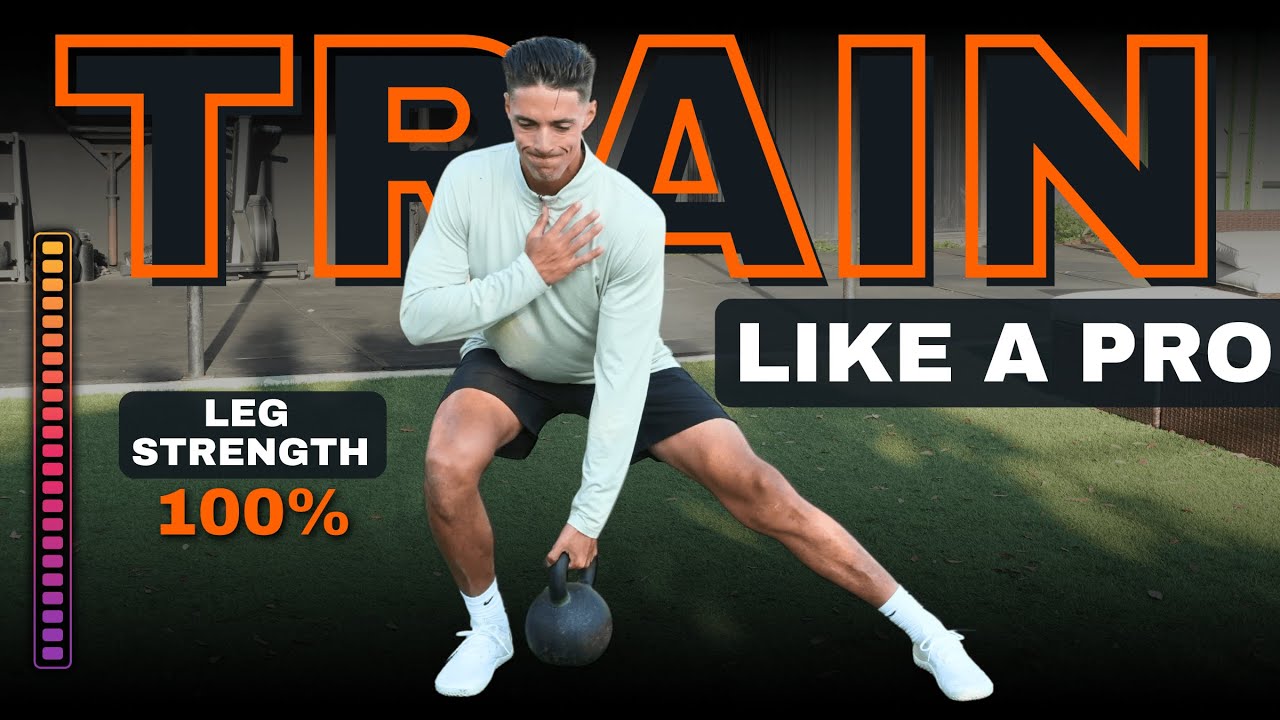
8 Lower Body Exercises for Explosive Pickleball Legs — No Gym Required
Pickleball is a game of quick lateral movements, explosive pushes, and stable positioning – your legs are doing most of the heavy lifting
The Progression From Step to Jump
Once you’ve built confidence with the lag mechanics, the progression becomes about footwork after contact.
Start by stepping into the court after you make contact with the ball, pointing your toe toward your opponent.
This is completely legal as long as it happens after contact (you must have at least one foot down at the moment of impact).
The next level, which is what the pros do, is jumping into the court after contact. This isn’t a high jump; it’s a forward jump.
Your momentum carries you into the court, and this forward motion amplifies the rotation and power you’ve already generated through your legs and wrist.
James Ignatowich, a professional pickleball player known for one of the fastest serves in the sport, uses this jumping technique on virtually every shot.
It’s no coincidence that nearly every pro jumps after contact. The forward momentum gives them additional power and rotation.
If you’re working toward that level, start mastering the 5 pickleball shots you must have before 2026.
Timing the Jump for Maximum Serve Power
The jump isn’t about leaving the ground early.
It’s a natural result of driving hard through the ball. If you’re forcing the jump, you’re doing it wrong.
Let your legs push and let gravity and momentum handle the rest.
The jump should feel like a consequence of effort, not a separate movement you’re adding on top.
Once that clicks, your serve power will jump with you.
5 Pickleball Skill Secrets to Reach 4.0+ Fast
Start with efficiency. Master that. Then move to prediction. Then pace control. Then resetting. Finally, work on your transition game.

The Release: Timing Your Ball Drop
Once you’ve drilled the lag mechanics and footwork, adding the ball is the final step. But here’s where timing becomes critical.
Don’t toss the ball up and then try to hit it. That ruins your timing and forces you to adjust mid-swing.
Instead, hold the ball in your palm facing down.
As you begin your serve motion and approach the moment when you’ll relax your wrist for that lag, release the ball. Let it drop into your strike zone naturally.
This way, your wrist snap and the ball’s arrival are synchronized perfectly.
For a deeper look at how the follow-through compounds these gains, read about why the follow-through is the key to a more powerful serve.
When you execute this correctly, you’ll notice two things immediately: the amount of spin on the ball increases dramatically, and the power increases without any additional effort from your arm.
You’re simply slapping through the ball with a relaxed arm, which is exactly what pickleball serve lag is designed to do.
This Simple Timing Hack Can Change Your Game Completely
Mid-court inconsistency is one of the most frustrating aspects of pickleball. It’s probably because you’re split-stepping all wrong.
The Common Mistake That Kills Your Pickleball Serve Lag
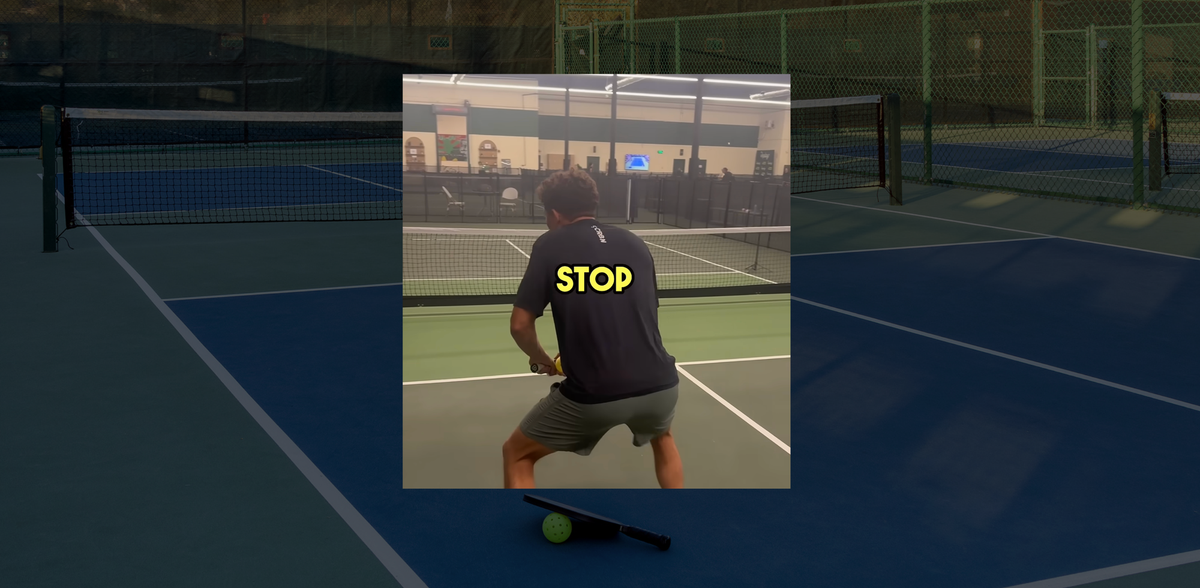
The biggest error recreational players make is trying to hit the ball hard with their arm.
This creates tension, which prevents lag from developing.
Tension also prevents you from using your legs effectively, which means you’re cutting off your power source at the knees, literally.
When you’re relaxed at contact, you get way more slap through the ball. This creates more lag and more power.
The paradox is that trying less hard often results in hitting harder.
It sounds counterintuitive, but it’s biomechanically sound. Dig into the 3 mistakes that are holding your serve back to see how tension shows up in other ways too.
If your serve feels stiff, the fix is almost never “try harder.” It’s almost always “relax more.” Start there.
Beginner Pickleball Mistakes That Are Costing You Points
Most beginner pickleball mistakes come down to a handful of repeatable patterns, bad positioning, the wrong shot at the wrong time, and unforced errors you can fix this week. This guide breaks down the most common ones and gives you practical corrections to start winning more points immediately.
Why This Matters for Your Game
A powerful serve changes the entire dynamic of a point.
Whether you’re a 3.0 player trying to earn more free points or a 4.0+ player looking to set up your third shot, a serve with pace and spin puts your opponent on their heels immediately.
They’re forced to react rather than dictate.
Understanding pickleball serve lag isn’t just about adding speed to your serve.
It’s about efficiency. You’re generating more power with less effort, which means you can sustain that power throughout a long match without fatiguing your arm.
A well-developed wrist snap technique compounds across every single point you play.
When you stack lag mechanics, ground force, and proper release timing together, your serve becomes a legitimate weapon. Not just a way to start the point.
A way to win it before the rally even begins.
For a proven framework on putting this into a complete serving system, check out the simple secret to hitting the perfect pickleball serve every time.
Pro coaches have been teaching players how to hit 60 mph pickleball serves using these exact principles.
The ceiling is higher than most players realize. And it all starts with lag.
💡
Frequently Asked Questions
What is pickleball serve lag and why does it matter?
Pickleball serve lag is the delay between when your wrist and elbow begin moving and when your paddle makes contact with the ball. It’s a loading mechanism that stores energy in your arm, allowing you to snap through the ball with force while keeping your arm relaxed. This creates a whip-like effect that generates power without tension, which is why every elite server uses it.
How long does it take to develop proper lag mechanics?
According to PickleballPlaybook, the foundational lag drill can produce noticeable results within a week of consistent practice. However, fully integrating lag into your serve and making it automatic takes longer. Most players see significant improvement within two to three weeks of daily repetition.
Can I add spin and pace at the same time with lag?
Yes. When you create proper lag and snap through the ball with a relaxed wrist, you naturally generate both spin and pace. The windshield wiper motion of your wrist creates the topspin, while the ground force and forward momentum create the pace. They work together, not against each other. Mastering topspin mechanics alongside lag gives you a complete serve package.
Why do my legs matter more than my arm strength for serve power?
All power in your pickleball serve comes from the ground upward. Your legs drive your body forward and upward, which automatically extends your arm in front of you. When you focus on standing powerfully through the ball, your arm follows naturally. Arm strength alone, without leg drive, creates tension and limits the snap that produces real serve velocity.
Should I jump after every serve?
Jumping after contact is an advanced technique used by pros like James Ignatowich. Start by stepping into the court after contact, then progress to jumping once you’re comfortable with the mechanics. Jumping amplifies rotation and power, but it’s not necessary for developing a strong serve. Master the essential pickleball shots and the fundamentals first, and the jump will come naturally.
Nguồn: thedinkpickleball