The block volley in pickleball is one of the most effective defensive tools you can add to your game, allowing you to absorb pace and neutralize hard attackers at the kitchen line. Learn the exact technique, grip adjustments, and drills to make the block volley a reliable reset weapon.
The block volley in pickleball is the shot that separates players who survive hands battles from those who get lit up every single time.
It’s not flashy. It won’t win you a highlight reel.
But executed right, it’s the most effective way to take a speedup traveling at speeds that can exceed 90 mph at the professional level and turn it into a neutral dink, all without breaking a sweat.
Here’s the thing: most players at the 3.5 to 4.5 level are way too reactive. Someone rips a ball at their chest, and they swing back, often popping it up or flying it out.
The block volley does the opposite. Instead of matching pace, you absorb it.
You let the attacker’s energy work against them, redirect it softly into the kitchen, and reset the rally on your terms.
Love pickleball? Then you’ll love our free newsletter. We send the latest news, tips, and highlights for free each week.
What Is a Block Volley in Pickleball?
A block volley is a defensive shot where you intercept a hard-driven ball at or near the non-volley zone line and redirect it softly back into the kitchen, eliminating pace rather than adding to it.
Think of it less as a shot and more as a reaction system.
The core principle: your paddle acts as a wall, not a weapon. When someone speeds up on you, you’re not trying to generate power. You’re trying to kill theirs.
This is different from a punch volley (which adds pace) or a reset dink (which is played below the net).
The block volley is specifically a kitchen-line defensive volley where pace management is the whole point.
Why Does the Block Volley Matter So Much in a Hands Battle?
If you’ve spent any time watching professional pickleball, you know what a hands battle looks like.
Two players at the kitchen, one fires a speedup, the other reacts in a split second. The best players in the world rarely counter with equal pace.
They block, redirect, and reset to regain control of the exchange.
That’s not an accident. Controlling the transition zone and kitchen line is where rallies are really won.
And the block volley is one of the most reliable tools for doing it.
When you consistently neutralize attacks, you put psychological pressure on the opponent too.
They burned energy trying to speed up on you, and you just… gave it back softly. That’s demoralizing.
💡
How to Hit the Block Volley in Pickleball
Getting the block volley right comes down to four things: grip pressure, paddle position, body posture, and contact point.
Get these right and the shot becomes almost automatic.
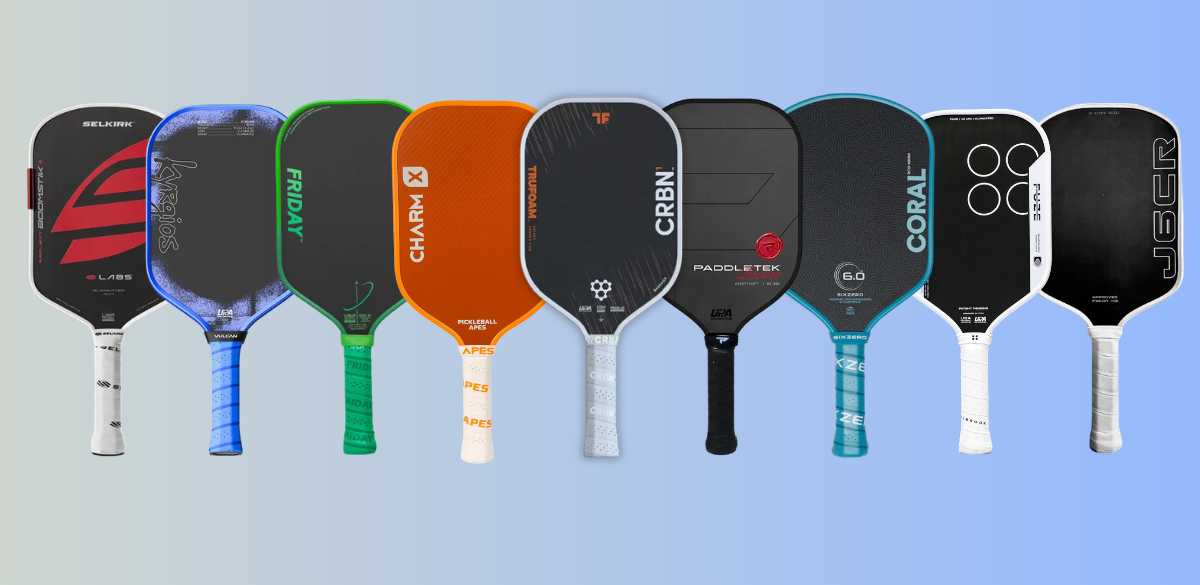
9 Power Paddles that Are Excellent at Dinking
Based on a unique blend of lab-tested power and consistency metrics, these paddles are proven to give you an edge in all three zones of the court.
Grip Pressure: Soft Hands Are the Whole Game
This is the most important element and the one most players ignore. Loose grip pressure is what makes the block volley work.
When you grip tight, the ball ricochets off your paddle with force. When you hold loosely, the paddle face absorbs the pace.
Research on racket sport biomechanics consistently shows that grip firmness directly affects impact shock transmission and energy return at the point of contact.
A 2020 study published in the Journal of Sports Sciences found that increased grip force in racket sports significantly increases the coefficient of restitution at impact, meaning a tighter grip sends more energy back into the ball.
For a block volley, that’s exactly what you don’t want.
A good cue: imagine you’re holding a raw egg. Tight enough to control it, loose enough not to crack it.
That’s your grip pressure for a block volley. You want somewhere around a 3 or 4 out of 10 on the grip scale.
Players with backgrounds in tennis often fight this instinct the hardest.
The backhand volley in pickleball demands a fundamentally softer approach than what tennis trained into you.
Understand Pickleball Volley Control: Physics & Technique
Pickleball volley control isn’t about luck or natural talent—it’s about understanding two fundamental principles: paddle angle and energy.
Paddle Position: High and In Front
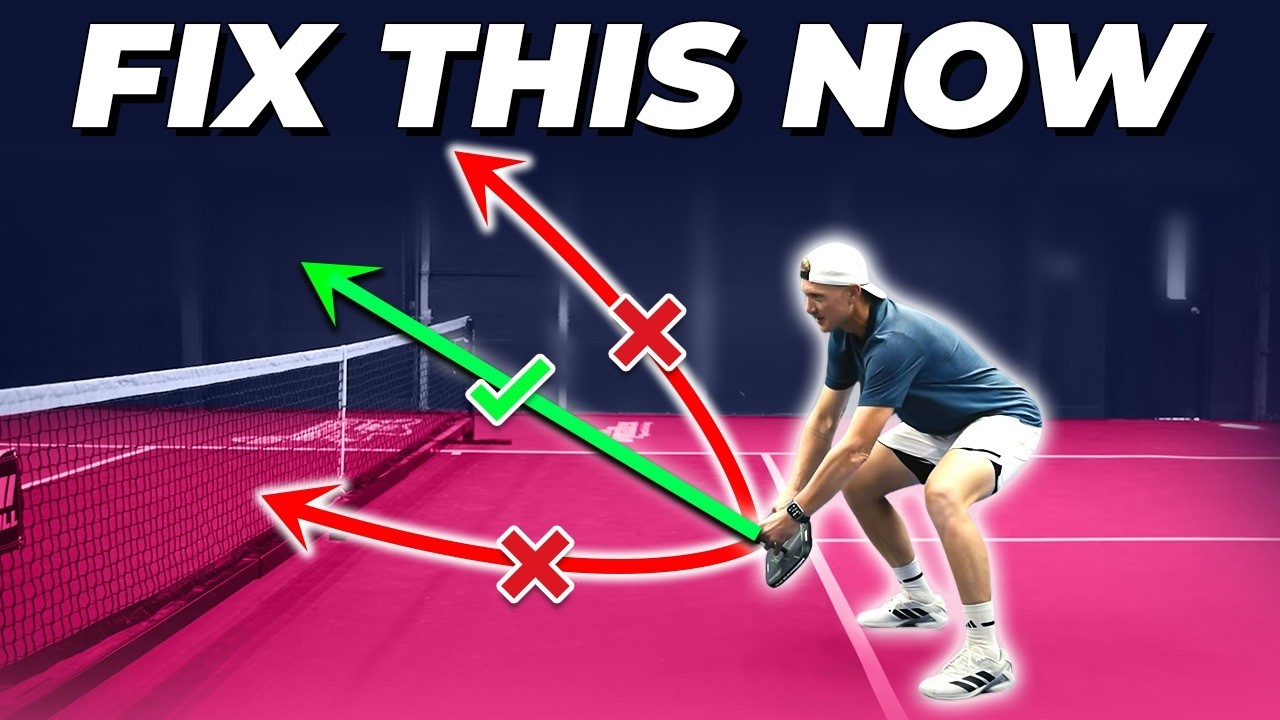
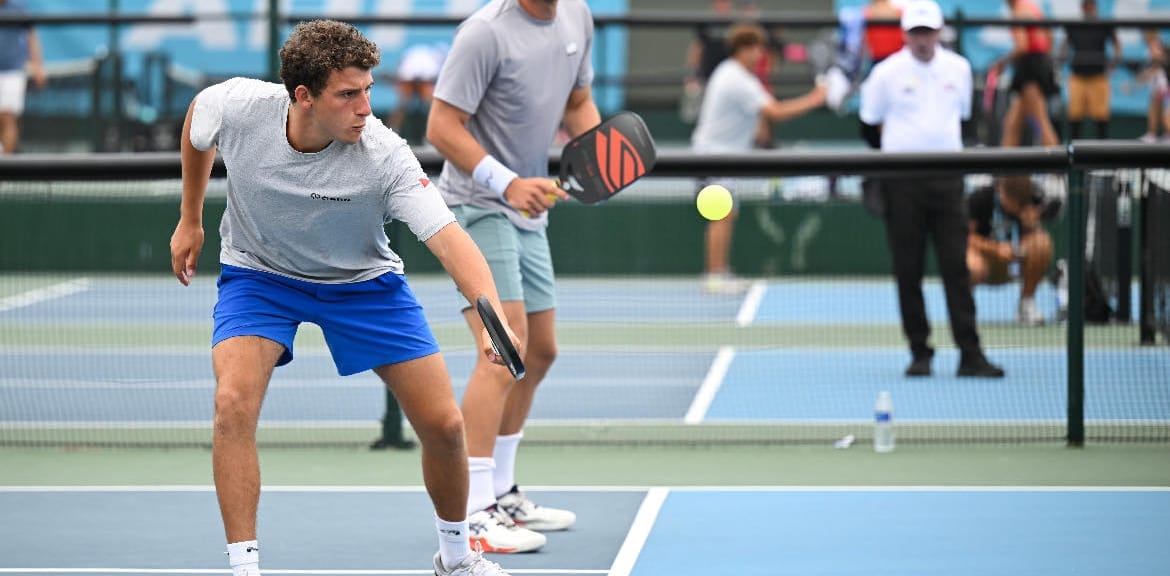
Your paddle needs to be up and in front of your body before the ball arrives, not after.
This is a split-step and ready position issue as much as it’s a shot mechanics issue.
Keep your paddle face roughly neutral, neither tilted dramatically open nor closed.
You want a slight open face (angled slightly upward) on most block volleys to help lift the ball over the net and into the kitchen, rather than driving it down into the tape.
Pickleball DUPR Rating: How It Works & How to Get Yours
Your DUPR rating pickleball number is the most accurate skill measurement in the sport. Here’s exactly how DUPR calculates it and how to get yours.
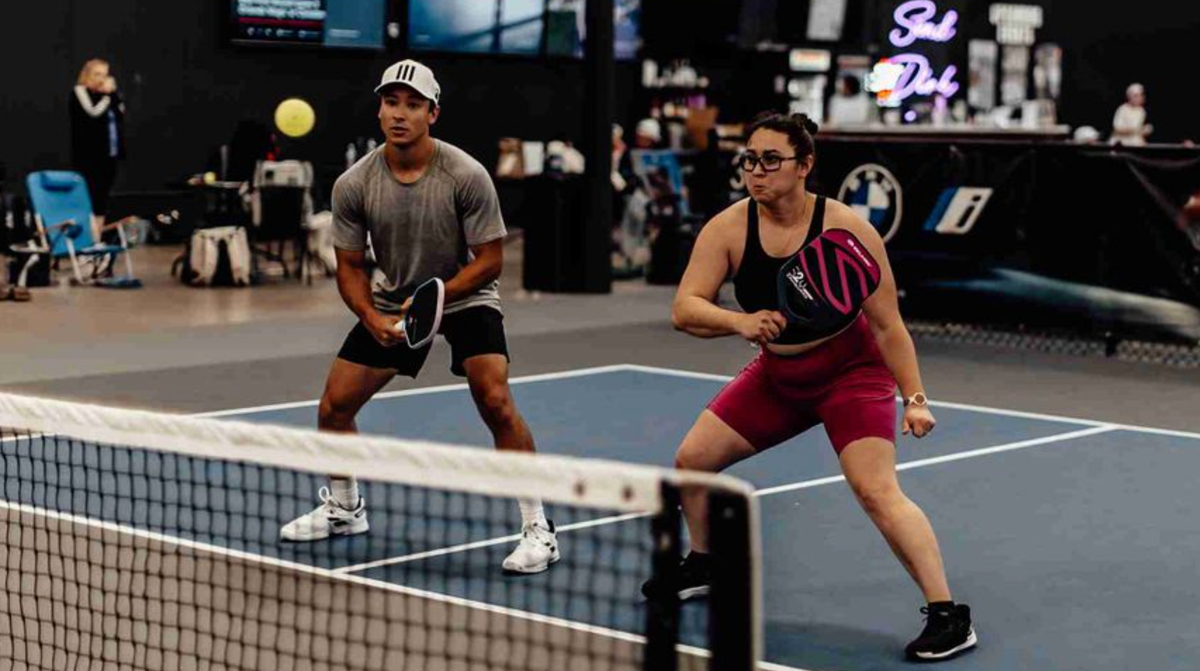
Contact Point: Out in Front, Minimal Backswing
There’s no backswing on a block volley. None.
The whole mechanics of the shot depend on meeting the ball out in front of your body with a stable, firm-but-soft paddle face.
The moment you take a backswing, you’re generating pace, which is the opposite of what you want.
Contact should happen at roughly arm’s length in front of your hip, not beside your body or behind it.
If you’re getting late contact, your reaction time is the issue, and that comes from better anticipation and reading your opponent’s setup.
For context on just how tight those margins are: research on sport-specific reaction time shows that trained athletes average roughly 150 to 200 milliseconds to initiate a motor response to a visual stimulus, meaning anticipation isn’t optional at kitchen speed. It’s survival.
Heads up: hundreds of thousands of pickleballers read our free newsletter. Subscribe here for cutting edge strategy, insider news, pro analysis, the latest product innovations and more.
Body Posture: Low and Stable
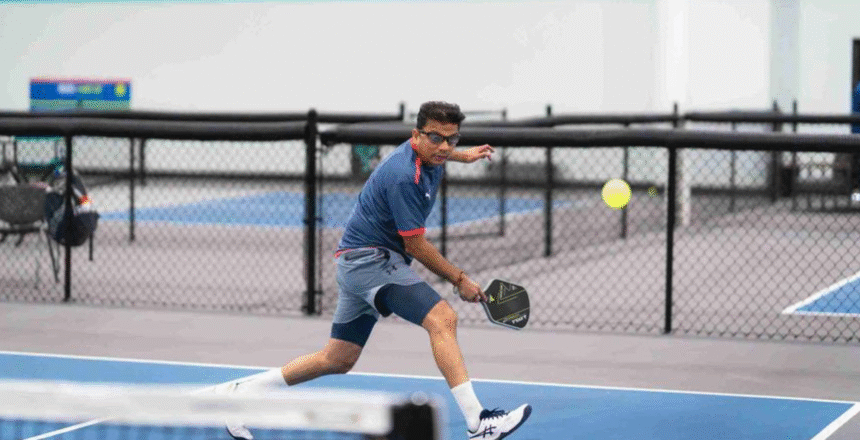
You should be in an athletic stance with knees slightly bent and your weight forward. Getting tall or standing straight up is a fast way to miss the shot.
Low posture gives you a stable base and lets you react to balls hit at your feet, body, or above your shoulder without overcommitting. =
Sports biomechanics research consistently supports that a lower center of gravity reduces reaction time in lateral and vertical movement tasks, which maps directly to what you need at the kitchen line.
Pickleball Shot Placement: Complete Winning Guide
Whether you’re serving, returning, dinking, or driving, knowing where to aim gives you control over the rally and keeps your opponent reacting instead of attacking.
When Should You Block vs. Counter?
This is where players get themselves in trouble. Not every speedup should be blocked.
The block volley is your go-to when the ball is above your waist and fast, when you’re off-balance, and when your primary goal is neutralization over attack.
If the ball arrives below the tape, a reset dink is more appropriate. If the ball is slower and you have time to set up, a punch counter might be the better play.
And if you’re getting targeted at the body, the block volley is almost always the correct call because there’s simply not enough room to generate a clean counter.
The mental model: if you’re reacting, you’re blocking. If you’re attacking, you’re countering.
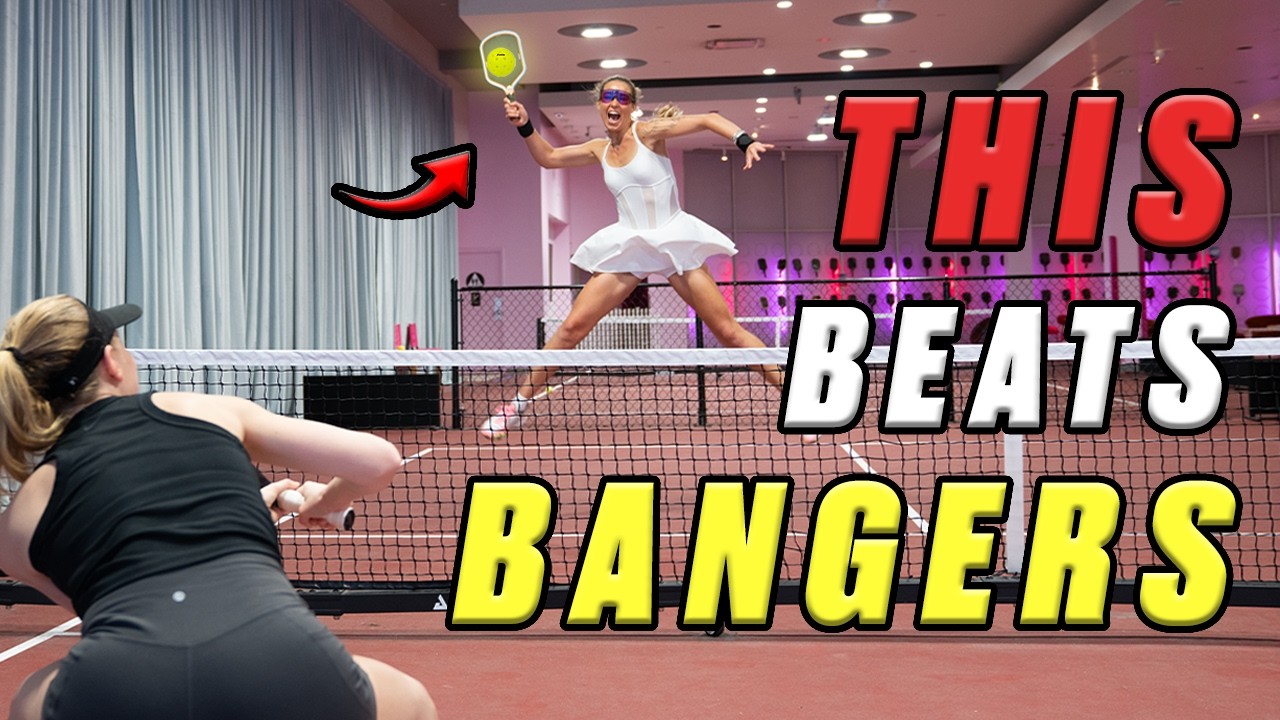
When to Block vs. Counter Against Pickleball Bangers
Bangers thrive on chaos. They want you panicking, swinging wildly, and popping the ball up for easy putaways.
Drills to Build a Reliable Block Volley in Pickleball
Reading about a block volley gets you only so far. You need repetitions, and you need them at game speed.
- Drill 1: Rapid-Fire Block Volley Feed Stand at the kitchen line with a partner hitting firm drives at you from the transition zone. Your only job: block every ball back into the kitchen with a dead-ball response. No counters, no power. Just absorbs. Do 3 sets of 20 reps per side (forehand and backhand). Solo pickleball drills can supplement this, but you really need a live ball for this one.
- Drill 2: Speedup-Block-Reset Sequence Two players at the kitchen. Player A dinks crosscourt until they choose to speed up. Player B blocks and resets into a dink. Player A responds with another speedup. The goal is to string together five consecutive successful block-reset sequences. This mirrors actual match conditions better than any isolated drill.
- Drill 3: Body Shot Chaos Partner hits directly at your body, varying speed and height. You must decide whether to forehand block, backhand block, or back up and absorb. This trains decision-making as much as mechanics. Advanced shot selection drills like this one separate good players from great ones.
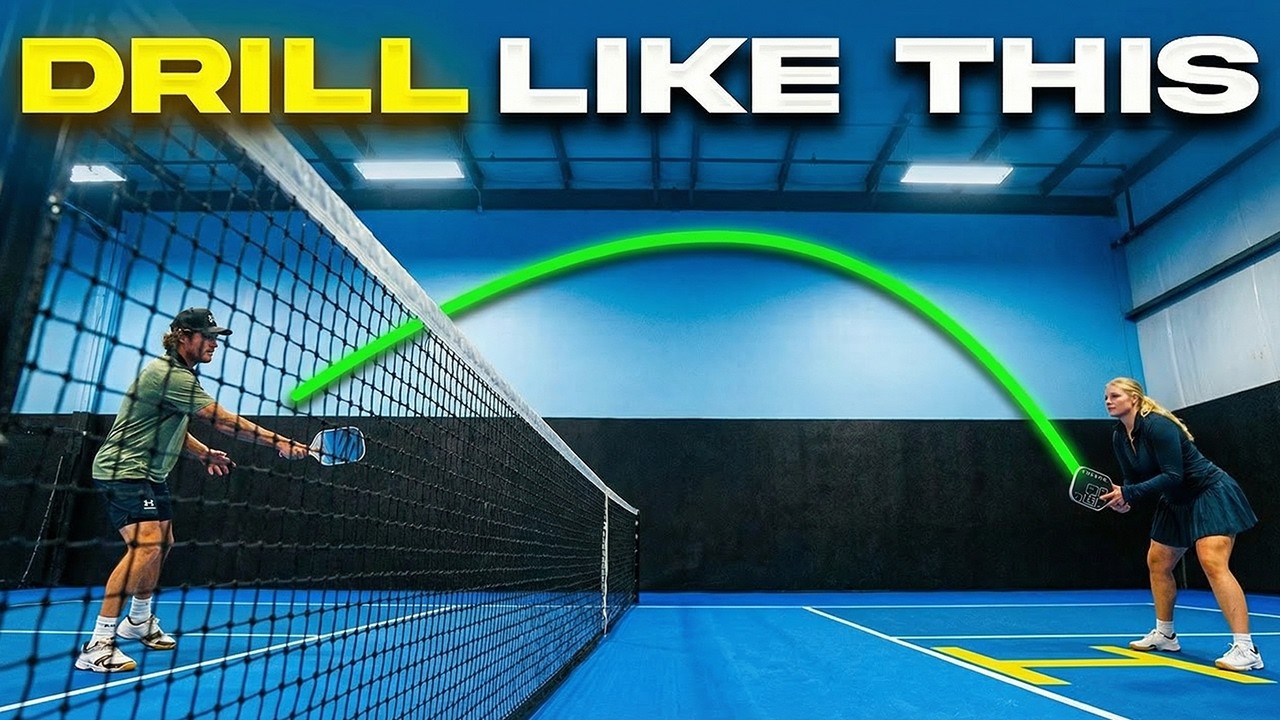
7 Pickleball Drills That Work for Every Level
Pro player Michael Loyd shares 7 pickleball drills designed to build real consistency and fix the weaknesses keeping you stuck.
The Mental Side of the Block Volley
Here’s something nobody talks about: the block volley is as much a mental discipline as a physical one.
Resisting the urge to counter a hard ball is hard. Every instinct in your body says swing. The block volley requires you to override that reflex deliberately.
The better you get at it, the more your opponent has to keep trying. And the more they try, the more mistakes they make. That patience is a weapon.
Some of the best points in pickleball end not because someone hit a great attack, but because they stayed disciplined long enough for the opponent to make an error.
Want to go deeper on the mental and tactical side of the kitchen game? This breakdown of doubles strategy and T-line placement is worth your time.
Mental Warfare: What Elite 6.0 Pickleball Players Think During Every Dink
What separates good from great in pickleball is the split-second mental shift that happens the moment the ball leaves the paddle
Key Takeaways
- The block volley in pickleball is a defensive kitchen-line shot designed to absorb pace, not generate it.
- Soft grip pressure (3-4 out of 10) is the single biggest factor in executing this shot consistently.
- No backswing. Contact out in front. Paddle face slightly open.
- Use a block volley when you’re reacting to a fast ball above your waist; use a reset dink when the ball is below the net.
- Drill it at game speed with a partner, not just shadow swings.
💡
Frequently Asked Questions
What is a block volley in pickleball?
A block volley in pickleball is a defensive shot executed at the non-volley zone line where you intercept a hard-driven ball and redirect it softly back into the kitchen. The goal is to absorb your opponent’s pace rather than add your own. It’s the primary tool for neutralizing speedups during kitchen-line exchanges.
How is a block volley different from a reset dink?
A block volley is hit out of the air at or above net height, usually in response to a fast-paced attack. A reset dink is typically a softer shot played below the net tape that arcs back into the kitchen. Both aim to neutralize pace, but the block volley is your reactive tool when the ball comes fast and high, while the reset dink is used when you’ve been pushed into a defensive position below the net.
What grip should I use for a block volley in pickleball?
Keep your grip soft, around a 3 or 4 out of 10 on a firmness scale. A tight grip causes the paddle to function like a wall that reflects pace back, which is the opposite of what you want. A looser grip lets the paddle face absorb energy. Most players should use a continental grip or a modified continental for optimal paddle face control.
Why do I keep popping the ball up when I try to block?
Three common culprits: your grip is too tight (causing the ball to bounce off), your paddle face is too open (sending the ball skyward), or you’re making contact too late (behind your body instead of out in front). Focus on getting your paddle up early, meeting the ball in front of you, and consciously loosening your grip pressure before contact.
When should I use a block volley instead of countering?
Block when you’re reacting, countering when you’re attacking. If someone speeds up on you and you have no time to set your feet, block. If the ball is slower and you have a read on where it’s going, a counter or punch volley might be the better option. The block volley in pickleball is specifically the right call when you’re in survival mode and need to reset the rally without making an error.
Nguồn: thedinkpickleball