A pickleball stretching routine is the fastest, most overlooked way to improve your court movement and stay injury-free. These 10 stretches target the exact muscles you use every time you step on the court.
A solid pickleball stretching routine is the difference between moving like a 3.5 and playing like a 4.5. Seriously.
Most players grind out drills, obsess over paddle tech, and completely ignore the one thing that would actually help them split-step faster, lunge deeper, and stop waking up sore the morning after a session.
That changes today.
Love pickleball? Then you’ll love our free newsletter. We send the latest news, tips, and highlights for free each week.
Why a Pickleball Stretching Routine Actually Matters
Your body takes a beating on the court.
Every drop shot, kitchen sprint, and overhead swing demands hip mobility, shoulder rotation, and ankle stability working together.
When any of those are stiff or restricted, you compensate. And compensation is where injuries start.
According to a 2025 study published in the Journal of Aging and Physical Activity, pickleball players over 50 face a disproportionately high rate of lower extremity injuries compared to other recreational sports, with ankle sprains and knee strains topping the list.
The fix is not slowing down. The fix is warming up properly and stretching consistently.
A proper pickleball stretching routine addresses three functional needs: pre-game activation, mid-game maintenance, and post-game recovery.
Most players skip all three. The ones who don’t stay on the court longer, play more consistently, and feel better the next day.
Here’s what a complete pickleball training routine can look like when you build it the right way.
US Senior Pickleball: The Only Tour Built by Seniors for Seniors
Everything you need to know about US Senior Pickleball, how to get involved, and why this year’s National Championship will be their biggest one yet

What’s the Difference Between Dynamic and Static Stretching?
Here’s the thing a lot of players get wrong: timing. Dynamic stretching (movement-based) belongs before you play.
Static stretching (hold-and-release) belongs after. Mixing them up is one of the most common mobility mistakes in recreational sports.
Dynamic stretches raise your core temperature, fire up your neuromuscular system, and increase your range of motion without reducing power output.
A 2025 meta-analysis in the British Journal of Sports Medicine confirmed that static stretching performed before activity can temporarily reduce muscle strength and explosive power, while dynamic warm-up routines improved sprint performance and agility scores across multiple sports.
Static stretches, on the other hand, reduce muscle tension, support recovery, and build long-term flexibility over time.
Hold them for 20-30 seconds after your match. Not before.
This distinction matters for your pickleball court movement more than most players realize.
💡
The Pickleball Stretching Routine: 10 Essential Stretches
Here are the 10 stretches that belong in your routine. The first five are dynamic (pre-game). The final five are static (post-game).
Do not skip the post-game section. That is where the long-term flexibility gains live.
1. Hip Circles (Dynamic)
Stand with feet shoulder-width apart and rotate your hips in slow, exaggerated circles. Ten reps clockwise, ten counterclockwise. This directly targets your ability to explode laterally from the kitchen line, which is where most court movement originates in pickleball.
Hip stiffness is one of the leading contributors to slow split-step reactions. Loose hips let you load and fire faster. It sounds obvious. Almost nobody actually does it.
2. Leg Swings (Dynamic)
Hold a fence or wall for balance. Swing one leg forward and back in a controlled arc, increasing the range with each swing. Ten reps per leg. Then switch to lateral swings across your body. Knee health on the pickleball court starts with hamstring and hip flexor activation, and leg swings hit both.
This is the single best pre-game movement for players who chronically pull a hamstring during aggressive baseline chases.
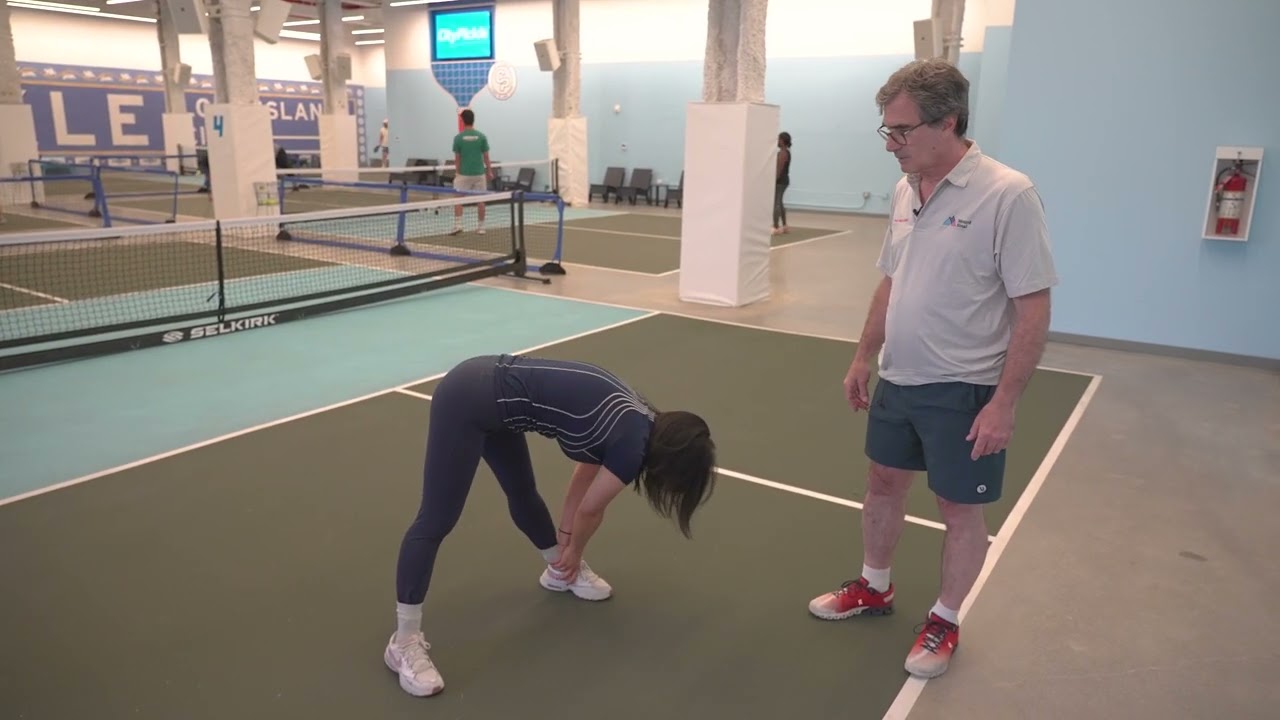
A Quick, Essential Stretching Routine for Pickleball Players
Building a stretching habit into your pickleball routine is one of the smartest things you can do for your long-term health and performance on the court
3. Ankle Rotations (Dynamic)
Lift one foot slightly off the ground and rotate your ankle through its full range of motion. Ten slow rotations per direction, per foot. Ankles are the first joint to absorb impact on every court movement, and they’re the most undertrained joint in most pickleball warm-up routines.
Stiff ankles equal slow direction changes. That is not an opinion.
4. Lateral Lunge Walk (Dynamic)
Step wide to your right, lower into a side lunge, hold for one second, then step your feet back together. Alternate sides for 10 total reps. This mimics the exact lateral movement pattern you use during kitchen exchanges and mid-court defense, making it one of the most sport-specific warm-up drills in any pickleball stretching routine.
Keep your chest tall and your grounded knee tracking over your toe. Collapsed knees during this drill are a red flag your glutes need more activation work.
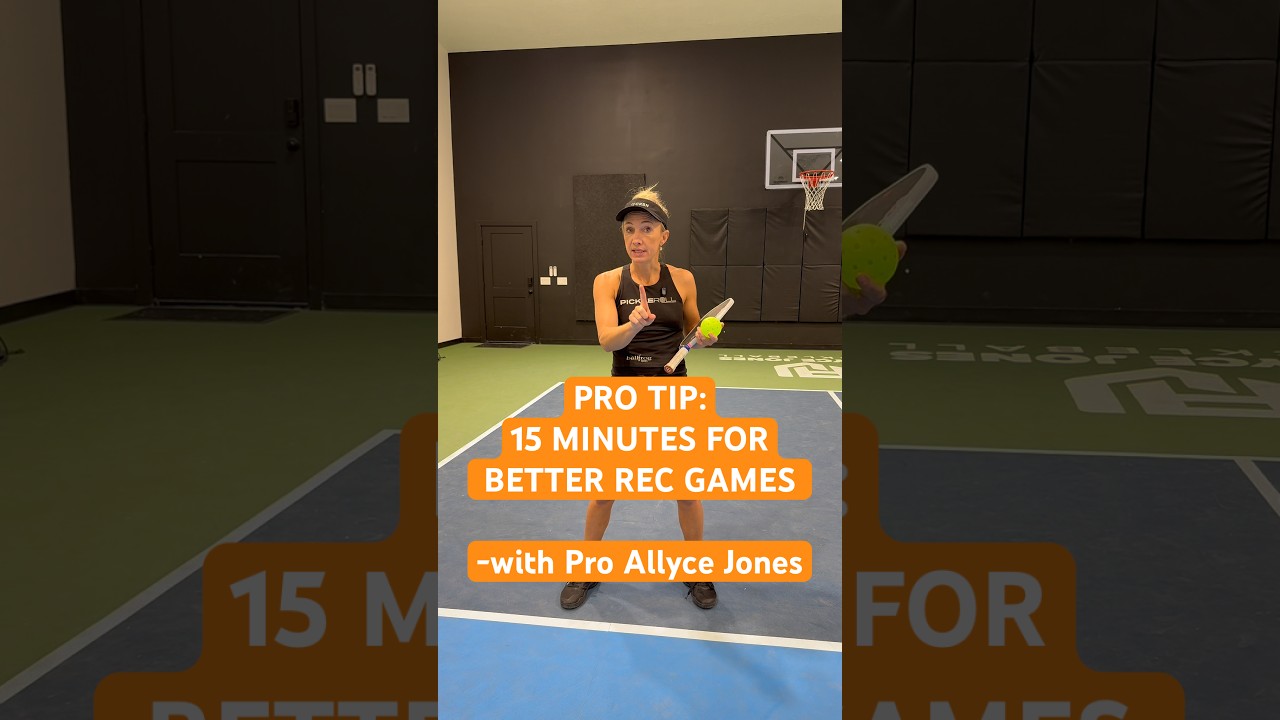
Pre-Game Drill: Transform Your Rec Game in 15 Minutes
An intentional pre-game drill focused on one skill can transform your performance and help you win more points.
5. Arm Circles and Shoulder Rolls (Dynamic)
Extend both arms to the side and make progressively larger circles, forward and backward. Follow with ten slow shoulder rolls in each direction. Shoulder rotation directly affects your serve, overhead, and reset mechanics, all three of which demand a healthy range of motion at the glenohumeral joint.
Players dealing with nagging shoulder tightness should also read about shoulder height and its impact on shot selection before assuming their mechanics are the problem.
Now for the post-game static stretches. Hold each one for 20-30 seconds. Breathe through them. Don’t bounce.
6. Standing Quad Stretch (Static)
Stand on one leg, pull your opposite foot toward your glute, and hold. Keep your knees together and your hips level. Tight quads are a primary contributor to knee pain in pickleball players, particularly during sustained lunging and lateral movement. This is non-negotiable in a post-match pickleball stretching routine.
Struggling with balance? Hold a wall. The stretch is more important than the balance challenge right now.
Pickleball Mental Game: Stay Calm Under Pressure and Win
The mental game competitive pickleball demands is just as important as your backhand or your third shot drop. Learn how top players stay calm under pressure, reset after errors, and build the focus that wins matches.
7. Seated Hamstring Stretch (Static)
Sit on the court or a bench with one leg extended. Hinge at the hip and reach toward your foot. Keep your back flat, not rounded. According to research published in Sports Health in 2025, hamstring flexibility is one of the strongest predictors of lower back health in athletes over 40. Given that pickleball’s fastest-growing demographic is 50+, this stretch deserves real attention.
Get comfortable being in this position for a full 30 seconds per side. It feels longer than it is.
8. Pigeon Pose Hip Stretch (Static)
Bring one leg forward, knee bent, and extend the opposite leg straight back. Lower your torso toward the ground and hold. This is the deepest hip flexor and external rotator stretch in any pickleball fitness routine, and it directly addresses the stiffness that causes players to move flat-footed in the kitchen.
Pigeon pose is borrowed from yoga, but the benefits are pure sport science. Your hips are the engine of your court movement. Stretch them like it.
9. Cross-Body Shoulder Stretch (Static)
Pull one arm across your chest with the opposite hand and hold. This stretch targets the posterior shoulder capsule, which tightens aggressively during heavy paddle use. Pickleball elbow and shoulder overuse injuries are increasingly common at all skill levels, and consistent posterior shoulder stretching is one of the most effective preventive tools available.
Thirty seconds per side. Do it every single time you play. This is the stretch players wish they had been doing two years before they needed it.
10. Child’s Pose Spinal Decompression (Static)
Kneel on the ground, sit your hips back toward your heels, and extend your arms forward on the floor. This decompresses the lumbar spine and releases the erector muscles that contract repeatedly during forward-bend shots like the dink and the drop. A 2025 review in the Journal of Orthopaedic & Sports Physical Therapy identified lumbar strain as the third most common soft tissue injury in recreational pickleball players.
Child’s pose for 30-60 seconds at the end of every session is the single easiest thing you can do to protect your back long-term. Do it even when you don’t feel tight.
5 Pickleball IQ Moves to Win More Matches
Coach Jess breaks down five pickleball IQ moves designed to give you a strategic edge over your opponents. These aren’t just technical skills—they’re the mental shifts that separate winning players from the rest.

How to Build This Into Your Actual Schedule
Knowing what to stretch means nothing if you don’t actually do it. Here is a simple framework:
- Before every match or drill session: Run through stretches 1-5 (dynamic). Budget 5-7 minutes. That’s it.
- After every session: Run through stretches 6-10 (static). Budget another 7-10 minutes.
- On rest days: Do the full routine, dynamic plus static, in one 15-minute block. This is where mobility compounds over time.
The players who stick to this build a body that recovers faster and moves better. Getting the most out of every court session starts off the court, not on it.
Consistency beats intensity here. Three minutes of daily stretching beats a 45-minute yoga session you do once a month.
The Complete Pickleball Drill Routine to Reach 5.0
Reaching 5.0 in pickleball requires more than isolated skill work. A structured pickleball drill routine that builds consistency across dinking, resets, volleys, and live play is what separates competitive players from the rest.
Does Your Warm-Up Actually Prepare You for Court Conditions?
Most players jog in, volley a few balls, and call it a warm-up. That is not a warm-up. That is showing up.
A real pickleball warm-up routine primes your nervous system, raises your muscle temperature, and gets your joints moving through sport-specific ranges before the first live ball.
Adding a Bzer warm-up routine to your practice sessions is one way to combine ball work with movement activation.
But the stretching component has to come first. Every time.
The players who consistently feel sharp in the first game of a session are the ones who are actually warm when the rally starts.
That is not an accident. That is a routine.
How Early Preparation Buys Time & Slows Down Pace of Play in Pickleball
When you’re prepared early, you’re not rushed. When you’re not rushed, you make better decisions. When you make better decisions, you win more points.
Key Takeaways
- A pickleball stretching routine reduces injury risk, improves court speed, and accelerates post-game recovery.
- Dynamic stretches (hip circles, leg swings, lateral lunges) belong before play. Static stretches (quad, hamstring, pigeon pose) belong after.
- Performing static stretching before play can temporarily reduce explosive power, per 2025 BJSM research.
- The hips, ankles, and posterior shoulder are the three highest-priority areas for pickleball players to maintain.
- Consistency is the variable that determines results. A 10-minute daily routine beats an occasional long session.
- Lower extremity injuries are the most common in recreational pickleball, and most are preventable with proper pre-game mobility work.
💡
Frequently Asked Questions
What is the best pickleball stretching routine before a match?
The best pre-match pickleball stretching routine focuses on dynamic movements that elevate your heart rate and activate sport-specific muscles. Hip circles, leg swings, ankle rotations, lateral lunge walks, and arm circles cover the key joints used in every point of pickleball. Run through all five back-to-back and you’ll walk on the court ready to move from the first rally.
How long should a pickleball warm-up routine take?
A complete pre-game pickleball warm-up routine takes 5-7 minutes for the dynamic stretching phase. The post-game static stretching phase adds another 7-10 minutes. Together, you’re looking at roughly 15 minutes total per session. The time investment is small. The injury-prevention payoff is significant, particularly for players over 40.
Should I stretch before or after playing pickleball?
Both, but differently. Dynamic stretching (movement-based) should happen before you play to warm up the muscles and joints without reducing power. Static stretching (held positions) should happen after play when your muscles are warm and pliable. Doing static holds before play has been shown in multiple 2025 sports science studies to temporarily reduce explosive strength and speed.
What stretches help with pickleball knee pain?
Standing quad stretches, seated hamstring stretches, and lateral lunge walks are the three most effective stretches for reducing pickleball-related knee pain. These movements address the quad-hamstring balance and hip stability that protect the knee joint during lunging, split-stepping, and lateral movement. Players with existing knee issues should also review exercises to protect the knee joint specific to court sports.
Can stretching actually improve my pickleball game?
Yes, and the mechanism is direct. Better hip mobility means faster lateral movement. Better ankle flexibility means quicker direction changes. Better shoulder range of motion means fuller, more controlled overhead swings. A consistent pickleball stretching routine doesn’t just keep you healthy. It makes you measurably faster and more fluid on the court over time.
Nguồn: thedinkpickleball