Pickleball fitness for seniors is the difference between playing twice a week and playing every day without breaking down. This guide breaks down the exact training approach that lets older players compete harder and recover faster.
Pickleball fitness for seniors is the most underrated edge in the game right now. Everyone’s focused on shot mechanics and court positioning.
Meanwhile, the players who actually stick around and keep improving? They’ve figured out the off-court side of things.
Here’s the thing: pickleball is uniquely demanding for older bodies. It combines lateral movement, explosive bursts, overhead swings, and long rallies.
None of that is especially forgiving on knees, hips, and shoulders that have a few decades of mileage on them.
The good news is that a smart fitness routine doesn’t require a gym membership or a personal trainer.
It requires knowing what to train, how hard to push, and when to back off.
Love pickleball? Then you’ll love our free newsletter. We send the latest news, tips, and highlights for free each week.
Why Pickleball Fitness for Seniors Is Different
Senior pickleball fitness isn’t just a scaled-back version of general athletic training.
It targets the specific physical demands of the game while accounting for how the body changes with age.
After 50, a few things happen whether you like it or not.
Muscle mass declines at roughly 1–2% per year (a condition called sarcopenia), reaction time slows, and recovery takes longer.
Joint cartilage gets less forgiving. Balance and proprioception, your body’s ability to sense where it is in space, start to erode.
None of that means you can’t compete. It means your training has to be intentional.
The players who commit to even two or three focused sessions per week see measurable improvements in strength, balance, and endurance.
And that translates directly to better pickleball.
AARP has even launched a nationwide pickleball clinic tour specifically celebrating how the sport supports active aging, which tells you everything about where this is heading.
What Does Pickleball Fitness for Seniors Actually Include?
A complete senior pickleball fitness plan covers four pillars: mobility, strength, balance, and cardio endurance. Miss any one of them and you’ll feel it on the court.
- Mobility is the foundation. Without it, your body compensates on every swing and every lateral step, which is how injuries accumulate. Target the hips, ankles, and thoracic spine specifically. These are the joints pickleball punishes most, and they’re exactly where older players tend to lock up first.
- Strength training is non-negotiable, and it doesn’t mean heavy lifting. Research published in the Journal of Strength and Conditioning Research consistently shows that resistance training two to three times per week dramatically reduces fall risk, improves joint stability, and preserves the fast-twitch muscle fibers you rely on for explosive volleys. Bodyweight squats, resistance band rows, and single-leg exercises are all you need to start.
- Balance work is the piece most players skip. A single-leg stand held for 30 seconds is harder than it sounds for most people over 60. That balance deficit shows up as slow footwork, missed split steps, and late recovery at the kitchen line.
- Cardio endurance doesn’t mean running miles. It means being able to sustain effort across a full session without your positioning degrading in the third game. Pickleball burns 350–450 calories per hour for most players, which gives you a sense of the aerobic demand. Building a base with low-impact cardio, cycling, swimming, or simply playing more, covers this pillar effectively.
💡
How to Warm Up Before You Play
Skipping the warm-up is how senior players get hurt. Cold muscles, stiff joints, and a game that starts at full intensity is a bad combination.
A proper warm-up for pickleball fitness seniors takes 8–10 minutes. Not a casual walk to the court, actual movement preparation. Here’s what it looks like:
- Light aerobic activation (2–3 min): Brisk walking, marching in place, or slow jogging. Get the heart rate up and blood moving to the muscles.
- Dynamic hip openers (1 min each side): Leg swings front-to-back and side-to-side. The hips are the engine of almost every pickleball movement.
- Ankle circles and calf raises (1 min): Ankles take a beating with lateral movement. Prepare them before the first game.
- Torso rotations (1 min): Mimic the rotation of a forehand swing, progressively increasing range of motion.
- Slow shadow footwork (2 min): Practice split steps, sidesteps, and transition movements at half speed. Good footwork starts before the ball drops.
Static stretches, the kind where you hold a stretch for 30 seconds, belong after the session, not before. Doing them cold actually reduces power output.
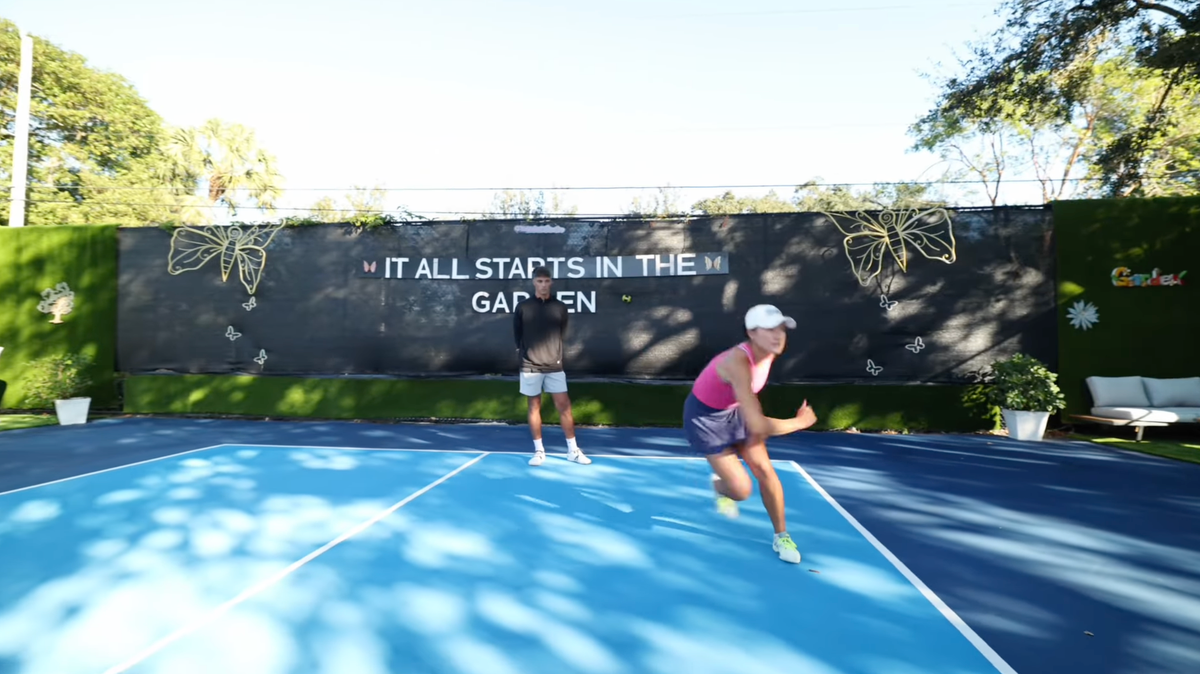
Roll, Lunge, Jump: The Anna Bright Method for Warming Up Right
Take a page out of the pro book. Move your spine, lunge deep, and jump a little. Your knees and your win-loss record will thank you.
Which Strength Exercises Actually Help Your Pickleball Game?
The best strength exercises for senior pickleball players target three areas: legs and hips for court coverage, core for shot stability, and rotator cuff for shoulder longevity.
Legs and hips:
- Goblet squats, Builds quad and glute strength that supports every lateral step and low dink exchange.
- Lateral band walks, Directly trains the hip abductors needed for side-to-side movement.
- Step-ups, Mirrors the movement of reaching for a wide ball and pushing back to center.
Core:
- Dead bugs, Teaches core stability without loading the spine. Critical for seniors who can’t tolerate sit-ups.
- Pall of press with a resistance band, Trains anti-rotation, which is exactly what happens when you reach for an off-center ball and don’t want to get pulled off balance.
Shoulders:
- Band external rotations, The #1 exercise for rotator cuff health. Doesn’t look like much. Absolutely matters.
- Face pulls, Counteracts the forward shoulder posture most people accumulate over decades.
Start with two sets of 10–12 reps, two days per week. Increase gradually. Taking care of your knees off the court directly protects you on it.
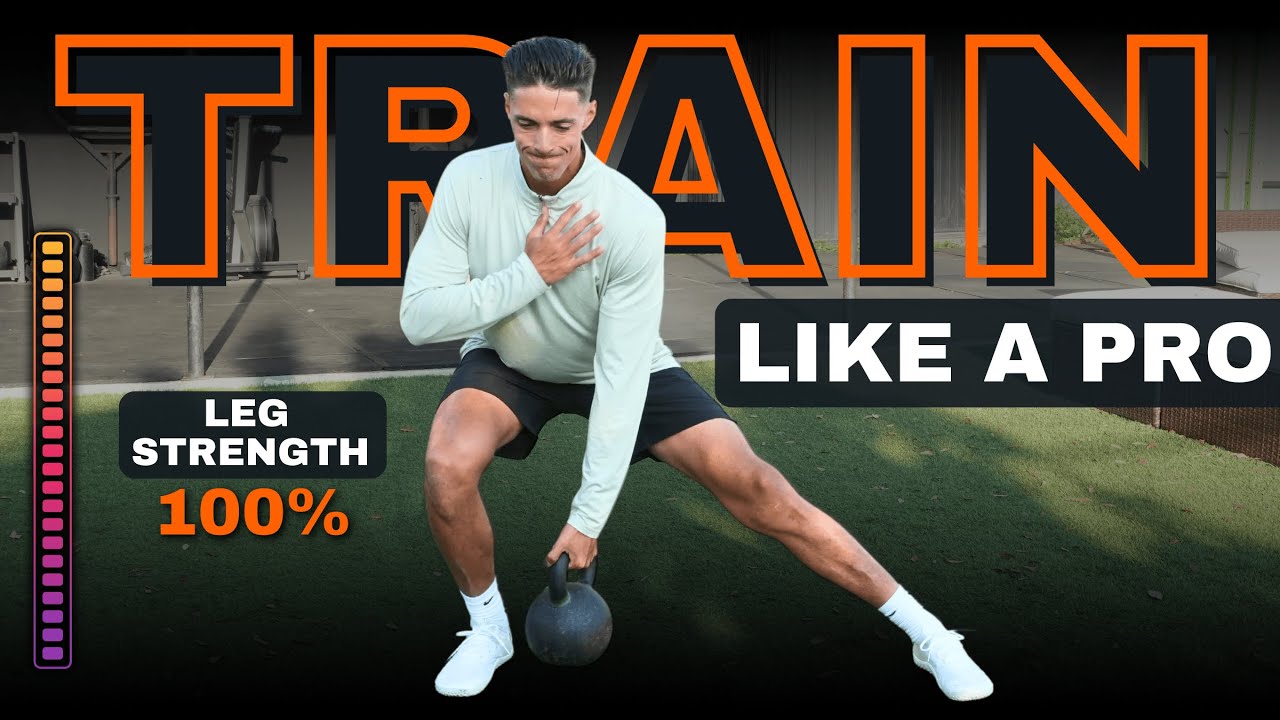
8 Lower Body Exercises for Explosive Pickleball Legs — No Gym Required
Pickleball is a game of quick lateral movements, explosive pushes, and stable positioning – your legs are doing most of the heavy lifting
Is Pickleball Enough Exercise on Its Own?
Pickleball is a genuinely good workout, research increasingly shows it carries real cardiovascular and longevity benefits.
But for senior players, it’s not a complete fitness solution by itself.
The sport provides inconsistent cardio demand (some rallies are explosive, others are slow), almost no strength stimulus, and zero systematic mobility work.
You can play five days a week and still have weak hips, tight ankles, and underdeveloped shoulder stability.
Think of pickleball as the test. Training is the preparation.
The players who show up with a structured routine built around their game move better, recover faster between sessions, and stay healthy far longer than those who only play.
Strong evidence links racket sport participation to longer life expectancy, but the compounding benefit comes when fitness supports your ability to keep playing consistently over years and decades.
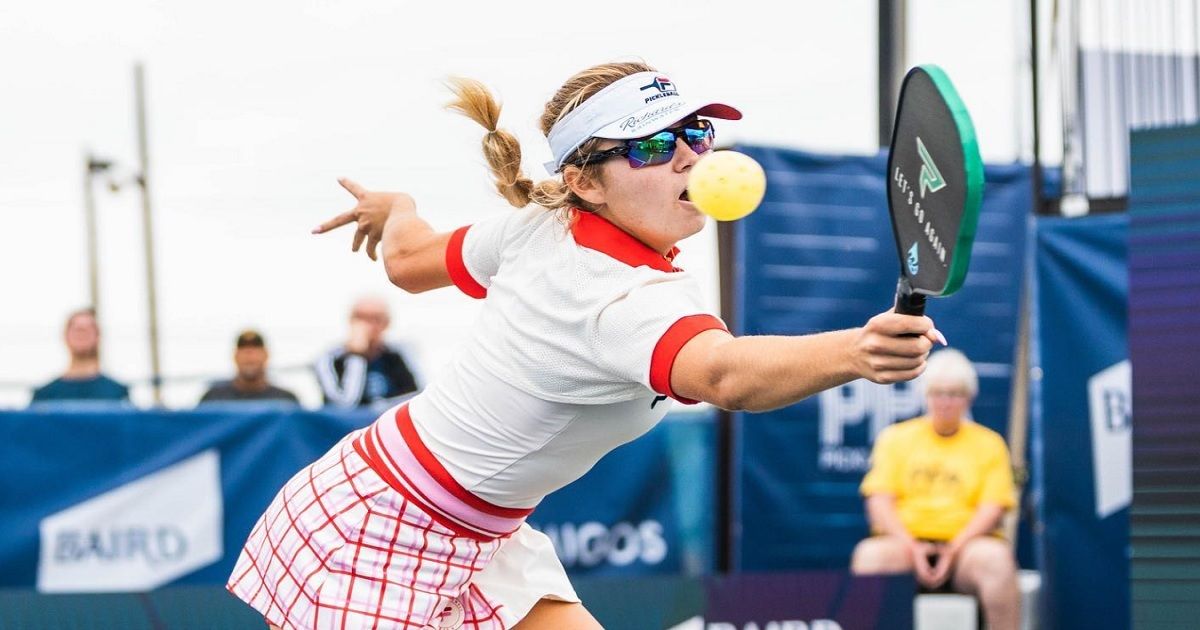
Is Pickleball Good Exercise? WaPo Digs In
Is pickleball good exercise? A recent WaPo article cites research which claims to have the answers.
How Should Seniors Recover After Playing?
Recovery is where senior pickleball fitness separates from younger players.
The training stress isn’t the problem, inadequate recovery is.
- Hydration first. Most older players are mildly dehydrated before they even set foot on the court. Pickleball demands more water consumption than people expect, especially in heat. Drink 16–20 oz in the two hours before play and continue sipping throughout.
- Post-game nutrition window. Muscle protein synthesis is most efficient in the 30–45 minutes after intense exercise. A small high-protein snack, Greek yogurt, cottage cheese, a protein shake, taken right after play accelerates muscle repair and reduces next-day soreness.
- Cool-down stretching. This is where static stretches earn their place. After play, spend 5–8 minutes on hip flexors, calves, and the chest and shoulder muscles used in overhead shots. Tight hip flexors pull the lower back. Tight calves increase Achilles risk. Both are preventable.
- Sleep and active recovery. Cold therapy and contrast bathing can reduce inflammation and speed recovery. But honestly, consistent sleep, seven to eight hours, does more for senior recovery than almost any gadget or supplement. If sore muscles are limiting your play frequency, look at sleep quality first.
Compression gear and targeted muscle care can also meaningfully reduce recovery time between sessions, especially for the lower legs and knees.
How to Prevent Pickleball Elbow
Knowing how to prevent pickleball elbow can keep you on the court longer and out of the physical therapy waiting room. Here’s what the research says about the exercises, technique fixes, and equipment changes that actually work.
Building a Weekly Pickleball Fitness Routine for Seniors
Here’s a realistic weekly structure for a senior player who wants to play 3–4 days and train 2 days:
- Monday: Play (with full warm-up + cool-down stretch)
- Tuesday: Rest or easy 20-minute walk
- Wednesday: Strength training (30–40 min: legs, core, shoulders)
- Thursday: Play (with full warm-up + cool-down stretch)
- Friday: Balance and mobility work (20 min: single-leg stands, hip openers, band exercises)
- Saturday: Play (with full warm-up + cool-down stretch)
- Sunday: Full rest
This isn’t the only way to structure it. But the principle is: never stack back-to-back hard days, and protect at least one full rest day each week.
Solo drilling on off-days is a great way to add court time without the physical toll of full games.
Figure-8 footwork drills specifically target the movement patterns seniors need most.
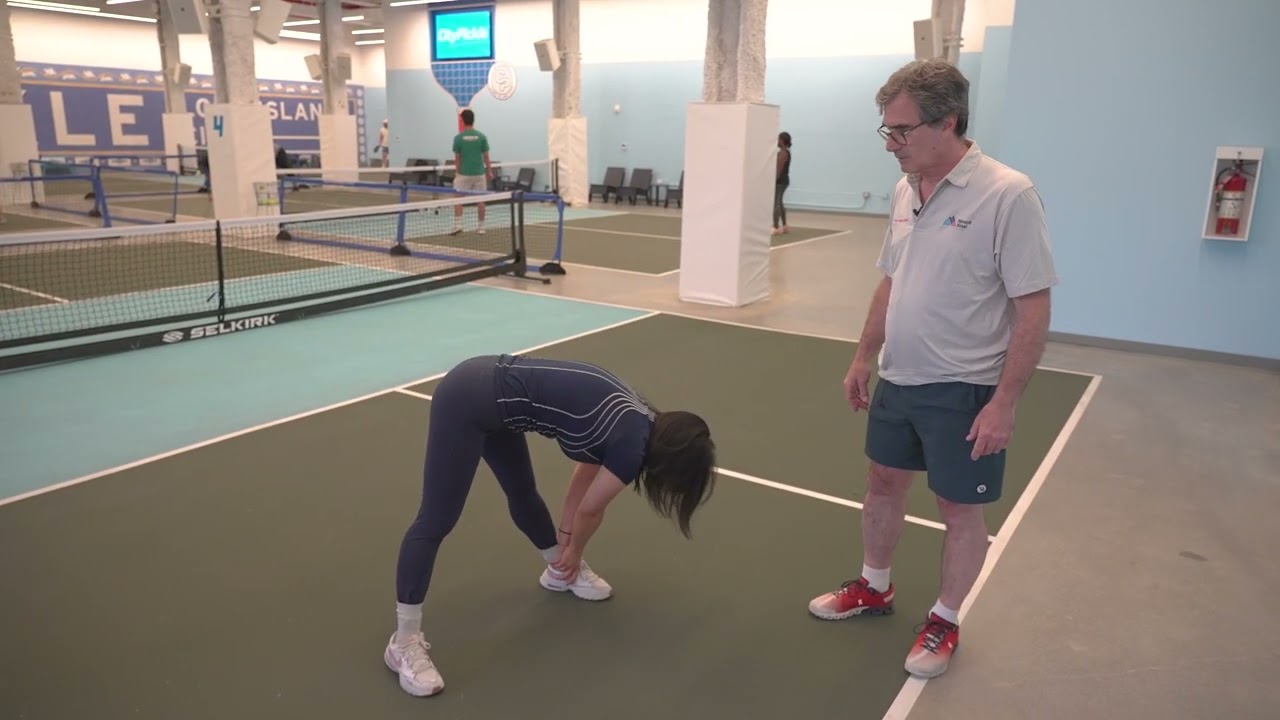
A Quick, Essential Stretching Routine for Pickleball Players
Building a stretching habit into your pickleball routine is one of the smartest things you can do for your long-term health and performance on the court
Key Takeaways
- Pickleball fitness for seniors requires targeted training in mobility, strength, balance, and cardio, not just playing more.
- Muscle mass declines with age; resistance training two to three times per week directly counteracts this and protects joints.
- A proper warm-up (8–10 minutes of dynamic movement) dramatically reduces injury risk for older players.
- Recovery, especially hydration, post-game nutrition, and sleep, matters more as you age.
- Playing pickleball alone is not a complete fitness program; it’s the test that your off-court training prepares you for.
- Consistency over intensity. Sustainable, moderate training produces far better long-term results than sporadic high-effort sessions.
💡
Frequently Asked Questions
Is pickleball good exercise for seniors?
Pickleball is excellent exercise for seniors. It combines cardiovascular demand, lateral movement, and hand-eye coordination in a low-impact format. Research links regular racket sport participation to reduced cardiovascular risk and longer life expectancy. The doubles format makes it accessible for all fitness levels while still delivering real aerobic benefit.
What are the best exercises for pickleball fitness seniors programs?
The most effective exercises for senior pickleball fitness are goblet squats, lateral band walks, single-leg balance holds, dead bugs, and band external rotations. These directly target the leg strength, hip stability, core control, and shoulder health that pickleball demands. Two sessions per week is enough to see meaningful improvement within 4–6 weeks.
How do seniors prevent injury while playing pickleball?
Injury prevention for senior pickleball players starts with a complete dynamic warm-up before every session, regular off-court strength training, and taking recovery seriously. Ankle sprains, knee pain, and shoulder injuries are the most common issues and are largely preventable with consistent mobility work, proper footwear, and avoiding playing on fatigued muscles.
How many times a week should a senior play pickleball?
Three to four days per week is the sweet spot for most senior players who are also doing off-court training. Playing every day without recovery time leads to cumulative stress on joints and tendons that eventually becomes injury. Rest days aren’t lost time, they’re when adaptation actually happens.
Can pickleball help seniors with balance and coordination?
Yes, and the evidence is strong. The sport requires constant footwork adjustments, directional changes, and reaction to unpredictable ball movement. Regular play measurably improves dynamic balance and coordination in older adults. Adding dedicated balance training off the court, single-leg stands, balance board work, amplifies this benefit and reduces fall risk significantly.
Nguồn: thedinkpickleball