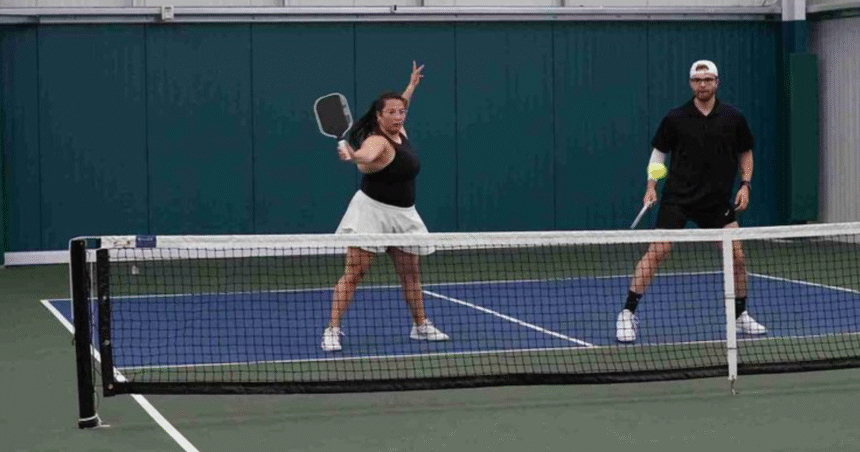
Most 3.5 pickleball players plateau because of a handful of fixable mistakes, not lack of talent. Here are the exact 3.5 pickleball mistakes to fix if you want to break into 4.0 and beyond.
The 3.5 pickleball mistakes to fix are almost always the same ones. You’ve got real skills.
You understand the game. But something keeps going wrong, and you can’t figure out what it is.
Here’s the thing: the gap between 3.5 and 4.0 isn’t about athleticism. It’s not even about shot-making, most of the time.
It’s about decision-making, positioning, and a few deeply ingrained habits that feel right but are quietly costing you points every single game.
Love pickleball? Then you’ll love our free newsletter. We send the latest news, tips, and highlights for free each week.
7 Forehand Speedup Secrets From Pro John Cincola
John Cincola owns one of the most feared forehand speedups in pro pickleball. Here are the seven secrets behind it, from setup checklist to last-second deception.
The 3.5 Pickleball Mistakes to Fix Right Now
Most players at this level have climbed from 3.0 through hard work and reps. The problem is, the habits that got you to 3.5 will not get you to 4.0.
You have to unlearn some things. That stings a little. But it’s the truth.
Let’s walk through the biggest culprits.
Mistake #1: Treating the Third Shot Like an Attack
This is the most common 3.5 pickleball mistake to fix, and it plays out the exact same way on courts everywhere.
You serve. Your opponent returns deep. And then you rip a drive right into the net, or straight at someone who resets it without blinking.
The third shot is not for winning points. It’s for getting to the kitchen line safely. That’s the entire job.
The third shot drop exists to neutralize the serving team’s positional disadvantage, not to put your opponent away.
According to USA Pickleball’s 2025 instructional guidelines, controlled placement and shot selection from the transition zone is one of the clearest markers separating intermediate from advanced players.
Consistent third shot execution is the baseline expectation at 4.0+.
The fix is simple in concept, genuinely hard in practice: commit to the drop. Accept that you might not feel powerful.
The drop isn’t about power. It’s about angle, arc, and getting both you and your partner to the line without handing your opponent an easy put-away.
Check out the breakdown on drive vs. drop decisions when you’re wrestling with which shot to pick.
💡
Mistake #2: Hanging Out in No Man’s Land
Every pickleball player learns what the kitchen line is.
But 3.5 players often still find themselves planted in the middle of the court, somewhere around the service line, wondering why they’re losing every rally.
That zone has a name: no man’s land (sometimes called the transition zone).
It’s the stretch of court roughly between the baseline and the kitchen line, and it’s dangerous territory.
You’re too close to be safe on lobs, too far to be effective at the net, and you’re hitting balls at your feet constantly.
Understanding how to move through the transition zone is critical.
The goal is to get from the baseline to the kitchen line as quickly and intentionally as possible, using your third (and sometimes fifth) shot as the vehicle.
You don’t sprint blind. You move as soon as the ball is in the air and you’ve played a ball that buys you time.
Mid-court positioning tips can help you understand when to advance, when to hold, and how to avoid getting picked apart when you’re stuck in that zone.
The short answer: don’t camp there. It’s a hallway, not a room.
Master the Pickleball Transition Zone: Attack or Reset
The best players in the world aren’t just comfortable in the transition zone – they actively use it to their advantage
Mistake #3: Dinking Without a Purpose
Here’s a 3.5 pickleball mistake to fix that feels counterintuitive: players at this level dink too much and not enough.
They’ll dink six or seven times in a row with no intention behind any of them, just keeping the ball in play, and then panic-speed-up at exactly the wrong moment.
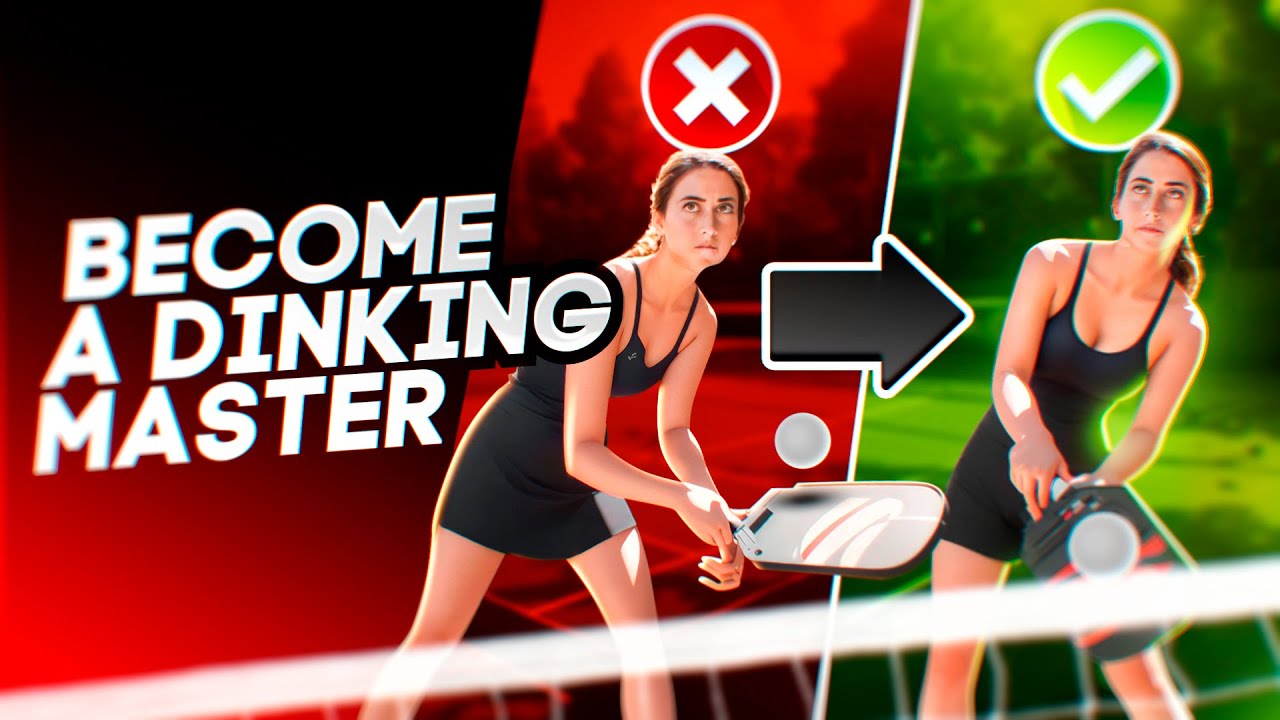
Dinking isn’t just rallying. Great dinking is proactive. You’re looking for a ball that sits up slightly. You’re angling toward their backhand.
You’re testing their feet. You’re maneuvering them into a position where your speed-up or drop is more likely to work.
A 2025 analysis from the Journal of Sports Sciences on net-zone rally patterns in racket sports confirms what good coaches have always said: purposeful short-game play, not aggression volume, correlates most strongly with point-ending advantage at the intermediate level.
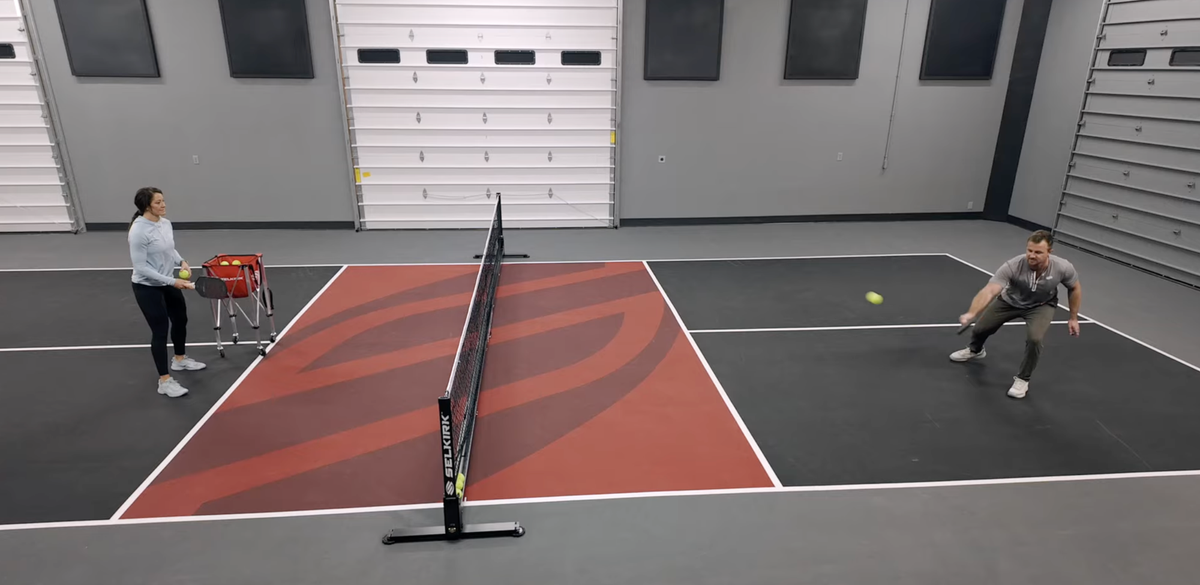
Try this dinking drill to build intentionality into your kitchen game. The goal isn’t just consistency. It’s control with a plan.
Pickleball Dinking Technique: The Complete Beginner’s Guide
This guide breaks down everything you need to know about proper dinking form, grip, stance, and drills to dominate at the kitchen line.
Are You Speeding Up at the Wrong Time?
Unforced errors from speed-ups are one of the defining characteristics of 3.5 play.
You see a ball that’s shoulder height, you go for it, and it either ends up in the net or sails wide.
Honestly, this one’s about pattern recognition more than anything else.
The speed-up wins when your opponent is out of position, off-balance, or leaning the wrong way. It doesn’t win just because the ball is attackable.
A ball you can attack and a ball you should attack are two different things.
At 4.0 and above, players are picking their spots deliberately. They’re using dink sequences to manufacture the right opportunity, then going.
At 3.5, players often react to ball height without reading the opponent’s position first. That’s a correctable mistake once you know what to look for.
The rule of thumb: if your opponent is balanced and in position, reset it instead. Live to dink another day.
Pro Speed-Up Strategy: Master the Kitchen Line Attack Like a 5.0+ Player
Connor Garnett shows that winning kitchen battles isn’t about raw power, but about positioning, psychology, and reading opponents in real time
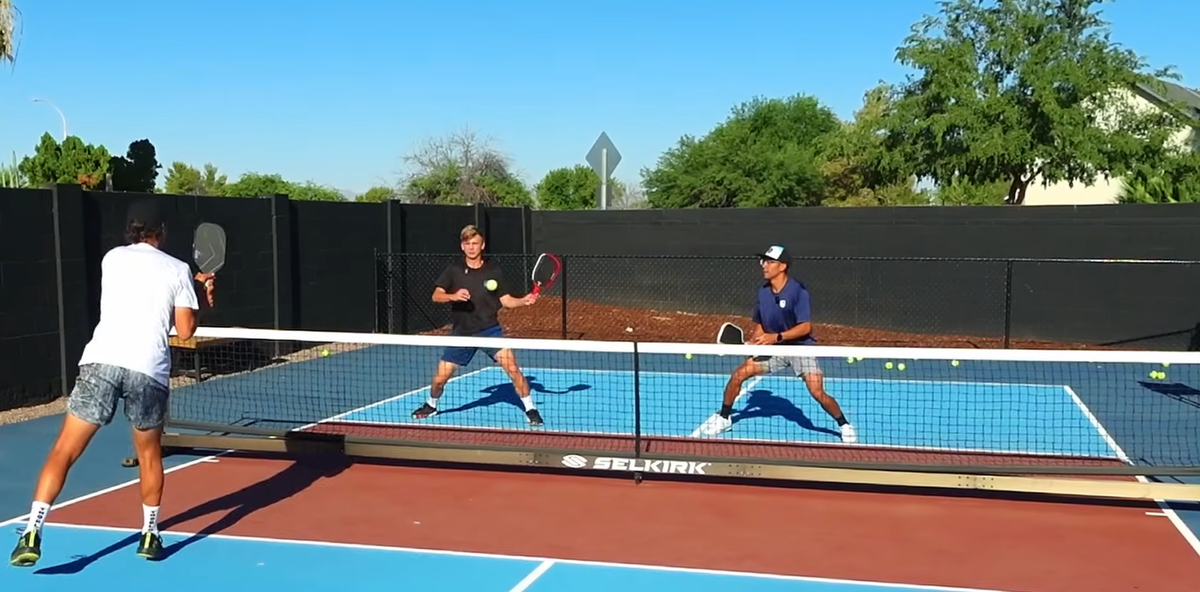
3.5 Pickleball Mistakes to Fix in the Return Game
The return of serve is one of the most undervalued shots in recreational pickleball.
At the 3.5 level, players either return too short, hand the serving team an easy third shot, or go for a winner on the return itself and give the point away clean.
The goal of the return is depth.
Deep returns push the serving team back, make the third shot harder, and buy time for the returning team to get to the kitchen. That’s it. That’s the job.
According to USA Pickleball’s 2025 Player Rating Handbook, one of the key differences between 3.5 and 4.0 players is consistent return placement, specifically depth management and directional control under pressure.
Players who know where to return serve strategically have a measurable advantage in rally survival.
Short returns are gifts. Long returns are strategies.
5 Pickleball Mistakes Trapping You at 3.0-4.0
Most pickleball players plateau at the 3.0-4.0 level because they’re making the same five critical pickleball mistakes over and over. Enhance Pickleball breaks down exactly what those mistakes are and how to fix them.
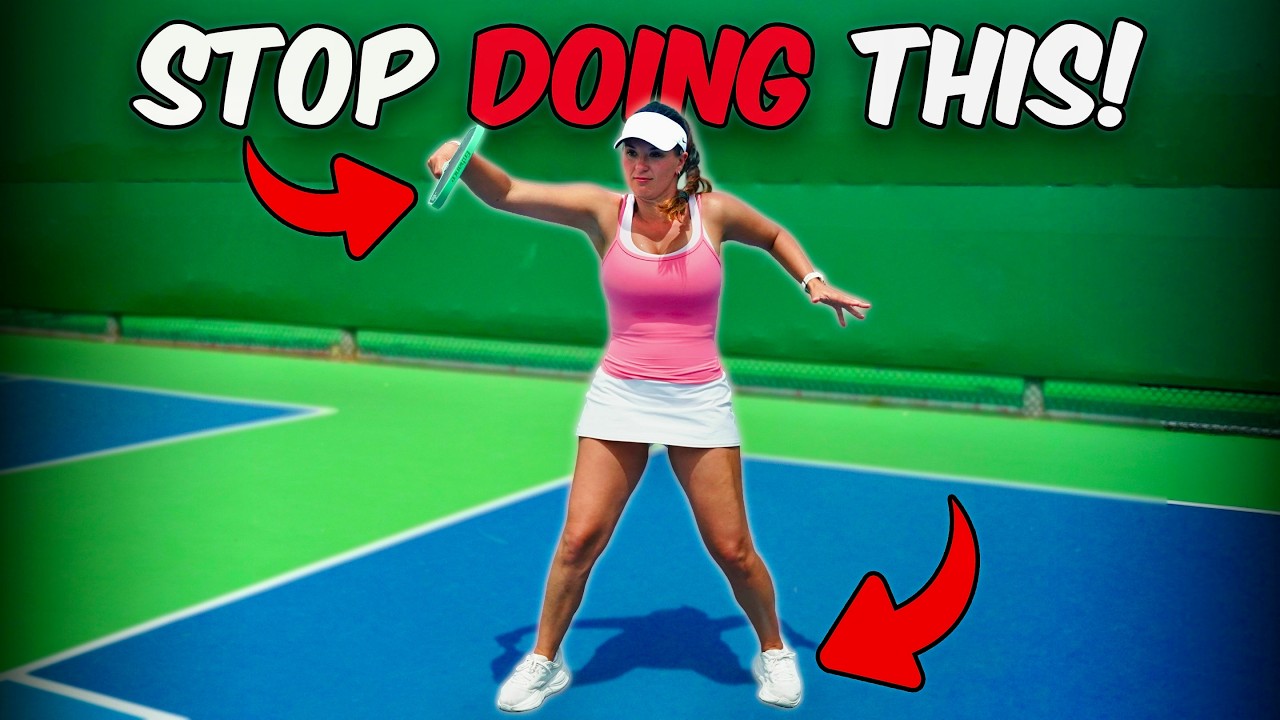
Mistake #4: Ignoring Kitchen Line Positioning
You can’t hold the kitchen line if you don’t know how to set up on it properly.
A lot of 3.5 players crowd the line too aggressively, which sounds like a compliment but actually puts them at a disadvantage.
You need a couple of inches of buffer to handle low balls without jamming your paddle.
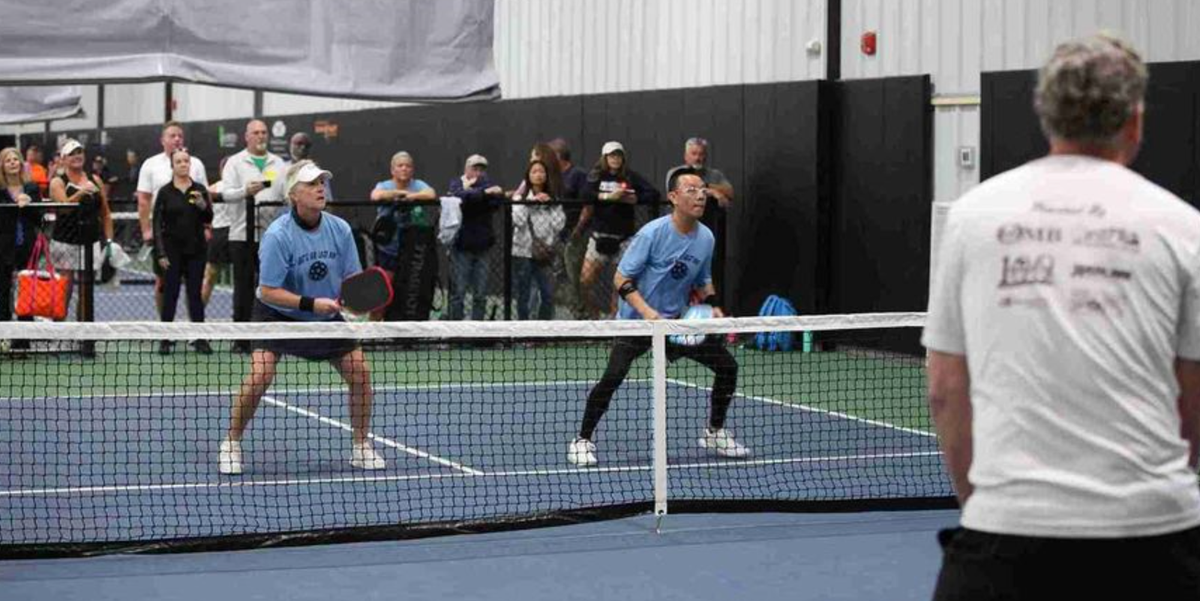
Kitchen positioning is about staggering correctly with your partner, maintaining active feet, and not letting your weight drift backward while you’re waiting.
Passive kitchen presence is almost as bad as not being there at all.
Understanding stagger and court positioning in doubles is one of those small adjustments that makes an immediate, visible difference in your defense and your attack opportunities.
How to Approach the Kitchen Line Safely in Pickleball
Knowing how to approach the kitchen line safely in pickleball is the difference between controlling a rally and getting picked apart in transition. This guide breaks down the footwork, shot selection, and timing you need to move forward without getting punished.
Mistake #5: Playing Too Many Shots Instead of the Right One
More shots is not better pickleball. This is one of the most overlooked 3.5 pickleball mistakes to fix.
Players add new shots, work on their Erne, experiment with the ATP, and neglect the fundamentals.
Meanwhile, their reset, their backhand volley, and their third shot are still shaky.
Skill investments that actually move the needle at the intermediate level are almost always the unsexy ones.
A reliable backhand volley wins you more points than a flashy Erne you pull off twice a season. Work the backhand volley until it’s automatic.
Get your reset clean enough that you stop fearing speed-ups. That’s what 4.0 players actually have over 3.5 players.
Also: stop trying to win points from the baseline. Drive when it makes sense. Otherwise, simplify your game and trust the process of getting to the net.
The 5 Mistakes 4.0 Pickleball Players Make Over and Over
Most 4.0 pickleball players already have the shots. The real problem is pickleball decision making, pressure management, and knowing when to use the right tool.
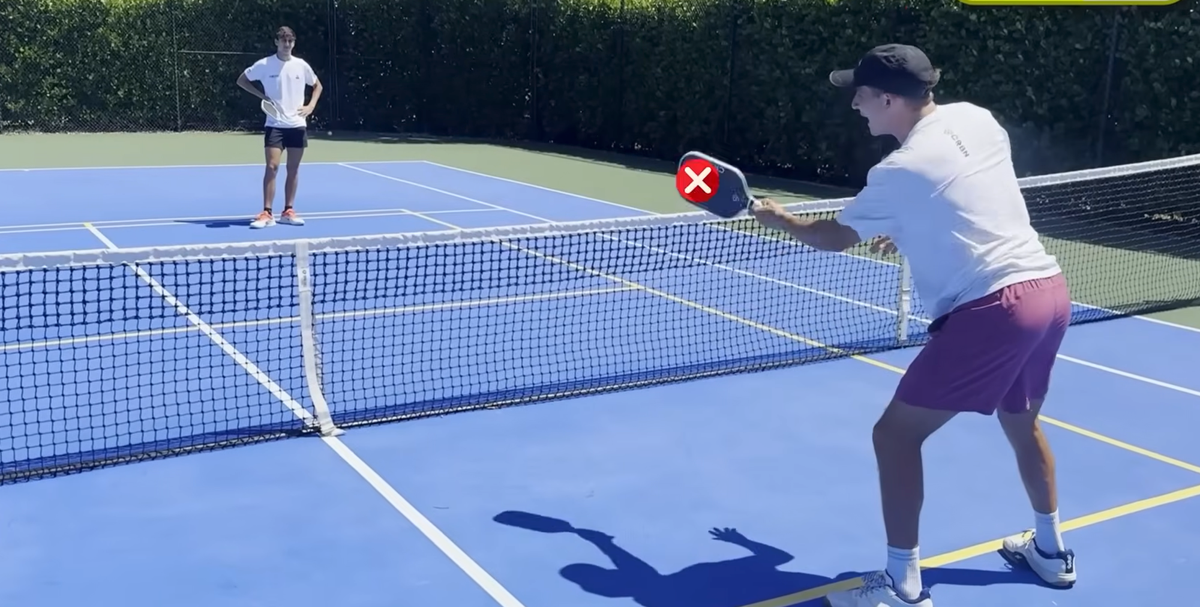
What Does It Actually Take to Move from 3.5 to 4.0?
Moving up in pickleball rating isn’t about adding more weapons. It’s about eliminating the consistent leaks in your game.
A DUPR rating analysis from 2025 makes this clear: players who climb from 3.5 to 4.0 most reliably are the ones who reduce unforced errors and improve rally sustainability, not the ones who hit harder.
The honest breakdown:
- Fix your third shot so you’re actually getting to the kitchen.
- Stop camping in transition and move through it with purpose.
- Dink with intention, not just to keep the ball alive.
- Pick your speed-ups deliberately instead of reacting to ball height.
- Return deep, every time, and stop giving away free third shot opportunities.
Solo drills build the muscle memory for all of this faster than open play. And the doubles strategy work helps it translate into real game situations.
The 3.5 ceiling is real. But it’s a ceiling you put up yourself. Knock it down.
3.5 to 4.0 Pickleball Plan: A 3-Month Roadmap
The 3.5 to 4.0 pickleball plan is a structured, 3-month roadmap targeting the exact skills that separate recreational players from competitive ones. Follow this plan and you won’t just play better, you’ll play smarter.
Key Takeaways
- 3.5 pickleball mistakes to fix almost always fall into five categories: third shot, positioning, dinking intent, speed-up selection, and return depth.
- The third shot drop is about neutralization, not attack. Commit to it.
- No man’s land is a transit zone. Move through it, don’t live in it.
- Dink with a plan. Every dink should be moving you toward a better attacking or resetting opportunity.
- Speed up selectively. Opponent position matters more than ball height.
- Deep returns are the most underrated weapon in a 3.5 player’s toolkit.
- Moving to 4.0 is about reducing errors, not adding shots.
💡
Frequently Asked Questions
What are the most common 3.5 pickleball mistakes to fix?
The most common 3.5 pickleball mistakes to fix are attacking the third shot instead of dropping it, camping in no man’s land, dinking without purpose, speeding up at the wrong time, and returning too short. Each of these shows up in nearly every recreational game at this level and all of them are correctable with focused practice.
How do I know if I’m ready to move from 3.5 to 4.0 in pickleball?
You’re ready to make the jump when your unforced errors drop noticeably, you’re reaching the kitchen line consistently after your third shot, and your dink exchanges have clear intention behind them. USA Pickleball’s 2025 rating standards describe 4.0 players as having reliable shot selection and consistent execution under pressure, not necessarily more power or trick shots.
Why do 3.5 pickleball players keep ending up in the transition zone?
Most 3.5 players end up stuck in transition because their third shot doesn’t buy them enough time to advance, or because they’re not moving as soon as the ball leaves their paddle. The fix is a more consistent third shot drop combined with intentional footwork. You should be moving toward the kitchen the moment your ball is in the air, not waiting to see where it lands.
How important is the return of serve at the 3.5 pickleball level?
Extremely important, and most players underestimate it. A deep return forces the serving team back, neutralizes their third shot options, and gives your team time to get to the kitchen line. Short returns are essentially gifts that hand your opponent an easy third shot from a comfortable position. Return depth is one of the fastest free improvements a 3.5 player can make.
Should 3.5 pickleball players focus on adding new shots or fixing fundamentals?
Fix the fundamentals first. Every time. A clean, reliable reset, a consistent third shot drop, and a sharp backhand volley will win you far more points than any advanced shot you’re not ready to execute under pressure. Add new shots once your baseline game is air-tight and your error rate is under control.
Nguồn: thedinkpickleball