Learning how to practice pickleball alone is one of the fastest ways to close the gap between where your game is and where you want it to be. These 7 solo drills target the shots and movement patterns that actually matter during live play.
Knowing how to practice pickleball alone is the single biggest separator between players who plateau and players who keep climbing.
Open play is great for reps and competition, but it’s not training.
You don’t control what shots you practice, you never isolate your weaknesses, and the mistakes that cost you games get quietly buried in the chaos.
Solo practice changes that. A wall, a ball, and 30 focused minutes can do more for your game than two hours of casual rec play.
Key Takeaways
- Solo drills are the most efficient way to build repeatable mechanics without relying on a partner’s schedule.
- The wall is your best training partner. It never misses, never gets tired, and always hits back.
- Serve consistency, drop shot trajectory, and dink mechanics can all be trained alone with the right structure.
- Footwork and movement drills done off-court produce direct returns on court performance.
- Fifteen to thirty minutes of focused solo work beats an hour of unfocused rallying every time.
Love pickleball? Then you’ll love our free newsletter. We send the latest news, tips, and highlights for free each week.
Why Solo Practice Actually Works
Most players wait for a partner, a drill session, or open play to get better. That’s the bottleneck.
The best players practice alone. Tennis players do it. Golfers do it. Squash players literally built an entire training culture around solo wall work.
Pickleball is catching up. Pro-level training routines now lean heavily on solo repetition to build muscle memory before adding the complexity of live play.
💡
Here’s the thing about deliberate practice: according to research published by Florida State University psychologist K. Anders Ericsson, skill acquisition happens fastest when practice is structured, focused on weaknesses, and includes immediate feedback.
Playing casual games gives you almost none of that. Solo drills give you all of it.
The goal isn’t to replace open play. It’s to show up to open play with sharper mechanics, better muscle memory, and a cleaner mental picture of your shots.
New to Pickleball Drilling? Try This Simple 45-Minute Practice Plan
Before you start drilling, decide which skills matter most to you right now. Intentionality is what separates productive practice from just hitting balls around.
What Do You Actually Need to Practice Pickleball Alone?
Not much. That’s the point.
A backboard or solid wall handles about 80% of what you need. Most parks with tennis or pickleball courts have a practice wall nearby.
Some indoor facilities have dedicated rebound walls. If you’re creative, a concrete garage wall or a smooth fence panel works in a pinch.
Beyond that: your paddle, a few balls, and a rough target line drawn with tape or chalk at net height (34 inches at center, 36 at the posts, per USA Pickleball’s official court specifications).
That’s your entire setup.
Getting the most out of your court time starts before you ever hit a ball. Show up with a plan for what you’re training, how many reps, and what “good” looks like on each shot.
Make Practice Skills Stick: The 70% Rule for Match-Proof Pickleball
Smooth, repeatable drills can make you look great in the moment, but they often create fragile skills that do not hold up when the ball, timing, opponent, and stakes change
How to Practice Pickleball Alone: 7 Drills That Actually Move the Needle
Drill 1: Wall Dinking for Touch and Consistency
This is the foundation of how to practice pickleball alone.
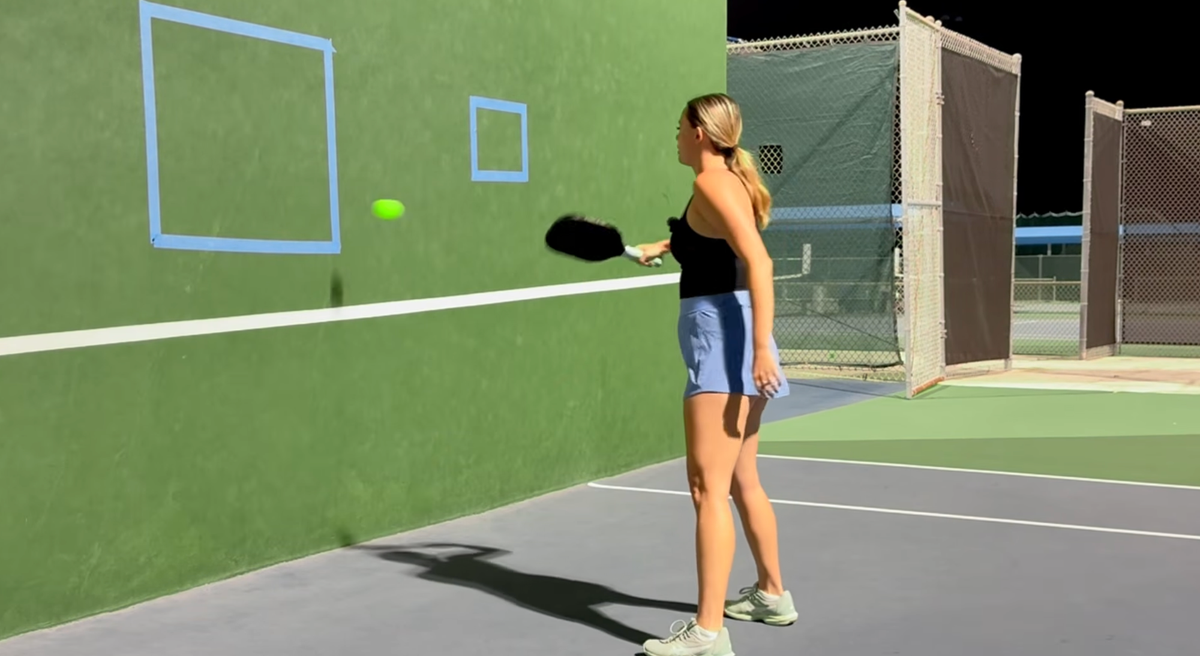
Stand 7 feet from the wall (roughly kitchen-line distance) and dink the ball against your target line continuously, alternating forehand and backhand.
Your goal: keep the ball below net height on every return, simulating a real dink exchange.
Why it works: Dinking is won on consistency, not power.
The wall returns the ball at a pace close to what you’ll face in a real dinking rally, forcing you to reset your paddle position between each shot.
Aim for sets of 25 consecutive dinks before you let yourself stop.
Pro adjustment: Move back to 10 feet and work on your roll dink vs. your slice dink in the same set. Track which one breaks down first. That’s your priority.
Simple Pickleball Wall Drills to Reach 5.0
It’s just you, your paddle, and the opportunity to repeat the same movement hundreds of times until it becomes muscle memory.
Drill 2: Serve Repetition for Placement and Spin
Serving is the only shot in pickleball where you control everything.
The speed, the spin, the placement. And most recreational players still miss it or serve short more than they realize.
Solo serve practice is straightforward: set up a target (a cone, a ball can, or a strip of tape) in the back third of the service box on each side.
Hit 20 serves to your weaker target zone. Then 20 to your stronger one. Then 20 alternating. Count your percentage.
Weaponizing your serve doesn’t mean hitting harder. It means developing a consistent motion and reliable placement so opponents can’t camp on their return.
Research from sport science consistently shows that serving accuracy improves significantly with blocked repetition practice, where you repeat the same shot type in volume before switching, rather than random variation.
A 2020 study in the Journal of Sport and Exercise Psychology confirmed this pattern applies broadly across racquet sports.
The Pickleball Serve Basics: Rules, Technique & Pro Tips from Michael Loyd
Fix your serve, and your entire game gets easier. You start points on offense instead of defense. Your opponent’s return is weaker. Your third shot is simpler. It all flows from that one shot you control completely.
Drill 3: Third Shot Drop Against the Wall
This is the shot that separates 3.5 players from 4.0+ players.
The third shot drop, executed well, neutralizes the serving team’s disadvantage and lets you get to the kitchen. Done poorly, it floats up and gets put away.
For solo training: stand at the baseline and drop-feed a ball, letting it bounce to knee height.
Hit your third shot drop toward the wall aiming at your net-height target line. Watch the arc.
The ball should peak before the net and drop into a downward trajectory as it crosses.
If it’s hitting the wall above your target line, the shot is too high. If it’s hitting below, you’re catching it too early.
The drop shot is one of those shots where you can’t think your way to consistency. You need reps. 50 a session is a reasonable floor.
Simplifying the Third Shot Drop: Fix These 5 Common Mistakes
The third shot drop becomes consistent when players stop overthinking mechanics and focus on smart positioning and progression
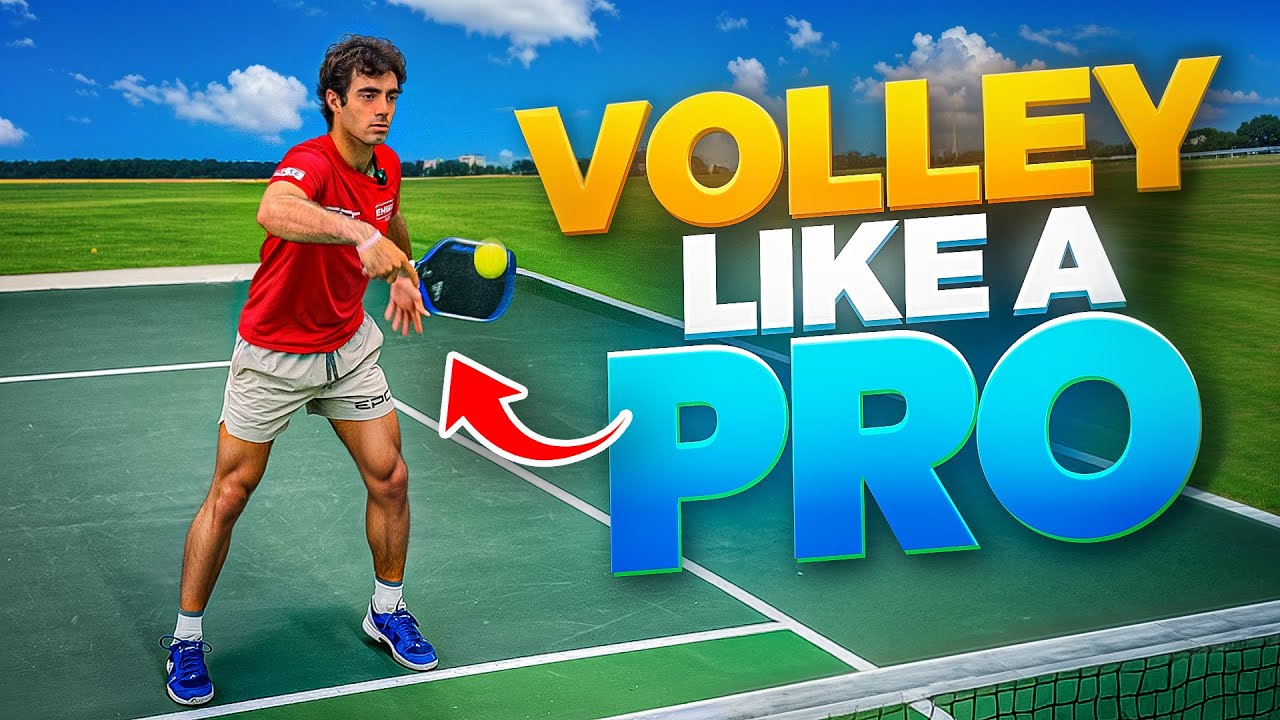
Drill 4: Volley Wall Work for Hand Speed and Reflexes
Stand 6-8 feet from the wall and volley continuously, staying compact and punching through the ball rather than swinging.
This is a hand-speed and reaction drill, not a power drill. Keep your paddle in front of your body. Aim for the same spot on the wall each time.
As you get comfortable, move 1-2 feet closer. The faster return time simulates the kitchen exchange fire you’ll face when someone speeds the ball up.
Your hands have to be ahead of the situation, not reacting to it. This drill builds exactly that.
Work forehand volleys for 60 seconds, backhand volleys for 60 seconds, then alternate with every ball. Time it instead of counting reps. You’ll push harder.
The Elite Volleying Technique That Beats Muscle in Pickleball
Stop trying to muscle your volleys. Start focusing on the mechanics that actually work.
Good footwork is the skill nobody works on and everybody needs.
Most unforced errors in recreational pickleball aren’t shot errors. They’re positioning errors. The shot breaks down because the feet weren’t there first.
The figure-8 drill is the best solo footwork exercise in pickleball. Set up two cones or targets about 8 feet apart near the kitchen line.
Move around them in a figure-8 pattern, shuffling laterally and always facing the “net.”
Every time you pass through the center, shadow-swing a dink or volley.
Focus on staying low, weight on the balls of your feet, and recovering to a neutral position between each movement.
Do this for 2 minutes straight. Rest 60 seconds. Repeat 3 times. Your court movement will noticeably improve within a few sessions.
The Simple Drill to get Lightning-Fast Hands in Pickleball
You’re not just getting quicker hands. You’re getting smarter hands. And in pickleball, that’s the real difference.
How to Practice Pickleball Alone Without a Wall
No wall available? You still have options. A ball machine eliminates the partner constraint entirely and lets you set specific shot types, speeds, and angles.
They’re expensive to own but many clubs rent court time that includes a machine.
No machine either? Shadow drilling (moving through shot sequences without a ball) is underrated.
Walk through your serve motion, your transition footwork, and your reset mechanics in slow motion, focusing purely on technique.
This is how pro athletes build motor patterns during recovery days. It’s not glamorous but it works.
You can also train your non-dominant hand solo, which has real payoff for balance, body control, and court awareness.
3 Pickleball Drill Alternatives to Level Up Your Game
Hate drilling? A top pickleball coach just revealed 3 pickleball drill alternatives that work better than traditional practice. These methods focus on intent, extended warm-ups, and court positioning to accelerate your improvement.
Drill 6: Return of Serve Positioning and Movement
Most players treat the return of serve as automatic. It isn’t. A poor return sets up the entire rest of the rally against you.
For solo return practice without a ball machine, simulate the movement pattern.
Start from your return position (roughly 2-3 feet behind the baseline), shadow the split step as the “serve” arrives, then move into your return stance and through your swing path.
Practice the explosive first step toward the ball on your backhand side. Practice the hip rotation on your forehand.
Then, with a ball, toss-feed from your own hand and practice hitting controlled, deep returns from various positions in the service box.
Making the most of your return is about footwork and positioning first, and shot mechanics second.
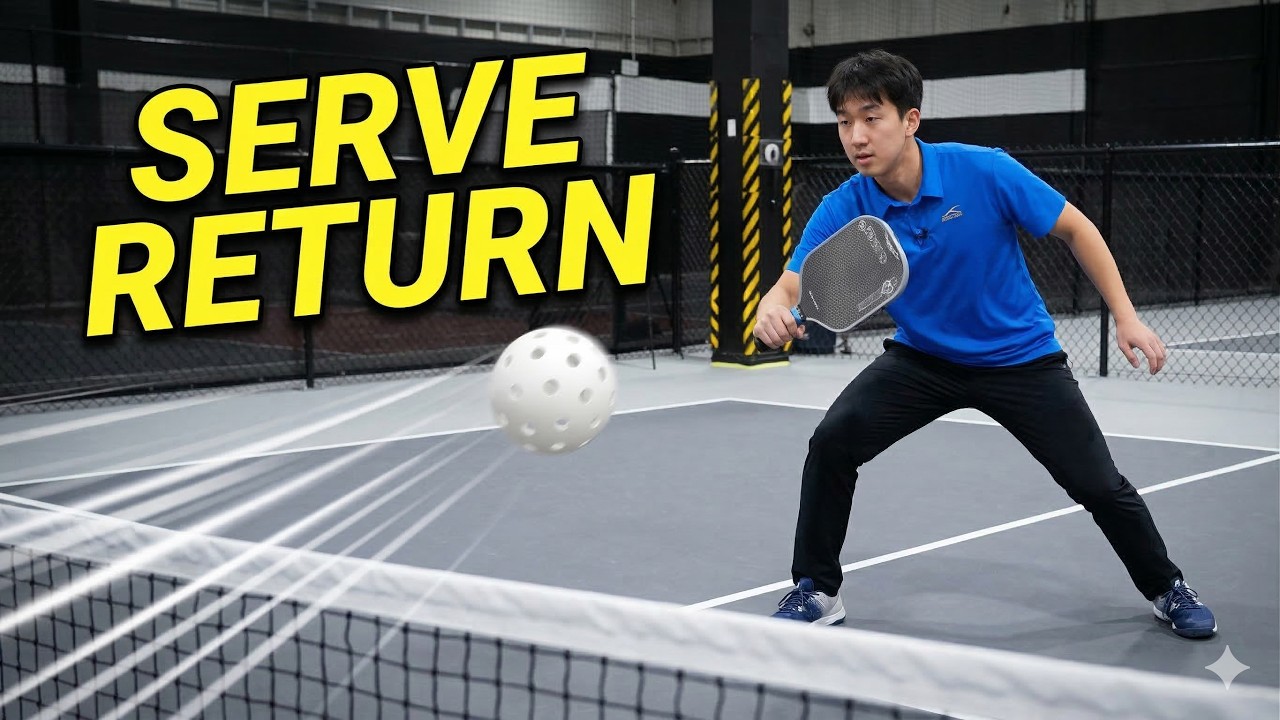
Pickleball Serve Return: 5 Steps to Master It
These five steps build on each other. Start with positioning and depth, add movement and timing, then mix in variety, and your return game will quickly become a weapon.
Drill 7: Target Practice for Shot Placement
This is the one solo drill that most directly translates to winning more points.
Place two targets in the kitchen: one near the left sideline, one near the right.
From the kitchen line, practice hitting dinks to each target with deliberate placement. From the baseline, practice hitting drops to the same targets.
Then add difficulty. Set a target at the opponent’s feet in the transition zone (7-10 feet from the net on your side of the court).
That’s the most difficult placement in pickleball to defend. Advanced shot selection is built entirely on this kind of placement awareness.
Track your accuracy. Fifty balls, how many land within 12 inches of your target? Write it down. Progress requires measurement.
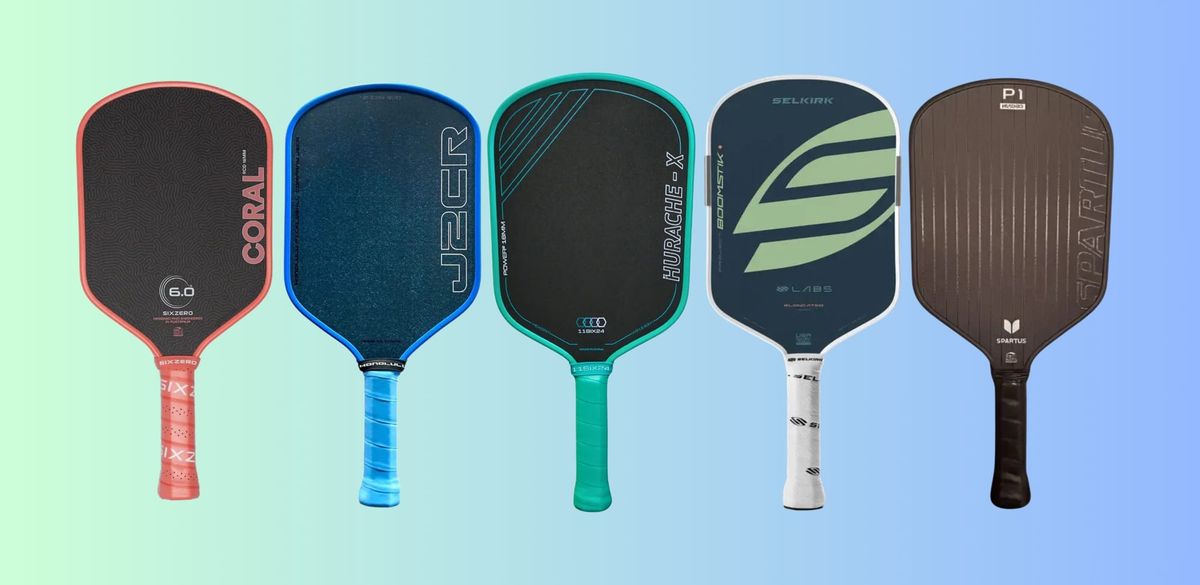
Pickleball Paddle Grit: 5 Durable Paddle Picks
Traditionally, a paddle’s surface grit is the first thing to wear out. Until now. A slew of top brands have entered the market with longer-lasting grit technology. Here are 5 of the best.
Building a Solo Practice Routine That Sticks
Here’s the truth: the best solo pickleball practice session is one you’ll actually do consistently, not the perfect one on paper.
A simple 30-minute structure:
- Warm-up (5 min): Figure-8 footwork drill, light wall volleying.
- Skill block 1 (10 min): Wall dinking, focusing on one specific adjustment per session.
- Skill block 2 (10 min): Serve practice or third shot drop reps.
- Closing block (5 min): Target practice. Finish on a success, not on a miss.
Rotate which shots you prioritize each session. Keep a simple training log (phone notes work fine) so you can see what you’ve been avoiding.
That’s usually the answer to why you aren’t improving.
You don’t need more open play. You need more of this kind of deliberate skill investment.
💡
Frequently Asked Questions
Can you really improve at pickleball by practicing alone?
Yes, and in some ways solo practice is more effective than partner drilling for building mechanical consistency. When you practice alone, every repetition is controlled. You choose the shot, the pace, and the target. According to sport science research on motor learning, this kind of blocked repetition is the fastest way to build new movement patterns. The caveat: solo practice builds the foundation. You still need live play to sharpen decision-making and adaptability.
How to practice pickleball alone without a wall?
You have three solid options without a wall. First, use a ball machine if your club has one. Second, do shadow drilling, moving through your serve, footwork, and swing mechanics in slow motion without a ball. Third, use self-toss feeding: drop the ball from waist height, let it bounce once, and practice specific shots like your third shot drop or groundstroke. Keeping your equipment organized and ready makes it easier to get these sessions in quickly.
How long should a solo pickleball practice session be?
Fifteen to thirty minutes of focused solo work is more valuable than an hour of unfocused repetition. The key word is focused. Each session should have a specific shot or skill as its target. Three drills, high reps each, and a clear measurement of progress. Quality beats duration every time.
What’s the most important shot to practice alone?
The third shot drop, without question. It’s the shot that most consistently determines whether recreational players stay stuck at 3.5 or break through to 4.0+. It can be drilled solo with a drop feed and a wall target, requires no partner, and pays off in almost every rally. After that, serve consistency. Then kitchen dinking mechanics.
How often should you do solo pickleball practice?
Two to three solo sessions per week, even if they’re short, will produce noticeable improvement within four to six weeks. The compounding effect of consistent repetition is significant. Elite coaches in racquet sports universally recommend that players spend at least as much time in deliberate solo practice as they do in match or game play, especially at the developmental stage. If you’re playing three days of open play, aim for two short solo sessions as a floor.
Nguồn: thedinkpickleball