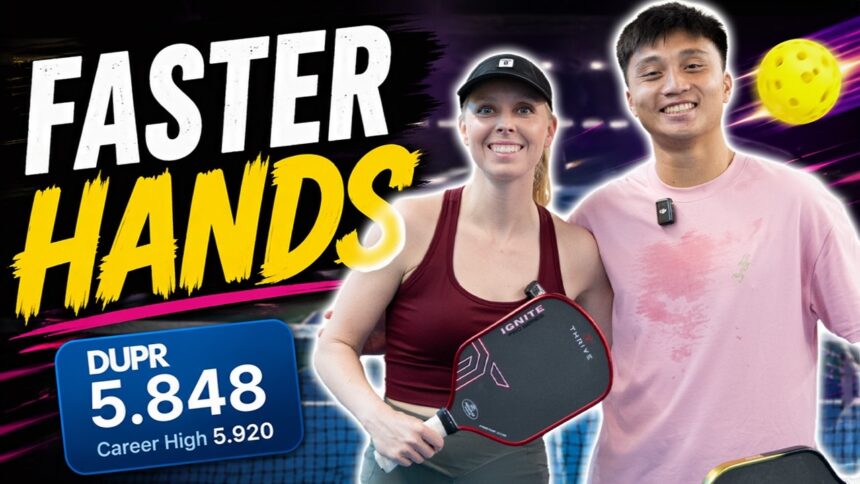
The pickleball pattern drill is one of the most effective ways to sharpen your counters and anticipation. Cori Elliott breaks down exactly how to run this drill and why it matters for competitive play.
A pickleball pattern drill is a structured exercise where one player initiates an attack to a specific location, the opponent counters, and the point plays out.
It’s not random. It’s not free-for-all. It’s controlled chaos designed to build muscle memory and decision-making skills simultaneously.
Here’s the key difference between a pickleball pattern drill and regular practice: in regular play, you don’t know where the ball is coming.
In a pattern drill, you do. This removes one variable and lets you focus on the others.
You can concentrate on reading your opponent’s body language, understanding how different speeds and heights affect their response, and developing counters to their counters.
That single shift in focus is what makes structured drilling so much more effective than just playing points.
Elliott explained it this way during the session: “A lot of the time people speed up or counter once and don’t expect the ball to come back. So this is good. We can try that out.”
That’s the whole philosophy in one sentence. Most players think one move ahead. The pattern drill teaches you to think two or three moves ahead.
Why Speed-Up Patterns Matter More Than You Think
The speed-up is one of the most important shots in modern pickleball. It’s the moment you take control of the point.
But here’s what separates good players from great ones: they don’t just speed up. They speed up with intention, and they’re prepared for what comes back.
In the training session, Luc Pham worked specifically on “backhand flick off forehand, off the bounce, speed up, reading counters, uh off the backhand side.”
This is advanced stuff. He’s not just hitting a speed-up. He’s hitting a speed-up from a specific position, off a specific shot, and preparing for a specific counter.
Elliott had Pham spend three minutes speeding up to only one location: Cori’s backhand.
This forced Pham to understand a critical concept: if you speed up to the same spot every time, your opponent knows where it’s coming.
But if you vary the height and speed of your speed-ups, you create uncertainty.
“You can also vary up the different speeds and heights so that you can understand, okay, so if I speed up high to her shoulder, is she going to put it more down? And if I speed it low, is it going to pop up more?” Elliott said.
This is the kind of thinking that separates 4.5 DUPR players from 5.5+ players. It’s not about hitting harder. It’s about hitting smarter.
If your speed-ups are getting attacked back, here’s exactly why they’re failing and how to fix them.
💡
The Anatomy of a Proper Pickleball Pattern Drill Session
So how do you actually run a pickleball pattern drill in your own training? Elliott and Pham’s session gives us a clear roadmap.
- Start with the fundamentals. Before you can run patterns, you need solid dinking. Elliott and Pham spent time on cross-court dinking, straight-on dinking, and cooperative volleys. This isn’t glamorous, but it’s essential. You can’t execute advanced patterns if your basic strokes are shaky.
- Then introduce the pattern. One player attacks to a specific location. The other player counters. The point plays out. Elliott explained: “One player attacks to a specific location, the opponent counters, and the point is played out. It’s a great way to develop better attacks, counters, blocks, and decision-making under pressure.”
- Vary the variables. Don’t just speed up to the same spot with the same speed. Change the height. Change the pace. Change the location. This forces your opponent to adapt and forces you to read their adjustments.
- Time it. Elliott and Pham did three-minute blocks of speed-ups, then five-minute blocks. This creates intensity and forces you to maintain focus and execution under fatigue. Wondering how much you should drill vs. play? A top pro actually did the math on that.
This structure applies the same logic as the 12 drills you need to play your best pickleball in 2026: build fundamentals first, then layer complexity on top.
How to Read Counters During Pattern Drilling
Reading counters is the hidden skill inside every pickleball pattern drill.
When you know what’s coming, you can study how it comes back. Notice the angle of your opponent’s paddle face before contact. Watch their weight shift.
Pro Michael Loyd’s two-thing rule for hitting consistent counters breaks this down better than almost anyone.
The pattern drill is the perfect environment to put that framework into live reps. Two things. Every time. Build the habit.
7 Pickleball Drills That Work for Every Level
Pro player Michael Loyd shares 7 pickleball drills designed to build real consistency and fix the weaknesses keeping you stuck.
Free-for-All Hand Battles: When Patterns Meet Reality
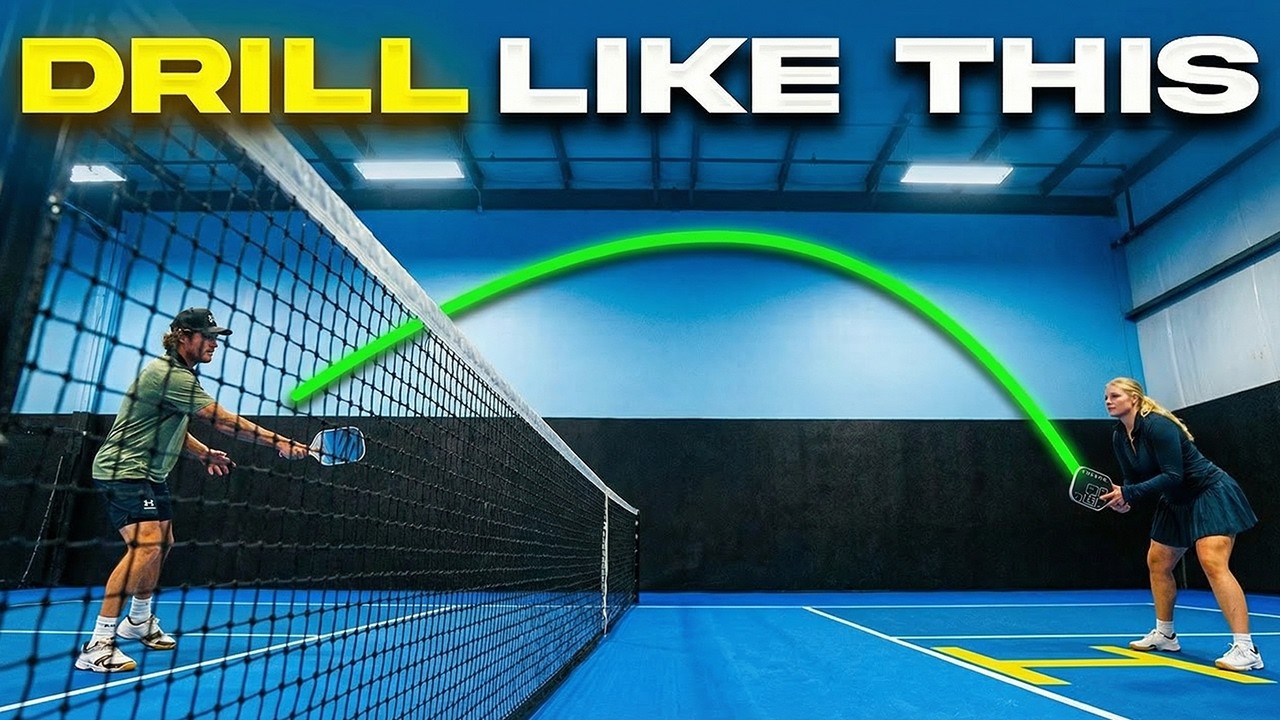
After drilling specific patterns, Elliott and Pham moved to what they called “free-for-all hand battles.”
This is where the pickleball pattern drill meets real match play.
You still have the structure of the pattern (one player initiates), but now both players can attack, counter, and adjust freely.
This is where you discover whether your pattern work actually translates to match situations.
Can you execute your counters when your opponent isn’t following the script? Can you stay composed when the rally gets chaotic?
The transition from structured patterns to semi-structured play is crucial.
Too many players stay in the comfort zone of drills and never test their skills in realistic scenarios. Elliott and Pham didn’t make that mistake.
Three pickleball drills disguised as games are another smart way to bridge that gap.
12 Pickleball Tips That Will Transform Your Game
Two experienced pickleball players break down 12 essential pickleball tips that will transform how you approach the sport. From injury prevention to advanced footwork, these insights can help you avoid costly mistakes and accelerate your improvement.
Why Pattern Work Separates Good Players from Great Ones
This isn’t just anecdote. Three patterns that separate good pickleball players from great ones comes down to sequencing, shot selection, and the ability to think multiple balls ahead.
The pickleball pattern drill is the training method that builds all three.
Top pros don’t just react. They plan.
And the pattern drill is how they practice planning.
If you want to understand how elite players map out entire exchanges before they happen, read how top pros use patterns to plan multiple shots ahead.
3 Patterns That Separate Good Pickleball Players From Great Ones
The gap between good and great pickleball players comes down to three repeatable patterns that create pressure instead of reacting to it

The 7-11 of Death: The Ultimate Pattern Drill Test
The session ended with 7-11 of Death, a game where only the baseline player can score. If you win the point at the baseline, you stay there.
If you don’t, you move up and your opponent goes back.
This is a brilliant way to test your pattern work under match pressure. You’re not just drilling.
You’re competing. You’re forced to execute your counters, your speed-ups, and your decision-making when points actually matter.
This game format teaches you something crucial: baseline dominance. In modern pickleball, controlling the baseline is increasingly important.
The player who can win points from the back of the court has a massive advantage.
This is one of the four key strategies to winning in 2026 that elite players are already applying.
The 12 Pickleball Drills You Need for Your Best Game in 2026
You can’t just show up and hit balls – you need a plan, and that plan should build progressively from simple to complex
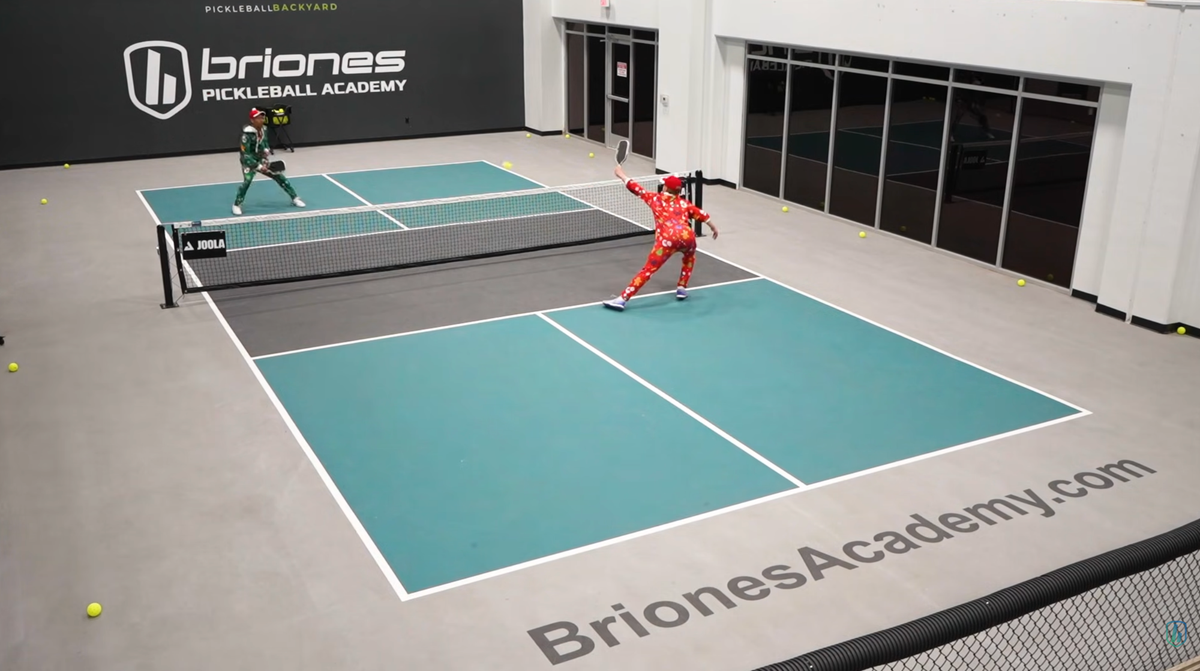
How to Build Your Own Pickleball Pattern Drill Routine
You don’t need a 5.8 DUPR player to run these drills. You need a partner and a clear plan. Here’s how to structure your own pickleball pattern drill session:
- Warm up with cooperative drills. Spend 5-10 minutes on cross-court dinking and basic volleys. Get your strokes grooved and your feet moving.
- Pick your pattern. Decide what you want to work on. Speed-ups to the backhand? Drops and drives? Resets? Pick one and commit to it.
- Set a time limit. Three to five minutes per pattern. This creates intensity and forces you to maintain focus.
- Vary the variables. Don’t repeat the same shot the same way twice. Change speeds, heights, and locations.
- Transition to free-for-all. Once you’ve drilled the pattern, play it out without the structure. See if it translates.
- Finish with a competitive game. Play 7-11 of Death or another game format to test your skills under pressure.
This structure takes about 45 minutes to an hour and hits every aspect of your game: fundamentals, pattern work, semi-structured play, and competitive pressure.
If you want a broader framework, a simple 4-step system to win more pickleball games in 2026 pairs perfectly with this drill structure.
The Forehand Flick Inside Pattern Training
One shot that shows up constantly in pattern drilling is the forehand flick.
It’s deceptive, it’s fast, and it punishes opponents who play too passive at the kitchen line.
If yours isn’t landing, ditch the windshield wiper technique for a better forehand flick.
That fix alone can change the entire feel of your speed-up game.
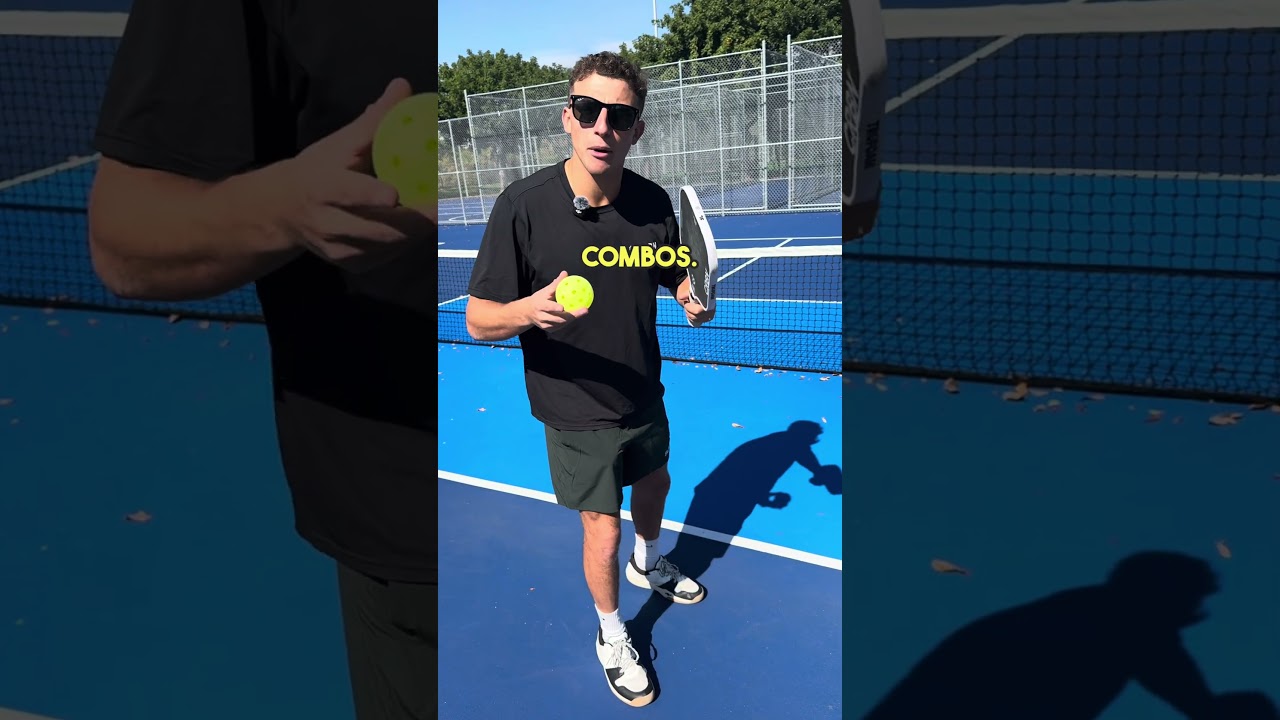
The Simple Drill to get Lightning-Fast Hands in Pickleball
You’re not just getting quicker hands. You’re getting smarter hands. And in pickleball, that’s the real difference.
The Mental Side of Pattern Drilling
Here’s something Elliott emphasized that often gets overlooked: you can’t miss.
During one drill, Elliott was working on resets and said,
“Can’t miss these. No missing resets. No missing. No missing. Cannot allow yourself to miss, guys.”
This is the mental discipline that separates good training from great training.
When you’re drilling, every shot matters. You’re not just going through the motions.
You’re building standards. You’re training your brain to expect perfection.
This mindset carries over to match play. If you’ve trained yourself to execute resets perfectly in drills, you’ll execute them better in matches.
If you’ve trained yourself to anticipate counters in patterns, you’ll anticipate them better when it counts.
Making practice skills stick with the 70 rule is another layer of this same principle: your drill standard should be high enough that match pressure feels manageable, not overwhelming.
What Elite Players Focus on During Every Point
It’s not just mechanics.
Mental warfare: what elite 6.0 pickleball players think during every dink reveals that high-level players are constantly running pattern recognition in real time.
The pickleball pattern drill is how they build that cognitive database.
Every rep in training is a data point they draw from in competition.
Pickleball Mental Game: Stay Calm Under Pressure and Win
The mental game competitive pickleball demands is just as important as your backhand or your third shot drop. Learn how top players stay calm under pressure, reset after errors, and build the focus that wins matches.
Why Pros Train This Way
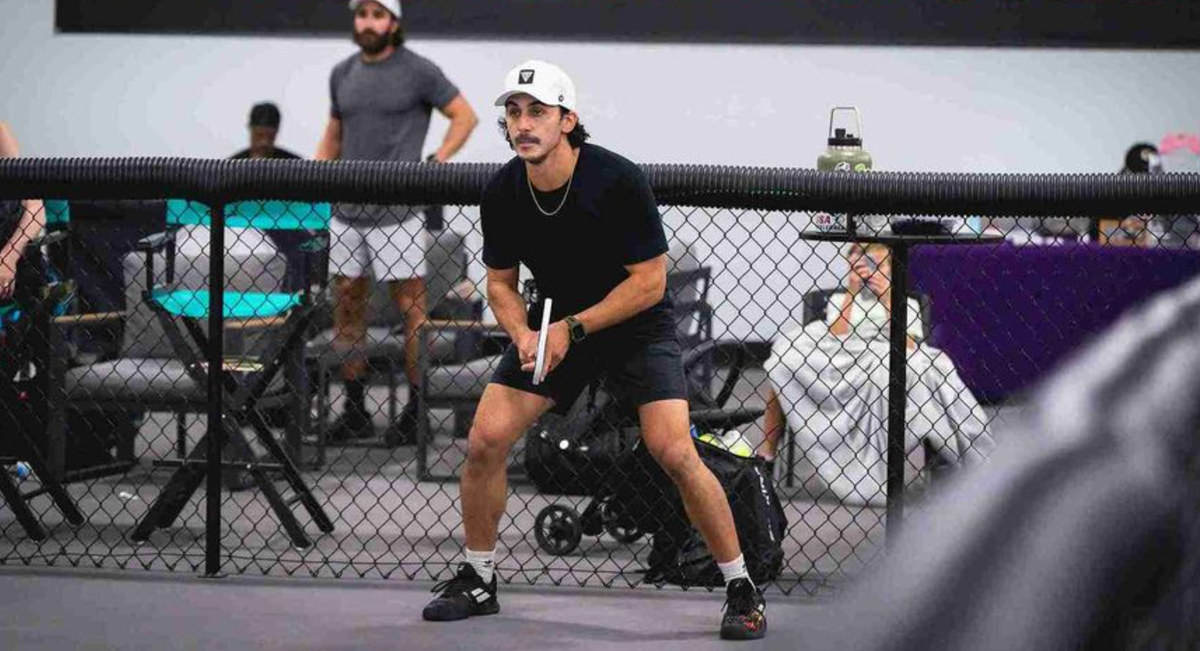
The reason Luc Pham and Cori Elliott use structured pickleball pattern drills is simple: they work.
Pattern drills isolate the variables you need to improve while maintaining the complexity of real match play.
They’re not as boring as hitting the same shot 100 times.
They’re not as chaotic as free play. They’re the sweet spot in between.
This is how elite players in every sport train. Tennis players use pattern drills. Basketball players use structured offensive sets.
Soccer players use positional play drills. The principle is the same: structure your practice to build specific skills while maintaining game-like conditions.
Even if you want to master attack patterns in pickleball, the process starts here.
If you want to improve your pickleball game, stop just playing points. Start drilling patterns. Your game will improve faster than you’d expect.
And if you want to know which shots to build those patterns around first, start with the 5 pickleball shots you must master before 2026.
💡
Frequently Asked Questions
What is a pickleball pattern drill and how does it work?
A pickleball pattern drill is a structured training exercise where one player initiates an attack to a predetermined location and the opponent counters, allowing the point to play out. Unlike free play, this removes the variable of unpredictability so players can focus on reading body language, adjusting to different speeds, and building counters to their opponent’s counters.
What’s the difference between a pickleball pattern drill and regular practice?
In regular practice, you don’t know where the ball is coming, which means you’re reacting to everything at once. In a pickleball pattern drill, you control one variable at a time, which lets you develop muscle memory and decision-making with far more precision than unstructured play allows.
How long should each pattern last during a drill session?
Three to five minutes per pattern is the sweet spot used by pros like Cori Elliott and Luc Pham. This duration creates enough intensity to build real muscle memory without letting focus drift, and it’s short enough to cycle through multiple patterns in a single session.
How do I transition from pattern drills to real match situations?
Start with fully structured pickleball pattern drills, then shift to semi-structured free-for-all exchanges where both players can initiate freely. Finish each session with a competitive game format like 7-11 of Death to test whether your drill work holds up under actual match pressure.
How often should I run pickleball pattern drills to see improvement?
Two to three times per week is the recommended frequency for serious improvement. Mix pattern drilling with match play and conditioning work so your game develops across all dimensions. Consistency over time matters far more than any single marathon session.
Nguồn: thedinkpickleball