The mental game competitive pickleball demands is just as important as your backhand or your third shot drop. Learn how top players stay calm under pressure, reset after errors, and build the focus that wins matches.
The mental game competitive pickleball requires separates the players who plateau from the players who podium.
You can drill your third shot drop until it’s automatic, but if you’re choking at 10-9 in the third, technique alone won’t save you.
The players winning tournaments aren’t just the most technically gifted. They’re the ones who’ve figured out what’s happening between their ears.
This isn’t soft stuff. This is the work.
Love pickleball? Then you’ll love our free newsletter. We send the latest news, tips, and highlights for free each week.
What Is the Mental Game in Pickleball, Exactly?
The mental game competitive pickleball players talk about isn’t just “staying positive.”
It’s a collection of specific, repeatable skills: attention control, emotional regulation, decision-making under stress, and identity resilience after errors.
Sports psychology research from the Journal of Applied Sport Psychology consistently shows that mental skills training improves performance in racket sports at every level.
Think of it this way. Two players are tied 10-10 in the deciding game of a tournament match. Same skill level. Same fitness.
The one who wins is almost always the one who can control their emotional state, stick to their process, and make a clear-headed shot selection.
That’s not talent. That’s a trainable champion mindset.
The mental side isn’t a bonus add-on for elite players. It’s foundational.
Why Does Competitive Pickleball Create So Much Pressure?
Competitive pickleball generates more psychological intensity than recreational play for a few specific reasons.
Points happen fast. The rally is over before your nervous system settles.
You’re constantly alternating between reacting and initiating, and any emotional residue from the last rally bleeds directly into the next one.
There’s also the social element. Tournament play means people are watching. You know your DUPR is on the line. Your partner is right there.
The pressure zone in pickleball is real and measurable.
Research published in the International Journal of Sport and Exercise Psychology confirms that competitive evaluation anxiety significantly degrades fine motor skills, which is exactly what your dink game requires.
This is why players who look rock solid in practice fall apart at 9-9. The technical skill is intact. The mental game competitive pickleball demands is not yet built.
💡
How to Build a Pre-Point Routine That Actually Works
The single most effective tool in the mental game competitive pickleball toolkit is a pre-point routine.
Top players across all racket sports use them. They’re not superstitions. They’re attention anchors.
A good pre-point routine does three things: it breaks the emotional residue from the last point, it directs your attention to the next task, and it brings your arousal level to an optimal zone.
Research on pre-performance routines in sport psychology shows they significantly reduce decision-making errors under pressure.
Here’s what a practical routine looks like:
- Breathe. One slow exhale after the point ends. Box breathing (4 counts in, 4 hold, 4 out) or even a single controlled breath-out lowers cortisol measurably.
- Reset physically. Bounce on your toes, tap your paddle, do whatever physical cue breaks the loop.
- Set a single process intention. Not “win this point.” Something like: “low and down the middle” or “reset until they pop it up.” One thought. Specific. Actionable.
The on-court rituals that pros use are built on exactly this framework. Consistent execution of the routine trains your nervous system to enter a ready state on cue.
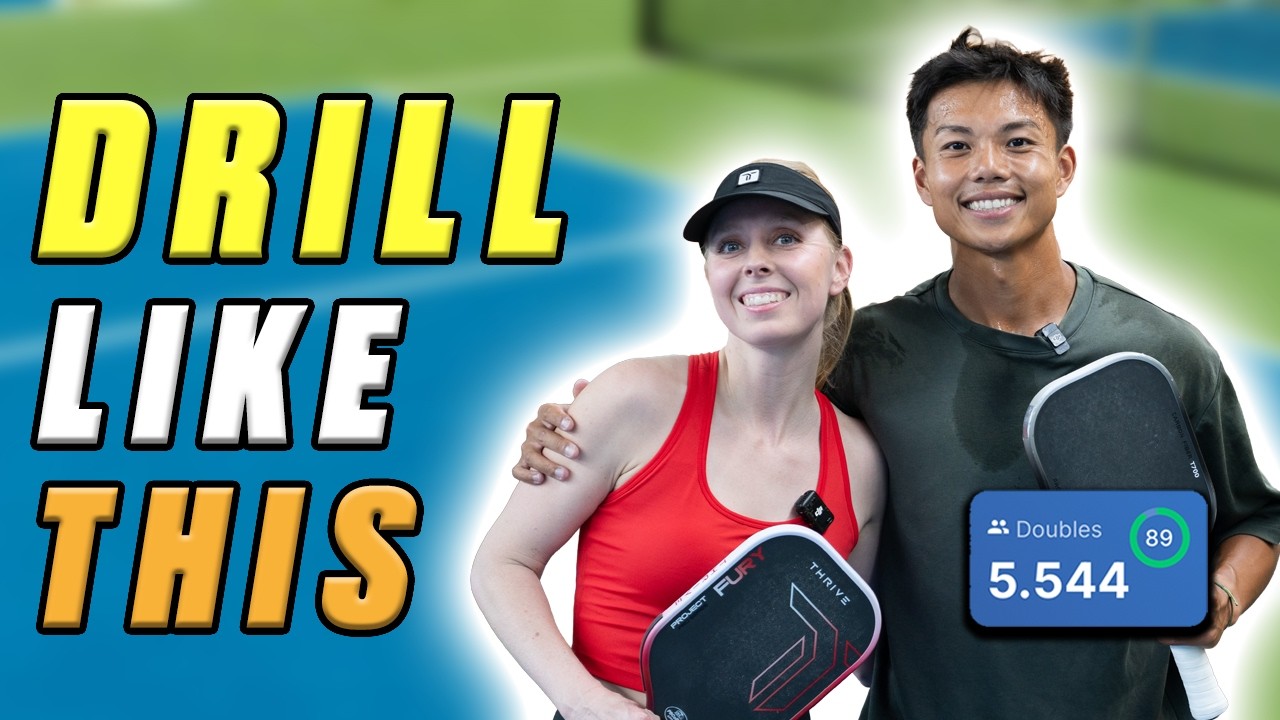
The Complete Pickleball Drill Routine to Reach 5.0
Reaching 5.0 in pickleball requires more than isolated skill work. A structured pickleball drill routine that builds consistency across dinking, resets, volleys, and live play is what separates competitive players from the rest.
How Do You Stop Negative Self-Talk During a Match?
Negative self-talk is the fastest way to accelerate a momentum collapse.
Every internal criticism you give yourself costs processing power that your brain needs for shot selection and reaction time.
Cognitive interference research from Sport, Exercise, and Performance Psychology shows that self-critical internal dialogue directly impairs motor output in real time.
The fix is not to eliminate all negative thoughts. That’s not realistic.
The goal is thought defusion: recognizing the thought, labeling it, and moving past it without amplifying it.
When you tell yourself “I can’t hit a backhand to save my life,” you’re not describing reality. You’re narrating a fear.
Try a simple redirect: “What’s the next shot?” Not a pep talk. Not self-criticism.
Just a task question. This is what building a champion mindset part 2 is really about.
The internal dialogue you run between points is either an asset or a liability. Train it the same way you train your drop shot.
Focus on your strengths during competition, not your gaps. Your gaps are for practice. Your strengths are for tournament day.
The 4th Shot Mindset: Stop Inviting Your Opponents to the Kitchen Line
Stop playing the fourth shot like it’s a formality. Instead, recognize it for what it is: your last chance to apply pressure before your opponent gets a chance to attack.
What the Best Competitive Players Think About Between Points
Here’s something that separates truly elite players from everyone else: they think less between points, not more.
Overcrowded internal thinking between rallies is a hallmark of players who struggle under pressure.
The best in the mental game competitive pickleball world are thinking about one thing: the next decision. Not the last three errors.
Not what their opponents did in the previous game. Not what their DUPR will look like if they lose. One decision.
Playing the percentages is a mental skill as much as a tactical one. When pressure is high, default to your highest-percentage shot.
This is why the case for boring pickleball is actually a mental argument: high-pressure moments demand simplicity, not creativity.
Decision-making quality goes down when emotional arousal goes up. Keep the game simple. Let your opponents make the mistakes.
How pickleball is like chess is a useful frame here. The best chess players don’t panic when the position gets complicated.
They slow down, evaluate, and execute the most logical move. Same principle applies at 10-9.
Think Small to Win Big: How to Set Pickleball Goals and Actually Achieve Them
You can’t will yourself into winning a tournament. You can absolutely will yourself into drilling eight hours a week.
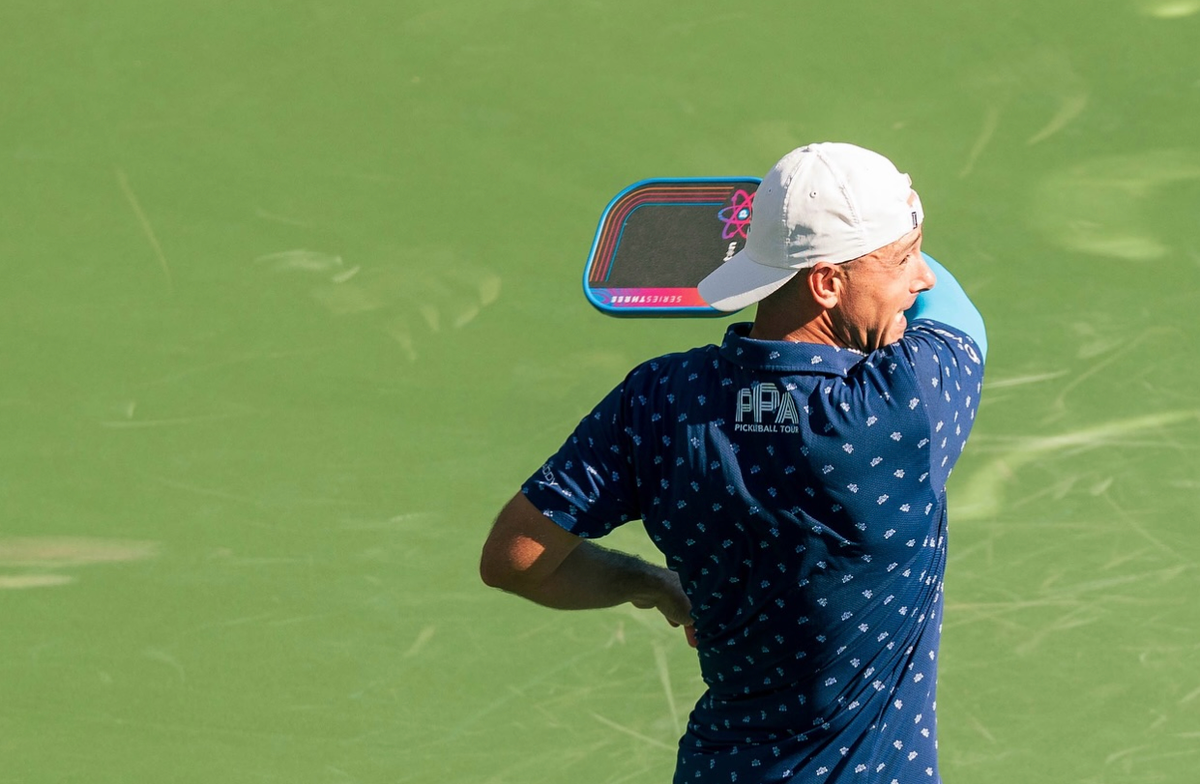
A timeout is not a sign that you’re losing control. It’s a sign that you’re a competitor. Using your timeout strategically is one of the highest-leverage mental game moves available to you.
When to call one:
- Your team has lost three or more consecutive points
- Your partner or you is visibly spiraling emotionally
- Your opponent has found a rhythm you haven’t disrupted yet
- You need to communicate a tactical adjustment
During the timeout, the conversation should be short and specific.
Reset breathing. One tactical tweak. A phrase of encouragement. Then get back to the line with intention. Don’t rehash the last five points.
The timeout is about creating a pattern interruption, not a film session.
Brene Brown’s talk on mindfulness in MLP touches on exactly this idea: the ability to pause, reconnect, and re-enter a competitive situation with presence is a learnable discipline, not a personality gift.
The 6-Second Mental Reset for Getting Past a Bad Pickleball Mistake
You miss a shot. You’re frustrated or angry. You’ve got about 6 to 8 seconds to assess what went wrong and get over it before the next point starts.
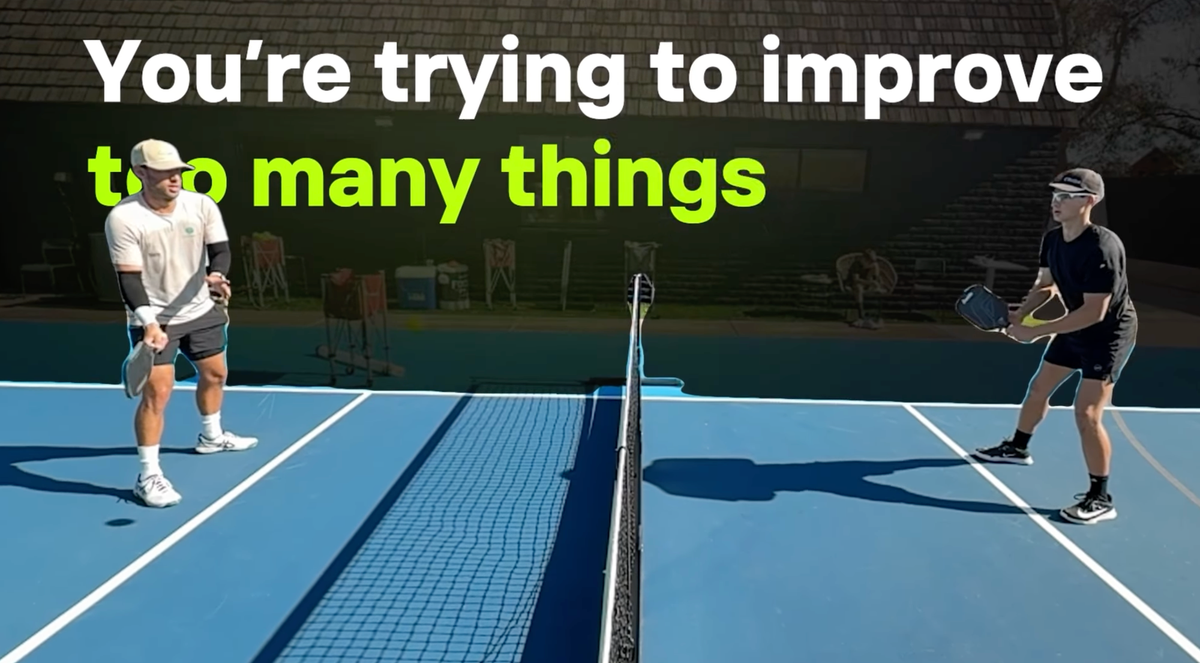
How to Play Your Best When It Matters Most
The mental game competitive pickleball demands becomes most critical in three scenarios: late in a tight third game, right after you’ve made a critical error, and when you’re facing a team or player who’s beaten you before.
Let’s take them in order.
- Late in a tight third game: Narrow your focus to the next point only. Pickleball is full of patterns and your brain will try to predict outcomes. Don’t let it. Outcome thinking kills execution.
- After a critical error: Use a 3-second rule. Three seconds of frustration is allowed. After that, you’re back to business. Anything longer is a performance tax you’re paying on the next point. The mistake you didn’t know you were making is often spending four points still emotionally attached to one bad shot.
- Against a team that’s beaten you before: This is identity work. Your body stores previous losses as threat signals. Secrets that advanced pickleball players don’t want you to know include this: your actual skill level in the present moment isn’t diminished by your history with that opponent. Play the ball, not the scoreboard.
How to become unattackable in pickleball is partly a technical conversation, but it’s mostly a mental one.
Players who can’t be rattled are harder to beat than players who are merely technically superior.
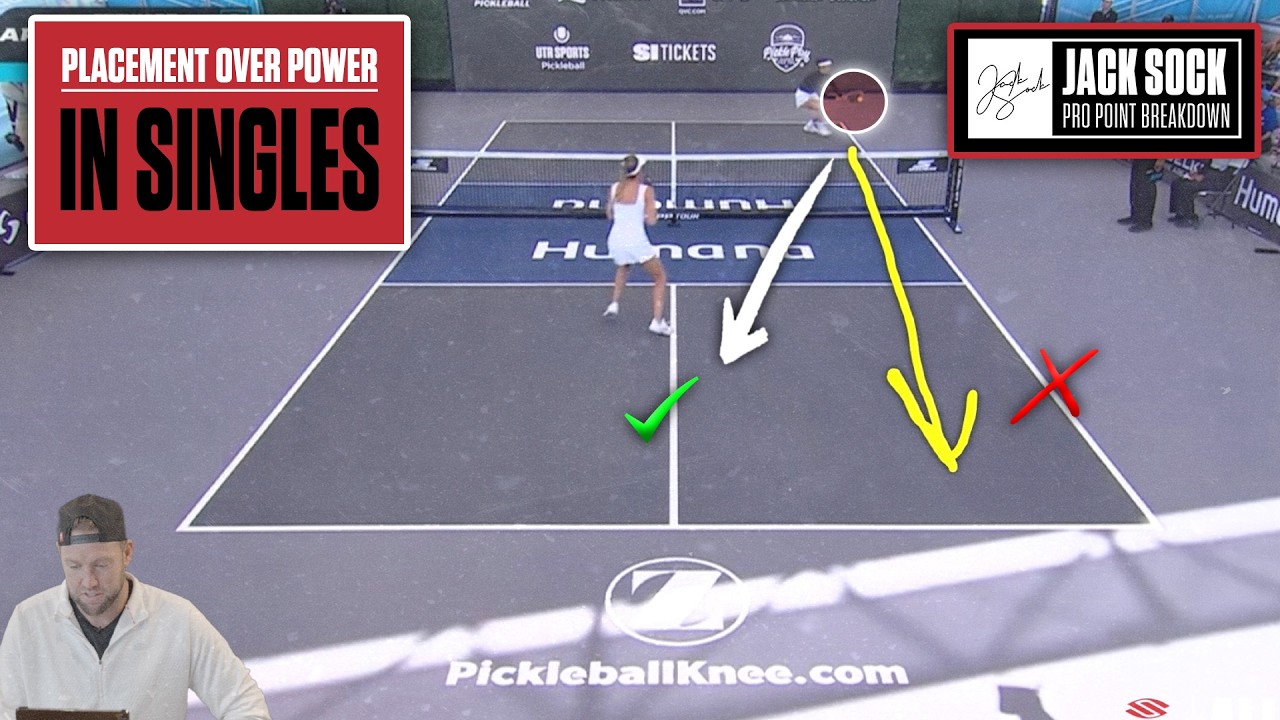
Finesse Shot in Pickleball: Jack Sock’s Strategy
In pickleball, a finesse shot often wins the point when power fails. Jack Sock analyzes a women’s singles rally to show why reading the court and choosing touch over aggression separates good players from great ones.
Should You Train the Mental Game Competitive Pickleball Demands Off-Court?
Yes. Emphatically. The research is clear on this.
Mindfulness-based interventions show consistent performance benefits in athletic populations, per NIH-published meta-analyses.
The mechanism is simple: mindfulness training strengthens the prefrontal cortex’s ability to regulate the amygdala’s stress response, which is exactly what goes haywire at 10-9 in the third.
Practically, this means:
- 10 minutes of daily mindfulness practice, even just breath-focused meditation, builds your in-match reset capacity over weeks
- Visualization: Sports science research from Applied Cognitive Psychology shows that mental rehearsal of specific scenarios activates the same neural pathways as physical practice. Walk through tight-match scenarios in your mind. Not hoping you win. Executing the process you’ve trained.
- Journaling after matches: Writing a two-sentence mental debrief after competition accelerates pattern recognition. What triggered you? What worked to reset?
Pair this with solo pickleball drills by yourself where you rehearse pressure situations, and you’re building mental resilience into your physical practice simultaneously.
Get the most out of your court time by incorporating intentional high-pressure practice reps.
Play out every point in drills as if it’s 10-9. That conditioning transfers.
The 6-Second Mental Reset for Getting Past a Bad Pickleball Mistake
You miss a shot. You’re frustrated or angry. You’ve got about 6 to 8 seconds to assess what went wrong and get over it before the next point starts.
Why Tournament Play Accelerates Your Mental Game Development
You can’t fully train the mental game competitive pickleball demands in casual rec play. The stakes aren’t real enough.
Your nervous system doesn’t activate the same threat response when nothing’s on the line.
Zane Navratil’s case for why average players should play tournaments is fundamentally a mental game argument: you need competitive reps to build competitive toughness.
There’s no shortcut. 3 skill investments to elevate your game all compound faster when tested under real pressure.
Play tournaments. Lose some. Get uncomfortable. That discomfort is the training.
The players who’ve beaten teams they shouldn’t beat almost always have one thing in common: they’ve been in enough pressure situations that the pressure itself feels familiar.
Familiarity kills fear.
The easy ways to simplify your pickleball game that top players use are themselves a mental strategy. Simplicity is repeatable. Complexity breaks down under stress.
The real reason you aren’t improving is often not technical at all.
It’s that you haven’t put yourself in enough uncomfortable situations to force mental adaptation.
Mental Warfare: What Elite 6.0 Pickleball Players Think During Every Dink
What separates good from great in pickleball is the split-second mental shift that happens the moment the ball leaves the paddle
Key Takeaways
- The mental game competitive pickleball demands is a trainable skill, not a personality trait
- Controlled breathing is your most reliable reset tool between points
- Pre-point routines create consistency when pressure spikes
- Self-talk quality directly affects shot quality
- Process goals beat outcome goals every single match
- Strategic timeouts are a weapon, not a white flag
💡
Frequently Asked Questions
How do I stop choking during competitive pickleball matches?
Choking in competitive pickleball is typically caused by directing attention inward (thinking about your mechanics or outcome) instead of outward (focusing on the ball and next shot). The fix is a consistent pre-point routine that redirects your attention to task-relevant cues. Controlled breathing, a physical reset gesture, and a single tactical intention before each serve will break the anxiety loop. Practice this routine during every drill session so it becomes automatic under pressure.
What is the mental game competitive pickleball players need to develop?
The mental game competitive pickleball players need includes attention control, emotional regulation between points, resilient self-talk, and the ability to make clear-headed decisions when the score is tight. These are not personality traits but trainable skills. Daily mindfulness practice, structured pre-point routines, and deliberate exposure to competitive pressure through tournament play are the most evidence-backed development methods.
Why do I play better in practice than in tournaments?
The gap between practice performance and tournament performance is almost always psychological, not technical. In practice, the consequences feel low, so your nervous system stays regulated. In tournaments, elevated cortisol from competitive stress narrows your attention and disrupts fine motor patterns. The solution is raising the stakes in practice by tracking scores, playing for consequences, and running high-pressure drills. The more your practice environment resembles competition, the smaller the gap becomes.
How do I deal with a bad call or a frustrating moment during a match?
Give yourself a defined window to react (two to three seconds max) and then redirect completely. A specific physical cue (bouncing on your toes, adjusting your grip tape, spinning your paddle once) creates a pattern interruption between the frustration and the next point. Carrying emotional weight from a bad call into the next rally is a choice, even if it doesn’t feel like one. The most competitive players make that transition fast.
Can meditation actually improve my pickleball game?
Yes. NIH-published research confirms that mindfulness meditation strengthens the prefrontal cortex’s regulatory capacity over the amygdala, which is the brain region that triggers competitive anxiety. Even 10 minutes of daily breath-focused meditation over four to six weeks produces measurable improvements in attention control and stress response. Elite athletes in tennis, golf, and racket sports have integrated mindfulness training for years. Pickleball competitors are catching up.
The Bottom Line
The mental game competitive pickleball demands isn’t a mystery. It’s a set of skills with evidence behind them and drills to practice them. Breathing control. Pre-point routines. Simplified self-talk. Process over outcome. Strategic timeout use. Deliberate exposure to pressure.
None of it is complicated. All of it requires repetition to build.
The players who win tight matches aren’t mentally superhuman. They’ve just done this work. Now you know what that work looks like. Change the way you think about doubles pickleball, build your mental toolkit the same way you build your technical one, and the scoreboard will follow.
Nguồn: thedinkpickleball