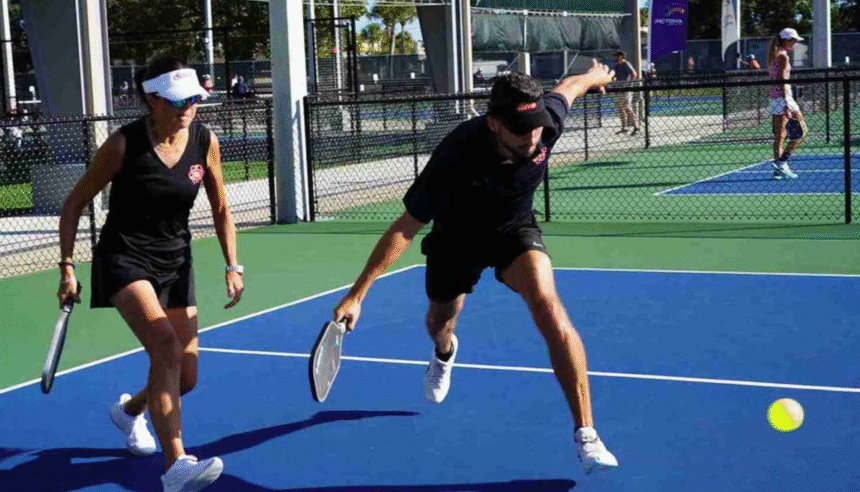
Pickleball footwork drills are the fastest way to close the gap between your shot-making ability and your actual on-court results. Here are five drills that competitive players use to move faster, recover quicker, and stop giving away free points.
Pickleball footwork drills are the most overlooked training tool at every skill level. Everyone wants to work on their third shot drop.
Nobody wants to do ladder runs. But here’s the truth: your feet are why your shots break down under pressure.
When your positioning is off by half a step, even a technically sound stroke produces a weak ball. Fix the feet first, and the shots follow.
Research backs this up. A 2021 study in the Journal of Sports Sciences found that lower-limb movement efficiency is among the strongest predictors of performance in racquet sports.
Pickleball is no different.
Love pickleball? Then you’ll love our free newsletter. We send the latest news, tips, and highlights for free each week.
Good footwork in pickleball means arriving at the ball early, in balance, with your weight loaded and ready to transfer. That’s it.
The problem is that most recreational players are arriving late, off-balance, and lunging because they’re still thinking about the last shot they hit.
The split step is where everything starts. This is a small, two-footed hop you take as your opponent makes contact with the ball.
It loads both legs simultaneously so you can explode in any direction. Tennis players have done it forever.
It’s just as critical in pickleball, especially at the kitchen line where reaction time is measured in fractions of a second.
Without the split step, you’re always chasing. With it, you’re anticipating.
The best players at the kitchen aren’t faster than you. They’re just never late.
Research published by the National Strength and Conditioning Association shows that agility in court sports is less about raw speed and more about reaction time and movement preparation.
That’s the split step in a nutshell.
What Does Good Pickleball Court Movement Look Like?
Good pickleball court movement looks like controlled urgency: quick, low steps with weight on the balls of the feet, knees slightly bent, and a ready position that allows immediate change of direction.
You should never be flat-footed when the ball is in play.
Most players know this. Most players still stand heel-heavy at the kitchen line wondering why they can’t stop attackable balls.
The answer isn’t reaction time. It’s stance.
Learn more about the specific on-court rituals that sharpen readiness here.
💡
These aren’t random gym exercises. Each drill below maps directly to a movement pattern that shows up in real points.
Do them consistently, and your court positioning improves whether you realize it or not.
Drill 1: The Split Step Activation Drill
The split step activation drill trains you to load and react before you actually need to move.
It’s the foundational pickleball footwork drill for anyone who wants to stop being slow at the kitchen.
How to do it:
- Stand at the kitchen line in your ready position.
- Have a partner bounce a ball from the baseline (or use your own voice as a cue).
- The moment the ball leaves the ground (or they call a direction), execute your split step: a small two-footed hop that lands with both feet simultaneously.
- Immediately shuffle two steps in the called direction, then recover to center.
- Repeat 15-20 times each side.
The goal isn’t speed. The goal is timing. If you’re jumping late, you’re just bouncing. If you’re jumping early, you’ve already committed.
You want the hop and the cue to be simultaneous.
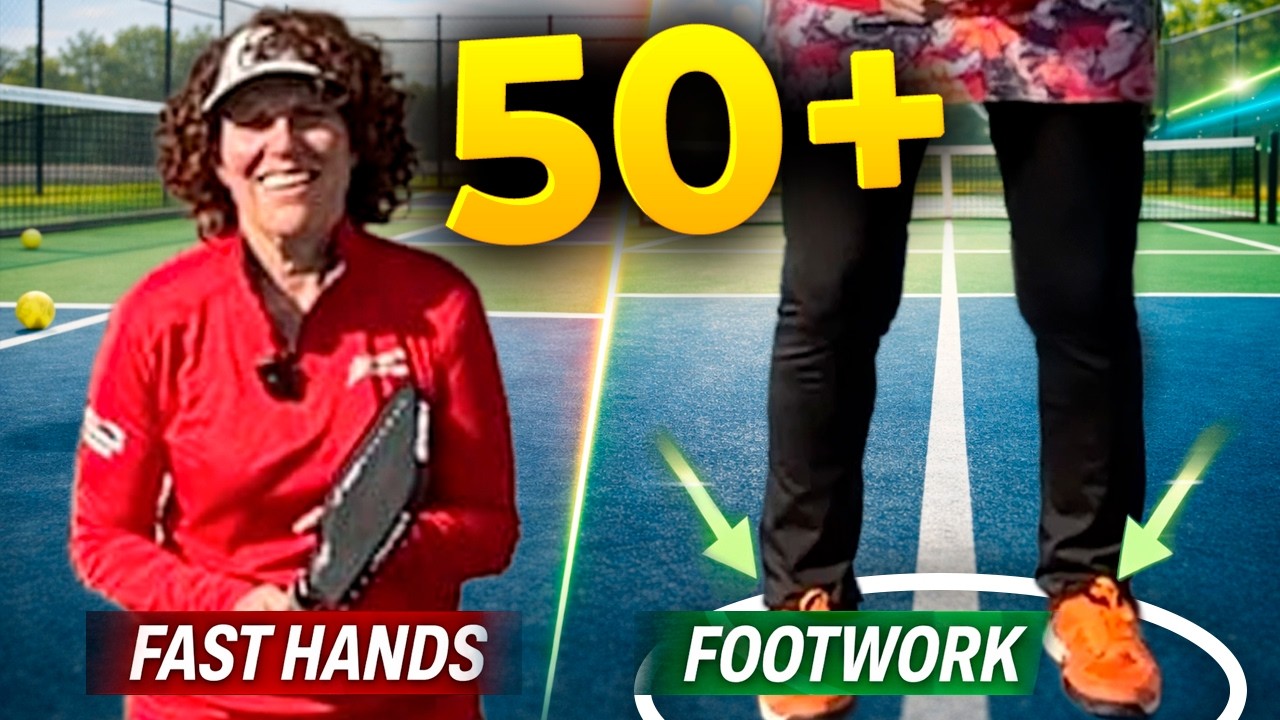
Split Step Pickleball: Footwork Tips for Seniors
By mastering this simple footwork move, you’ll stop your forward momentum and give your brain the split second it needs to read your opponent’s paddle.
Drill 2: The Figure-8 Shuffle
The figure-8 shuffle develops lateral movement and body control across the full width of the court.
It’s one of the most complete pickleball footwork drills available without a partner.
How to do it:
Set two cones (or water bottles) about 10 feet apart at the kitchen line.
Shuffle laterally around each one in a figure-8 pattern, staying low with your paddle in ready position throughout.
Run 30-second intervals with 15 seconds of rest. Aim for three to five rounds. Focus on not crossing your feet and keeping your chest facing the net at all times.
This is a solo drill you can run any time you get court access and it directly translates to your ability to cover the wide dink to your non-dominant side.
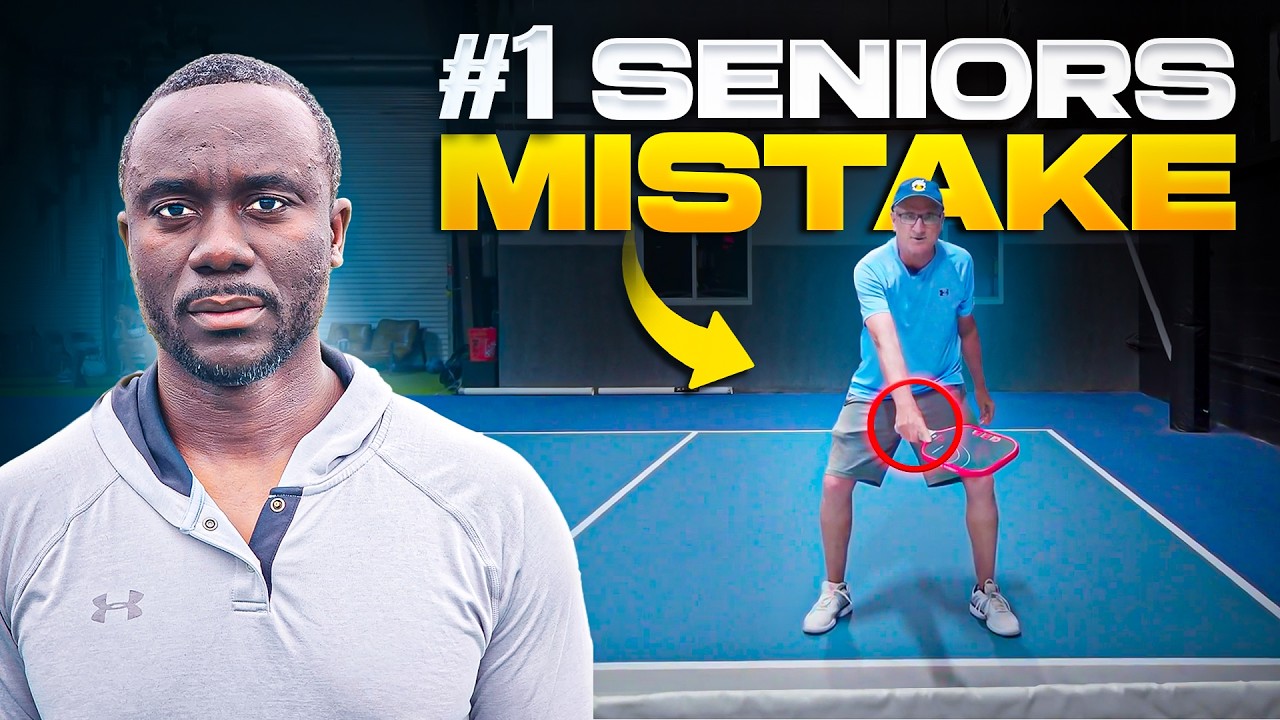
4 Essential Footwork Tips Every Senior Pickleball Player Must Master
Smarter positioning and simple footwork adjustments can help senior pickleball players improve performance without relying on speed
Drill 3: The Transition Zone Sprint-and-Stop
The transition zone sprint-and-stop drill trains the most difficult movement in the entire game: getting from the baseline to the kitchen line without losing control of your body.
Most errors in mid-court happen because players are still moving forward when they contact the ball.
How to do it:
- Start at the baseline in an athletic stance.
- Sprint forward toward the kitchen line.
- At the transition zone (roughly the service line), execute a hard stop: both feet down, weight balanced, knees bent.
- Simulate a volley or dink stroke from that stopped position.
- Backpedal to baseline and repeat.
Do 10-12 reps. The hard stop is the whole point.
You’re training your body to decelerate and reset before you swing, which is the only way to execute a controlled transition when a rally is live.
Research from the American College of Sports Medicine confirms that deceleration mechanics are as important as acceleration for injury prevention and performance.
You’re training both with this drill.
Master the Pickleball Transition Zone: Attack or Reset
The best players in the world aren’t just comfortable in the transition zone – they actively use it to their advantage
Drill 4: The Kitchen Lunge-and-Recover
The kitchen lunge-and-recover drill builds the strength and mobility to reach wide balls without losing your court position afterward.
A good lunge extends your reach by 18 inches or more. A bad lunge leaves you sprawled on the court with nowhere to go.
How to do it:
- Stand at the kitchen line, centered.
- Step aggressively to one side with a lateral lunge, reaching the paddle toward an imagined wide ball.
- Drive off that foot immediately to recover back to center.
- Alternate sides for 10 reps each.
The recovery is as important as the lunge itself. You don’t get points for reaching the ball if you’re already out of position for the next shot.
This drill programs the full sequence: reach, contact, recover.
For knee health during this drill, make sure your lunging knee tracks over your second toe and doesn’t collapse inward.
If it does, slow down and reduce the range before adding speed.
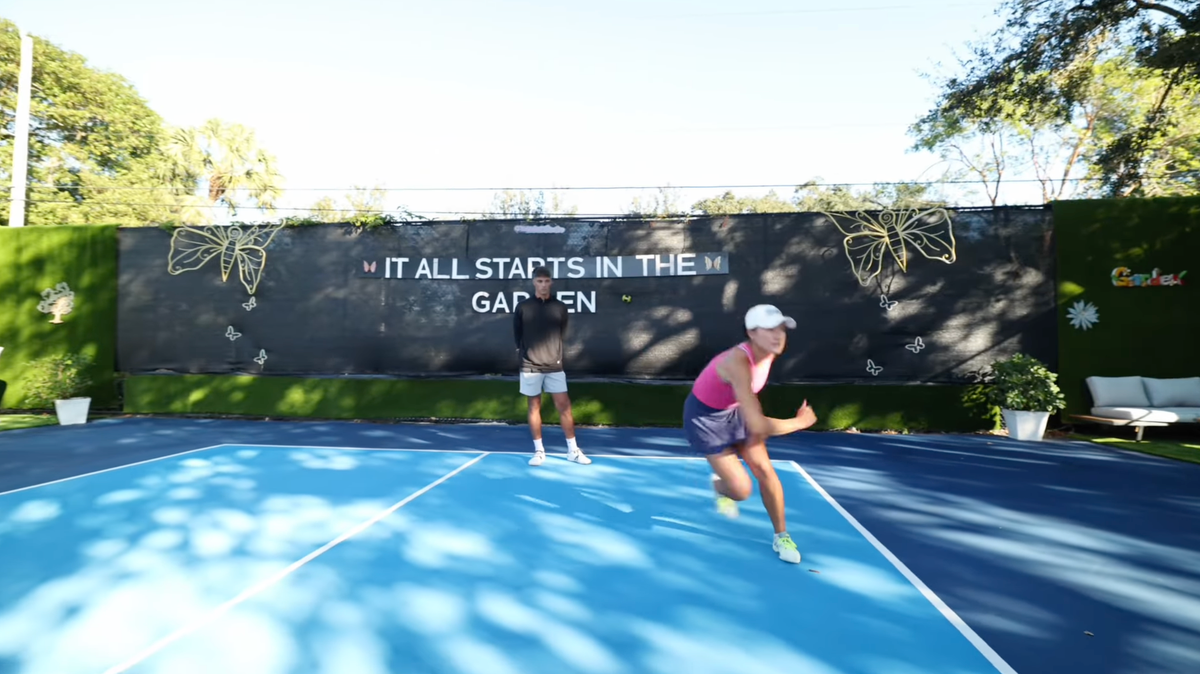
Roll, Lunge, Jump: The Anna Bright Method for Warming Up Right
Take a page out of the pro book. Move your spine, lunge deep, and jump a little. Your knees and your win-loss record will thank you.
Drill 5: The Shadowing Drill
The shadowing drill is the closest thing to a real-game footwork simulation without actually playing.
You’re moving through the patterns of a real rally without a ball.
How to do it:
- Stand at the kitchen line.
- Call out (or have a partner call) a sequence: “left, right, back, sprint, stop, lunge left, recover.”
- Move through each cue without pausing.
- Run sequences of 8-10 movements, then rest.
Elite tennis players have used shadowing for decades.
It’s starting to show up in advanced pickleball training programs for the same reason: your brain is learning the movement patterns without fatigue or shot pressure interfering.
After 10 minutes of shadowing, get on the court. Your feet will feel automatically better positioned. Honestly, you’ll notice it immediately.
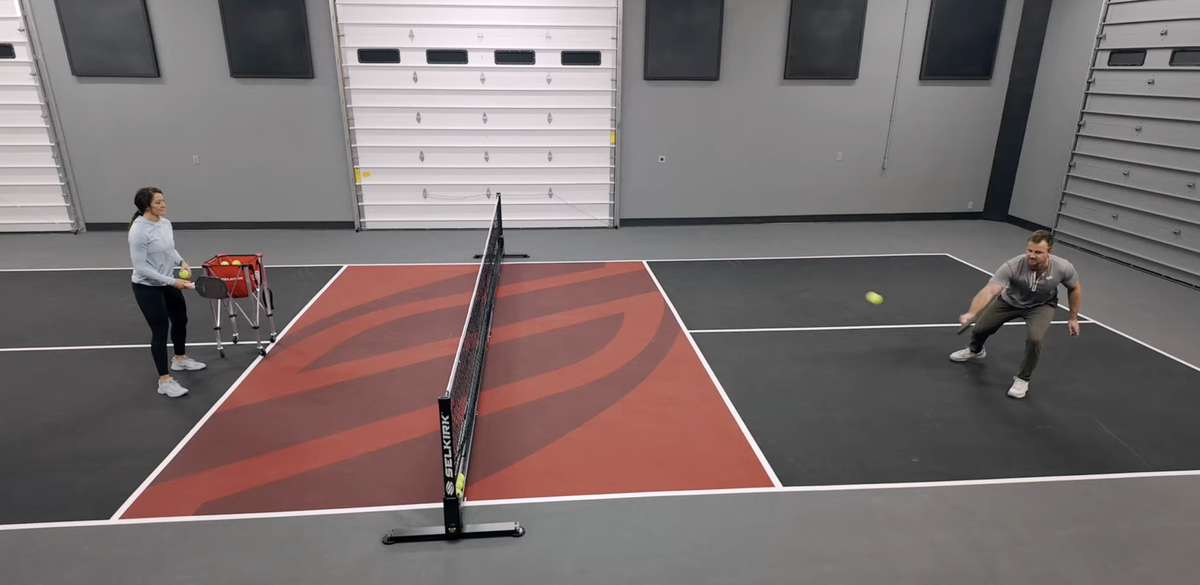
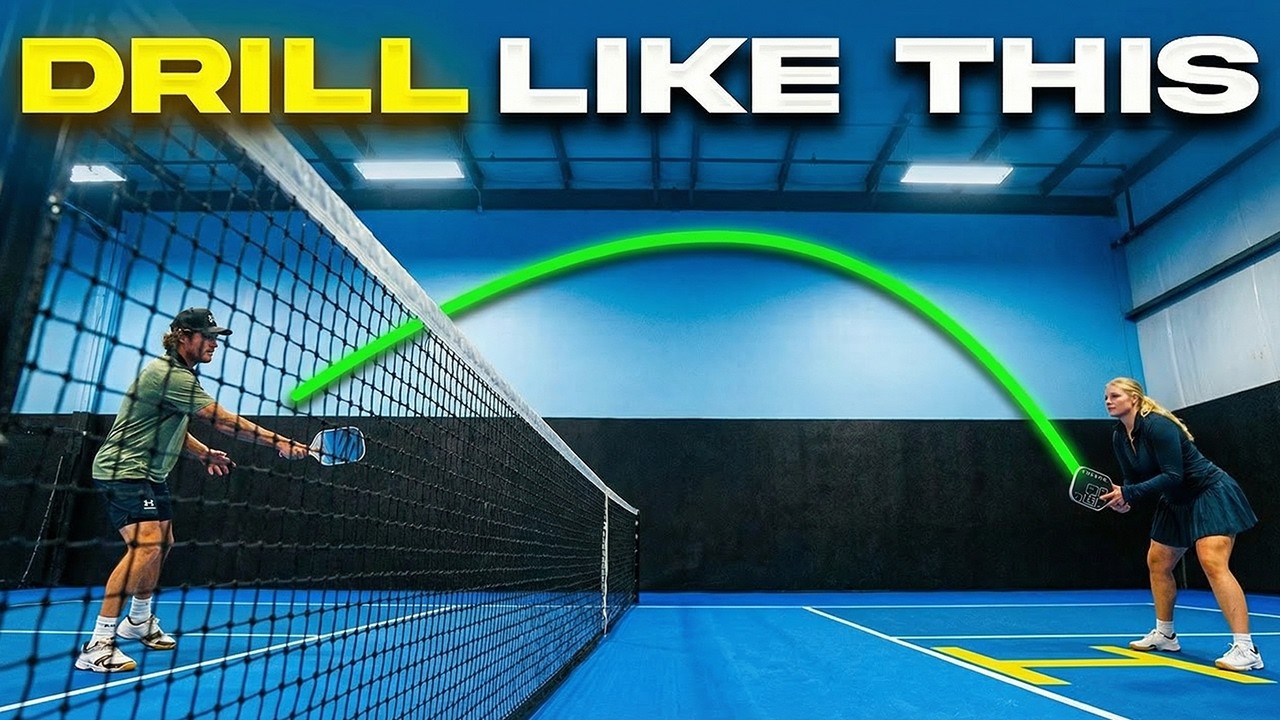
7 Pickleball Drills That Work for Every Level
Pro player Michael Loyd shares 7 pickleball drills designed to build real consistency and fix the weaknesses keeping you stuck.
Three sessions per week is the sweet spot for improving pickleball footwork without accumulating fatigue.
Each session doesn’t need to be long. Fifteen minutes of focused footwork before you pick up a ball is enough to see changes in four to six weeks.
A 2020 study in the International Journal of Sports Physiology and Performance found that short, frequent agility sessions produced significantly better court movement outcomes than infrequent long sessions.
Quality over quantity. Show up consistently.
The best players don’t separate footwork training from practice. They bake it in.
Three skill investments that compound fast in pickleball are footwork, reset mechanics, and third shot consistency. Footwork is the foundation all three sit on.
Also: your shoes matter more than you think.
Pickleball-specific court shoes with lateral support and a non-slip outsole make a measurable difference in how efficiently you can execute these drills.
Running shoes are not a substitute. They flex in the wrong plane and offer zero lateral stability.
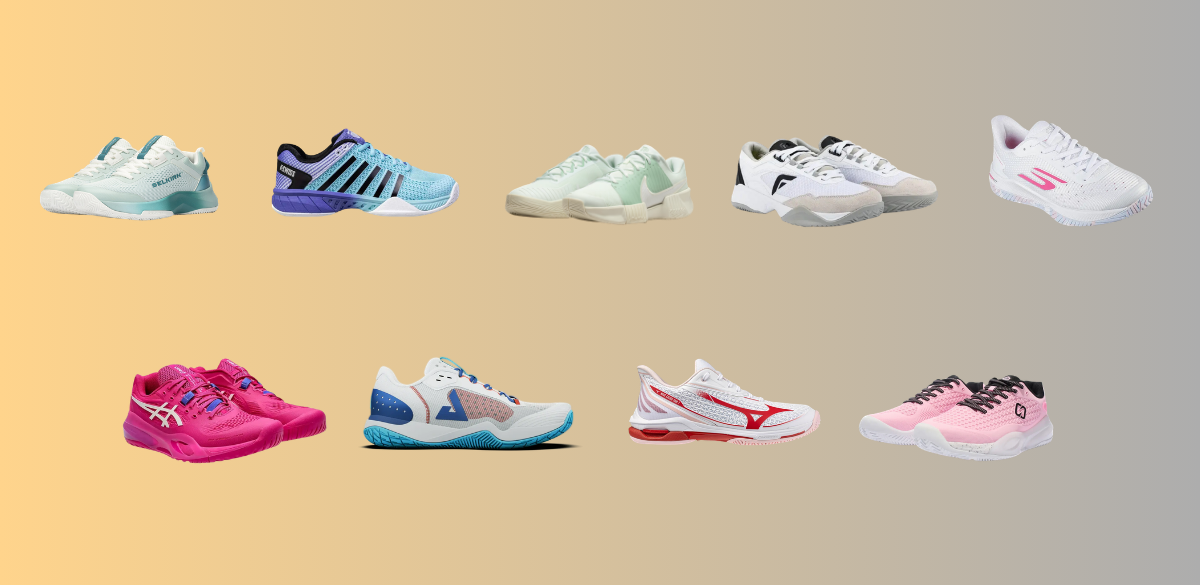
Best Women’s Pickleball Shoes of 2026: Top 9 Reviewed
I tried the 9 top women’s pickleball shoes from Nike, ASICS, Selkirk, JOOLA and more to reveal the best options for comfort, speed, and on-court performance.
The most common pickleball footwork mistake is moving after the ball, not with it. Reactive movement is slower than anticipatory movement. Always.
Here are three specific errors to eliminate:
- Standing flat-footed at the kitchen line. Get on the balls of your feet every time the ball crosses the net. No exceptions. If you’re heels-down, you’re already behind.
- Crossing your feet on lateral movement. Shuffling keeps your base wide and your balance intact. Crossing opens you up to getting jammed and eliminates your ability to change direction quickly.
- Not recovering to center after every shot. This is where court positioning falls apart in doubles. Hit, recover, reset. Every single time.
The real reason most players stop improving is they practice the same patterns with the same mistakes.
Footwork drills with focused attention break those patterns.
Get more out of every session on the court by working movement deliberately before you ever start a rally.
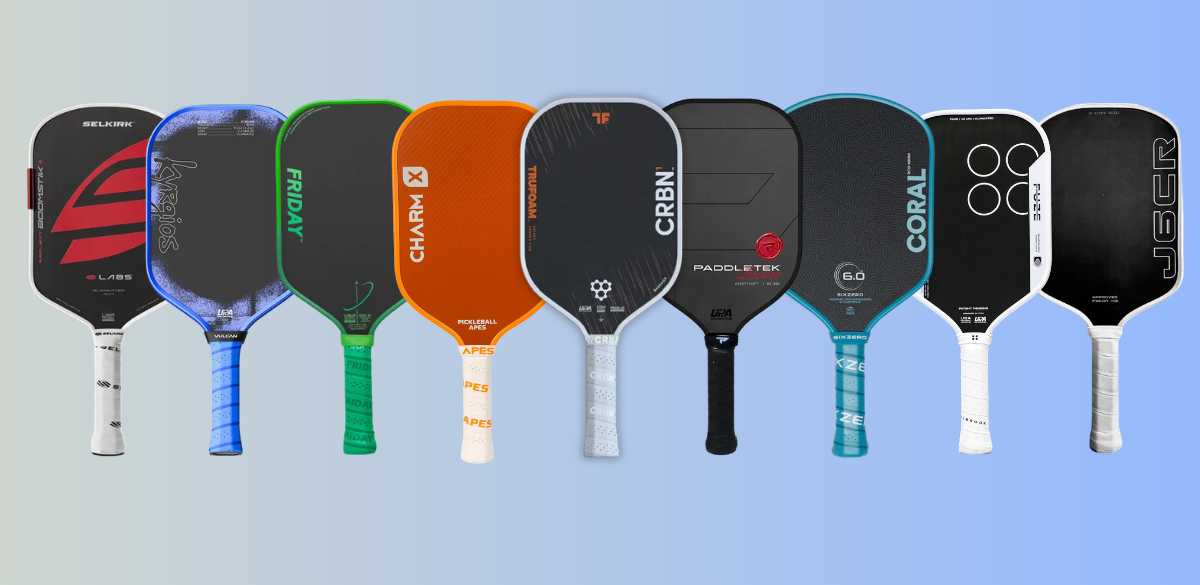
9 Power Paddles that Are Excellent at Dinking
Based on a unique blend of lab-tested power and consistency metrics, these paddles are proven to give you an edge in all three zones of the court.
Key Takeaways
- Pickleball footwork drills fix the root cause of most shot errors: poor positioning at contact.
- The split step is non-negotiable at the kitchen line. Train it specifically.
- The figure-8 shuffle, transition sprint-and-stop, lunge-and-recover, and shadowing drill each target a real in-game movement pattern.
- Three 15-minute footwork sessions per week produces measurable results in four to six weeks.
- Proper court shoes, weight on the balls of your feet, and consistent post-shot recovery are the non-drill factors that multiply every drill you do.
- Don’t skip the mental side either — knowing where to move is as important as being able to get there fast.
💡
Frequently Asked Questions
The best pickleball footwork drills for beginners are the split step activation drill and the figure-8 shuffle. Both require no advanced athleticism and directly address the two most common beginner movement problems: arriving late to the ball and standing flat-footed at the kitchen line. Start with the split step drill for five minutes before every session. Here are three tips every beginner needs to accelerate that learning curve.
How do I improve my movement speed in pickleball?
Improving movement speed in pickleball is less about being faster and more about moving sooner. The split step is the single biggest lever: it primes your muscles to react the moment your opponent contacts the ball. Pair it with a low, athletic stance throughout rallies and consistent recovery to center position after every shot. Secrets advanced players use almost always trace back to earlier preparation, not raw quickness.
Footwork and shot technique are inseparable. Poor footwork produces poor shots because you’re contacting the ball off-balance, rushed, or from the wrong distance. Most shot errors that players attribute to technique are actually footwork failures. When you improve your court movement, shot quality improves automatically because you’re hitting from a better position. Simplifying your game often starts with cleaning up your feet.
Yes. The shadowing drill, lateral shuffles, and split step activation drill can all be done in any open space. A driveway, gym floor, or living room all work fine. You don’t need a ball or a partner for most footwork training. Even ten minutes in a small space before a session will translate directly to better on-court movement.
Court-specific shoes with lateral reinforcement and a non-marking rubber outsole are the best choice for pickleball footwork drills. Running shoes flex longitudinally, which actively works against the lateral cuts and shuffles that these drills require. Dedicated pickleball shoes or indoor court shoes provide the grip and ankle support to execute these movements safely and efficiently.
Nguồn: thedinkpickleball