Mastering the speed up is one of the fastest ways to move up the rating ladder. This guide breaks down when to pull the trigger, how to execute with precision, and which drills will make it second nature.
The pickleball speed up that 3.5 players fear most isn’t the hardest one, it’s the one that arrives at the right moment, at the right height, at the right angle.
Most 3.5s have the arm swing. What they’re missing is the read, the setup, and the patience to wait for the right ball before they pull the trigger.
That’s exactly what this guide fixes.
We’re going to break down how to speed up from the kitchen, not randomly, not reactively, but deliberately, so you stop giving away free points and start taking them.
Love pickleball? Then you’ll love our free newsletter. We send the latest news, tips, and highlights for free each week.
What Is a Speed Up in Pickleball (and Why Does It Matter)?
A speed up is a deliberate, aggressive attack at the kitchen line, a sharp, fast-paced ball fired at your opponent’s body or shoulder before they can reset.
It breaks the dinking pattern and forces your opponent into a defensive position. Done right, it wins points outright.
Done wrong, it hands them a free ball to attack back.
Here’s why it matters at the 3.5 level specifically: most 3.5 players dink passively, waiting to be attacked instead of creating offense.
Learning to speed up from the kitchen puts you in the driver’s seat. You choose when the rally escalates. That’s a huge shift in how rallies play out.
The speed up is legal under USA Pickleball Rule 7.L, which allows any volley or dink to be attacked as long as the paddle doesn’t contact the ball inside the non-volley zone (the kitchen) during a volley.
Your feet have to stay behind the kitchen line when you attack.
When Should You Speed Up at the Kitchen?
Speed up from the kitchen when the ball sits at or above net height on your side. That’s the green-light window.
- Shoulder height or higher? That’s the prime attack zone. The ball is sitting up, and you have a downward angle to work with. Shoulder height balls at the kitchen are the most attackable balls in pickleball, don’t let them go to waste.
- At net level? That’s a yellow light. You can still attack, but the angle is flatter, and your margin for error shrinks. The ball needs to go to the body or wide of your opponent, not straight at their forehand.
- Below the net? Red light. Full stop. That’s a reset ball, not an attack ball. Trying to speed up a ball below the tape from the kitchen is the most common unforced error at the 3.5 level, and it’s what separates 3.5s from 4.0s.
A good rule of thumb: if you have to lift the ball over the net, don’t speed it up. If you can drive it downward, do.
💡
How to Speed Up From the Kitchen: The Step-by-Step Mechanics
Step 1: Stay Ready, Not Tight
Your ready position at the kitchen matters more than most players think. Stand with your paddle in front of your body, roughly chest height.
Grip pressure should be firm but not white-knuckled, a controlled grip lets you snap through contact without your arm locking up.
Knees bent slightly. Weight on the balls of your feet. You want to be ready to move laterally or step into a speed up without telegraphing your intention.
Step 2: Identify the Right Ball
Read the trajectory early. You’re watching for a dink that floats, one that doesn’t dive below the tape. The moment a ball crests above net height, that’s your signal. Don’t wait for the ball to start dropping. Attack it at or just after the peak.
This read takes reps to develop. Working through targeted kitchen drills where a partner feeds you alternating attackable and non-attackable balls builds this recognition faster than any open rally will.
Step 3: Load and Compact Swing
The speed up from the kitchen is not a full backswing. It’s a compact, punchy swing that uses mostly your wrist and forearm. Think of it like a punch volley with added snap.
Here’s the motion in sequence:
- As the ball rises, drop your paddle head slightly below the intended contact point.
- Drive forward and slightly downward through the ball at contact.
- Follow through short, not loopy, not across your body. Straight at your target.
The backhand speed up is the one most 3.5 players neglect.
JW Johnson, arguably the best hands player in the game, uses his backhand attack from the kitchen constantly.
The backhand speed up is harder to telegraph and harder for opponents to read. Study JW Johnson’s unusual dinking technique and you’ll notice how little backswing he uses. That’s not an accident.
How to Speed Up From the Kitchen in Pickleball
Knowing when to speed up from the kitchen in pickleball is the difference between earning a point and handing one away. This guide breaks down the exact timing triggers, target zones, and attack patterns 3.5–4.0 players need to start winning more exchanges at the net.
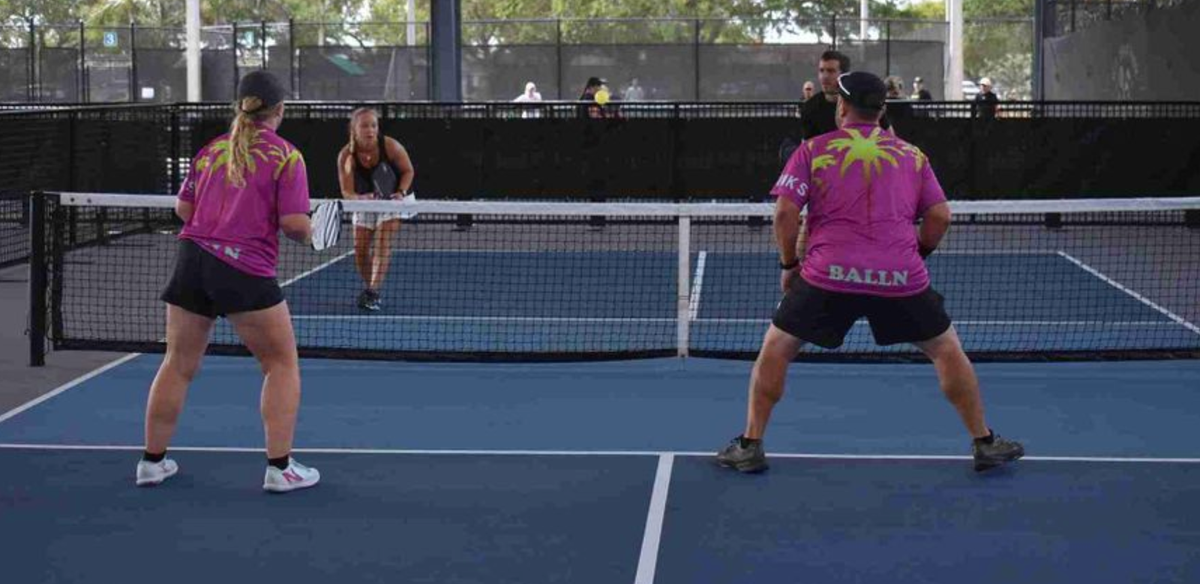
Step 4: Pick Your Target
Don’t just speed up “somewhere.” Attack with precision. The three best targets for a kitchen speed up are:
- The hip or belly button: Jams your opponent and removes their arm extension.
- The backhand shoulder: Most players have a weaker backhand reaction than forehand.
- The crosscourt angle: Creates a wide ball that pulls your opponent off the court.
Targeting your opponent’s body with a speed up is almost always more effective than attacking their paddle. Body shots compress the response window and reduce their reset options.
Step 5: Be Ready to Finish or Reset
A speed up from the kitchen is the opening punch, not always the kill shot. If your opponent gets a paddle on it, the ball is coming back fast.
You need to be reset-ready the second your attack leaves your paddle.
This is where 3.5 players leak the most points, they watch their speed up, celebrate early, and get caught flat-footed when the opponent counters.
Stay locked in. If the counter comes back to your body, absorb it softly. If it comes back as a pop-up, attack again.
Pro Speed-Up Strategy: Master the Kitchen Line Attack Like a 5.0+ Player
Connor Garnett shows that winning kitchen battles isn’t about raw power, but about positioning, psychology, and reading opponents in real time
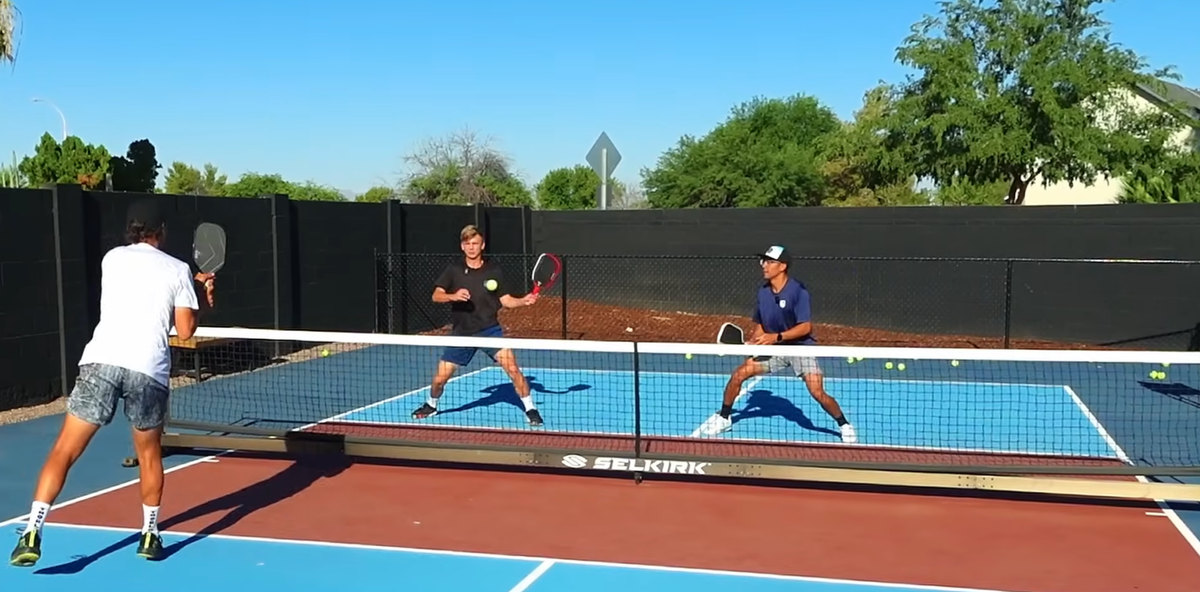
The Best Drills to Train Your Speed Up Kitchen Pickleball 3.5 Game
Drills make the speed up automatic. Here are three that directly train the mechanics and decision-making:
Drill 1: The Attack and React Drill
Partner at the kitchen. They feed you alternating dinks, some attackable (above net), some non-attackable (below net). You call “green” on attackable balls and speed them up. You call “red” on non-attackable balls and reset softly.
This builds the read before it builds the swing. Solo reps on a wall won’t replicate it, you need a live feeder who can randomize the ball height.
Drill 2: The Figure-8 Speed Up Drill
Start a figure-8 dinking pattern with your partner crosscourt and down the line. Any time either player sends a ball that sits above tape height, they’re allowed to speed up. The drill teaches you to dink with intention, low and unattackable, while staying alert for the ball that begs to be attacked.
Drill 3: The Continuous Counter Exchange
Speed up on purpose. Both players agree to trade speed ups and counters for a set number of exchanges. This is advanced shot selection training that forces you to reset under pressure, counter aggressively when possible, and stay mentally locked through fast exchanges.
Pro tip: start slow. The point isn’t speed, it’s placement and control under pressure. As the exchange gets cleaner, the pace will naturally increase.
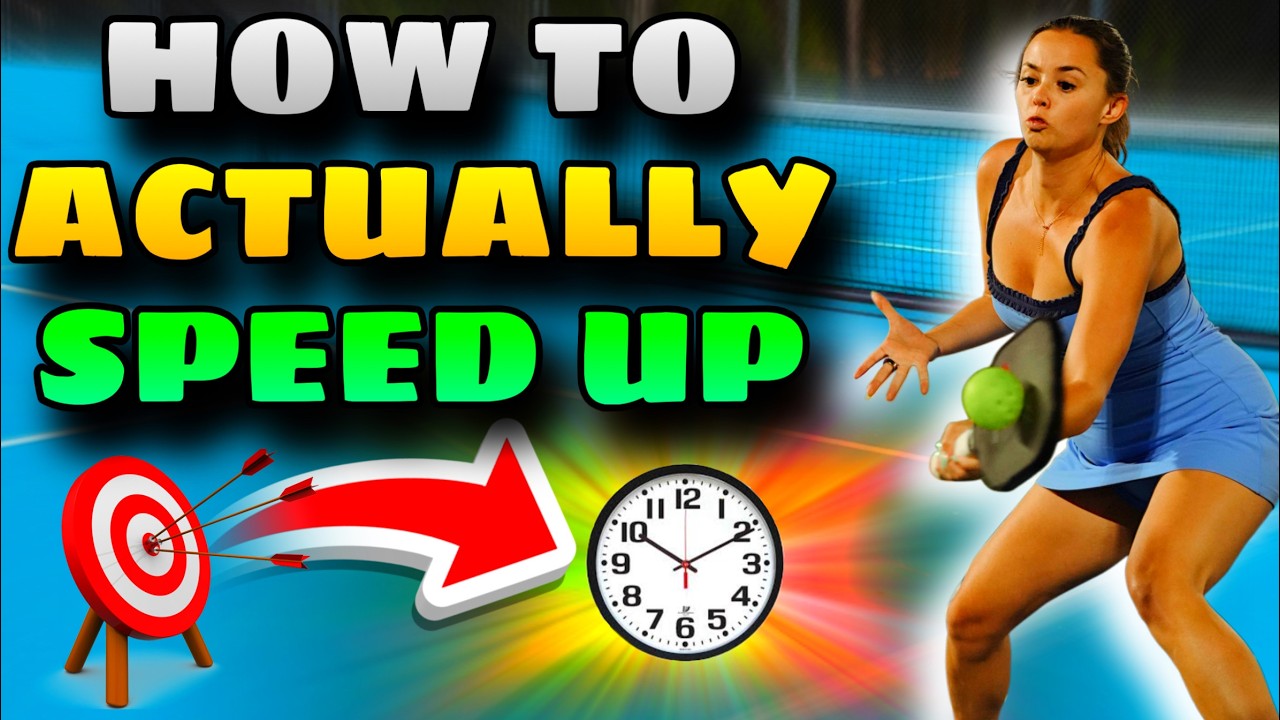
The Pickleball Speedup: Pro Secrets to Win Points
The pickleball speedup is one of the most misunderstood shots in the game, but it’s also one of the most powerful when executed correctly. Pro player Ava Ignatowich breaks down exactly how to hit speedups, when to use them, and the triangle concept that separates amateurs from advanced players.
Common Mistakes That Kill Your Kitchen Speed Up
- Attacking too early. If the ball hasn’t risen above net height yet, you’re hitting upward, and that gives your opponent a much easier counter. Wait for the ball to peak.
- Going for the lines. A speed up from the kitchen doesn’t need to be a winner. Body shots are more consistent and create the same disruption. Save the angle shot for when you’ve set it up with a prior attack.
- Over-swinging. The kitchen speed up is a compact motion. Power shots in pickleball come from snap, not from full-arm swing. A 3.5 who swings too big telegraphs the attack and loses control of placement.
- Not following up. As mentioned, after the speed up, reset your stance. The mid-court transition game is where rallies are actually won and lost. Don’t go passive the moment after you attack.
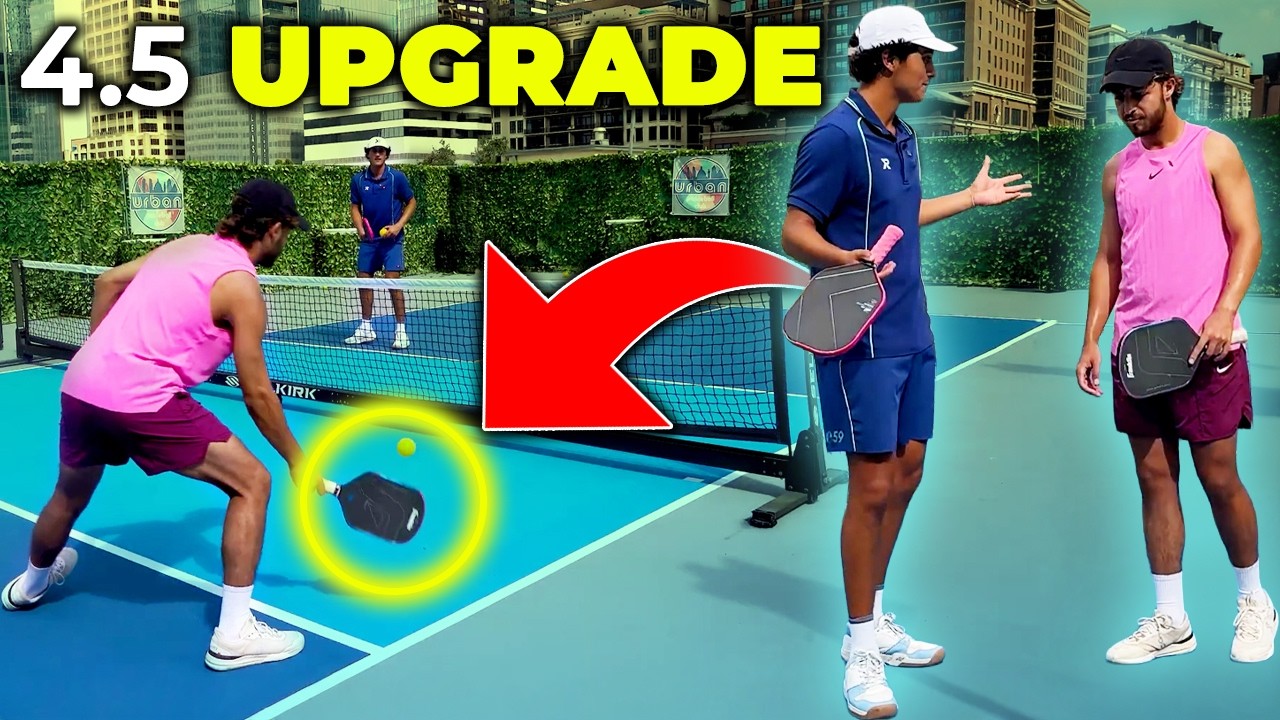
Why Your Pickleball Speedups Fail (and How to Fix Them Like a Pro)
Think of it like a jab in boxing: it’s quick, it’s deceptive, and it sets up the knockout blow
Speed Up Kitchen Pickleball 3.5: Reading the Opponent to Time Your Attack
Great speed ups aren’t just about ball height, they’re about opponent positioning. The best moment to attack from the kitchen is when your opponent is:
- Mid-reach on a wide dink (their weight is shifted laterally and their reset option is limited)
- Looking down at the ball instead of tracking your paddle
- Slightly off balance after a previous exchange
Deception plays a big role here. If you always look the same before a speed up, your opponent will start reading you. Change your body angle.
Use the same setup motion for both a soft dink and a speed up. Make them play guessing games instead of playing prediction games.
At the 4.0 level, opponents will start to anticipate your speed up patterns.
That’s when the slice dink becomes your best setup tool, draw them into expecting a soft ball, then fire.
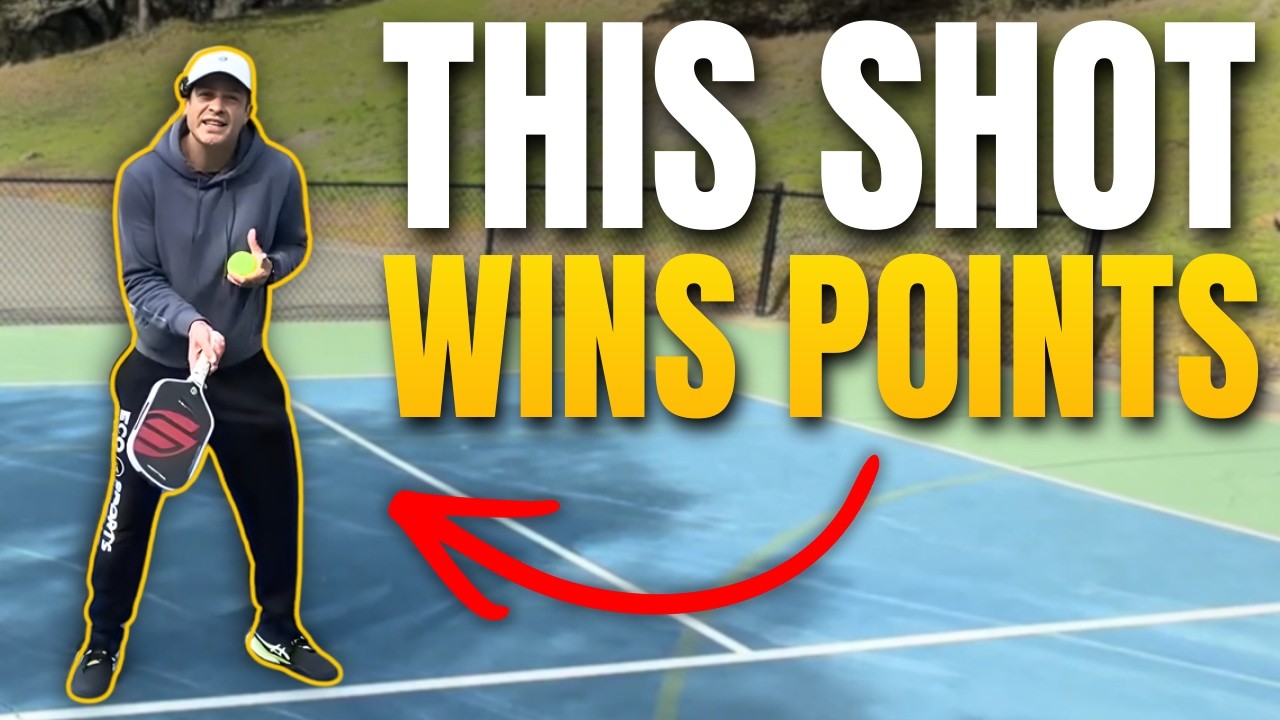
How to Disguise Your Speed-Up Shot in Pickleball
Your opponent relies on reading small changes in your movement, grip, and paddle position to anticipate your shots. Eliminate those tells and you’re in control.
Key Takeaways
- A speed up kitchen pickleball 3.5 attack works best on balls at or above net height, wait for the right ball.
- Use a compact, punchy swing with wrist snap, not a full arm swing.
- Target the hip, backhand shoulder, or crosscourt angle, not the lines.
- Stay reset-ready immediately after your speed up, don’t watch.
- Drill the read before drilling the swing: knowing which ball to attack matters more than how hard you hit it.
- The backhand speed up is underused at the 3.5 level and gives you a major tactical edge
💡
Frequently Asked Questions
What is a speed up in kitchen pickleball for 3.5 players?
A speed up is an aggressive, fast attack executed at the kitchen line during a dinking rally. For 3.5 players, it means recognizing a ball that sits at or above net height and firing it hard at the opponent’s body or shoulder before they can reset. It’s the primary way to shift from a passive dink battle to an offensive advantage.
When should I speed up from the kitchen?
Speed up when the ball reaches at or above net height on your side of the court. If you can swing with a slight downward angle, the ball is attackable. If you have to lift it over the net, it’s a reset ball, not an attack ball. Attacking below the tape is the most common speed up mistake at the 3.5–4.0 level.
Where should I aim when I speed up from the kitchen?
Aim at your opponent’s hip, belly button, or backhand shoulder. Body shots compress their response window and reduce reset options. Crosscourt angles also work well when you’ve pulled them slightly wide. Avoid going straight at their forehand or trying to hit the sideline on your first attack, both are lower-percentage choices.
How do I practice the kitchen speed up?
The most effective drills are the Attack and React drill (a partner feeds alternating attackable and unattackable balls), the figure-8 speed up drill (live dinking with opportunistic attacks), and the continuous counter exchange (intentional back-and-forth speed up rallies). Combine these with solo wall work to build the mechanics before adding a live partner.
Why do 3.5 players miss so many speed ups?
The two biggest culprits are attacking the wrong ball (too low) and over-swinging. A speed up from the kitchen is a compact, punchy motion, not a full drive. The second issue is poor follow-up: many 3.5 players watch their attack instead of resetting their stance, which leaves them flat-footed when the opponent counters. The fix is reps with deliberate reset practice immediately after every speed up attempt.
For more on building your kitchen game, read how to position yourself at the kitchen and how to respond when the perfect drop lands in front of you.
Nguồn: thedinkpickleball