The crosscourt dink is one of pickleball’s most versatile shots, and mastering it requires understanding paddle positioning and footwork fundamentals. Learn the exact technique used by top players to control the net and dominate rallies.
The crosscourt dink is one of the most essential shots in pickleball, and if you’re serious about improving your game, you need to understand how to execute it properly.
Unlike aggressive attacking shots, the dink is all about control, placement, and patience.
When you’re hitting a crosscourt dink, you’re not trying to win the point outright; you’re setting up your opponent to make a mistake or positioning yourself for a winning shot later in the rally.
Love pickleball? Then you’ll love our free newsletter. We send the latest news, tips, and highlights for free each week.
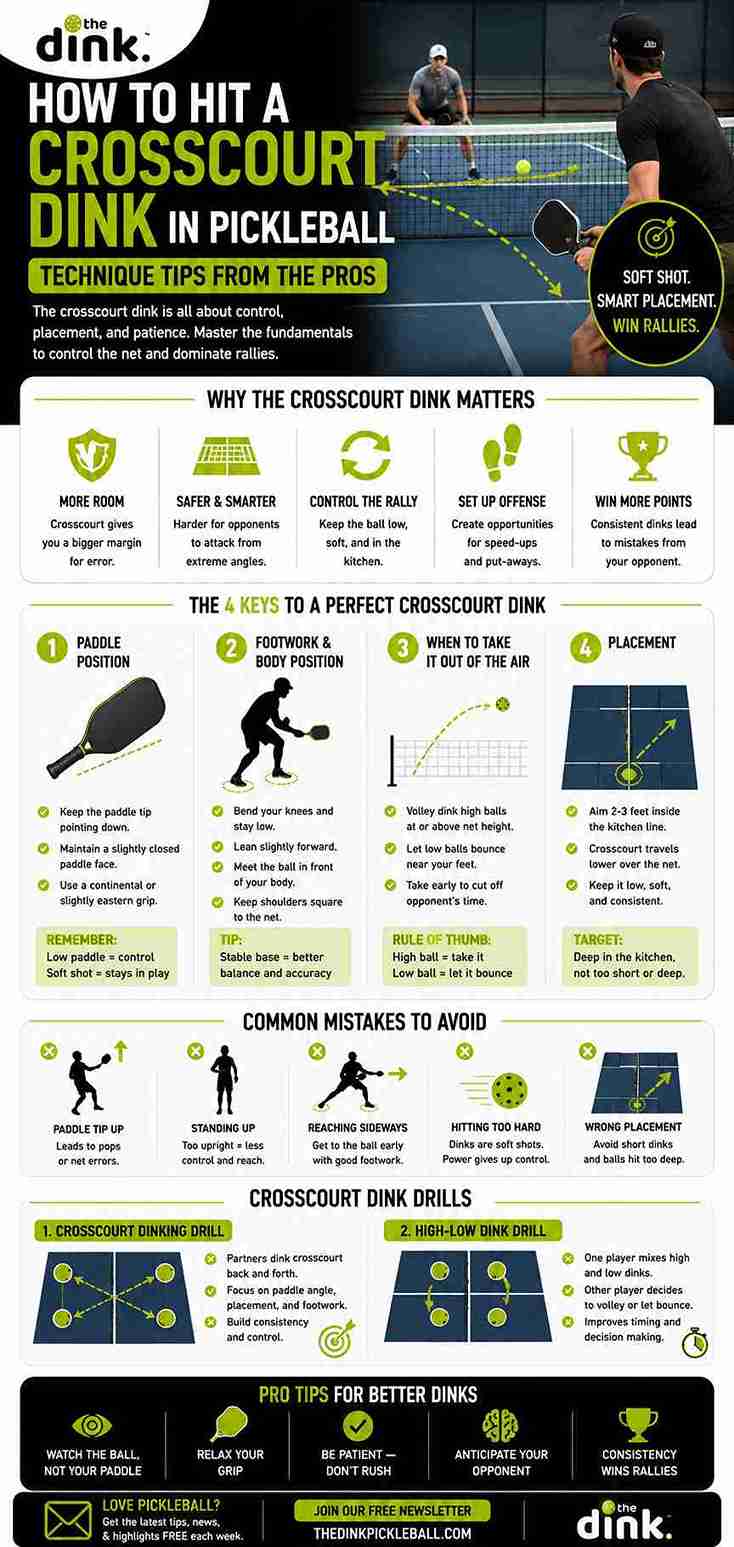
The crosscourt dink travels diagonally across the court, which means it has to clear the net at a lower point than a straight dink would.
This requires precision and a solid understanding of angles.
According to James Ignatowich, the key to hitting a crosscourt dink effectively is understanding when to take the ball out of the air versus when to let it bounce.
When you’re hitting crosscourt, your paddle tip needs to stay down throughout the entire motion.
This isn’t just a suggestion; it’s fundamental to controlling the shot.
If your paddle tip comes up, you’ll either hit the ball too hard or send it into the net.
The low paddle position gives you the control you need to keep the ball soft and in play.
Every pro at the kitchen line knows this instinctively. It becomes second nature once you’ve drilled it enough.
Paddle Position: The Foundation of Your Crosscourt Dink
Here’s the thing about the crosscourt dink: everything starts with your paddle.
Your paddle tip should be pointing downward, not level with the ground or angled upward.
This low paddle position is what separates a controlled dink from a ball that either flies long or drops into the net.
When you’re taking the ball out of the air on a crosscourt dink, maintain that downward paddle angle.
You’re not scooping the ball upward; you’re meeting it with a stable, low paddle face.
If your opponent hits a ball that bounces near your feet, get your paddle down and block it rather than trying to generate pace.
The goal is consistency, not power.
Think of your paddle as a wall. You want the ball to hit that wall and die on the other side of the net.
That’s what a well-executed crosscourt dink looks like: the ball barely clears the net and lands softly in your opponent’s kitchen, forcing them to hit up on their next shot.
💡
How to Position Your Paddle on a Crosscourt Dink
Your paddle face should be slightly closed, not open to the sky.
A closed face gives you the downward trajectory you need to keep the pickleball dink shot low over the net.
Check your grip too: a continental or slightly eastern grip makes it much easier to maintain that closed paddle angle through contact.
The grip sets the foundation for everything else in your dinking game.
Get that right first, then work on everything above it.
Pickleball Dinking 101: Small Swings, Big Results
You’re not trying to hit winners from the kitchen. You’re trying to create situations where your opponent makes a mistake or gives you a ball you can attack
Footwork and Body Position Matter More Than You Think
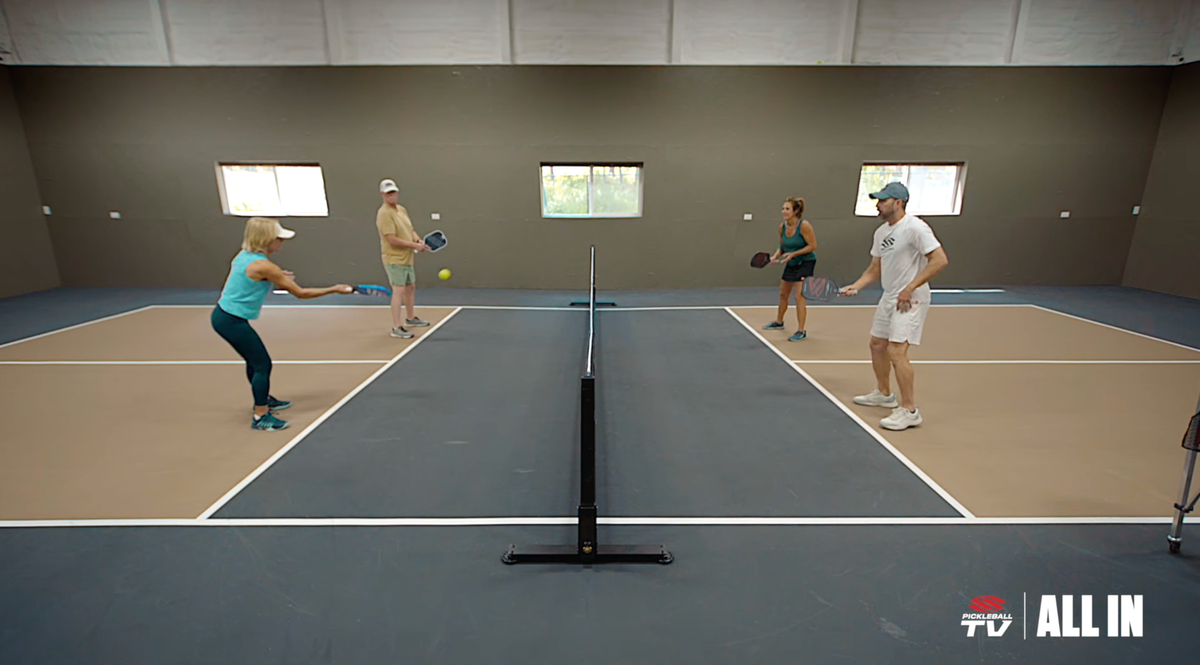
You can have perfect paddle positioning and still mess up a crosscourt dink if your footwork is sloppy.
Bending your knees is absolutely critical.
When you’re in the dinking zone, your legs should be slightly bent, ready to move in any direction.
This athletic stance gives you stability and allows you to adjust quickly if the ball takes an unexpected bounce.
It also keeps your center of gravity low, which directly improves your shot accuracy on wide or low dinks.
When hitting a crosscourt dink, lean into the shot slightly. This forward momentum helps you take the ball earlier and gives you better control.
You’re not lunging; you’re just shifting your weight forward to meet the ball in front of your body.
Meeting the ball in front of you, rather than at your side or behind you, is what allows you to direct it crosscourt with precision.
our shoulders should be relatively square to the net, though you can open them slightly toward the sideline you’re hitting to.
If you’re off-balance when you hit a crosscourt dink, you’ll have no control over where the ball goes.
Pickleball Shot Placement: Complete Winning Guide
Whether you’re serving, returning, dinking, or driving, knowing where to aim gives you control over the rally and keeps your opponent reacting instead of attacking.
Body Mechanics That Make the Crosscourt Dink Stick
Staying low throughout your dinking exchanges is a non-negotiable. Most recreational players stand too upright, which forces them to bend at the waist and reach for the ball. Get your whole body down to the ball’s level, not just your arm.
That’s the difference between a lazy dink and a precise one. Your legs are doing just as much work as your paddle. Don’t let them be an afterthought.
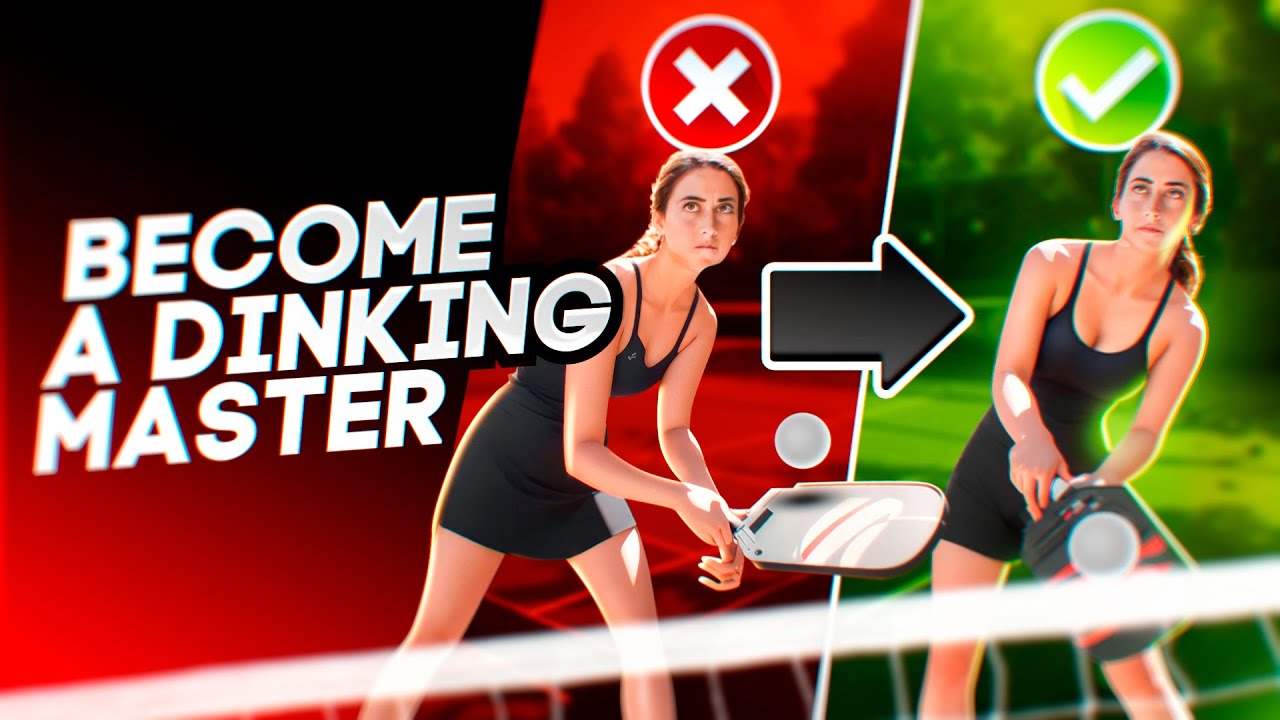
Pickleball Dinking Technique: The Complete Beginner’s Guide
This guide breaks down everything you need to know about proper dinking form, grip, stance, and drills to dominate at the kitchen line.
When to Take the Ball Out of the Air
One of the biggest advantages of mastering the crosscourt dink is the ability to take the ball out of the air before it bounces.
This is called a volley dink, and it’s a game-changer.
When you take the ball out of the air, you’re cutting off your opponent’s reaction time and controlling the pace of the rally.
The decision to volley or let the ball bounce depends on the height of the incoming shot.
If your opponent hits a ball that’s coming at you at net height or above, take it out of the air.
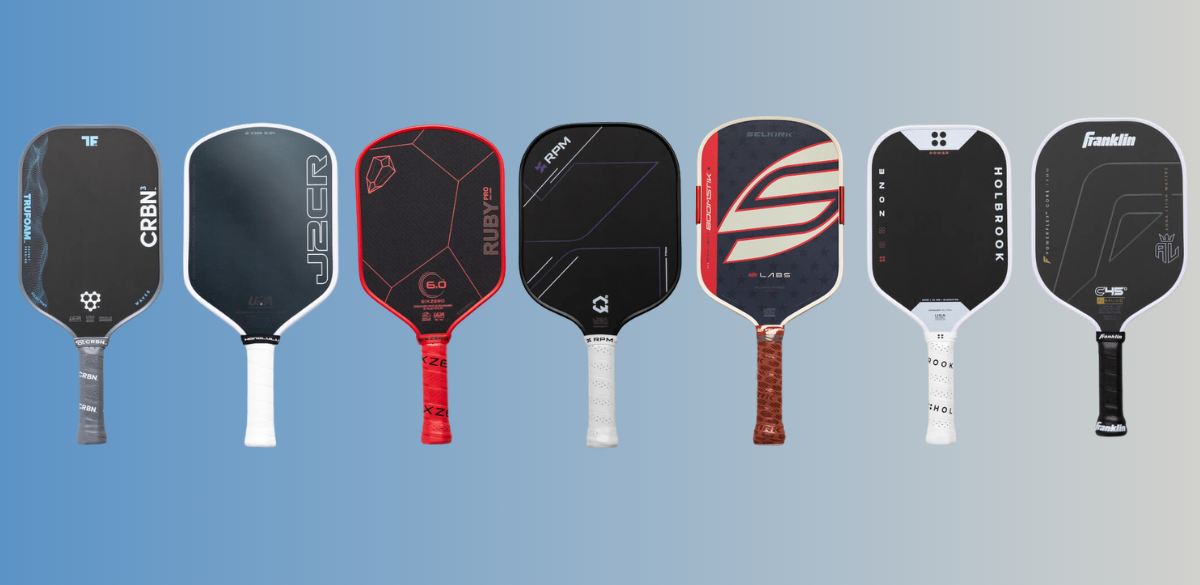
7 Popular Paddles with the Most Spin, Based on RPM
The meta has shifted from smashing the ball at every opportunity to shaping it to our will. These top brands offer the best spin rate by RPM.
If they hit a softer dink that’s going to bounce near your feet, let it bounce and then block it.
Trying to volley a ball that’s dropping to your feet is a recipe for hitting it into the net.
When you do volley a crosscourt dink, your paddle tip stays down just like it does on a bounce dink.
You’re not taking a full swing; you’re just redirecting the ball with a short punch or block.
If you can add a little topspin to your volley dink, even better, but control is always the priority.
The compact motion is everything. Overthink it and you’ll tighten up and mis-hit.
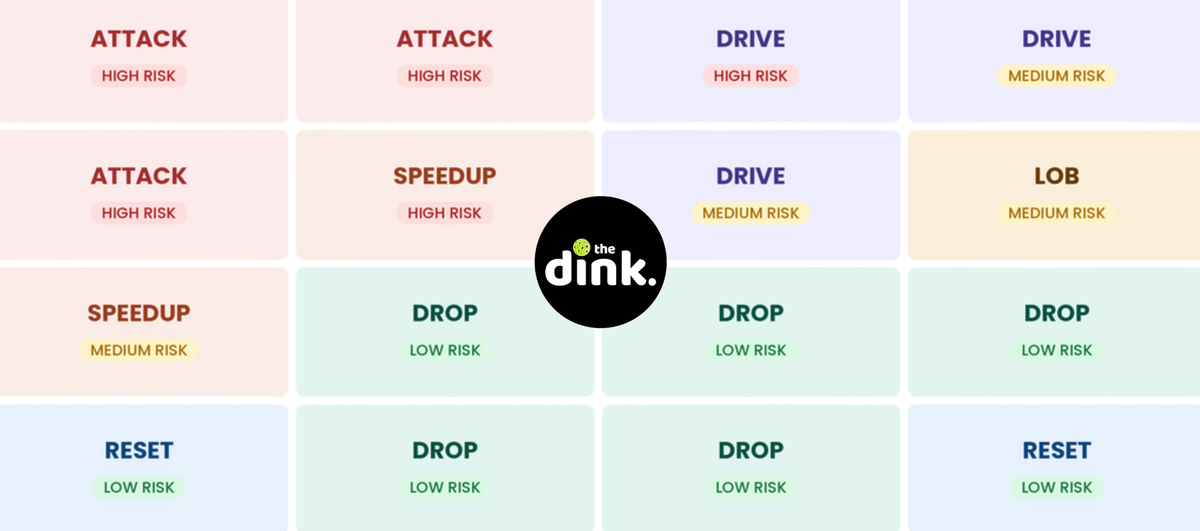
Decision Matrix: When to Attack or Reset in Pickleball
Pickleball is really all about two key factors: your court positioning and the height of the ball. This matrix decodes the game for you.
Reading the Incoming Shot on a Crosscourt Dink
Anticipating where the ball is going before it gets to you is a skill that separates good dinkers from great ones.
Watch your opponent’s paddle face at contact. That tells you spin direction, pace, and trajectory.
Once you can read those three things, making the volley-or-bounce decision becomes instinctive.
It sounds like a lot to track, but your brain gets there faster than you think with enough reps.
How to Read Your Opponent’s Eyes and Poach More Balls in Doubles Pickleball
The key to winning many pickleball points isn’t just quick reflexes; it’s reading what your opponent is about to do before they do it
Adding Topspin to Your Crosscourt Dink
If conditions allow, adding topspin to your crosscourt dink can give you a real edge.
Topspin makes the ball dip faster, which means it’s harder for your opponent to attack.
However, topspin is only an option when you have a higher ball to work with.
If you’re dealing with a low dink that’s bouncing near your feet, forget about topspin and just focus on getting the ball back in play.
To hit a crosscourt dink with topspin, brush up slightly on the ball while keeping your paddle tip down. It’s a subtle motion, not a big windmill swing.
The brush creates spin without adding pace, which is exactly what you want.
Your opponent will see the ball dip quickly, and they’ll have to hit up on their next shot, giving you a clean opportunity to attack.
That’s the whole game at the kitchen line: manufacture the right ball, then punish it.
Mastering Pickleball Topspin: 5 Common Mistakes and How to Fix Them
By maintaining a stable face and letting the path of the paddle create the spin, you widen your margin for error and maximize consistency
Why Consistency Beats Power in the Crosscourt Dink
The biggest mistake recreational players make with the crosscourt dink is trying to hit it too hard.
They think that adding pace will give them an advantage, but it actually does the opposite.
A hard dink is easier to attack. A soft, consistent dink forces your opponent into a defensive position.
Think about professional pickleball matches.
The best players in the world spend entire rallies dinking back and forth, waiting for the right moment to attack.
They’re not trying to end the point with a pickleball dink shot; they’re trying to set up a winning shot.
Your crosscourt dink should be part of that strategy.
- Keep it soft.
- Keep it consistent.
- Keep it in the kitchen.
The more you practice hitting soft crosscourt dinks, the more comfortable you’ll become with the shot.
You’ll develop a feel for how hard to hit the ball to clear the net and land it in the kitchen.
You’ll also start to recognize patterns in how your opponents respond to different dink placements, which will help you set up your attacks more effectively.
Mastering the soft game is the fastest path to a higher rating, and the crosscourt dink is the foundation of that game.
Don’t overcomplicate it. Get your paddle down, bend your knees, and let consistency do the work.
💡
Frequently Asked Questions
What is a crosscourt dink in pickleball?
A crosscourt dink is a soft, controlled shot hit diagonally across the net from one kitchen corner to the opposite kitchen corner. It travels a longer distance than a straight dink, which means it has more time to drop and stays lower over the net. The crosscourt angle is one of the most effective tools for moving your opponent and creating openings at the kitchen line.
What’s the difference between a dink and a drop shot?
A dink is hit from the kitchen line area and is designed to stay low and land in your opponent’s non-volley zone. A drop shot is typically hit from mid-court or the baseline and is designed to arc softly into the kitchen, allowing you to advance to the net. Both shots are essential, but they’re executed from different court positions and with different intentions.
Can I hit a crosscourt dink from the baseline?
Technically yes, but it’s not ideal. The crosscourt dink is most effective when you’re already positioned at the kitchen line, where the angle is sharper and the net height advantage is greatest. From the baseline, you’d typically hit a third-shot drop or transition shot instead, which is a different technique altogether.
How do I know if my paddle tip is in the right position for a crosscourt dink?
Your paddle tip should be pointing downward at roughly a 45-degree angle or steeper throughout the shot. If you’re unsure, film yourself hitting dinks and watch the video back. Your paddle face should be slightly closed, not open to the sky, and your wrist should stay firm rather than flipping through contact.
What should I do if my opponent keeps attacking my crosscourt dinks?
If your opponent is attacking your crosscourt dinks, you’re likely hitting them too high or with too much pace. Focus on keeping the ball lower over the net and reducing your swing to a compact block or brush. You can also vary your dink placement by mixing crosscourt dinks with straight dinks to keep your opponent guessing and off-balance.
Is it better to hit a crosscourt dink or a straight dink?
Both have their place in your game. Crosscourt dinks are great for moving your opponent side to side, opening up the court, and forcing wider errors. Straight dinks are useful for keeping the ball in front of you, maintaining control, and setting up a speed-up to the body. Mix them up consistently to keep your opponent off-balance and unable to anticipate your next shot.
Nguồn: thedinkpickleball