If you want to improve third shot drop consistency, the answer isn’t more court time, it’s structured, intentional repetition. This guide breaks down the exact drill protocol that builds a reliable drop you can trust under pressure.
The fastest way to improve third shot drop consistency isn’t hitting a thousand balls at the wall.
It’s running the right drill protocol, in the right order, until the mechanics become automatic.
Most players skip structure entirely and wonder why their drop falls apart the moment it counts.
Here’s the thing: consistency isn’t a talent. It’s a trained output. And the players who own this shot aren’t gifted, they just practiced it differently.
Love pickleball? Then you’ll love our free newsletter. We send the latest news, tips, and highlights for free each week.
What Is the Third Shot Drop (And Why Does It Keep Failing)?
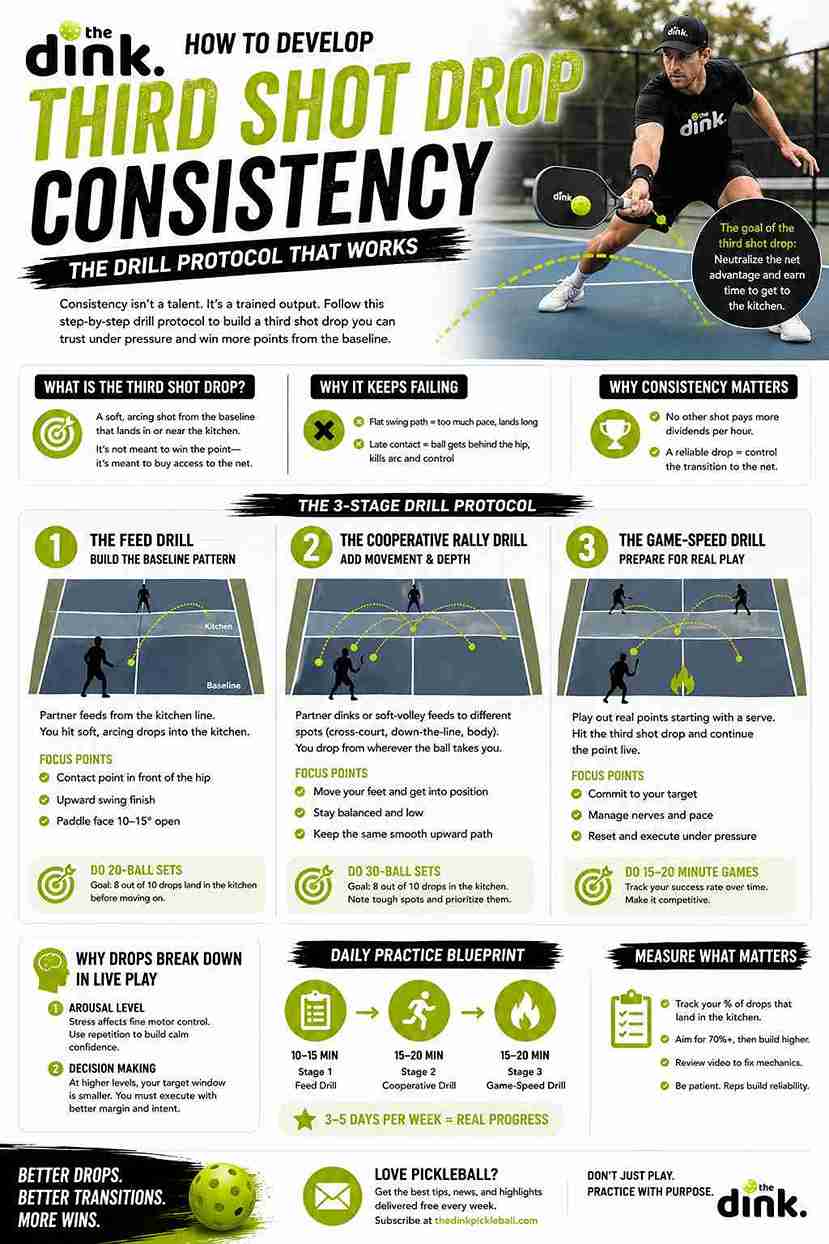
The third shot drop is a soft, arcing shot hit from the baseline that lands in or near the non-volley zone, the kitchen.
Its purpose is singular: neutralize the net advantage held by the returning team and give the serving team time to move forward.
That’s it. It’s not meant to win the point. It’s meant to buy access to the net.
So why do so many players miss it?
The two most common mechanical culprits are a flat swing path (produces too much pace, ball lands long) and late contact (the paddle catches the ball behind the hip, which kills arc and control).
Both are fixable. Neither gets fixed by just “hitting more.”
If you want to improve your third shot drop consistency, you need a protocol that isolates the problem, builds the correct pattern, then stress-tests it.
That’s exactly what this drill sequence does.
Why Improve Third Shot Drop Consistency Before Anything Else?
Honestly, no other shot pays more dividends per hour of practice.
A reliable third shot drop is the hinge between three baseline options and controlling the net.
Without it, you’re stuck at the baseline, trading drives while the opponent dictates from the kitchen.
With it, every rally becomes winnable because you can earn a transition into the soft game on your terms.
Research on motor skill acquisition, specifically blocked versus random practice protocols, consistently shows that early-stage skill learning benefits from repetitive, blocked practice before variable practice is introduced.
That’s the science behind why the staged drill approach below works.
Think of improving your drop this way: you’re not just practicing a shot. You’re building a reliable reset mechanism that activates under pressure.
That’s a motor program, and motor programs need structure to form correctly.
💡
Stage 1: The Feed Drill: Building the Baseline Pattern
This is where you start. Not with live play. Not with a partner feeding from the wrong spot. You need a controlled feed from inside the transition zone.
How to run it:
Your practice partner stands at the kitchen line and feeds soft, mid-pace balls to your backhand side. You’re positioned at the baseline, roughly one step behind it.
Your job: hit soft, arcing drops that land inside the kitchen. No power. No spin yet.
What to focus on:
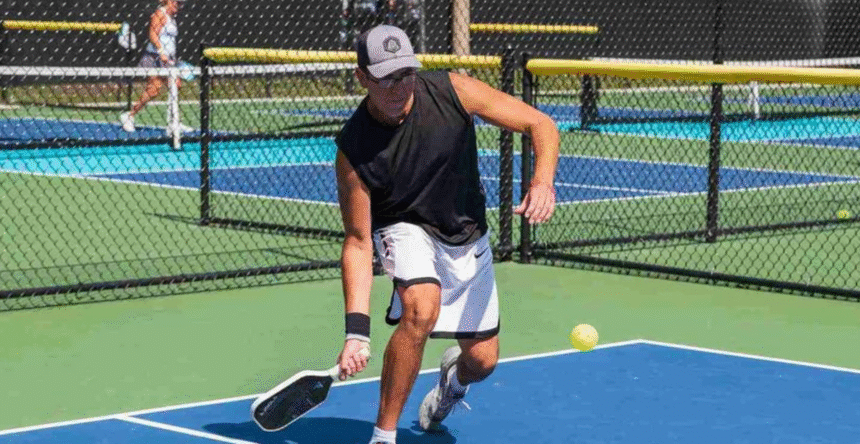
- Contact point in front of the hip. If the ball gets behind you, the shot dies.
- Upward swing finish. The paddle face should end higher than where it started. Think “lifting through the ball,” not pushing at it.
- Open paddle face. Aim for roughly 10-15 degrees open at contact to generate the necessary arc.
Run 20-ball sets. Count how many land in the kitchen cleanly. Your target is 8 out of 10 before progressing.
Most players should expect to spend 2–3 sessions here before that number becomes reliable.
This drill directly addresses the flat swing path problem. It also forces you to practice the exact contact geometry that produces consistent arc.
If you’re currently hitting your drops long, it’s almost always a swing path issue, and this drill exposes it quickly.
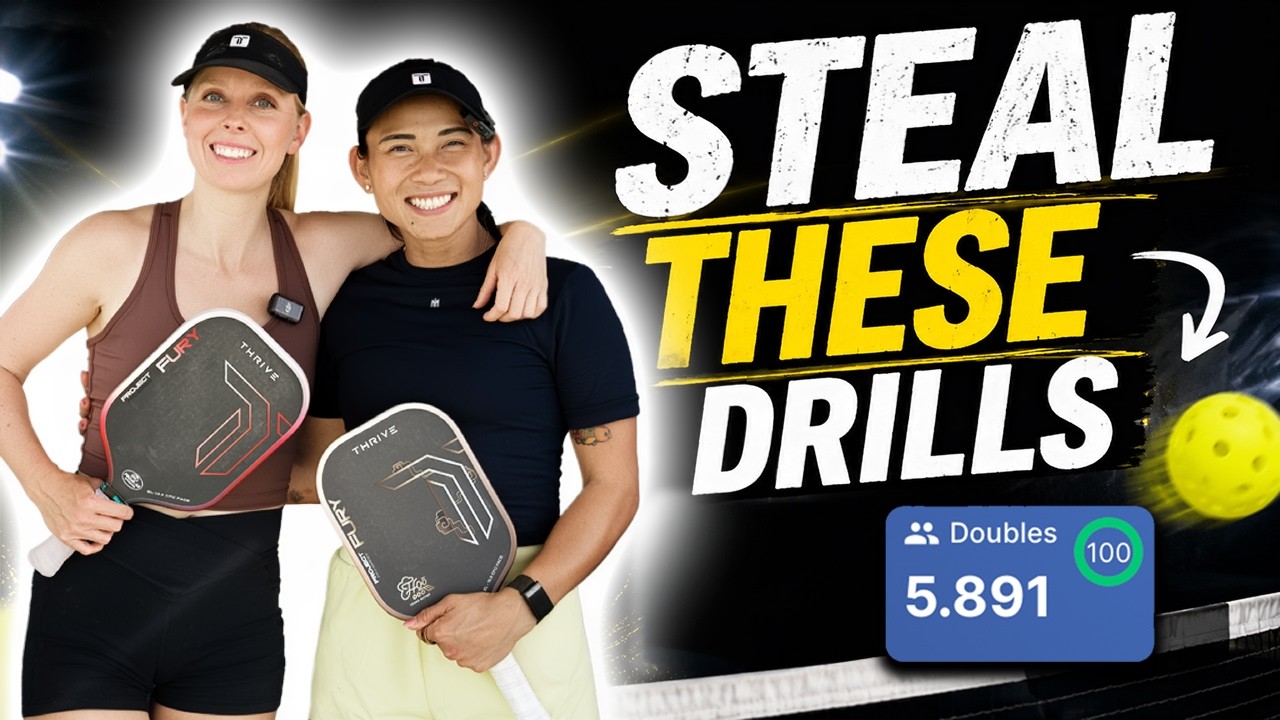
Pro Pickleball Drilling Routine: Train Like a 6.0 DUPR
This advanced pickleball drilling routine focuses on building consistency, cleaner attacks, and faster hands under pressure.
Stage 2: The Cooperative Rally Drill, Adding Movement and Depth
Once Stage 1 is dialed, you add movement and depth variation. This is still cooperative, your partner is helping you, not trying to win.
How to run it:
- Your partner stands at the kitchen line and dinks or soft-volley feeds to different spots, alternating cross-court, down-the-line, and to your body.
- You respond with a third shot drop from wherever the ball takes you.
- The key variable introduced here is footwork and positioning under light movement stress.
This is where most players discover their second problem: the drop breaks down when they’re off-balance or hitting from an awkward position.
Good footwork isn’t just about speed, it’s about arriving at the ball early enough to use the correct swing path.
If you’re reaching or rushing, the contact point shifts and the drop falls apart.
A 2025 study on sport skill variability and contextual interference found that introducing moderate variability after initial blocked practice significantly improves transfer to game conditions, exactly why Stage 2 exists before live play.
Run sets of 30 balls. Count kitchen landings. Same target: 8 out of 10.
Take note of which positions give you the most trouble, those spots become the priority reps in your next session.
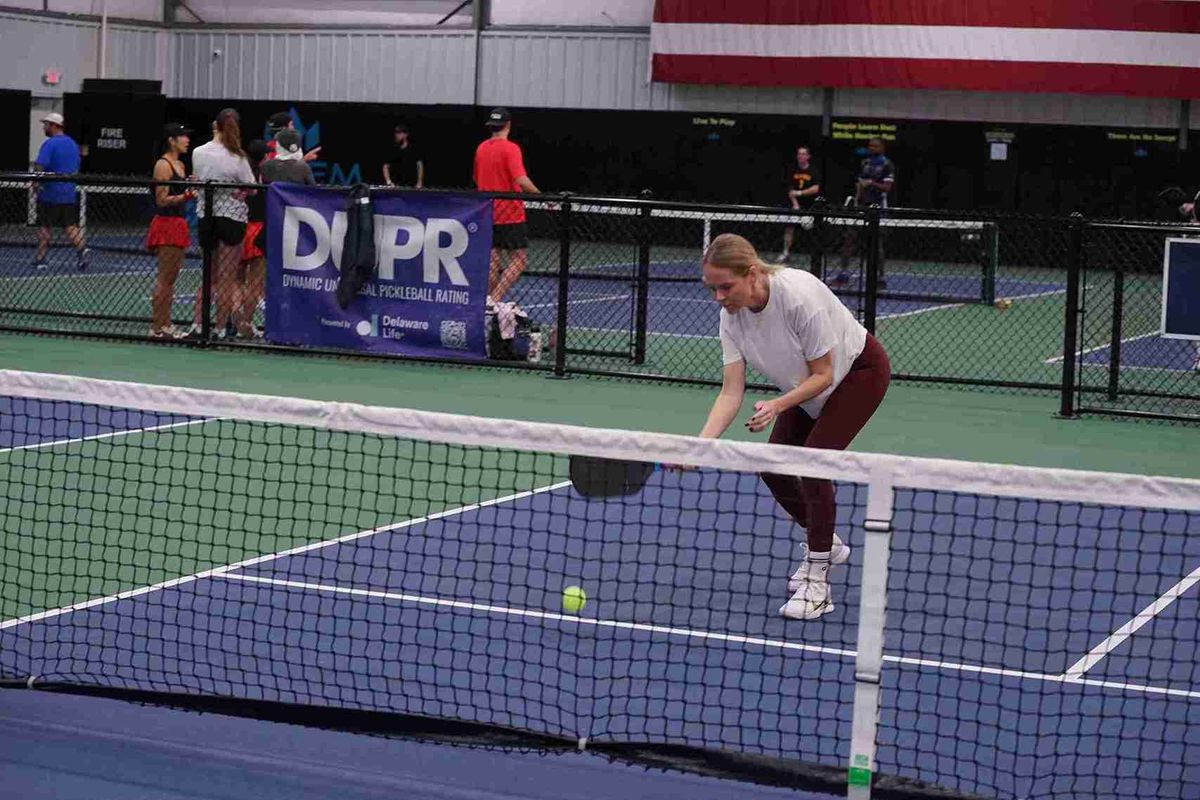
Third Shot Drop vs Drive in Pickleball: Make the Right Call
The third shot drop vs drive pickleball debate isn’t about picking a favorite, it’s about reading the rally and choosing the shot that actually works. This guide breaks down when to drop, when to drive, and how to stop guessing on ball three.
Why Does the Third Shot Drop Break Down in Live Play?
Here’s a question every intermediate player has asked: “My drop looks great in drills, then falls apart in games. Why?”
Two reasons. First, arousal level. The physiological stress of actual competition changes your mechanics.
Research on the performance-arousal relationship shows that fine motor control, exactly the kind required for a drop shot, degrades first under elevated stress. Second, decision-making load.
In a real rally, you’re tracking the ball, reading your opponent, planning your transition. That cognitive demand competes with the motor execution of the shot.
The fix isn’t to just “stay calm.” It’s to raise the pressure in practice until the mechanics are automatic enough to survive competition stress. That’s Stage 3.
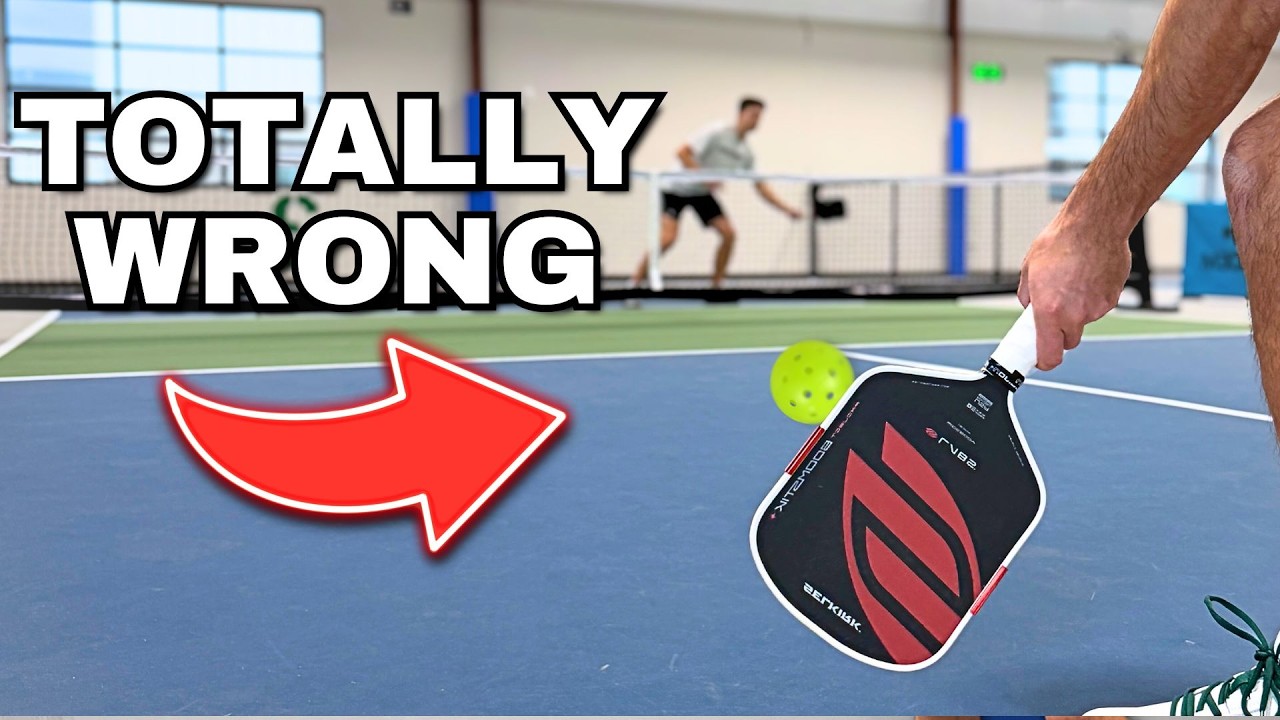
Simplifying the Third Shot Drop: Fix These 5 Common Mistakes
The third shot drop becomes consistent when players stop overthinking mechanics and focus on smart positioning and progression
Stage 3: The Pressure Protocol: Testing Your Drop Under Fire
This is the stage most players skip, and it’s the reason their drop never fully transfers to match play.
Drill A: The 3-Shot Sequence
Play out points starting from a serve. The rule: you must attempt a third shot drop on every third shot, no drives allowed.
If you miss the drop, the point ends immediately.
This creates immediate consequences for mechanical errors, which is exactly what competitive situations do.
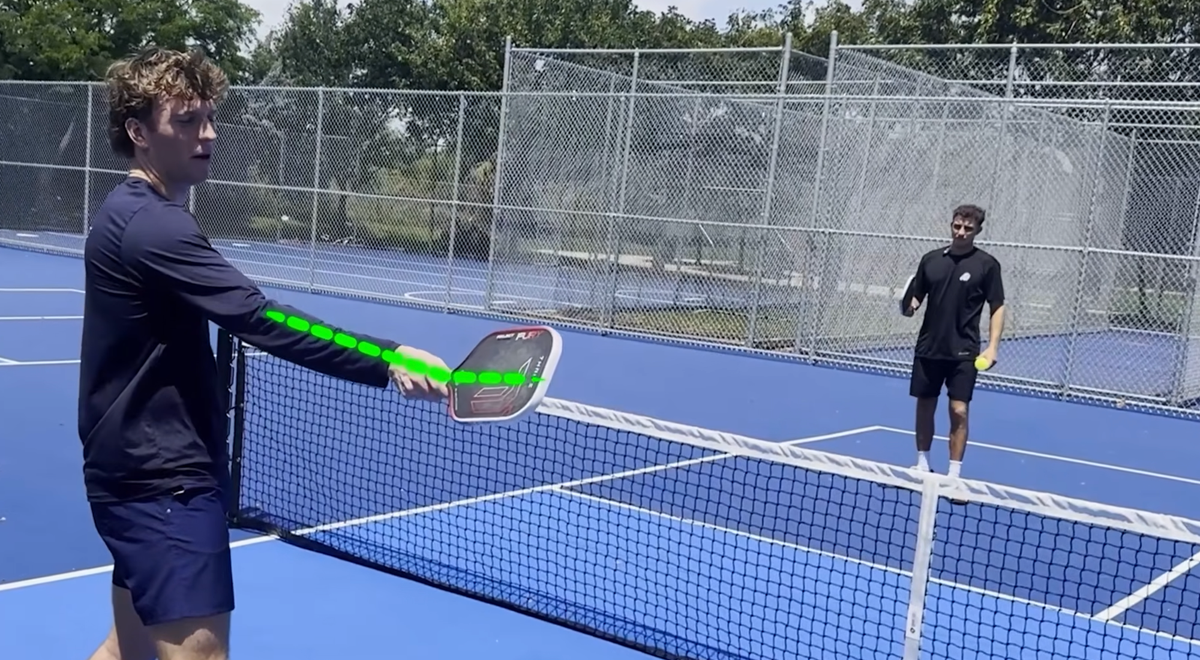
Fourth Ball Pressure: The Shot Changing Pickleball in 2026
Fourth ball pressure is the shot that separates elite players from the rest. This aggressive midcourt technique applies relentless pressure on opponents and makes it nearly impossible to establish net control.
Tracking your drop percentage in this format is useful. Aim for 60% or higher landing in the kitchen before you consider the shot match-ready.
Most recreational players, honestly, hover around 40-50%, which explains why they keep getting attacked.
Drill B: The Transition Game
Play out 5-shot rallies. After your third shot drop, you must move forward. Your partner volleys aggressively off your drop. You play out the point.
The pressure isn’t just on the drop, it’s on the whole sequence.
Navigating the transition zone after the drop is where the real battle happens, and this drill forces you to manage both.
Drill C: Solo Wall Work
Solo repetition still has a role, but it needs to be structured. Solo drills work best for reinforcing swing path when you don’t have a partner.
Stand 7-8 feet from a wall. Hit upward-arcing soft shots. Focus on ball height off the wall: it should return between knee and hip height.
Anything higher means the arc was too steep; anything lower means the swing was too flat.
How to Practice the Third Shot Drop Alone: Solo Drill Guide
The third shot drop is the single most important shot in pickleball, and you don’t need a partner to get reps in. This guide walks you through the best solo drills to practice the third shot drop alone and build real, transferable court feel.
The Mechanics Fix Nobody Talks About
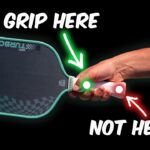
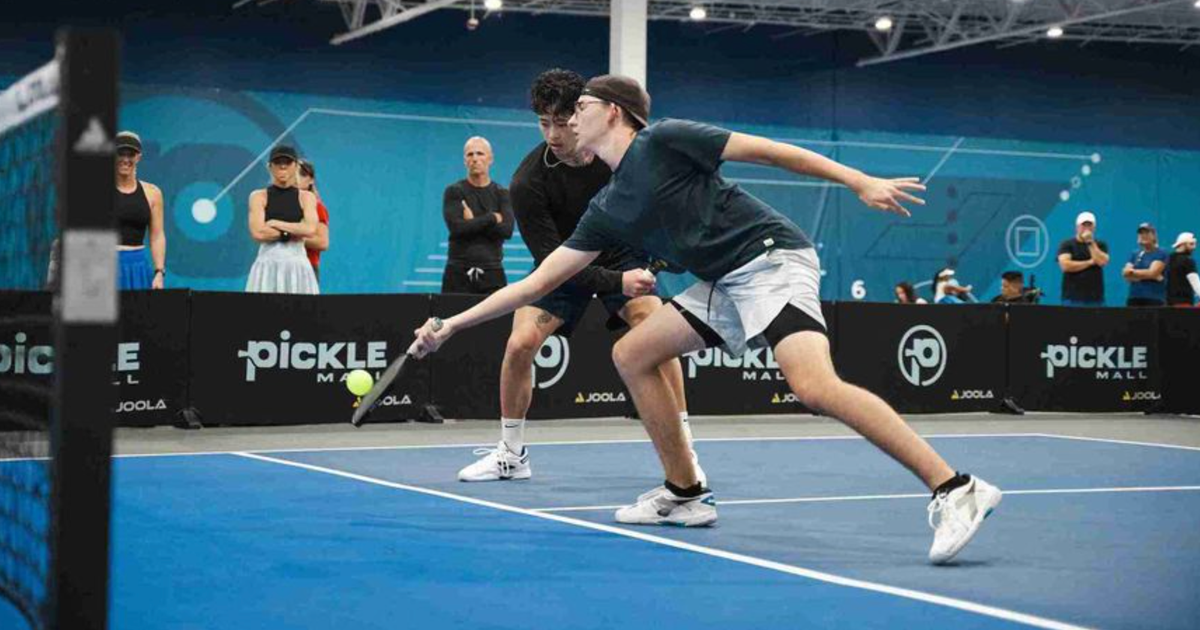
Most third shot drop guides stop at “swing soft and lift.” That’s incomplete. Grip pressure is the piece that gets ignored.
Holding the paddle too tight at the moment of contact stiffens the wrist, kills the natural flex needed for a soft touch, and causes the ball to pop off the paddle with too much pace.
The ideal grip pressure at contact is roughly a 3-4 on a 1-10 scale. Firm enough to control direction, loose enough to absorb pace.
Test this in your next session: consciously relax your grip on the third shot and compare the result.
Most players are genuinely shocked by how much the ball behavior changes from this single adjustment.
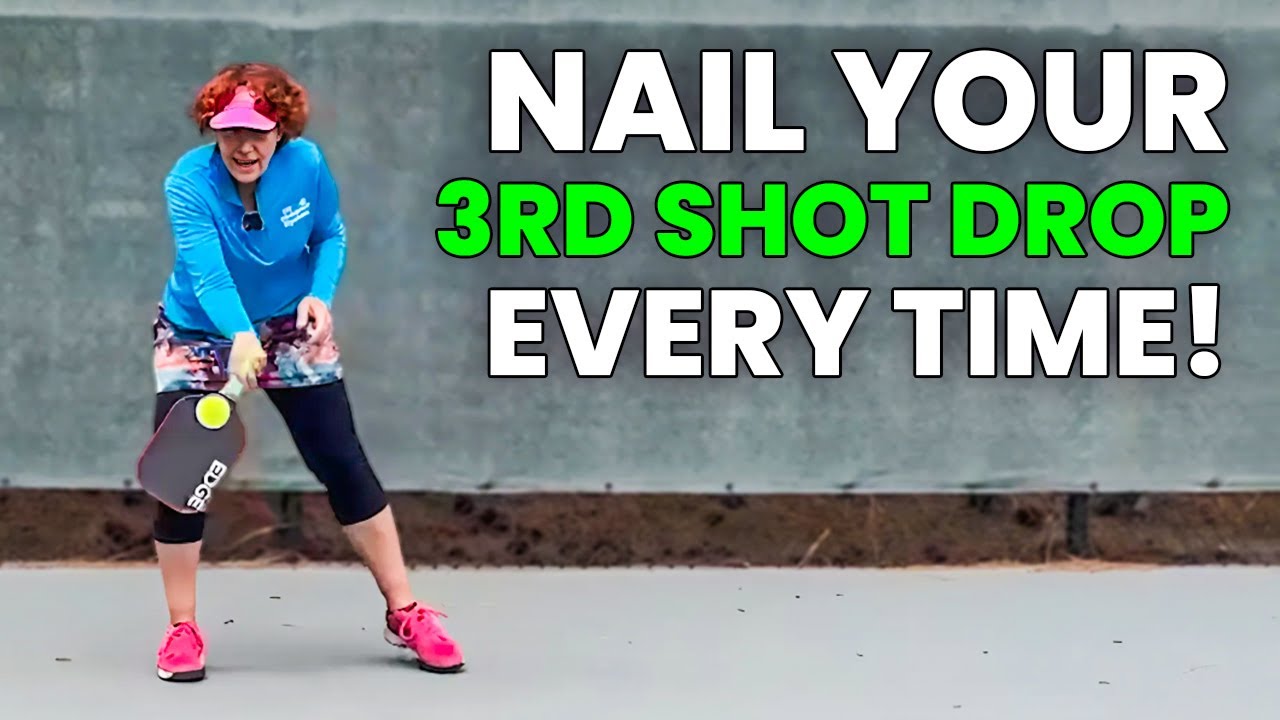
Master the Third Shot Drop: 3 Keys to Consistency
The third shot drop is one of pickleball’s most misunderstood shots. Here are three fundamental mechanics that separate consistent players from those who struggle.
How to Improve Third Shot Drop Consistency With Spin
Once your flat drop is dialing in, adding backspin takes the shot to the next level.
A backspin drop, hit with a slightly open paddle face dragging slightly under the ball, sits up less after the bounce and is harder to attack.
It also creates a lower effective arc, which reduces the “pop” that gives opponents pace to work with.
Introduce this in Stage 1 of the drill protocol: same feed setup, same target area, but now add a slight downward drag on the low-to-high swing.
It takes time to groove. Don’t rush it. The flat drop should be hitting 8 of 10 before you layer in spin work, otherwise you’re trying to fix two things at once.
For players who want to add topspin variation into their third shot repertoire, note that a topspin drop is harder to execute but lands with more margin.
It’s a higher-skill variant worth adding once the backspin version is reliable.
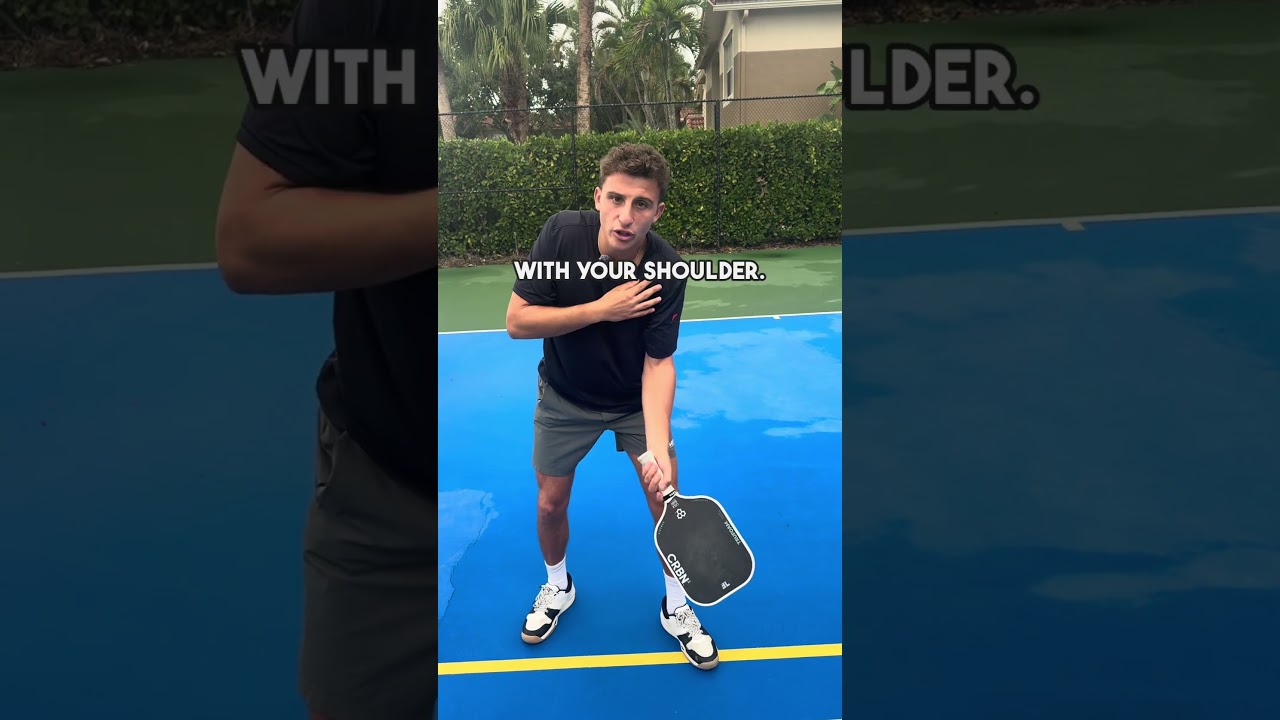
Stop Botching Your Third-Shot Drop: Quick Fixes to 2 Common Mistakes
The less your paddle moves before contact, the less can go wrong
Common Mistakes That Kill Your Third Shot Drop Progress
Even with the right protocol, a few habits will sabotage your work:
- Switching to drives when the drop feels off. This is the biggest one. Choosing between a drive and a drop mid-point is fine. But abandoning drop practice sessions because the drop “isn’t working today” is exactly what prevents the pattern from setting. Stay in the drill.
- Practicing only in cooperative settings. The Stage 3 pressure drills exist for a reason. Skipping them means your drop lives in a lab, it won’t survive the real world. Advanced drills with shot pressure are non-negotiable.
- Ignoring the reset chain. The third shot drop doesn’t end at the kitchen. What happens after the ball lands matters. How your opponent responds to the perfect drop should shape how you move forward. Practice the full sequence, not just the shot in isolation.
- Not tracking metrics. “I’m getting better” is not feedback. Count kitchen landings per set. That number will tell you more than any feel-based assessment.
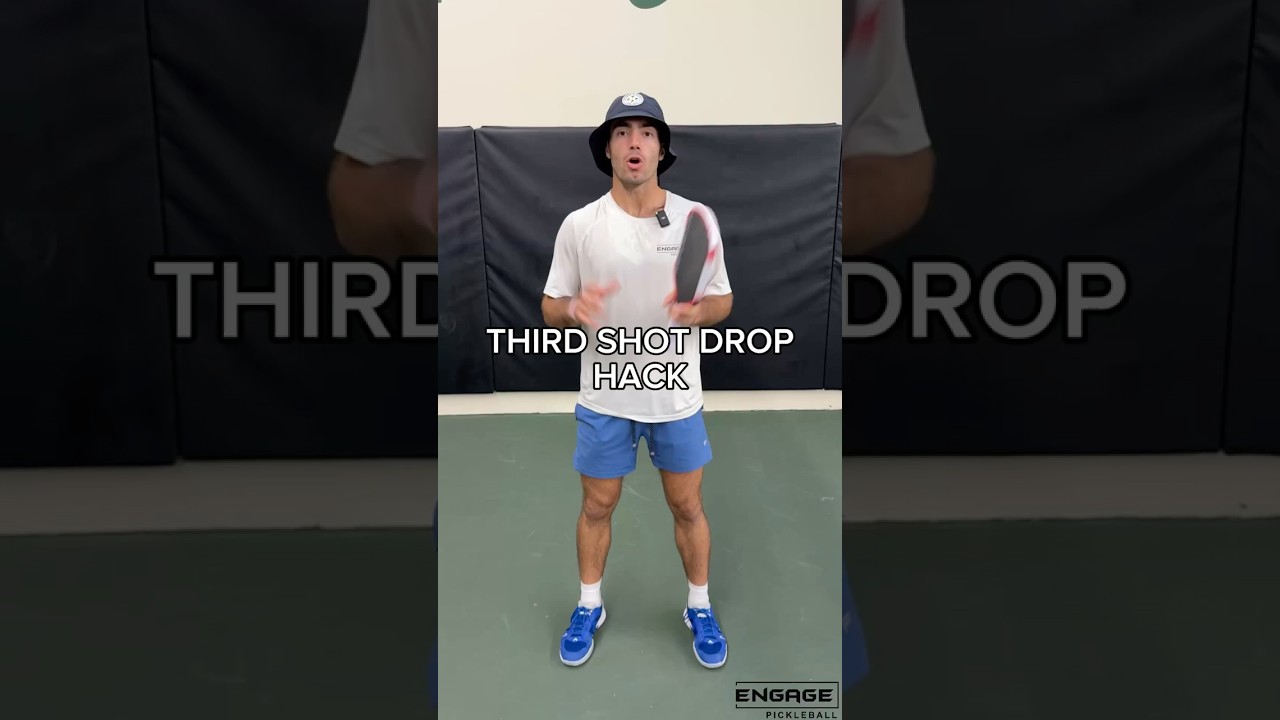
Master the Third Shot Drop in Pickleball
The third shot drop is one of pickleball’s most critical shots, and most players are making a fundamental mistake. Richard from Engage Pickleball reveals the contact point hack that will transform your consistency and get you to the kitchen line every time.
Key Takeaways
- The third shot drop is a neutralizing tool, not an offensive one, success means landing softly in the kitchen, not winning the point outright.
- Most inconsistency comes from swing path errors and contact point issues, not lack of effort.
- A staged drill protocol (feed → cooperative → live) builds reliable mechanics more effectively than random rep volume.
- Pressure-testing your drop in game situations is the final step that most players skip.
- Target metric: 8 out of 10 drops landing in the kitchen during cooperative drilling before moving to live play.
💡
Frequently Asked Questions
How long does it take to improve third shot drop consistency?
Most players see measurable improvement, defined as consistently landing 7 out of 10 drops in the kitchen during cooperative drilling, within 4 to 6 structured practice sessions. The timeline extends if you’re only playing recreational games without dedicated drill time. Structured repetition, not game volume, is what accelerates improvement.
What is the correct swing path to improve third shot drop consistency?
The correct swing path is a low-to-high motion with a slightly open paddle face. Contact should happen in front of the hip, and the paddle finish should end higher than where it started. A flat or downward swing is the most common mechanical cause of drops landing long or into the net.
Should I use a drive or drop on the third shot?
Both are valid third shot options, but the drop is generally the higher-percentage play because it neutralizes the net advantage held by the returning team. A drive is more effective when the return sits high and short, giving you a ball you can attack flat. For most recreational and competitive players, leading with the drop and reading the response is the default strategy.
Can I practice the third shot drop without a partner?
Yes, with some limitations. Wall practice is effective for reinforcing swing path and grip pressure but doesn’t replicate the arc and bounce dynamics of a real court scenario. A ball machine or feed-and-catch drill with a partner is significantly more effective for building match-transferable consistency. Solo work is best used as a supplement, not a replacement.
Why does my third shot drop work in drills but fail in matches?
This is almost always caused by elevated arousal disrupting fine motor control, combined with added cognitive load from tracking opponents and planning transitions. The fix is to raise the pressure during practice, specifically through consequence-based drills where a missed drop ends the point. Repeating the shot in low-pressure settings builds the pattern; pressure drills make it durable.
Nguồn: thedinkpickleball