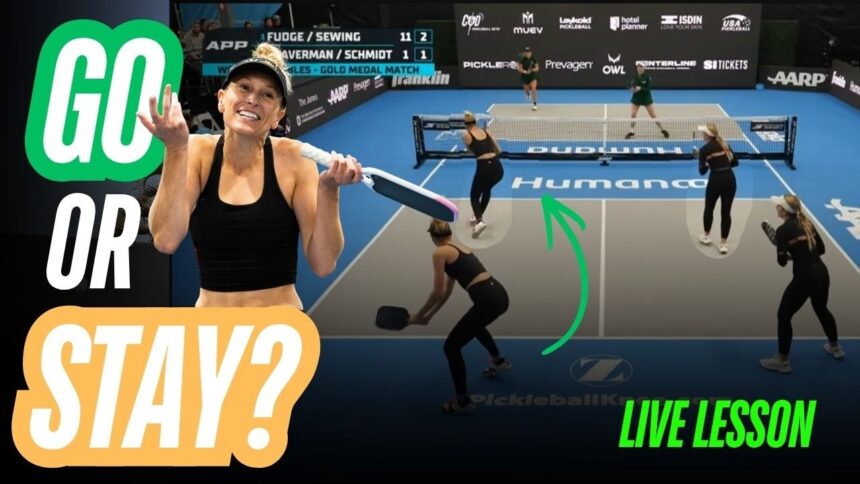
The third shot decision is one of the most misunderstood moments in pickleball, but mastering it can transform your game. Here’s when to rush the kitchen, when to stay back, and how communication changes everything.
The third shot decision might be the most misunderstood moment in pickleball, but it’s also one of the most important.
You’ve served, your opponent has returned, and now you’re facing a choice that will either put you in control of the point or leave you scrambling from the baseline.
Get it right, and you take command. Get it wrong, and you’re giving away free rallies.
In a recent video on the Jilly B Pickleball channel, Jilly B breaks down exactly what separates the players who understand this moment from those who don’t.
Whether you’re a 3.0, 3.5, or 4.0 player, this third shot decision will change your game.
Love pickleball? Then you’ll love our free newsletter. We send the latest news, tips, and highlights for free each week.
The Three-Piece Puzzle Behind the Third Shot Decision
Before you even think about whether to rush the kitchen, you need to understand the framework.
Jilly B breaks the third shot decision into three distinct pieces that must be solved in rapid succession.
- First comes the question: whose ball is it? This isn’t something you figure out when the ball bounces. Great players know whose ball it is as soon as it leaves the opponent’s paddle. If you’re waiting until the ball lands, you’re already late.
- Second: if it’s your ball, what shot are you going to hit? Are you dropping it softly? Driving it? Lobbing? You need to commit to a shot before you even move.
- Third: if it’s not your ball, where do you go? When your partner is hitting the third shot, your positioning matters just as much as theirs. You can’t just stand there and hope.
This three-part mental checklist is what separates reactive players from proactive ones.
Players who understand modern pickleball strategy have already internalized this framework before the point even begins.
Why Communication Changes Everything in Your Third Shot Decision
Here’s the thing about pickleball that separates the good players from the great ones: communication is the foundation of everything else.
Jilly B doesn’t teach the third shot decision as a technical drill. She teaches it as a communication problem.
“Great players do not need to wait to be told what is their ball,” she explains. “They overcommunicate. They drive the bus.”
Think about what happens when two players don’t communicate on the third shot.
The ball lands in the middle, both players hesitate, and at the last second someone yells “you” or “me.” By then, it’s too late.
You’re reactive instead of proactive. You’re a victim instead of a victor. This is the common trap rec players fall into at every level of the game.
The solution is simple but requires discipline: you have to call the ball as it’s crossing the net, not after it bounces.
Jilly B tells her partner “you” or “me” the moment the ball leaves the opponent’s paddle.
This gives your partner time to prepare, get their paddle back, and hit a better shot.
💡
When Should You Actually Rush the Kitchen?
The million-dollar question: should you go in on the third shot or stay back at the baseline?
The answer depends on several factors, and Jilly B walks through the decision tree.
If you hit a strong third shot that lands deep and gives you time, you can rush the kitchen.
Your opponent will be forced to hit a defensive shot, and you’ll be in position to put the ball away.
But if your third shot is weak or lands short, staying back is the smarter play.
You need time to recover and get into a defensive position.
How to Dink in Pickleball: A Step-by-Step Guide
Learn how to dink in pickleball step by step, from proper grip and footwork to advanced strategy and drills that help every level improve at the kitchen line.
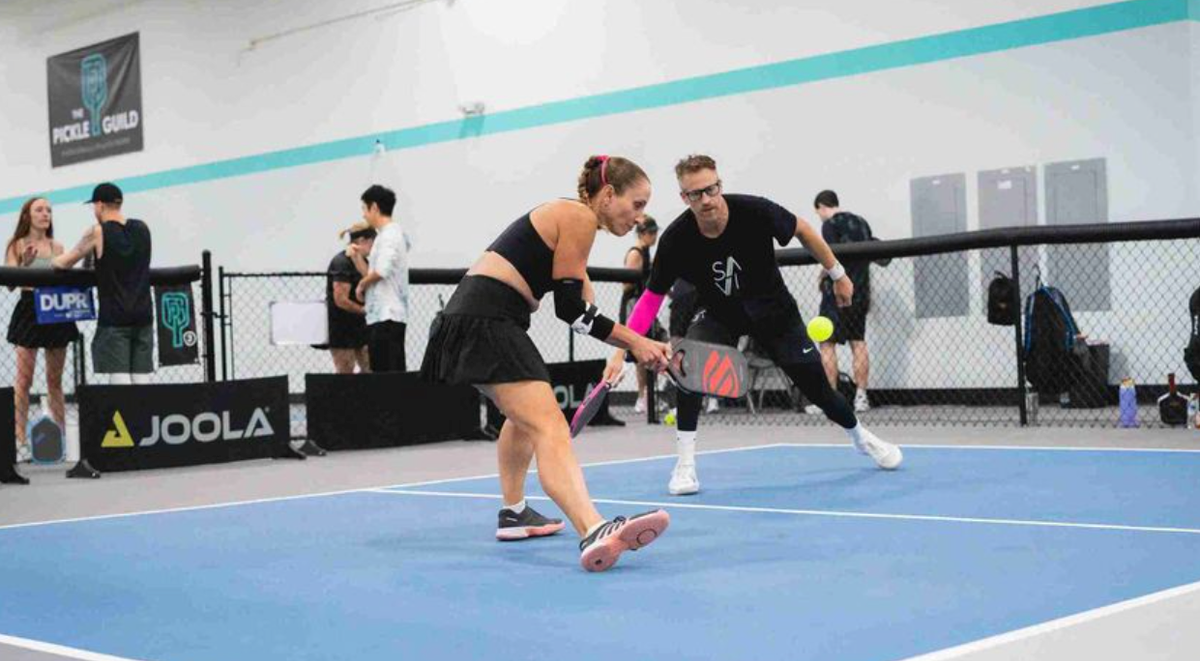
The key is this: your third shot decision should be made before you hit the ball, not after.
You’re not reacting to where the ball lands. You’re committing to a plan and executing it.
Understanding your court position before the ball arrives is one of the most critical habits you can develop.
Players who recognize their court position consistently make smarter shot selections under pressure.
Communication with your partner matters here too. If you’re rushing the kitchen, your partner needs to know so they can adjust their positioning.
The best teams make this decision together, not in isolation.
These are exactly the kinds of habits covered in a simple 4-step system to win more pickleball games.
How to Break Out of Pickleball Isolation in Dink Rallies
Frustrated by pickleball isolation? Learn how to escape relentless targeting in dink rallies with pro strategies from Zane Navratil. Discover how to master aggressive crosscourt dinks, exploit predictable opponents, and get your partner back in the game to flip the script.
What Makes a Third Shot Decision “Strong Enough” to Rush?
Not every ball earns you a trip to the kitchen.
A strong third shot drop lands softly in the non-volley zone and forces your opponent to dig it up from below the net.
A strong drive must be hit with enough pace and placement that your opponent can’t attack it back.
If your drop or drive doesn’t meet that standard, stay back. Chasing the kitchen on a weak ball is one of the fastest ways to lose a point at any level.
You can sharpen your drop shot technique to know exactly when your ball earns you the right to advance.
5 Pickleball Rushing Mistakes Costing You Points
Rushing is one of the most common pickleball mistakes that silently destroys your game. From running through shots to insta-serving, these five pickleball rushing mistakes are probably costing you points in every single match.
The Divorce Ball: A Tactical Weapon
One of the most interesting concepts Jilly B introduces is what she calls the “divorce ball.”
This is a shot aimed at the spot where both opponents can reach it equally, forcing them to communicate or collide.
“If you are just playing a team, you’ve never played them before, you don’t know who to aim to, left foot of the right side player,” she says. “Make them fight over this ball.”
Why does this matter? Because teams that don’t communicate will struggle.
They’ll both go for it or both back off. They’ll be late to the ball. They’ll give you the point.
This is why the third shot decision isn’t really about technique. It’s about team dynamics.
It’s about who’s in control of the point mentally before the ball even gets there.
Knowing six spots to attack your opponents makes the divorce ball just one weapon in a broader tactical arsenal.
How Pro Players Use Shot Placement to Expose Weak Communication
The pros don’t just aim at the open court. They aim at the seam between opponents.
This is a calculated decision to exploit the one moment where most doubles teams break down: the third shot.
According to CBS Sports, communication and team coordination are consistently cited as the top differentiators between intermediate and elite pickleball players.
Simone Jardim and other top professionals have built their doubles success on this exact principle.
When you watch their play, you’ll see them target the middle with purpose, especially early in a match against an unfamiliar team.
It’s a diagnostic shot as much as a tactical one.
From Weak to Weapon: How to Wreck a Two-Handed Backhand Drive in Pickleball
Many players think the two-handed backhand is all about arm strength and paddle speed. But that’s backwards. The real power comes from the ground up.
Respect the X: A Third Shot Decision Framework for Confusion
When you’re confused about whose ball it is, Jilly B offers a framework called “respect the X.”
The idea is simple: if the ball is coming crosscourt toward you and away from your partner, it’s probably yours.
The arc of the ball’s trajectory tells you who should take it.
“If the ball is coming crosscourt it’s coming towards me and away from her,” explains Scott, who appears in the video. “So the more crosscourt it’s coming it’s getting further away from her and it’s coming towards me so I kind of would like that ball.”
This isn’t a hard rule. It’s a guideline for when you’re genuinely unsure. But the best players don’t need guidelines.
They’ve practiced communication so much that they just know.
Pairing this framework with structured repetition, like the 12 drills you need to play your best pickleball in 2026, is the fastest way to make it second nature.
Third Shot Drop vs Drive in Pickleball: Make the Right Call
The third shot drop vs drive pickleball debate isn’t about picking a favorite, it’s about reading the rally and choosing the shot that actually works. This guide breaks down when to drop, when to drive, and how to stop guessing on ball three.
The Correctable Call
One of the most practical insights from Jilly B is that early communication is correctable.
If you call “you” too early and then realize the ball is actually coming to you, you can change your call to “me.”
But if you wait too long, you don’t have time to correct yourself.
“The sooner you say it, the more likely you’re wrong,” she says. “But you also have a little bit of time to correct it.”
This reframes the whole approach to the third shot decision. You’re not trying to be perfect. You’re trying to be early.
You’re trying to give yourself and your partner time to adjust and react.
This is why Jilly B emphasizes that great players like Simone Jardim literally tell their partner what they’re doing as the ball crosses the net.
“She’ll go ‘go’ which means speed up, or ‘lob,'” Jilly B explains. “She’ll literally tell her partner what to do.”
This is the same proactive instinct that makes the 6 essential pickleball shots to master in 2026 so much more effective when paired with clear communication.
The Role of Shot Variety in Your Third Shot Decision
Your third shot decision isn’t just about going in or staying back. It’s about which shot gives you the best foundation to advance.
The drop, the drive, and the lob each carry different risk-reward profiles.
Understanding all three gives you genuine decision-making power at the moment the point is won or lost.
Players who have studied why pros abandoned the slice shot in 2025 understand that shot evolution at the top level directly influences which third shot options are viable in recreational play.
The game changes fast.
Your shot selection has to keep up. A topspin drive executed at the right moment can be just as effective as a perfectly placed drop.
Pickleball Decision Making: Master Your Shot Selection
Pickleball decision making separates casual players from competitive ones. Master when to drive, drop, reset, and attack to transform your game.
From Reactive to Proactive: The Real Third Shot Decision Shift
The real transformation happens when you shift from being reactive to being proactive.
Instead of waiting to see what happens, you’re telling your partner what’s about to happen. Instead of being a victim of the point, you’re driving the bus.
“It helps us go from reactive, a reactive state to a proactive state,” Jilly B says. “It helps us go from passive to active. It helps us go from victim to victor.”
This mindset shift is what separates 3.0 players from 4.0 players. It’s not about hitting harder or spinning more.
It’s about controlling the narrative of the point before it even develops.
Players who hit a pickleball plateau often find that technical improvement alone doesn’t move the needle.
What breaks through the plateau is strategic clarity, and the third shot decision is exactly where that clarity shows up most.
If you want to know what shots you must master to break 5.0, this mindset is the starting point.
The third shot decision is your chance to take control. Master it, and you’ll see your game transform.
According to NBC Sports, the mental game in pickleball has become a defining competitive differentiator as the sport grows at the recreational and professional level.
💡
Frequently Asked Questions
What is the third shot decision in pickleball?
The third shot decision is the choice a serving team makes after the return of serve: rush the kitchen or stay back at the baseline. It’s called the third shot because the serve is shot one, the return is shot two, and the serving team’s next ball is shot three. Getting this decision right sets the entire tone of the point.
When should I rush the kitchen on the third shot?
Rush the kitchen when you’ve hit a strong, deep drop or drive that forces your opponent into a defensive position. If your shot is weak or lands short, stay back and give yourself time to reset. The key is making this call before you hit the ball, not after you see where it lands.
How do I communicate the third shot decision with my partner?
Call the ball as it crosses the net, not after it bounces. Say “you” or “me” clearly and early so your partner has time to prepare, set their paddle, and execute a better shot. Early communication is correctable; late communication is not.
What is the “divorce ball” in pickleball?
The divorce ball is a shot aimed at the seam between two opponents, where either player can reach it. It forces a team to communicate or collide, exposing any breakdown in their doubles coordination. It’s one of the smartest tactical shots you can deploy against a new team you haven’t scouted.
Why does the third shot decision matter more than technique alone?
The third shot decision is a communication and positioning problem first, a technical problem second. Great players win points by controlling the mental narrative of the rally before it develops. Technique matters, but knowing when to advance and how to tell your partner your plan matters even more.
Nguồn: thedinkpickleball