Pickleball etiquette for beginners goes beyond the rulebook, the unwritten social code of the court matters just as much as your backhand. Here’s what every new player needs to know before stepping on a court.
Pickleball etiquette for beginners is one of those things nobody hands you a pamphlet for, and yet, breaking these unwritten rules will earn you side-eyes faster than a shanked third shot.
The written rules are easy enough to look up. The social code? That takes longer to learn.
Here’s the thing: pickleball is one of the most welcoming sports on the planet.
Millions of Americans are picking up a paddle every day.
Don’t be the person who walks in blind and burns every court relationship in the first week.
This guide covers the unwritten rules that actually matter.
Love pickleball? Then you’ll love our free newsletter. We send the latest news, tips, and highlights for free each week.
What Is Pickleball Etiquette, Exactly?
Pickleball court etiquette is the set of unwritten behavioral standards that govern how players interact on and around the court.
It covers everything from how you call the score to how you handle a disputed line call to what you do when you’re waiting for a court.
None of it appears in the USA Pickleball official rulebook, but all of it shapes whether you’re welcomed back or quietly tolerated.
Think of it as the difference between knowing the rules of poker and knowing how to sit at a table.
The rules get you in the game. Etiquette earns you a seat next week.
New players often focus on footwork and shot selection, and they should, especially the basics every beginner needs to build on.
But if your court manners are rough around the edges, technique can only take you so far.
The Most Important Pickleball Etiquette Rule for Beginners
The single most important pickleball etiquette rule is calling the score before every serve, loudly and clearly. This isn’t optional.
Under USA Pickleball Rule 4.A.1, the server must announce the score before each serve.
Skipping it creates confusion, slows the game, and signals to everyone on the court that you’re not paying attention.
The format: server score, receiver score, server number (in doubles). In singles, it’s just server score first, then receiver score.
Get this habit locked in from day one. It sets the tone for your entire game.
💡
Line Calls: The One That Gets Everyone in Trouble
Line calls are where pickleball court etiquette gets tested hardest. Here’s the rule, and it matters: if you can’t call a ball out with certainty, it’s in.
That’s not a courtesy, it’s written into the culture, and for good reason.
A 2022 study published in the Journal of Sport & Exercise Psychology found that perceived fairness in recreational sport settings is the top predictor of long-term participant retention.
In plain terms: people keep playing games that feel fair. Bad line calls drive people away.
The guideline that governs this is clear: only call the lines on your side of the net.
Calling your opponent’s lines for them, even if you’re right, is a breach of etiquette. It’s their call. Let them make it.
If a call genuinely feels wrong? Mention it once, calmly. Then let it go.
The proof that pickleball players are among the most honest in sports is real, trust the culture.
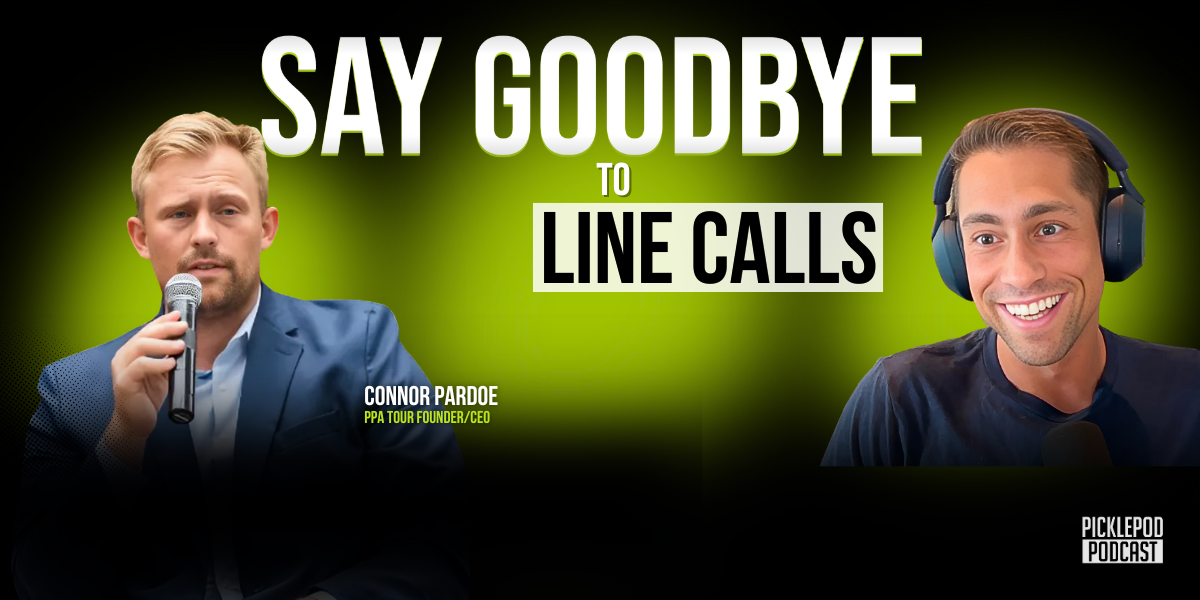
Exclusive: PPA CEO Connor Pardoe Says Automated Line Calls Are Coming to Pro Pickleball
In a PicklePod exclusive, PPA CEO Connor Pardoe told host Zane Navratil that the same line-calling technology used in professional tennis is coming to pro pickleball as soon as this year: “You won’t even call lines anymore”
Does It Matter Who You Play With in Rec Play?
Yes. This is one of the unwritten rules of pickleball that trips up new players most: targeting the weakest player relentlessly is technically legal, but it’s often considered bad form in recreational settings.
Competitive play is different. But in open play or casual rec sessions, repeatedly hammering a player who’s clearly outmatched doesn’t make you look skilled, it makes you look unsportsmanlike.
Spread your shots around. Play your game. Win the point without making someone feel like they shouldn’t have come.
This applies in doubles especially.
Changing the way you think about doubles pickleball is one of the fastest ways to improve, and part of that mindset shift is understanding that good partners protect each other, and good opponents respect each other.
Three Pickleball Shots Every Recreational Player Must Learn
The lob handles defense, the drop volley finishes points with touch, and the ATP gives you an escape route when you’re in trouble.
How Does Open Play Actually Work?
Open play (sometimes called “rec play” or “drop-in pickleball”) has its own etiquette system. Here’s how it typically runs at most facilities:
- Place your paddle on the designated rack or board when you arrive. Courts rotate in the order paddles were placed.
- Winners typically stay on the court, losers rotate off, and the next group in line rotates in. Confirm the format at your specific facility before assuming.
- Don’t linger on the court after your game ends. Grab your gear, shake hands, and clear out so the next group can start.
What you actually get out of rec play depends a lot on how you show up socially. Earn a reputation as someone easy to play with, and you’ll always have a game.
Opinion: The Politics of Open Play & Why It Isn’t All About You
A paddle rack dispute in Coral Gables highlights the growing debate around open play etiquette and fair rotation systems in pickleball.
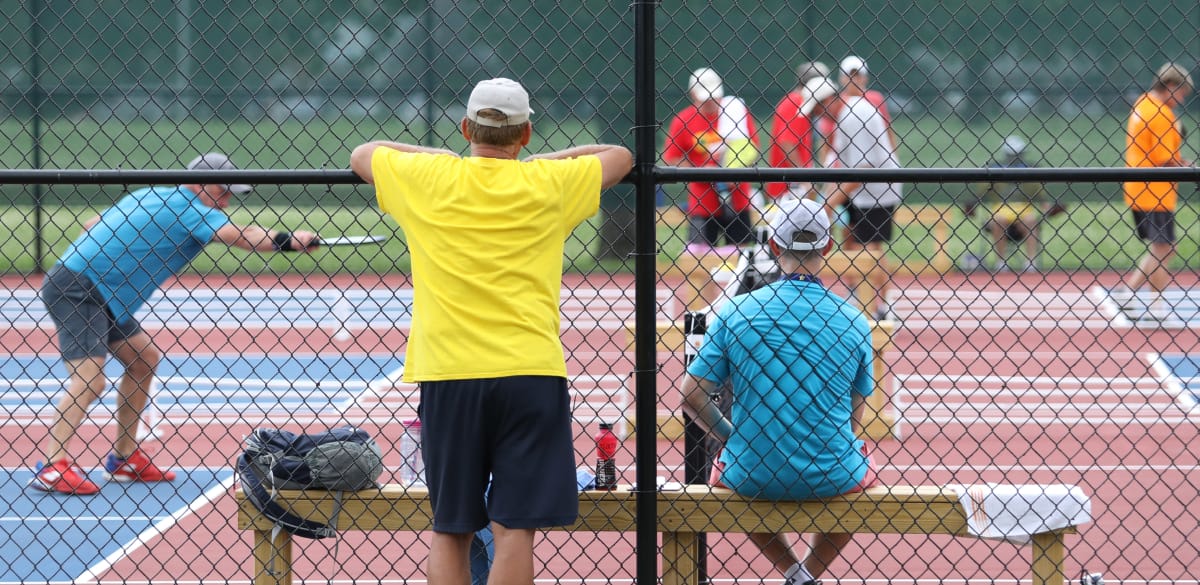
What Should You Never Do on a Pickleball Court?
The behaviors that violate pickleball etiquette for beginners fastest are coaching uninvited, over-celebrating, and making excuses.
Each one damages the court culture in a different way.
Unsolicited coaching is the big one. Nobody asked you to fix their backhand. Even if you’ve spotted the problem, keep it to yourself unless asked.
There’s a time and place for that, and it’s not mid-game. Amateur players have plenty of habits to break beyond shot selection.
Over-celebrating your winners is a gray area. Fist pumps? Fine.
But excessive celebration after an opponent’s error, especially a newer player, is widely considered poor form. Read the room.
Excuse-making after a loss drains everyone around you.
The sun, the wind, your grip, maybe all true. Nobody wants to hear it. On-court rituals and mental habits that build resilience will serve you far better.
The Do’s and Don’ts of Attacking in Pickleball
Timing, positioning, and reading your opponent matter way more than gripping and ripping
Noise, Language, and Court Boundaries
Keep your language clean and your volume reasonable.
Pickleball is often played in community centers, public parks, and facilities where families and kids are present.
The growth of pickleball across all age groups has made this a genuinely cross-generational sport, behave accordingly.
A few specifics most players figure out too late:
- Don’t yell across courts to friends on other courts mid-rally. Wait for a natural break.
- Keep music to yourself. Bluetooth speakers that bleed onto adjacent courts aren’t welcome, even if your playlist is excellent.
- Thank the net. Yes, this is a thing. When the net cord gives you a lucky winner, acknowledge it. Classy players do.
The ten most fun, and annoying, sayings in pickleball is a good read for understanding the vocabulary and inside jokes that make this culture tick.
The Unwritten Rules of Pickleball
Respect the elderly. Leave the paddle rack alone. And whatever you do, never offer unsolicited advice.
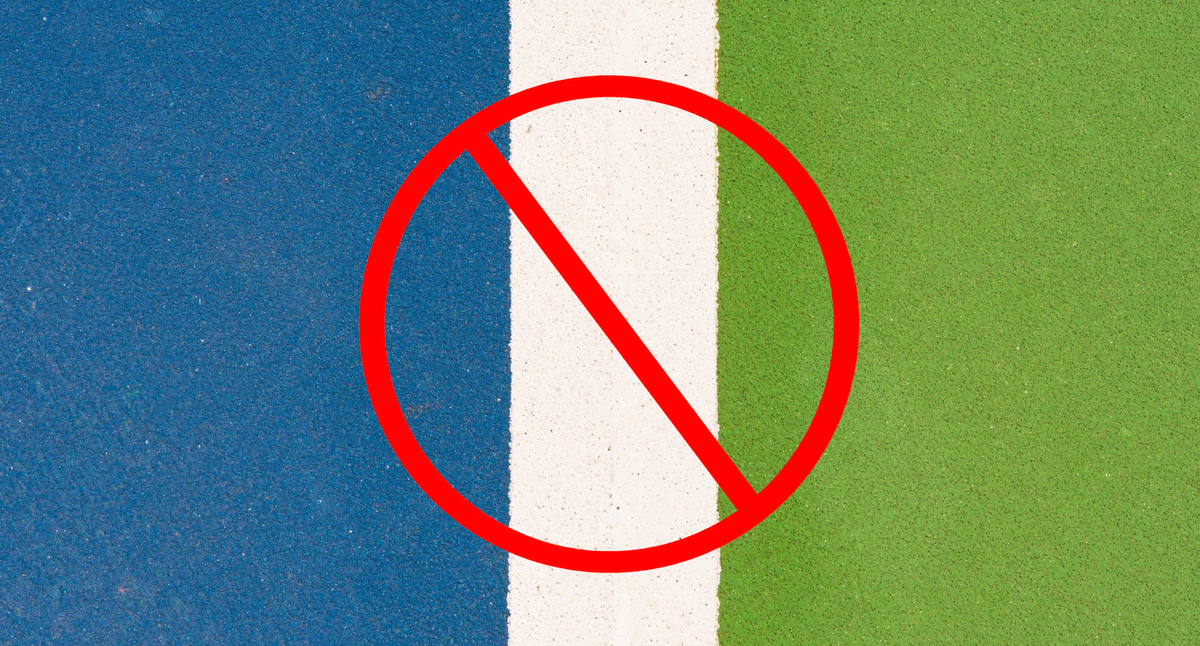
Pickleball Etiquette for Beginners: The Kitchen Line Rule People Get Wrong
Volleying in the kitchen is a fault, but the etiquette issue is slightly different.
It’s about what happens after a kitchen violation is called. Call it on yourself. Immediately. Don’t wait for your opponent to say something.
Self-officiating is a fundamental part of recreational pickleball.
USA Pickleball Rule 9.A is clear that non-volley zone faults are the responsibility of the player involved.
If your momentum carries your foot into the kitchen after a volley, call it.
Letting violations slide when you know about them is one of the fastest ways to lose your reputation on a court.
Understanding how to position yourself at the kitchen will also cut down on those close calls, better positioning means fewer opportunities to accidentally cross the line.
Don’t Fear the Pickleball Kitchen: Essential Non-Volley Zone Rules Explained
The best way to internalize the kitchen rule is to play. Pay attention to where your feet are when you volley. Feel your momentum. After a few matches, it becomes second nature.
Why Pickleball Etiquette Actually Makes You a Better Player
Here’s the take most guides skip: players who understand pickleball social etiquette consistently play in better games.
They get invited to play with stronger partners. They get access to higher-skill open play sessions.
They get pulled into games above their level, which is the fastest way to improve.
Skill gets you on the court. Etiquette keeps you there.
The 7 tips that took one player from 3.0 to 3.5 are worth reading alongside this guide, because technical improvement and social growth compound together in this sport faster than in almost any other.
And honestly? The game is more fun when everybody’s playing it the right way. The pickleball community is genuinely special. Show up for it.
Third Shot Drop Pickleball: 3rd Shot Guide
The 3rd shot pickleball play is the most important shot you’ll hit on every single rally. This step-by-step guide breaks down the mechanics, common mistakes, and drills to help 3.0 to 4.0 players master it fast.
Key Takeaways
- Always call the score before every serve, no exceptions.
- Give your opponent the benefit of the doubt on line calls, especially in recreational play.
- Rotate off the court after each game in open play settings.
- Never coach or correct other players unless they ask.
- Celebrate good shots by your opponents. It costs nothing and builds the whole room.
- Leave your ego at the baseline. Picking on weaker players isn’t strategy, it’s bad form.
💡
Frequently Asked Questions
What is pickleball etiquette for beginners?
Pickleball etiquette for beginners refers to the unwritten social rules that govern behavior on and around the pickleball court. These include calling the score before every serve, making fair and honest line calls on your side of the net, rotating off the court properly in open play, and refraining from coaching other players unless invited. These norms aren’t in the official rulebook, but they shape how welcoming and enjoyable the court environment is for everyone.
Who calls the ball in or out in pickleball?
Each player calls line balls on their own side of the net. You should never call a ball out on your opponent’s side. If you cannot clearly determine that a ball is out, it must be called in. This principle applies at every level of recreational play and is foundational to the fairness culture pickleball is built on.
Is it rude to target the weaker player in recreational pickleball?
In competitive play, targeting an opponent’s weakness is a legitimate strategy. In recreational and open play settings, however, repeatedly targeting the weakest player on the other team is generally considered poor sportsmanship. The social norm in rec play is to play your game without making another player feel singled out or humiliated. Read the room and adjust accordingly.
Can you give advice to other players during a game?
Only if they ask. Unsolicited coaching during or after a game is one of the most commonly cited breaches of pickleball etiquette. Even well-intentioned tips can feel patronizing if they aren’t requested. If someone wants feedback, they’ll ask for it. Wait for that invitation.
It’s a fault. Under official USA Pickleball rules, your momentum carrying you into the non-volley zone after hitting a volley is a violation, even if you hit the ball from outside the zone. The right move is to call it on yourself immediately. Self-officiating is part of the game’s culture, and calling your own faults is one of the clearest signals of good pickleball etiquette.
Nguồn: thedinkpickleball